Arkansas Woodcock Migration Timing
If you've ever found yourself wondering when exactly those quirky, long-billed woodcock are going to make their grand appearance in Arkansas, you're not alone. It's a common frustration for hunters who love pursuing these elusive migratory birds, especially with their inconsistent arrival times. This comprehensive guide will walk you through the nuances of woodcock migration patterns into and across Arkansas, helping you understand the factors at play and improving your chances of intercepting them for a successful hunt.
Understanding Woodcock Migration Patterns
Woodcock, often affectionately called "timberdoodles," are true migratory birds, meaning their presence in Arkansas is entirely dependent on their annual journey between northern breeding grounds and southern wintering areas. Unlike resident game birds, you can't just expect them to be in the same thicket year-round. Their movements are a fascinating ballet choreographed by weather, food availability, and instinct, making them a captivating challenge for any hunter.
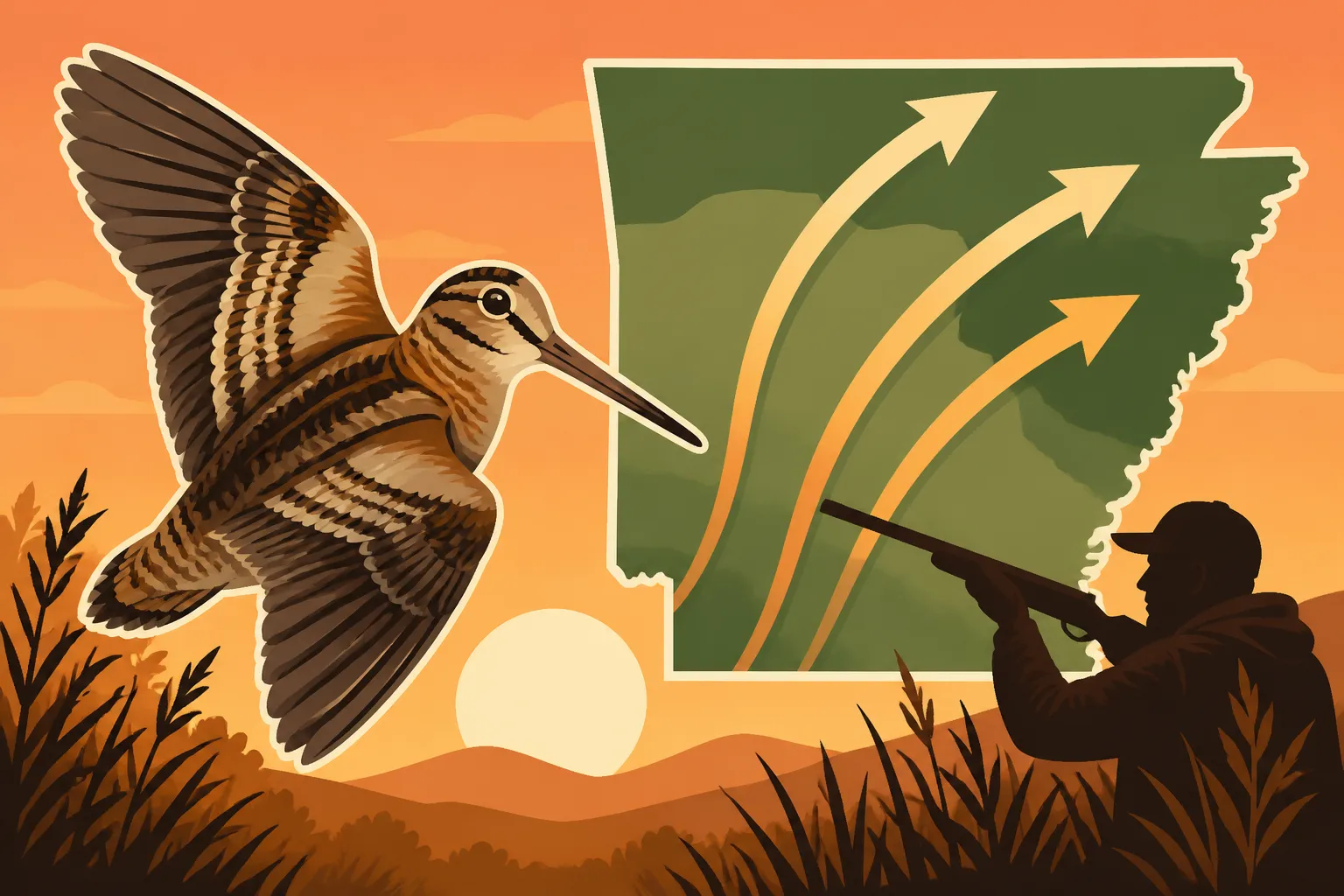
The primary migration corridor for woodcock passing through Arkansas is part of the Mississippi Flyway. These birds will breed primarily in the northern U.S. and Canada, then begin their southward trek as colder temperatures and freezing ground conditions make their preferred food – earthworms – inaccessible. Their migration isn't a single, mass movement but rather a series of waves, often triggered by specific weather events. Understanding these waves is key to timing your hunts effectively.
The Phases of Woodcock Migration Through Arkansas
Arkansas typically experiences three general phases of woodcock migration: early, peak, and late. Each phase brings different numbers of birds and offers unique hunting conditions. It's not a rigid calendar, but rather a flexible window that shifts with the year's climate patterns. Knowing what to expect in each phase can help you plan your outings and adjust your tactics accordingly. The beauty of chasing woodcock lies in this dynamic nature, constantly keeping you on your toes and reminding you that nature sets the schedule, not us.
| Migration Phase | Typical Timing (General) | Characteristics of Birds | Habitat Preferences | Hunting Considerations |
|---|---|---|---|---|
| Early Arrivals | Late October – Mid-November | Scattered singles, young birds | Wetter, dense cover | Fewer birds, more local |
| Peak Migration | Late November – Mid-December | Larger flights, mixed ages | Diverse, food-rich cover | Best numbers, more competition |
| Late Migration/Wintering | Late December – January | Concentrated birds, overwintering | Thick, protective cover near water | Cold weather, birds are savvy |
The "Woodcock Moon" Phenomenon
You might hear older hunters talk about the "Woodcock Moon." While not a scientific term, it refers to the period around the first full moon in November, which often coincides with the first significant push of migrating woodcock into and through our state. This isn't a hard-and-fast rule, but it’s an old piece of hunter's wisdom that holds some truth, as bright moonlit nights can sometimes spur migratory activity. It’s a good reminder that folklore often has roots in keen observation.
This period usually sees birds moving in larger groups, sometimes referred to as "flights." If you hit the cover just after one of these big pushes, you can have some truly memorable days. However, these birds are just passing through, so they can be here today and gone tomorrow, moving onward to Louisiana, Texas, or points further south. Scouting frequently and staying flexible is crucial during this window.
Key Factors Influencing Woodcock Arrival in Arkansas
Woodcock are incredibly sensitive to environmental cues, and their migration timing into Arkansas is influenced by a complex interplay of weather, food availability, and habitat conditions. It's rarely just one thing that sends them south; it's usually a combination of factors that collectively signal it's time to move. Understanding these can help you predict their arrival better than just looking at a calendar.
Northern Weather Systems and Cold Fronts
The most significant driver of woodcock migration is the weather further north. When cold fronts sweep down from Canada and the northern plains, bringing freezing temperatures and often snow, the ground up there freezes solid. Since woodcock primarily feed on earthworms, a frozen ground means no food. This immediately pushes birds southward. A series of strong cold fronts can trigger large waves of migration, packing birds into our bottomlands and brushy cover.
These large-scale weather events are your best indicators. Keep an eye on the long-range forecasts for states like Missouri, Iowa, and even Minnesota. When a sustained deep freeze is predicted for those regions, you can bet that woodcock are on the move. Sometimes, a "bluebird day" here in Arkansas, crisp and clear, might follow a brutal cold front up north, meaning woodcock could be dropping into our state even if our local temperatures aren't extreme.
Local Food Availability and Habitat Conditions
While northern cold drives them south, what keeps them in Arkansas, even temporarily, is the local habitat and food sources. Woodcock love moist, rich soil where earthworms thrive. This means bottomland hardwoods, alder thickets, young timber clearcuts, and brushy creek bottoms are prime real estate. If Arkansas has experienced a mild autumn with plenty of rain, keeping the ground soft, birds might linger longer. Conversely, a dry spell that hardens the ground could push them through faster.
Look for areas with dense, low-growing cover that provides protection, combined with proximity to moist soil. River and creek bottoms, particularly those with a lot of young growth and briars, are often magnets. I've had some fantastic hunts in spots that others overlook, simply because they lacked standing water for ducks but held abundant cover and soft ground for woodcock. Consider checking areas mentioned in Woodcock in Arkansas Bottoms to get a better idea of these specific habitats.
Rainfall and Soil Moisture
Rainfall is absolutely critical for woodcock. They literally probe the earth with their long bills to find worms. If the ground is too dry and hard, they simply can't feed efficiently. Therefore, areas that have received recent rain or are naturally damp will hold birds. This is why bottomlands and areas near water sources are so important. A good soaking rain can make an area "sticky" for woodcock, drawing them in and holding them for a few days before they continue their journey.
Think about the low-lying areas, the fringes of old fields that stay damp, or those messy, overgrown spots along drainages. Even a slight depression that collects moisture can be a hot spot. During a dry fall, these moist oases become even more crucial. Mapping tools like onX Layers for Arkansas Land Status or even the Using the AGFC Map Tool can help you identify these topographical features and potential holding cover. It's all about finding that soft dirt.
Hunting Strategies Based on Migration Timing
Successfully hunting woodcock in Arkansas means adapting your strategy to the migration phase you're in. What works during the early trickle might not be effective during a major flight, and vice versa. Flexibility and keen observation are your best friends when pursuing these acrobatic fliers. It's not about forcing the issue; it's about being where they want to be, when they want to be there.
Early Season Hunts: Scattered Birds and Scouting
When the first woodcock start filtering into Arkansas, typically in late October or early November, you'll generally find scattered birds. These are often young-of-the-year or early migrants pushed by the first hints of northern cold. During this phase, you might jump a single bird here, another one a quarter-mile away. It's less about finding a "flight" and more about finding those isolated pockets of ideal habitat that attract and hold individual birds.
This is a prime time for scouting. Walk potential cover thoroughly, looking for their distinctive "splat" droppings, which look like white paint splotches on leaves. A good pointing dog is invaluable during this time, helping you locate those solitary birds. Don't expect huge numbers, but these hunts can be incredibly rewarding for dog work and getting some early season action. Remember, even a few birds are a success when they're the vanguard of the migration. Consider this an extension of Small Game and Squirrel Hunting in Arkansas season, where you're just out enjoying the woods.
Peak Migration: High Probability, High Competition
The peak migration period, usually from late November through mid-December, is when you have the best chance of encountering significant numbers of woodcock. This is when the sustained cold fronts up north really push birds south in earnest. You might find several birds in a relatively small patch of cover, or even experience multiple flushes from a single thicket. This is the time to really hit your favorite spots hard, and explore new ones.
However, with higher bird numbers often comes higher hunter pressure. Popular public land spots might see more foot traffic. If you're on public ground, consider working deeper into cover or finding less obvious travel corridors. This is also when having mapping software or using a service like GoHunt can be incredibly helpful for identifying overlooked pockets of ideal habitat that others might bypass. Check Arkansas Small Game Seasons and Limits to make sure you're within the legal window and limits during this exciting period.
Late Season Hunts: Overwintering Birds and Deep Cover
As December gives way to January, many woodcock have either moved further south or settled into specific overwintering grounds in Arkansas. These birds tend to be more concentrated in areas that offer consistent food and thermal cover, often in the densest, most difficult-to-penetrate thickets. They're also typically older, savvier birds who have run the gauntlet of hunters further north.
Look for really thick stuff – dense briar patches, cane breaks, or tangled bottomland spots that offer refuge from the elements. These birds have weathered a lot, and they'll be masters of evasion. Your dog will be essential for locating them in this type of cover, and you'll need to be ready for fast, close-range shots. The cover can be brutal, but the rewards of finding a late-season woodcock can be deeply satisfying. Hunting Arkansas bottomland hardwoods will provide a lot of insight into the type of cover that holds these wintering birds.
Finding the Right Habitat for Migrating Woodcock
Locating productive woodcock cover is an art form, but one that can be learned with keen observation and a good understanding of their preferences. They aren't in every patch of woods, but once you learn to "read" the landscape for them, you'll start seeing patterns. The critical elements are moisture, dense low cover, and soft ground for feeding.
Identifying Prime Holding Cover
Woodcock crave dense, low-growing vegetation. Think young hardwood stands, alder or willow thickets along creeks, old field edges reverting to brush, and areas where logging has occurred recently, resulting in thick sapling growth. They love tangles of greenbrier, blackberry, and young saplings that are almost impenetrable to a person, but provide ideal camouflage and protection for a small bird. They won't typically be found in mature, open timber where the understory is sparse.
When scouting, look for those "messy" spots that other hunters might avoid. A good example might be an abandoned farm field that’s gone wild, with briars, sumac, and young cedars taking over. Another classic spot is the edge of a timber block near a wet ditch or seep, especially where there's been some recent disturbance that encourages thick new growth. These micro-habitats are gold mines.
Utilizing Mapping Tools for Scouting
In today's age, technology is a game-changer for finding woodcock cover. Mapping apps and platforms like GoHunt provide invaluable tools for scouting from your couch. You can use aerial and topographic layers to identify moist bottomland areas, drainages, creek beds, and changes in timber density. Look for lighter green areas on aerial maps, which often indicate younger, denser growth.
Layering different maps can highlight potential pinch points or travel corridors for migrating birds. For example, identify a creek bottom (which often holds moisture) and then look for areas adjacent to it with thick, brushy cover. Public land maps, available through Public Hunting Land in Arkansas resources or the AGFC map tool, can also guide you to accessible areas. Mark potential spots, then go put boots on the ground to confirm the habitat.
The Importance of Water and Edge Habitat
While woodcock don't need standing water like ducks, they absolutely thrive near consistent moisture sources. Creek bottoms, low-lying areas that collect runoff, and the edges of beaver ponds or sloughs are all prime areas. These spots tend to hold more earthworms, and the dense cover that grows near water provides excellent hiding spots. The key is "edge habitat" – where two different cover types meet.
Think about the transition zone between an open field and a dense wood line, or where a mature timber stand gives way to a young, brushy clearcut. Woodcock often utilize these edges for feeding and cover. The same principles you might use when scouting for deer, understanding how they use different cover types, can often apply to woodcock, albeit on a smaller, brushier scale. It's about finding that intersection of food, cover, and moisture.
Disclaimer
This article is for general informational purposes only and does not constitute professional advice. Laws, prices and regulations vary by location and change over time. Consult a qualified professional for guidance on your specific situation.