Arkansas Bobwhite Population Trend
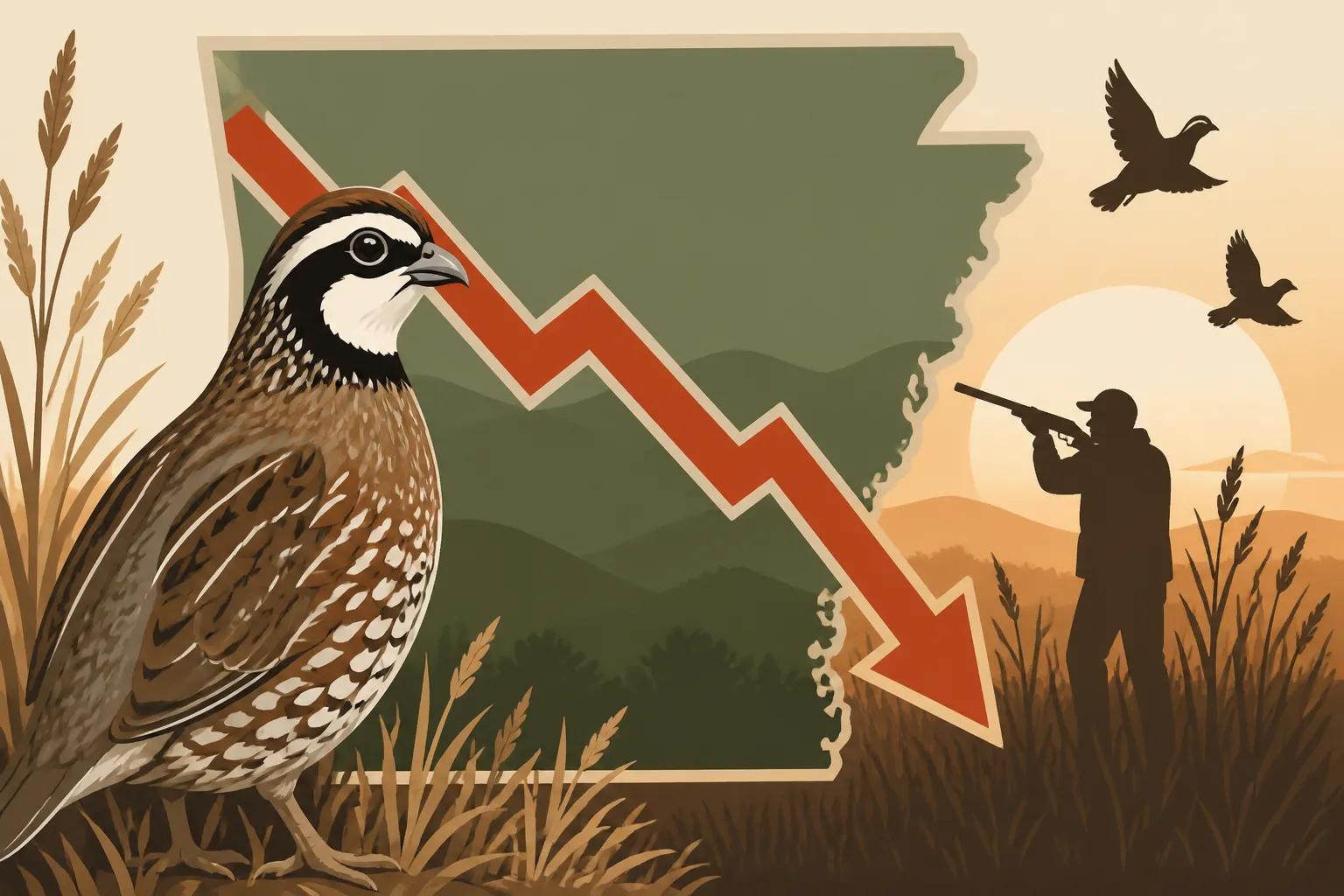
It’s a tough pill to swallow for many hunters and conservationists in Arkansas: the bobwhite quail, once a common sight and sound across our fields and woods, has seen its numbers dwindle dramatically. For those who grew up hearing their distinctive whistle, or chasing coveys across open ground, this decline isn't just a statistic; it's a loss of a treasured part of our natural heritage and hunting tradition. This guide aims to dig deep into the historical context, the primary reasons for this unfortunate trend, and what is being done to bring back this iconic game bird.
The Stark Reality of Arkansas Bobwhite Quail Decline
For generations of Arkansans, the bobwhite quail was more than just a bird; it was a symbol of crisp autumn mornings, the thrill of a dog on point, and the camaraderie of a walk-up hunt. Mention quail hunting to an older gentleman in the Delta or the Ozarks, and you’ll likely hear wistful tales of overflowing coveys and abundant birds. Sadly, those days feel like a distant memory for most of us, and the numbers bear out the anecdotal evidence: our bobwhite population is facing significant challenges, a reality that can be disheartening for anyone who cares about Arkansas wildlife.
Historical Abundance and the "Good Old Days"
Think back to the mid-20th century. Arkansas, much like many other Southern states, was a quail hunter's paradise. The landscape itself, shaped by smaller farms, less intensive agriculture, and frequent prescribed burning, provided an ideal mosaic of food, cover, and nesting sites. Fields were smaller, hedgerows and fencerows were thick with natural vegetation, and timber was managed differently, often creating a patchwork of open woods, young growth, and shrubby edges. These conditions allowed bobwhite quail populations to thrive, leading to the "good old days" that so many of us hear about from our grandfathers. It wasn't uncommon for a hunting party to flush multiple coveys in a single outing, making quail hunting a fundamental part of the hunting culture and a rite of passage for many young hunters.
Back then, the quail's iconic "bob-white!" call was a sound that truly defined the Arkansas countryside from spring through fall. Their habitat needs were met almost incidentally by common land management practices, before we truly understood the intricate details of quail ecology. This historical abundance created a foundation of expectation for quail hunting that, unfortunately, modern hunters seldom experience. The shift away from these diverse, smaller-scale land uses has fundamentally altered the playing field for bobwhites, leading to the stark contrast we see today compared to those bygone eras of plenty.
The Core Causes of the Downward Spiral
The decline of the bobwhite quail isn't due to a single culprit; it's a complex web of interconnected factors that have chipped away at their numbers over decades. One of the biggest, undeniably, is habitat loss and degradation. As farming practices modernized, fields grew larger, fencerows were cleared, and the diverse edges that quail rely on for nesting, brooding, and escape cover simply vanished. The "clean farming" mentality, while efficient for crop production, essentially sterilized vast tracts of land for quail.
Beyond agriculture, changes in forestry have also played a significant role. The shift from diverse, open pine and hardwood forests with frequent natural fires to dense, monoculture pine plantations or heavily shaded, unmanaged hardwoods eliminated crucial early successional habitat. Where natural disturbances once created brushy pockets and forb-rich openings, now you often find either dense timber that's too dark or open, grassy areas that lack overhead protection. These changes are profound and have created an environment that is increasingly inhospitable for quail, leaving pockets of suitable habitat isolated and difficult for birds to utilize effectively for population expansion. The cumulative effect of these widespread changes is what we're grappling with today, making it a monumental challenge to reverse the trend.
Understanding the Habitat Crisis for Arkansas Quail
At its heart, the bobwhite quail's struggle in Arkansas is a story of habitat. These birds are extremely particular about their living arrangements. They need a specific blend of grasses, forbs, and woody cover to survive and reproduce effectively. They're not like deer, which can adapt to a wider range of habitats, or ducks, which migrate to where the water is. Quail are creatures of specific landscapes, and when those landscapes change fundamentally, their populations suffer. It's a tough realization that much of the land we love for other forms of hunting or recreation simply doesn't support the quail like it once did.
Loss of Early Successional Cover
Early successional habitat is a fancy term for what many of us would just call "weedy fields," "brushy edges," or "young regrowth." It's the kind of environment that crops up naturally after a disturbance like a fire, logging, or an old field going fallow. This habitat is absolutely critical for quail. It provides the dense, waist-high cover for nesting, the insect-rich environment for chicks to feed, and the thorny thickets for escape from predators. Unfortunately, this type of habitat is increasingly rare in Arkansas. We've become too "clean" with our landscapes.
Think about it: old fields are either converted to row crops or allowed to mature into dense timber. Fencerows that once provided a brushy transition zone between field and forest are now often bulldozed to make way for larger equipment. These small, yet vital, patches of diverse vegetation are the lifeblood of a quail covey. Without this constant renewal of early successional habitat, quail simply don't have the places they need to raise their young and find refuge. This loss of diverse, messy habitat is perhaps the single biggest factor contributing to the bobwhite's decline, and it's a direct result of changing land use across both private and public lands.
The Impact of Modern Agriculture and Forestry
Modern agricultural practices, while incredibly efficient for feeding a growing population, have unfortunately created a biological desert for bobwhite quail across vast areas of Arkansas. The trend towards larger, monoculture fields means mile after mile of a single crop, offering no diversity. The use of broad-spectrum herbicides eliminates the valuable forbs and weeds that provide food and cover for quail and their insect food sources. Furthermore, fall tillage often leaves fields bare through the winter, exposing quail to predators and harsh weather, rather than the stubble and diverse vegetation that historically offered protection.
In forestry, the shift towards dense, even-aged pine plantations has similarly impacted quail. While pine plantations can offer some cover, when they grow too dense, they shade out the understory, eliminating the grasses and forbs that quail need. Similarly, in hardwood forests, the suppression of natural fire has led to an increasingly dense mid-story layer, making it difficult for quail to move around and find food. These modern approaches, driven by economic efficiency, have inadvertently stripped the landscape of the complex, varied cover that bobwhites require for every stage of their life cycle. If you're using tools like GoHunt to scout potential hunting areas, understanding these land use patterns is crucial to identifying even marginal quail habitat, as areas with diverse edges or recent timber work might offer a glimmer of hope.
Invasive Species and Predator Dynamics
Beyond habitat loss, other ecological factors are making life harder for Arkansas quail. Invasive plant species, like sericea lespedeza or privet, can quickly dominate an area, creating dense, impenetrable thickets that are useless to quail because they lack the open understory for movement and foraging. These plants outcompete native grasses and forbs, further reducing the food and cover diversity quail need. It's a subtle but insidious form of habitat degradation that often goes unnoticed until it's too late.
Moreover, predator dynamics have changed. While predators are a natural part of any ecosystem, the loss of good escape cover due to habitat degradation leaves quail more vulnerable. Coyotes, bobcats, raccoons, and even raptors have an easier time hunting quail when the birds can't quickly dive into a dense, thorny thicket or melt away into a brushy fencerow. When quail habitat is patchy and sparse, it essentially funnels quail into predictable areas, making them easier targets. It's not necessarily an increase in predator numbers that's the sole issue, but rather the increased effectiveness of predators in a diminished habitat. This double-whammy of poorer cover and more exposed birds creates a significant hurdle for quail populations trying to rebound.
The Silver Linings: Conservation Efforts and Restoration
While the picture painted by the bobwhite quail's decline can feel pretty bleak, there's a vital counter-narrative of hope and hard work. Across Arkansas, dedicated conservationists, landowners, and state agencies are stepping up to fight for this iconic bird. It's not an easy battle, and it requires long-term commitment and a shift in how we view and manage our land, but the efforts are real and offer a genuine chance for the bobwhite to regain a foothold. The good news is that quail respond remarkably well to targeted habitat improvements, making these efforts potentially very fruitful.
Dedicated Land Management Initiatives
The Arkansas Game and Fish Commission (AGFC) has been at the forefront of dedicated land management initiatives aimed at restoring quail habitat. They've identified Arkansas Quail Focus Areas and are implementing strategies like prescribed burning, timber thinning, and the planting of native warm-season grasses and forbs on public lands, particularly on various Wildlife Management Areas (WMAs). These efforts are designed to mimic the historical disturbances that created ideal quail habitat, breaking up dense canopy, promoting new growth, and enhancing plant diversity.
For instance, on some WMAs, you'll see areas where timber has been thinned significantly, allowing sunlight to reach the forest floor, which then encourages the growth of beneficial quail plants. Prescribed fire is another powerful tool, clearing out leaf litter and woody debris, stimulating new growth, and controlling invasive species. These are science-backed approaches, and while it takes time and sustained effort, they are proving that where good habitat is restored, quail can and will return. It's a testament to the fact that active, thoughtful management can make a tangible difference in the face of widespread habitat loss.
Hunter and Landowner Roles in Recovery
While large-scale initiatives are crucial, the bulk of Arkansas's potential quail habitat lies on private land. This means that hunters and private landowners are absolutely essential partners in any successful quail recovery. Many landowners, through programs offered by the AGFC or other conservation groups, are learning how to implement quail-friendly practices on their own property. This could involve creating field borders, managing fencerows for cover, planting native grasses, or engaging in small-scale timber stand improvement. Even small changes on individual properties can add up to significant benefits when done across a landscape.
Hunters, beyond just purchasing licenses that fund conservation, can also become advocates and educators. By joining organizations like Quail Forever or actively participating in local conservation projects, they can contribute directly to habitat work. Furthermore, hunters who lease land or have relationships with landowners can encourage quail-friendly management practices, emphasizing that healthy quail habitat often benefits other wildlife like deer and rabbits too. Tools like the AGFC Map Tool or even commercial platforms like GoHunt can help private landowners visualize their property and identify areas ripe for habitat improvement, such as creating new edges or establishing native grass strips.
Partnering for a Brighter Future
The future of the bobwhite quail in Arkansas hinges on continued collaboration and a shared vision. It’s not just the AGFC doing the heavy lifting; it’s a mosaic of partners, from private landowners and hunting clubs to non-profits and federal agencies, all working towards a common goal. Groups like Quail Forever are incredibly active in Arkansas, providing expertise, funding, and manpower for habitat projects. They work directly with landowners, offering technical advice and even cost-share programs to implement habitat improvements.
These partnerships are vital because quail conservation is a landscape-level challenge. It requires connecting pockets of good habitat, creating corridors for movement, and influencing land use across broad areas. The ability to work together, share resources, and educate more people about the specific needs of the bobwhite is what will ultimately turn the tide. It's about building a community of conservationists who understand that restoring the "bob-white" call to our fields is a long game, but one that's absolutely worth playing. Many are now focusing on specific areas Where Arkansas Quail Remain to concentrate efforts and expand populations from those strongholds.
The fight for the bobwhite quail is far from over in Arkansas. While the population trends have been challenging to witness, there is a dedicated movement gaining momentum to bring this iconic bird back. Through scientific land management, committed landowners, and enthusiastic hunters, we are working towards a future where the sound of the bobwhite's whistle once again fills the Arkansas air. It's a journey that requires patience, persistence, and a deep love for our wild places, but it's a journey we're determined to see through.
Key Factors in Arkansas Bobwhite Quail Decline & Recovery
| Factor | Impact on Quail Population | Potential Solutions / Recovery Efforts |
|---|---|---|
| Habitat Loss | Reduction of nesting, brooding, and escape cover | Prescribed burning, native grass plantings, field borders |
| Modern Agriculture | Monoculture fields, herbicide use, fall tillage | Diverse crop rotations, no-till, fencerow management |
| Modern Forestry | Dense canopy, lack of understory diversity | Timber thinning, selective logging, open pine management |
| Invasive Species | Outcompete native plants, create unusable cover | Herbicide application, mechanical removal, prescribed fire |
| Predator Dynamics | Increased vulnerability due to poor escape cover | Create dense, thorny escape cover, predator management |
| Weather Extremes | Nest destruction, chick mortality | Provide resilient habitat that offers better protection |
| Disease/Parasites | Stress on populations, reduce reproductive success | Healthy, diverse habitat promotes healthier birds |
Disclaimer
This article is for general informational purposes only and does not constitute professional advice. Laws, prices and regulations vary by location and change over time. Consult a qualified professional for guidance on your specific situation.