Arkansas Mountain Lion Confirmations
It's a question that sparks lively debate around campfires and in sporting goods stores across Arkansas: "Are there mountain lions here, really?" For many hunters, seeing a mountain lion, also known as a cougar or puma, is like spotting a ghost – a fleeting glimpse, a vague track, and then the doubt creeps in. It's frustrating to hear conflicting stories or dismissive remarks when you're convinced you saw something truly wild. This guide aims to cut through the folklore and shed light on the official stance and documented evidence concerning mountain lion confirmations in Arkansas, helping you understand what's genuinely out there.
The Enduring Mystery of Arkansas's Mountain Lions
Arkansas has long held a mystique when it comes to big cats. The whispers of a large, tawny predator stalking the shadows of the Ozarks and Ouachitas are as old as the hills themselves. For generations, tales have been passed down, some genuine, some perhaps born of an overactive imagination in the dim light of dawn or dusk. It’s understandable why this topic generates so much conversation; the presence of an apex predator like a mountain lion speaks to the wildness of our state and the allure of encountering such an elusive creature.
A Brief History of Cougars in Arkansas
Historically, mountain lions certainly roamed what is now Arkansas. They were an integral part of the ecosystem, preying on deer and other wildlife across the vast wilderness that once covered the state. However, as human settlement expanded, habitats were fragmented, and predator control efforts became widespread, mountain lions were eventually extirpated from Arkansas, meaning they were completely wiped out within state lines. This wasn't unique to Arkansas; many eastern states saw their large predator populations disappear. The last officially recognized native mountain lion in Arkansas was taken many, many decades ago. The memory of them, however, persisted, embedded in the very fabric of our outdoor heritage. It’s not a question of if they were here, but when they left and if they’ve returned.
Why the Rumors Never Die
Despite the official stance of extirpation, reports of mountain lion sightings have continued, unbroken, for decades. Why do these rumors persist with such tenacity? Part of it is undoubtedly the immense, wild expanses we still have in Arkansas. Think of the deep hollows of the Ouachita National Forest or the rugged, remote reaches of the Ozarks. These areas are perfect for a reclusive predator. Then there’s the allure of the unknown, the thrill of believing such a magnificent creature still roams. Most importantly, many sightings, though unconfirmed, are genuinely believed by the individuals who experience them. People often see something large, tan, and cat-like, and given the deep-seated belief that "they're out there," it's easy to jump to the conclusion of a mountain lion. Understanding the persistent nature of these sightings is key to approaching the topic with an open mind, even as we seek hard evidence.
Understanding "Confirmed" Versus "Unconfirmed" Reports
This is where the rubber meets the road. In the world of wildlife management, there's a significant difference between a "report" or "sighting" and a "confirmation." Many hunters feel frustrated when their credible-sounding sighting is dismissed, but wildlife agencies operate on a strict set of scientific criteria to verify the presence of a species, especially one presumed to be extirpated. It's not about disbelieving people; it's about objective, verifiable proof.
The Criteria for Official Confirmation
For a mountain lion presence to be officially confirmed in Arkansas, the evidence must be undeniable. A brief, distant glimpse, no matter how convincing to the observer, usually doesn't meet the standard. The most common forms of official confirmation typically involve:
- DNA Evidence: This is the gold standard. A hair sample, scat (feces), or blood found at a kill site that can be genetically analyzed to confirm it came from a mountain lion.
- Verified Tracks: Not just any tracks, but clear, measurable prints that an experienced wildlife biologist can positively identify as a mountain lion’s and rule out other animals like dogs or bobcats. These tracks often need to be photographed with a scale for accurate assessment.
- Physical Specimen: The ultimate confirmation is a dead animal – whether found deceased or legally harvested in a state where they are hunted. While hunting mountain lions isn't legal in Arkansas, finding a carcass would be irrefutable proof.
- Irrefutable Photo or Video: A clear, high-quality photograph or video that leaves no doubt about the animal's identity. This means good lighting, a clear view of key features, and often multiple frames or a longer video clip. Fuzzy, distant, or partially obscured images are almost always deemed inconclusive.
Without one of these definitive pieces of evidence, even the most compelling personal accounts remain in the "unconfirmed" category. It's a high bar, but it's necessary for scientific accuracy.
Differentiating from Common Misidentifications
A huge number of "mountain lion" sightings turn out to be something else entirely upon closer inspection. It's easy to misidentify animals, especially when they're glimpsed quickly, at a distance, or in poor light. Here are some of the most common culprits:
- Bobcats: Though much smaller, a bobcat can appear surprisingly large, especially a male with a full winter coat or if seen at an unusual angle. Their tawny color and cat-like movements can easily lead to misidentification.
- Large Feral Cats: Believe it or not, some domestic cats that have gone wild can grow to a considerable size, and their coloration can sometimes mimic a cougar.
- Coyotes and Dogs: A large coyote or even a domestic dog can sometimes be mistaken, especially if the lighting is poor or only a partial view is available. Features like tail length and head shape are crucial differentiators.
- Deer: Incredibly, a deer can sometimes be mistaken for a mountain lion, particularly if only the body is seen through dense brush, and the observer's mind is already predisposed to seeing a big cat.
- Lighting and Perception: The way light hits an animal, especially at dawn or dusk, can play tricks on the eyes, distorting size and shape.
To help illustrate the differences, here's a quick comparison of common characteristics:
| Characteristic | Mountain Lion (Cougar) | Bobcat | Coyote | Domestic Dog (large) |
|---|---|---|---|---|
| Size (approx.) | Large (male up to 180 lbs, 8 ft long inc. tail) | Medium (up to 35 lbs, 3 ft long) | Medium (up to 50 lbs, 4.5 ft long inc. tail) | Varies, can be large (e.g., German Shepherd) |
| Tail | Long, thick, muscular, often with a black tip | Very short, "bobbed" (4-7 inches) | Bushy, medium length, often pointed down | Varies, usually curls or hangs |
| Color | Tan, tawny, grayish-brown | Tan, reddish-brown with spots/streaks | Gray, reddish-brown, often grizzled | Varies widely |
| Head Shape | Relatively small, rounded, powerful jaw | Rounded, prominent cheek ruffs | Pointed muzzle, erect ears | Varies, usually longer muzzle |
| Tracks | No claw marks (retractable), round, distinct | No claw marks, small, round | Claw marks usually visible, oval | Claw marks usually visible, rounder/oval |
| Scat | Segmented, often contains hair/bone, buried | Segmented, often contains hair/bone | Twisted, often contains hair/bone/berries | Varies widely, often undigested food |
Using detailed mapping tools, such as those offered by GoHunt, can also help you understand the typical ranges and habitats of known predators, making it easier to evaluate what you might be seeing on your trail cameras or during scouting trips. Being able to compare your observations against reliable information helps immensely.
Where and How Arkansas Mountain Lion Confirmations Have Occurred
Despite the widespread belief and countless unconfirmed sightings, official, verifiable confirmations of mountain lions in Arkansas are extremely rare. The Arkansas Game and Fish Commission (AGFC) maintains a diligent approach, investigating reports and seeking concrete evidence. When a confirmation does occur, it's typically a significant event, often indicating a transient animal rather than a breeding population.
Documented Instances and Their Locations
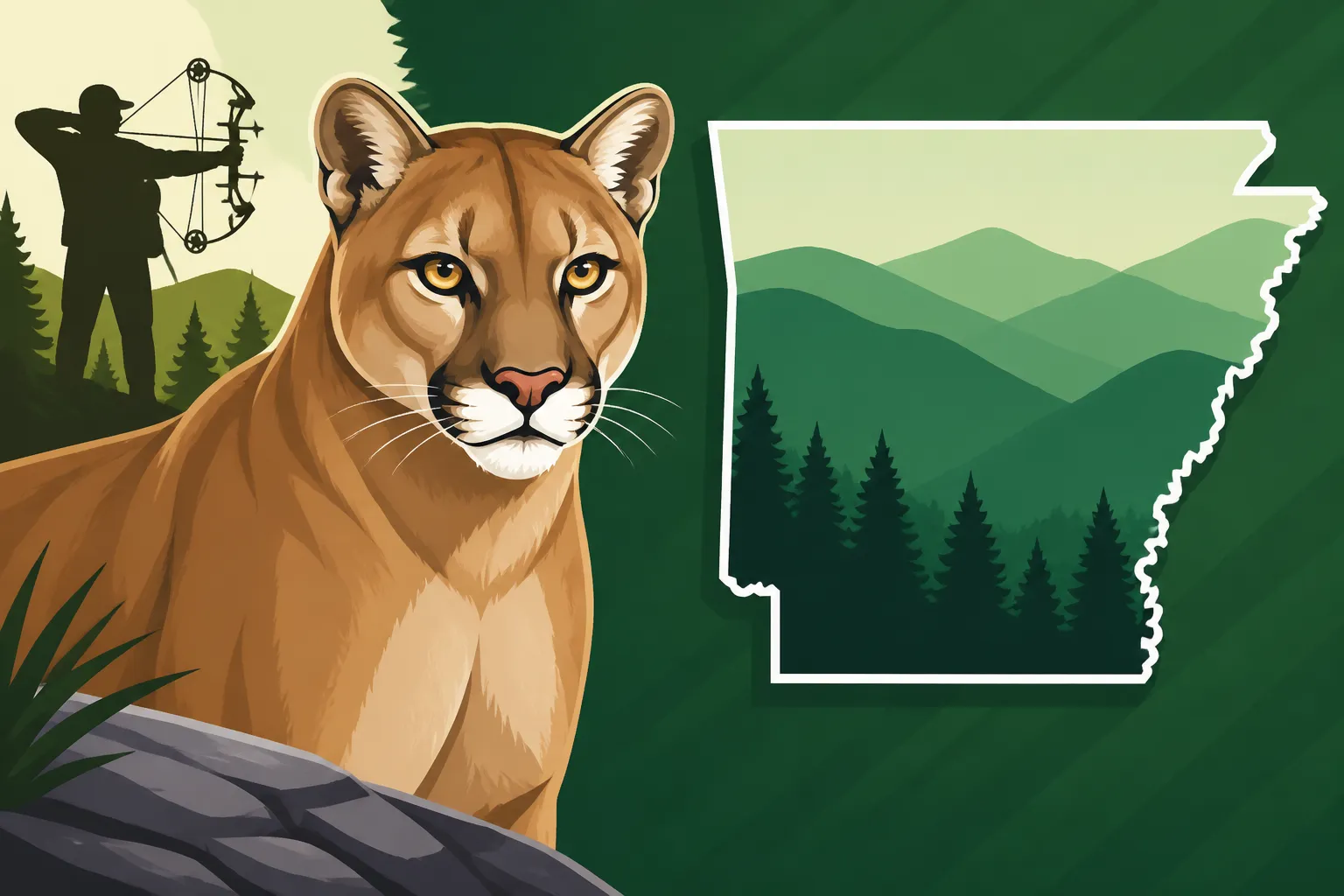
Over the past few decades, there have been a handful of documented instances where mountain lions have been confirmed in Arkansas. These have almost exclusively involved individual, transient male cats, not evidence of an established breeding population. These confirmations have generally occurred in the western and northern portions of the state, particularly in counties bordering Oklahoma, which does have an established mountain lion population.
For example, there have been confirmations in counties like Scott, Franklin, and Washington. These instances were usually based on solid evidence, such as DNA from hair or scat, or irrefutable trail camera footage reviewed by multiple experts. It's not uncommon for young male cougars to disperse hundreds of miles from their birth territory in search of new hunting grounds and potential mates. These individuals often travel through multiple states before either settling, being killed, or simply disappearing. The confirmations in Arkansas typically align with this "dispersal event" pattern, rather than indicating resident big cats.
It’s a powerful reminder that while they aren't living here in large numbers, the occasional individual will absolutely wander through our state. It speaks to the wild connectivity of our region. Arkansas Black Bear Numbers Today gives a good example of how a large predator population can be tracked and confirmed.
The Role of Technology in Modern Confirmations
In our modern age, technology plays a critical role in documenting wildlife, especially elusive species. Trail cameras, in particular, have revolutionized the way we observe and confirm animal presence. Many of the credible (though still unconfirmed) sightings nowadays come from hunters’ trail cameras, and the few true confirmations have often involved this technology.
When setting up your cameras for deer or turkey, keep in mind the potential for other visitors. Cameras placed on game trails, near water sources, or along logging roads in remote areas are most likely to capture images of whatever truly walks through. It takes a clear, well-lit image of the entire animal, or at least distinctive features, to move a photo from "interesting" to "confirmed."
Beyond cameras, advances in genetic testing have made DNA analysis a crucial tool. If a potential mountain lion kill site is found, or an unusual scat sample, wildlife biologists can collect samples and send them off for testing. This scientific rigor ensures that confirmations are based on facts, not just speculation. When scouting your hunting areas, whether you're using a detailed map from GoHunt to identify potential travel corridors or just walking the ground, pay attention to any unusual signs that might warrant further investigation or a well-placed trail camera. Understanding Scouting Arkansas Public Land Before Season becomes even more critical when looking for signs of all types of game, including rare predators.
What Mountain Lions Mean for Arkansas Hunters and Wildlife
While confirmed mountain lion sightings are rare, their occasional presence, even if transient, can understandably stir concern and wonder among hunters and wildlife enthusiasts. It's a natural reaction to want to understand what a new or returning apex predator might mean for the broader ecosystem and for your hunting experience.
Potential Impact on Game Populations
The good news, from a game management perspective, is that the occasional transient mountain lion is highly unlikely to have any significant impact on Arkansas's healthy deer or turkey populations. A single animal, or even a few scattered individuals passing through, simply isn't enough to exert noticeable predation pressure on our robust game herds. The primary limiting factors for game populations in Arkansas are habitat quality, disease (like CWD, which is a major concern), and human harvest pressure, not a handful of wandering cougars.
However, if, at some point in the distant future, a breeding population of mountain lions were to establish itself, then their impact would become a consideration. But even then, healthy ecosystems with diverse prey bases can generally support predator populations without catastrophic declines in game numbers. Think about how Black Bear Hunting in Arkansas exists alongside healthy deer populations in the Ozarks and Ouachitas; the system is designed to handle it. For now, Arkansas's game species are far more influenced by factors like Arkansas Deer Population Estimate and habitat management.
Coexisting with Large Predators
Even with rare confirmations, being aware of the potential for a large predator encounter is always wise in the wilderness. If you are hunting in the Ozark National Forest Hunting or the Ouachita National Forest Hunting, you are in areas wild enough to support large animals. Here are some general tips for living and recreating in areas where large predators might be present, whether it's a transient cougar or a resident black bear:
- Be Aware: Stay alert, especially at dawn and dusk, when many predators are most active. Pay attention to your surroundings.
- Don't Hike Alone: If possible, hike with a partner or in a group.
- Make Noise: Talk, sing, or carry a bell to avoid surprising an animal.
- Keep Dogs Leashed: A leashed dog is safer for both the dog and potential wildlife encounters. Don't let your dog harass wildlife.
- Secure Food and Trash: If camping, always store food and trash in bear-resistant containers or hung from a tree. This isn't just for bears; it discourages all wildlife from associating humans with food.
- If You Encounter a Predator:
- Do not run. Running can trigger a chase response.
- Make yourself look large. Raise your arms, open your jacket.
- Make noise. Shout, clap, throw rocks if necessary.
- Maintain eye contact (with cougars; with bears, avoid direct eye contact).
- Slowly back away. Give the animal an escape route.
- Fight back if attacked. Aim for the face and eyes.
While the chances of encountering an aggressive mountain lion in Arkansas are infinitesimally small, being prepared provides peace of mind. We have other predators like coyotes and bobcats that are far more common, and understanding Predator and Furbearer Hunting in Arkansas and how to handle them is a more immediate concern for most hunters.
The reality of mountain lion confirmations in Arkansas is complex: rare, often transient, but scientifically documented. It’s not a tale spun entirely from thin air, but it's also not indicative of a widespread, breeding population at this time. As hunters and outdoor enthusiasts, our best approach is to be informed, to respect the wildness of our state, and to continue to support the science-based wildlife management that keeps Arkansas's ecosystems thriving.
Disclaimer
This article is for general informational purposes only and does not constitute professional advice. Laws, prices and regulations vary by location and change over time. Consult a qualified professional for guidance on your specific situation.