How Many Arkansas Counties Have CWD
It's incredibly frustrating to try and keep up with all the regulations, especially when it comes to something as serious as Chronic Wasting Disease (CWD). One minute you're planning a deer hunt in your favorite spot, the next you're wondering if that county has new restrictions because of CWD. This guide aims to clear up some of that confusion by detailing which Arkansas counties are currently designated as CWD Management Zones and what that means for hunters like you.
Understanding the Landscape of CWD in Arkansas
Chronic Wasting Disease (CWD) is a neurological disease that affects cervids, including white-tailed deer, elk, and moose. It's caused by abnormal proteins called prions and is always fatal. What makes CWD particularly concerning for hunters and wildlife managers in Arkansas is its ability to spread through direct animal-to-animal contact and indirectly through environmental contamination, as prions can persist in the soil for years. When CWD was first detected in Arkansas back in 2016, specifically in a free-ranging deer in Newton County, it sent ripples through the hunting community. It was a wake-up call, signaling a significant shift in how we approach deer management and hunting practices in many parts of the state.
The Arkansas Game and Fish Commission (AGFC) quickly established CWD Management Zones to contain the spread and manage the disease. These zones are not just arbitrary lines on a map; they are strategic areas where specific regulations are put into place to minimize the risk of CWD transmission. The goal is to monitor disease prevalence, educate hunters, and implement measures that protect both the deer herd and the integrity of hunting in Arkansas. Without these zones, the disease could spread unchecked, potentially devastating local deer populations and altering hunting traditions for generations.
How CWD Initially Took Hold in Arkansas
The discovery of CWD in Arkansas was a pivotal moment. Before 2016, many hunters hoped the state would remain free of the disease, given its geographic location relative to other affected states. However, the initial detection in Newton County, followed by subsequent cases in surrounding areas, confirmed that CWD had indeed established a foothold. The disease is believed to have been present for some time before its detection, silently spreading within the deer population. This initial outbreak primarily centered in the Ozark Mountains, a region known for its rugged terrain and abundant wildlife.
The spread within these initial counties has been a focus of intensive monitoring efforts by the AGFC. Researchers and biologists have been working tirelessly to understand the prevalence rates and identify hotspots. This ongoing research helps inform the boundaries of the CWD Management Zones and the specific regulations applied to them. Understanding How CWD Reached the Arkansas Ozarks is crucial for appreciating the preventative measures now in place across the state. It's a sobering reminder that vigilance is key in managing wildlife diseases.
The Purpose of CWD Management Zones
The establishment of CWD Management Zones is the AGFC's primary tool for combating the disease. These zones are defined areas where special regulations apply to hunting, carcass transport, and even baiting practices. The rationale behind these zones is multifaceted. Firstly, by restricting the movement of deer carcasses or certain parts of them from affected areas, the AGFC aims to prevent the physical transport of prions to unaffected areas. Imagine a hunter taking a deer harvested in a CWD zone all the way across the state without proper precautions; that's a potential vector for spread.
Secondly, these zones allow for more focused monitoring and testing. The AGFC can concentrate its resources, like hunter-submitted samples and targeted surveillance, in areas where CWD is known or suspected to exist. This helps them gauge the disease's prevalence and track its potential expansion. Lastly, certain hunting regulations, such as restrictions on baiting or feeding deer, are often implemented within these zones. These measures aim to reduce deer congregation, which can increase the likelihood of direct deer-to-deer transmission of prions. It's about protecting the long-term health of our deer herd and ensuring sustainable hunting opportunities for years to come.
Pinpointing Arkansas's CWD Management Zone Counties
Knowing which counties are included in the CWD Management Zone is absolutely essential for any hunter heading into the field. These zones aren't static; they can expand or contract based on new detections and ongoing surveillance efforts. What was a clear county line last year might now have different implications for your hunting plans. Staying informed about these boundaries is not just good practice; it's a legal requirement.
The AGFC regularly updates its official maps and regulations, and it's your responsibility as a hunter to check these before each season. You can often find this information on the AGFC website, through their mobile apps, or by consulting mapping platforms that integrate this data. Many savvy hunters even use digital mapping tools like GoHunt to overlay CWD zones onto their potential hunting areas, ensuring they are always in compliance.
Current List of CWD Management Zone Counties
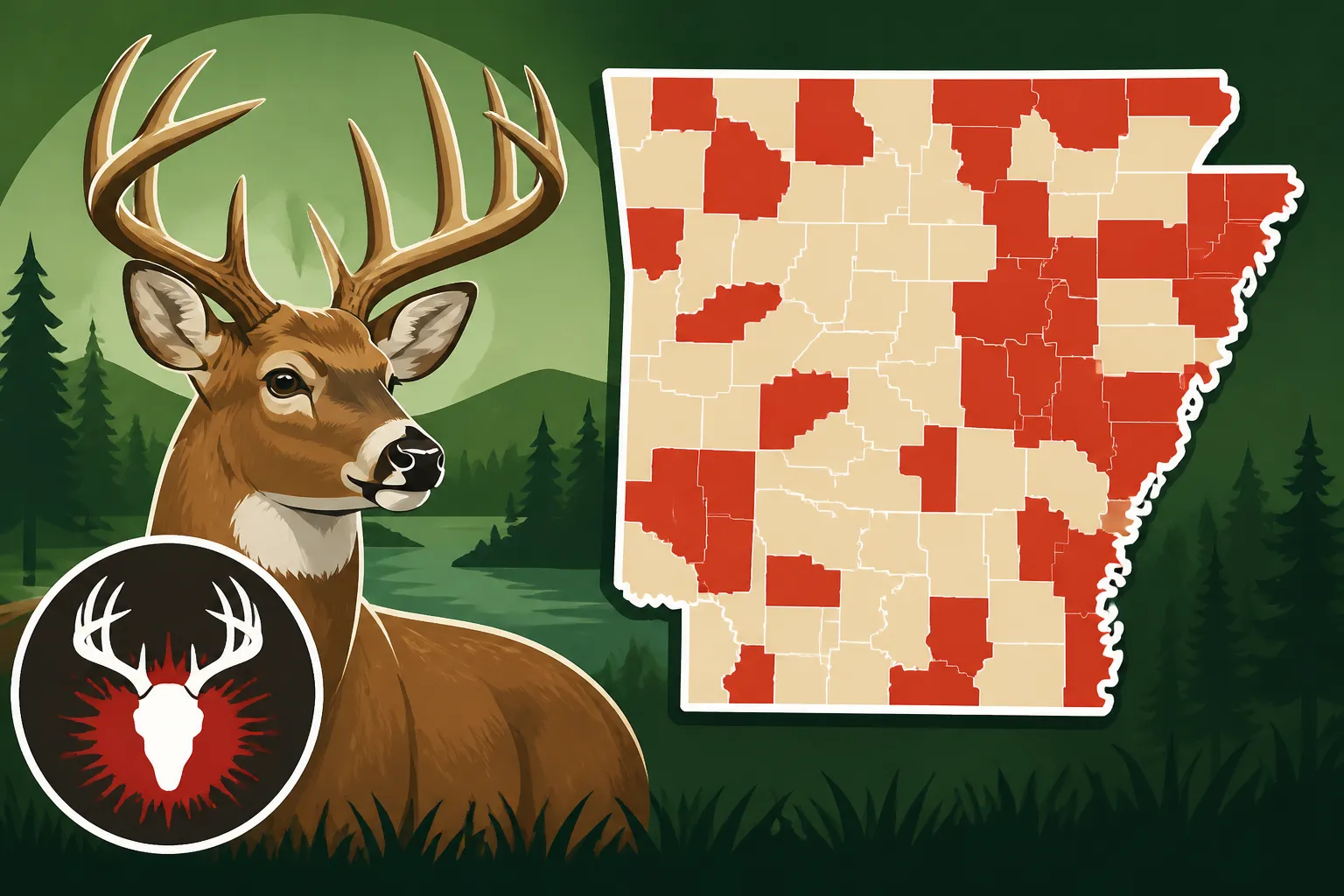
As of the last comprehensive updates, the CWD Management Zone in Arkansas includes a significant number of counties, primarily radiating out from the initial detection point in Newton County. It's a good idea to visualize this as a growing area rather than isolated pockets, although prevalence can vary widely within the zone.
Here's a table outlining the counties generally recognized as part of the CWD Management Zone. Keep in mind that this information is subject to change, so always verify with the most current AGFC regulations before your hunt.
| Region | Counties in CWD Management Zone |
|---|---|
| Northwest Ozarks | Baxter, Benton, Boone, Carroll, Cleburne, Conway, Crawford, Franklin, Fulton, Independence, Izard, Jackson, Johnson, Logan, Madison, Marion, Montgomery, Newton, Pope, Searcy, Stone, Van Buren, Washington, White, Yell |
| Central/East | Poinsett, Woodruff, Cross, St. Francis, Lee, Phillips |
| Southwest | Polk, Scott, Sebastian |
This table provides a general overview, but it's important to remember that sometimes only portions of a county might be included, or entire counties might be added or removed based on new surveillance data. For instance, while many of these counties are fully within the CWD zone, others might have specific boundary lines that hunters need to be aware of. The best way to get hyper-local information is through the AGFC's interactive maps or by calling their regional offices.
What Being in a CWD Zone Means for Hunters
Hunting within a CWD Management Zone comes with specific responsibilities and restrictions that differ from hunting in unaffected areas. These rules are designed to prevent further spread of the disease, and adherence is critical for all hunters. The most significant regulations typically revolve around carcass transport and processing. For example, if you harvest a deer in a CWD zone, you are often restricted from transporting certain parts of that animal out of the zone. This means you might need to process your deer down to deboned meat, quarters, or taxidermy-ready capes and skulls (with brain matter removed) before leaving the designated area. This is a big change for many hunters who are used to taking a whole deer home for processing.
Another key aspect is the potential for mandatory or voluntary CWD testing. In some CWD counties, especially early in the season or during specific periods, the AGFC might request or require hunters to submit samples from harvested deer. This is how they gather crucial data on disease prevalence. Look for designated CWD sample collection sites or drop-off locations, which are usually well-marked during hunting season. Understanding these rules is critical, and it directly impacts your field dressing and transport plans after a successful harvest. For more details on what's expected, you'll want to review Arkansas CWD Management Zone Rules.
Navigating Hunting Regulations in CWD Counties
Hunting in a CWD Management Zone requires a heightened level of awareness and preparation. It's not just about knowing the boundaries; it's about understanding the practical implications for your hunt from the moment you hit the woods until your venison is in the freezer. Ignoring these regulations isn't just a risk to the deer herd; it can also lead to hefty fines and legal trouble for hunters who fail to comply.
Many hunters find that planning their hunt in a CWD zone means a bit more logistical thinking than usual. You might need to identify a local processor within the zone, or be prepared to debone your deer in the field before heading home. This planning becomes even more critical when considering specific regulations around baiting, which is a common practice in some areas but often restricted or outright prohibited within CWD Management Zones to prevent deer from congregating and exchanging fluids.
Carcass Movement Restrictions
One of the most impactful rules for hunters in CWD Management Zones pertains to carcass movement. The core principle is simple: you cannot transport whole carcasses, or certain high-risk parts, out of the CWD Management Zone. This is because the prions that cause CWD are most concentrated in the brain, spinal cord, lymph nodes, and spleen. Moving these parts risks introducing the disease to new areas.
What this usually means for hunters is that if you harvest a deer in a CWD county and intend to leave that zone, you must process the animal down to specific acceptable parts. This typically includes:
- Deboned meat
- Quarters or other large pieces of meat with no part of the spinal column or head attached
- Skulls and skull plates (with all brain and nervous tissue removed)
- Antlers attached to a skull plate (again, all brain and nervous tissue removed)
- Clean hides (without the head attached)
- Teeth
- Finished taxidermy products
This might mean investing in a good game processing kit for the field, or researching local meat processors in the CWD zone before you even leave home. It's a good idea to carry a copy of the current regulations with you, perhaps on your phone or printed, to avoid any confusion if you're stopped by a wildlife officer. Getting the full scoop on Carcass Transport Rules Out of Arkansas will also be helpful if you're traveling across state lines.
CWD Testing and Sampling Requirements
CWD testing is a cornerstone of the AGFC's management strategy within affected counties. While not always mandatory for every deer harvested, there are often periods, locations, or specific hunts where testing is required or highly encouraged. For example, during the first few days of modern gun season, the AGFC might set up check stations in CWD zones, requesting samples from all harvested deer.
Even when not mandatory, voluntary submission of samples is incredibly valuable. Hunters can usually find designated drop-off locations for deer heads at various points within CWD Management Zones. These locations are typically well-publicized by the AGFC before and during the hunting season. When you submit a sample, you're directly contributing to the state's understanding of CWD prevalence and helping to protect the deer herd. The process for Arkansas CWD Testing for Hunters is usually straightforward, involving a quick sample collection from the deer's lymph nodes or brainstem, and you'll typically be notified of the results if you provide contact information. Always look for signage and updated information from the AGFC regarding testing requirements in your specific hunting area.
Baiting and Feeding Restrictions
Another critical regulation often associated with CWD Management Zones is the prohibition or restriction of baiting and feeding deer. While seemingly unrelated to disease transmission at first glance, the reasoning is sound: baiting and feeding can cause deer to congregate in unnaturally high densities. When deer gather closely around a feeder or a pile of corn, they increase direct nose-to-nose contact and leave behind saliva, urine, and feces. These bodily fluids can contain CWD prions, leading to indirect transmission if another deer comes into contact with contaminated feed or soil.
Therefore, many CWD Management Zones implement bans on placing bait or feed for deer. This means no corn piles, protein pellets, or mineral blocks if you're hunting in a restricted area. It's vital to check the current Baiting Rules in Arkansas CWD Zones before placing any attractants on your property or hunting lease. These rules might seem inconvenient, but they are a proactive measure aimed at slowing the spread of CWD by reducing the opportunities for prions to jump from one animal to another, or from the environment to an animal.
Staying Current and Informed
Given that CWD is an evolving situation, the most challenging part for hunters is often staying current with the latest information. Regulations can change, zone boundaries can be adjusted, and new testing requirements might be implemented. Relying on old information or hearsay is a sure way to find yourself out of compliance. Thankfully, the AGFC provides several excellent resources to help hunters stay informed, and there are also third-party tools that can be incredibly helpful.
Imagine planning a hunt for months, only to realize on opening day that the rules for that specific county have changed. It's a scenario no one wants to face. That's why making it a routine to check official sources before every hunting trip, especially if you're heading into a CWD Management Zone, is so important.
Official AGFC Resources for CWD Updates
The Arkansas Game and Fish Commission website is your absolute go-to for the most accurate and up-to-date information regarding CWD. They typically have dedicated sections that detail the disease, current CWD Management Zone maps, and specific regulations for those zones. You'll often find:
- Interactive Maps: These are invaluable. They allow you to zoom in on specific counties and see the exact CWD zone boundaries, which is far more precise than a general county list.
- Regulations Digests: The annual hunting guide will contain the latest CWD rules, but online updates can happen more frequently. Always check the digital versions for any in-season changes.
- Press Releases and News Alerts: The AGFC will issue news releases when there are significant changes to CWD zones or regulations, or new detections.
- CWD Hotline/Contact Info: Many state wildlife agencies offer direct phone lines or email addresses for specific CWD questions.
Beyond the website, consider following AGFC's official social media channels for quick updates and announcements. They're often good at disseminating critical information rapidly to the hunting community.
Utilizing Mapping Tools and Hunting Apps
In today's digital age, hunters have access to powerful mapping tools and hunting apps that can integrate regulatory information. These platforms can be incredibly useful for visualizing CWD Management Zones in relation to your chosen hunting grounds. Apps like GoHunt, for example, often provide layers that show public land boundaries, property lines, and sometimes even regulatory overlays like CWD zones.
Before you head out, use these tools to:
- Verify your location: Confirm if your hunting property or WMA falls within a CWD Management Zone.
- Understand local rules: Many apps link directly to the state's regulations, allowing you to quickly reference specific CWD rules for your location.
- Plan your exit strategy: If you're in a CWD zone, you can use these apps to identify potential processing facilities or CWD drop-off points along your route home.
While these apps are fantastic resources, always cross-reference information with the official AGFC website. App developers rely on AGFC data, and sometimes there might be a slight lag in updates. However, for everyday planning and in-field reference, having CWD zone information at your fingertips through a reliable app like GoHunt is a game-changer for responsible hunting. This vigilance helps ensure you're compliant and doing your part to manage CWD within White-Tailed Deer Across Arkansas.
Disclaimer
This article is for general informational purposes only and does not constitute professional advice. Laws, prices and regulations vary by location and change over time. Consult a qualified professional for guidance on your specific situation.