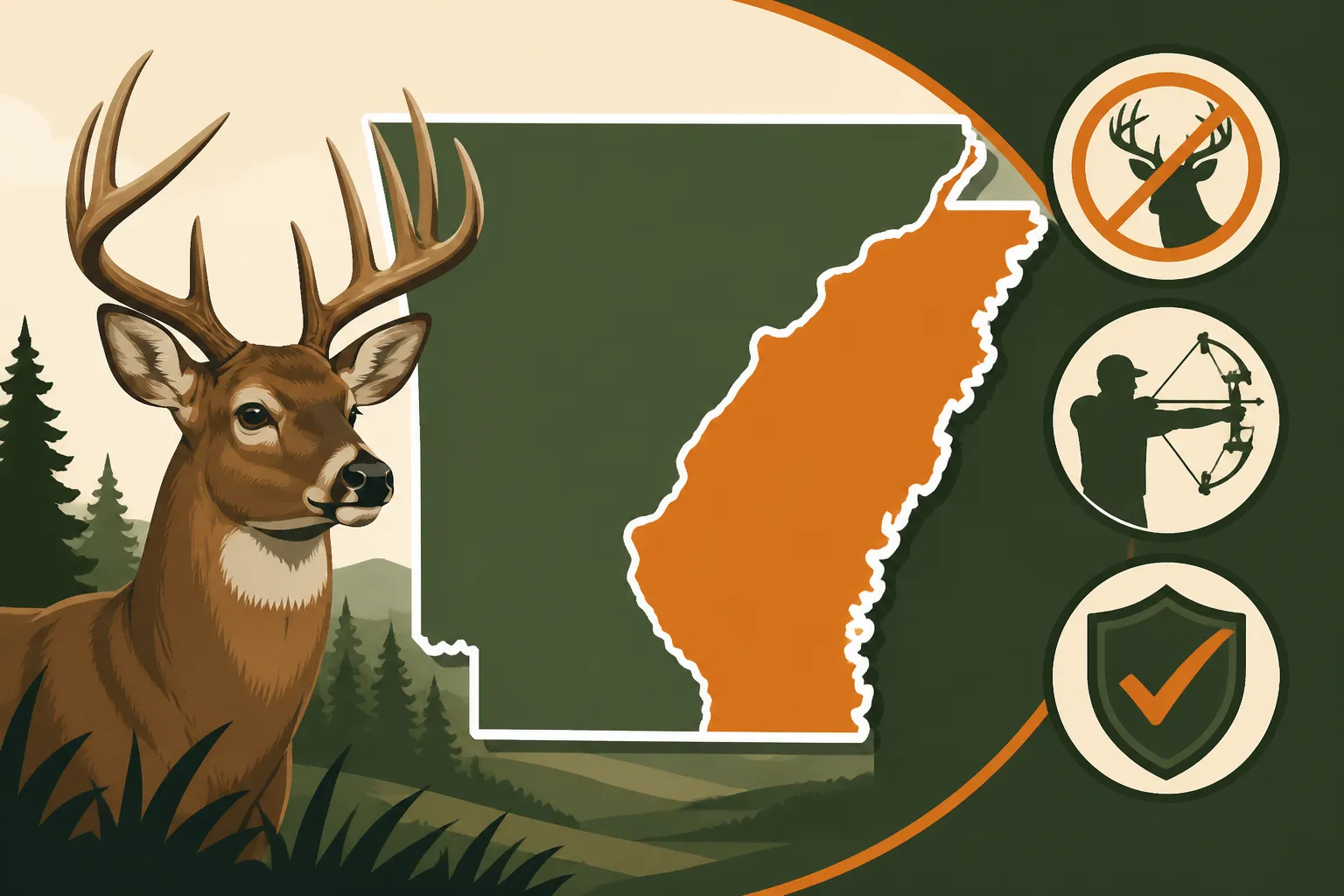
Arkansas CWD Management Zone Rules
It can feel incredibly frustrating and confusing to keep up with all the hunting regulations these days, especially when a serious issue like Chronic Wasting Disease (CWD) adds another layer of complexity. The Arkansas Game and Fish Commission (AGFC) has implemented vital rules for CWD Management Zones, and understanding these isn't just about avoiding a fine; it's about protecting the health of our deer herd. This guide is here to walk you through every aspect of hunting within Arkansas's CWD management zones, making sure you're informed and confident.
Understanding Chronic Wasting Disease and Its Impact
CWD is one of those topics that can really spark debate and concern among hunters, and for good reason. It's a scary disease with no cure, and it poses a significant threat to our cherished deer and elk populations. Knowing what it is and how it got here is the first step in understanding why these strict rules are so crucial.
What Exactly is CWD?
Chronic Wasting Disease is a neurological disease that affects cervids – that’s deer, elk, moose, and reindeer – leading to progressive degeneration of their brains and ultimately, death. It's caused by abnormal proteins called prions, which can persist in the environment for a very long time. Think of it like a slow, debilitating illness that makes the animal waste away, hence the "wasting" in its name. Symptoms can be subtle at first, but eventually include drastic weight loss, stumbling, listlessness, excessive drooling, and a lack of fear of humans. It's a truly heartbreaking sight to witness. Unfortunately, there is no vaccine and no treatment, making management strategies focused on preventing its spread and reducing its prevalence. It's not just a deer problem; it's a hunter's problem because it impacts the very health of the animals we pursue and love.
How CWD Arrived and Spread in Arkansas
For years, many of us in Arkansas hoped CWD would never make its way here. We watched other states grapple with it, and it always felt like something "out there." That hope was dashed in 2016 when CWD was confirmed in a deer harvested in Newton County, deep in the Ozarks. This discovery was a gut punch, and it immediately triggered a flurry of action from the AGFC. Since that initial detection, the disease has slowly but surely been identified in deer and elk across multiple counties, particularly spreading from that initial focal point. You can find more detailed information on Where CWD Was First Found in Arkansas and its subsequent expansion. The prions can spread directly through animal-to-animal contact or indirectly through contaminated environments, like feed sites or mineral licks where infected deer may have left saliva, urine, or feces. It's a silent threat that moves beneath the surface, making it incredibly difficult to contain once established.
Navigating Arkansas's CWD Management Zones
Once CWD was confirmed, the AGFC had to act decisively to try and limit its spread. This meant establishing CWD Management Zones, which are areas where specific regulations are put in place to monitor and manage the disease. It's vital for any hunter to know if they're hunting in one of these zones.
Identifying Affected Counties
The core of Arkansas's CWD management strategy revolves around designating specific counties as CWD Management Zones. These aren't static; they can expand as new cases are confirmed, so it's critical to stay informed. Currently, the CWD Management Zone includes counties where CWD has been detected, along with surrounding counties deemed to be at high risk for transmission. The AGFC provides an updated list of Arkansas CWD Counties List on their website. It's your responsibility as a hunter to check this list before every season, or even before every hunt, as boundaries and regulations can change. Many hunters, myself included, rely heavily on mapping applications like GoHunt that often integrate these critical zone boundaries, allowing you to visually confirm your location in relation to CWD-affected areas. This can be a lifesaver when you're deep in the woods and unsure of county lines.
Understanding Core vs. Buffer Zones
Within the broader CWD Management Zone, the AGFC sometimes designates "Core" CWD areas and "Buffer" CWD areas. These distinctions are made based on the prevalence of the disease and dictate slightly different levels of regulatory intensity.
Core CWD areas typically encompass the counties where the disease was first detected or where prevalence rates are highest. These are often where the most stringent regulations are applied.
Buffer CWD areas are surrounding counties that are at risk of CWD spreading from a core area but might not yet have high detection rates. Regulations here might be slightly less restrictive than in core zones but are still more stringent than in non-CWD counties.
The idea is to create layers of protection, recognizing that the disease doesn't stop at a county line, but that management efforts need to be scaled to the actual risk and prevalence. This layered approach aims to slow the expansion of CWD while gathering more data. It's a dynamic system, and what's a buffer zone today could become a core zone tomorrow if CWD detections increase.
| Regulation Aspect | Standard Arkansas Deer Hunting Zones | CWD Management Zones |
|---|---|---|
| Baiting Deer | Permitted | Prohibited |
| Carcass Transport | Whole carcass permitted state-wide | Restricted (no whole carcass out of zone) |
| Deer Feeding | Permitted | Prohibited |
| Mandatory CWD Testing | Not required (voluntary) | May be required on specific dates/WMAs |
| Antlerless Deer Harvest | Varies by zone, generally allowed | May be encouraged/increased |
Specific Hunting Regulations for CWD Areas
Okay, so you know what CWD is and which counties are affected. Now, what does that actually mean for your hunt? The rules within CWD Management Zones are designed to reduce the spread of prions, and they directly impact how and where you can hunt. It's a significant change from what many of us are used to.
Deer Harvest Rules and Antler Regulations
Generally, the overall Arkansas Deer Seasons and Zone Limits remain consistent, but there can be subtle yet important differences in CWD zones, particularly concerning antlerless deer. Often, in CWD Management Zones, the AGFC may encourage or even make it easier to harvest antlerless deer. This isn't because they want to punish hunters; it's a science-backed effort to reduce overall deer densities, which in turn can help slow the transmission rate of CWD within the population. Fewer deer packed together means less opportunity for direct contact or for prions to build up in the environment. So, if you're hunting in a CWD zone and have an antlerless tag, it’s a good idea to consider filling it, as you're actively participating in the management effort. Always consult the current AGFC regulations directly for the most up-to-date information, as these specifics can shift from year to year based on disease monitoring results. Understanding What Counts as a Legal Arkansas Buck is always important, but particularly so when specific harvest objectives are in play for disease management.
Restrictions on Baiting and Supplemental Feeding
This is probably one of the most significant and often debated regulations in CWD Management Zones: the ban on baiting and supplemental feeding of deer. I know, for many of us, putting out a corn feeder or a mineral block is a long-standing tradition or a key scouting tool. But here's the hard truth: concentrating deer at a single spot dramatically increases the chances of CWD transmission. When multiple deer lick the same block, or eat from the same pile of corn, they're exchanging saliva, and if one of them is infected, those prions can spread to others and contaminate the site. This is why the AGFC has implemented a strict ban on Baiting Rules in Arkansas CWD Zones. This prohibition includes corn, protein pellets, mineral blocks, or any other food placed out specifically to attract deer. It extends to feeding deer year-round, not just during hunting season. This rule, while tough for many to swallow, is a critical component of slowing the disease's spread.
Carcass Management and Transport Protocols
After a successful hunt, our minds usually turn to celebrating the harvest and getting that deer processed. But if you're hunting in a CWD Management Zone, there's another crucial step to consider: how you handle and transport the carcass. This is where many hunters can inadvertently break the rules or, more importantly, contribute to the spread of CWD.
Rules for Moving Deer Carcasses Out of Zones
This is a big one, folks, and it causes a lot of confusion. The AGFC has strict regulations regarding moving whole deer carcasses out of a CWD Management Zone. The reason is simple: the prions that cause CWD are most concentrated in the brain, spinal cord, lymph nodes, and spleen. If you transport a whole carcass out of a CWD zone to process it elsewhere, you run the risk of inadvertently spreading those prions to a new, unaffected area through discarded bones or other waste. The general rule is you cannot transport a whole carcass or certain high-risk parts out of a CWD Management Zone. This includes taking a deer harvested in a CWD zone and driving it to your home county if your home county is not in a CWD zone. For a complete understanding, refer to the Carcass Transport Rules Out of Arkansas or within the state's CWD zones. This applies even if you're just taking it to a processor a few counties over.
Permitted Carcass Parts and Processing Requirements
So, if you can't move the whole carcass, what can you take out of a CWD Management Zone? The rules are designed to allow you to transport the valuable parts of the deer while leaving the high-risk parts behind. Generally, permitted parts include:
- Deboned meat
- Antlers, clean skull plates (with no brain material attached), or finished taxidermy mounts
- Clean hides (without head attached)
- Teeth
Basically, anything that doesn't contain the brain, spinal cord, or lymphatic tissue is usually fine to transport. This means you need to field dress your deer and either completely debone it in the field or take it to a certified processor within the CWD zone who can handle the carcass appropriately and dispose of the high-risk parts safely. This often requires a change in our traditional post-harvest routine, but it's a small price to pay for the health of the herd. If you plan to process your own deer, make sure you have the tools and knowledge to debone it effectively in the field. This also ties into important information about Arkansas Deer Checking and Tagging which often requires specific procedures within CWD zones.
CWD Testing, Reporting, and Public Land Considerations
Being a responsible hunter in Arkansas's CWD Management Zones also means actively participating in disease monitoring and knowing how CWD affects your public land hunting strategies. It's a collective effort, and every hunter plays a role.
Voluntary and Mandatory Testing Initiatives
The AGFC relies heavily on CWD testing to understand the prevalence and spread of the disease. This data is critical for making informed management decisions. In CWD Management Zones, you might encounter voluntary CWD testing stations, especially during the modern gun deer season. These are typically staffed by AGFC personnel or volunteers, and they ask hunters to voluntarily submit lymph node samples from their harvested deer. This process is usually quick and straightforward, and it provides invaluable data. There may also be periods of mandatory CWD testing in specific counties or on certain WMAs within the CWD zones. For example, during the opening weekend of modern gun season, you might be required to submit a sample from any deer harvested in a particular area. Always check the current regulations for specific dates and locations for mandatory testing. Participating in testing, whether voluntary or mandatory, is a direct way you can contribute to the long-term health of Arkansas's deer herd.
Hunting on Public Lands Within CWD Zones
Hunting on public lands in Arkansas is a fantastic opportunity, and that doesn't change just because an area is designated as a CWD Management Zone. However, all the CWD rules – the baiting bans, carcass transport restrictions, and potential mandatory testing – apply equally to public lands like Wildlife Management Areas (WMAs) and National Forests within these zones. It's crucial to consult the AGFC's interactive map or GoHunt app before heading out to public lands like those in the Ozark National Forest Hunting or even specific WMAs within a CWD zone. These tools can often show you not only the WMA boundaries but also overlay CWD zone lines and provide links to specific WMA regulations, which might have additional CWD-related rules. Remember that high hunting pressure on public lands can sometimes lead to more frequent deer interactions, which in turn could potentially contribute to CWD spread. However, following all regulations, especially the baiting ban, is the most effective way we as hunters can help mitigate this. Understanding the broader Arkansas Deer Population Estimate helps put these localized efforts into perspective for the overall herd health.
Disclaimer
The information provided in this guide is for general informational purposes only and is subject to change. Hunting regulations, especially those pertaining to CWD, are updated regularly by the Arkansas Game and Fish Commission. Always consult the most current official AGFC regulations and advisories before planning or engaging in any hunting activities.