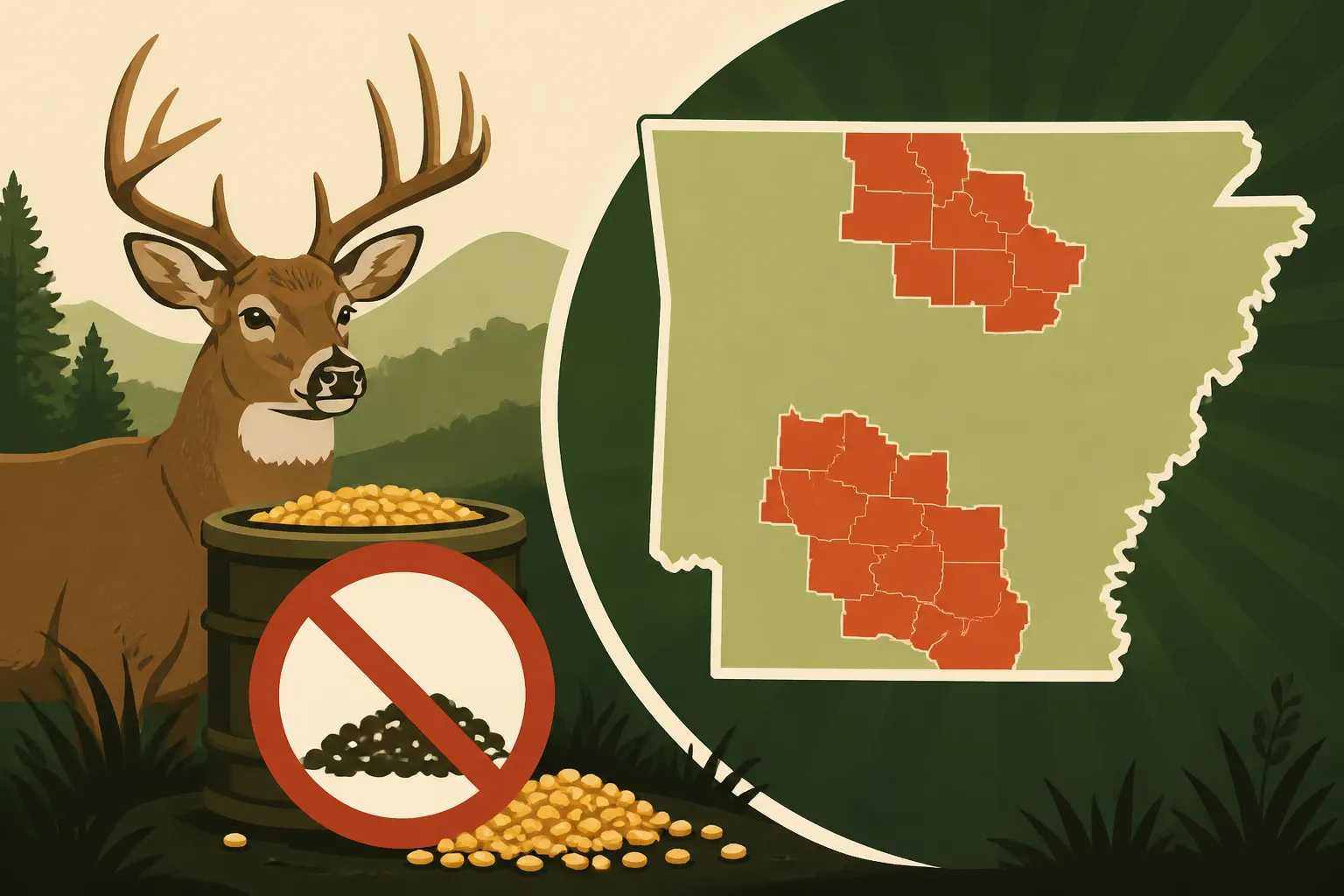
Baiting Rules in Arkansas CWD Zones
Navigating the complex world of hunting regulations can feel like a maze, especially when it comes to rules around baiting, which are often misunderstood and carry hefty penalties if violated. The confusion only deepens when you factor in specific restrictions designed to combat Chronic Wasting Disease (CWD). This guide aims to clear up all the fog, providing a detailed breakdown of Arkansas's baiting rules, particularly within CWD management zones, so you can hunt ethically and legally.
Understanding Arkansas's Baiting Regulations
When you're out in the Arkansas woods, it's crucial to understand what's permissible and what's not, particularly concerning bait. The Arkansas Game and Fish Commission (AGFC) has clear guidelines, but they can sometimes feel a bit like reading a legal document. Let's break down the general rules first, before diving into the stricter CWD zone specifics.
General Statewide Baiting Rules
Outside of designated CWD management zones, Arkansas has traditionally been one of the states where baiting for certain game animals, primarily deer, has been permitted under specific conditions. This means you could, in many areas, put out corn, protein pellets, or other food attractants to draw deer closer to your stand. Many hunters across the state have relied on this practice for years, especially on private land where they have invested in feeders or established bait sites. The idea is to concentrate deer activity, making it easier to pattern their movements and increase shot opportunities. This generally applies to private lands where you have explicit permission to bait, but it's not a free-for-all. Even where allowed, ethical considerations, such as not leaving excessive bait or hunting over stale, moldy feed, are important for deer health and responsible hunting.
However, it's vital to remember that "general statewide rules" are exactly that—general. They are subject to change and always superseded by more specific regulations, like those found in CWD zones or on certain public lands. For instance, most public lands in Arkansas, including Wildlife Management Areas (WMAs) and national forests like the Ouachita National Forest Hunting or Ozark National Forest Hunting, have outright prohibitions against baiting regardless of CWD status. So, before you even consider putting out a single kernel of corn, always double-check the specific regulations for the area you intend to hunt. This due diligence is your first line of defense against unknowingly breaking the law.
The "Baiting" Definition
The AGFC defines baiting quite broadly, and it's essential to grasp the nuances to avoid accidental violations. "Bait" generally refers to any food, mineral, or other substance that attracts game. This includes things like corn, rice, sweet potatoes, apples, commercial deer attractants, and even salt blocks or mineral licks. The key here is intent and placement. If you place any of these substances to attract game for the purpose of hunting, it's considered baiting. This isn't just about direct feeding; even a mineral block placed specifically to draw deer can fall under the baiting definition in certain contexts, particularly within CWD zones.
Consider a scenario where you've scattered a bag of corn under your deer stand. That's a clear-cut example of baiting. What about a mineral block that slowly dissolves? If its primary purpose is to attract deer for hunting, it also counts. The AGFC is clear that "baiting" encompasses not just feeding but also the use of any substance that "could attract game." This broad interpretation is in place to prevent clever workarounds and ensure the spirit of the law is upheld. Therefore, when in doubt, assume it falls under the baiting definition unless explicitly stated otherwise by the AGFC.
Exceptions and Loopholes
While the definition of baiting is broad, there are some important exceptions that hunters often confuse with illegal baiting. These usually revolve around standard agricultural practices or the use of food plots. For instance, normal agricultural planting, harvesting, and post-harvest manipulation activities are generally not considered baiting. If you're hunting adjacent to a soybean field that's just been harvested, and deer are naturally feeding on the leftover beans, that's perfectly legal. The key distinction is that the food source is a result of legitimate farming operations, not placed solely for hunting purposes.
Similarly, bona fide food plots planted for wildlife are also generally exempt from baiting prohibitions, even in CWD zones in some cases. A food plot, by definition, is a planted area specifically designed to provide forage for wildlife over an extended period. This isn't a dump of corn; it's a living, growing food source. However, even with food plots, there are nuances. You can't just scatter a bag of corn and call it a food plot. The AGFC regulations specify what constitutes a legitimate food plot versus illegal baiting. When contemplating a food plot, always refer to the latest AGFC regulations or consult with a local wildlife officer to ensure your efforts align with the rules, especially when dealing with the stricter requirements of the Arkansas CWD Management Zone Rules.
Navigating Baiting Rules in Chronic Wasting Disease CWD Zones
Now, let's get to the critical part: CWD zones. The presence of Chronic Wasting Disease has dramatically altered baiting regulations in specific areas of Arkansas. These rules are not optional; they are mandatory and strictly enforced to protect the deer herd.
Why CWD Zones Have Stricter Rules
The primary reason for stricter baiting rules in CWD zones is to mitigate the spread of the disease. CWD is a fatal neurological disease that affects deer, elk, and moose. It's caused by misfolded proteins called prions, which can persist in the environment for years, making eradication incredibly difficult. One of the main ways CWD spreads is through direct animal-to-animal contact and indirectly through contaminated environments, such as shared feeding sites. When deer congregate around a bait pile or mineral lick, they increase their chances of transmitting the disease to one another, either directly through saliva, urine, or feces, or indirectly by leaving prions in the soil or on vegetation that other deer then ingest.
By prohibiting baiting and feeding, wildlife agencies aim to reduce deer congregation at artificial sites. This reduces the opportunities for infected animals to transmit prions to healthy ones and helps slow the geographical spread of the disease. It's a tough but necessary measure to protect the long-term health of Arkansas's deer population, which is a vital natural resource. This is also why understanding regulations like Arkansas CWD Rules and Carcass Transport is so crucial, as they are all part of a comprehensive strategy to combat this insidious disease.
Specific Prohibitions in CWD Zones
In designated CWD management zones in Arkansas, the rules are unequivocally clear: it is illegal to feed or bait deer. This prohibition covers a wide array of substances and activities that would be considered legal outside these zones. We're talking about everything from corn, rice, and protein pellets to commercial attractants, mineral blocks, and salt licks. If it's designed to attract or supplement a deer's diet, and it's placed in a CWD zone, it's prohibited. This is not a suggestion; it's the law.
This means hunters in these zones must completely rethink their strategies. You can't rely on that trusty feeder you might use elsewhere. Even leaving out apples or other food scraps can be considered a violation. The intent is to eliminate any artificial congregation points for deer. This strict approach means hunters need to adapt their methods, focusing instead on natural food sources, effective scouting techniques, and strategic stand placement. Ignorance of the law is no excuse, and wardens patrol these areas specifically looking for violations.
How to Identify CWD Zones
Knowing which counties fall into a CWD zone is paramount. The AGFC maintains an updated list of CWD counties and provides detailed maps to help hunters identify these areas. These zones can change, so what was a CWD county last year might have different boundaries or new additions this year. It's not enough to remember a general idea; you need to check the exact, current information before every hunting season. For example, understanding How Many Arkansas Counties Have CWD is important, but also knowing the exact boundaries of those counties.
A great resource for this is the official AGFC website, which usually has interactive maps and downloadable PDFs detailing the latest CWD management zones. Additionally, hunting apps like GoHunt offer digital mapping solutions that often incorporate AGFC zone boundaries, making it easier to see where you stand (literally!) in relation to CWD restrictions. This kind of technology can be incredibly helpful for Using the AGFC Map Tool on your phone or computer, ensuring you're always up-to-date. Before you ever leave your driveway, make it a habit to cross-reference your hunting location with the current CWD zone maps. It could save you a significant fine and contribute to the health of the deer herd.
Practical Implications for Hunters in CWD Zones
Hunting in a CWD zone without the aid of bait can feel like a significant challenge if you're accustomed to using attractants. However, it forces hunters to sharpen their skills and connect more deeply with the natural environment.
Scouting and Stand Placement
Without bait, scouting becomes even more critical. You need to become an expert in finding natural food sources, identifying deer travel corridors, and understanding bedding areas. Instead of looking for a corn pile, you'll be scrutinizing acorn flats, browsing pressure on honeysuckle, or recent rubs and scrapes along a creek bottom. This means spending more time in the woods before the season opens, identifying pinch points, saddles, and natural funnels that deer use regularly. Looking for fresh sign near white oaks or persimmon trees, or in areas with thick cover offering refuge, becomes your new focus.
When it comes to stand placement, think about prevailing winds, thermals, and how deer naturally move through the landscape. Consider areas where different habitat types meet—the edge of a clearcut, a transition line between hardwoods and pine, or a creek crossing. Tools that help you analyze terrain features, like contour lines and elevation changes, can be invaluable. This deeper understanding of deer behavior and habitat use will make you a more successful and ethical hunter in the long run. Embracing this challenge can even lead to a more rewarding hunting experience, as you're truly outsmarting a wild animal on its own terms, perhaps like when Hunting the Arkansas Early Buck-Only Archery Days.
Alternative Attractants
While food-based baiting is out, there are still legal alternatives you can explore to draw deer in, even within CWD zones. Scent attractants, such as deer urine (when allowed), estrus scents during the rut, or even curiosity scents, can be effective. Always check local regulations to ensure the use of such scents is permitted in your specific hunting area, as rules can vary. Calls, like grunt tubes and rattling antlers, also fall into the category of legal attractants. Learning how to properly Rattling and Grunting in Arkansas can bring a curious buck within range.
Another effective strategy is identifying and hunting near natural food sources. As mentioned, acorns, persimmons, and other mast crops are deer magnets in the fall. During the winter, deer will browse on green shoots and certain woody vegetation. Understanding these seasonal food preferences and actively scouting for them will greatly improve your chances. This focus on natural patterns not only adheres to CWD zone rules but also deepens your understanding of deer ecology, making you a more knowledgeable hunter.
Penalties for Violations
It's impossible to overstate the importance of adhering to CWD zone baiting rules. The penalties for violations are significant and can include substantial fines, forfeiture of equipment, loss of hunting privileges, and even jail time in severe cases. These aren't minor infractions; they are taken very seriously by the AGFC because of the grave threat CWD poses to Arkansas's wildlife.
A single violation can cost you hundreds or even thousands of dollars in fines, and the embarrassment of a citation is something no hunter wants. Furthermore, a hunting license suspension can mean missing out on seasons for years, impacting not just your personal pursuits but also potentially your ability to hunt with family and friends. The AGFC invests heavily in CWD monitoring and enforcement, so assume that CWD zones are actively patrolled. When in doubt, always err on the side of caution. If you suspect someone is violating baiting rules, you can report it to the AGFC, playing your part in protecting the herd.
Arkansas Baiting Rules Comparison
To help clarify the differences between general statewide rules and those specifically for CWD zones, here's a quick comparison:
| Feature/Rule | General Statewide (Outside CWD Zones) | CWD Management Zones |
|---|---|---|
| Deer Baiting | Generally permitted on private land, prohibited on most public land. | Strictly prohibited (no feeding or baiting of deer). |
| Mineral Blocks/Licks | Generally permitted on private land. | Strictly prohibited (considered a form of baiting). |
| Commercial Attractants | Generally permitted on private land. | Strictly prohibited. |
| Food Plots | Permitted if bona fide agricultural practice, even on public land in some cases. | Permitted if bona fide agricultural practice, with specific guidelines. |
| Purpose | Concentrate deer, increase harvest opportunity. | Prevent deer congregation, reduce CWD transmission risk. |
| Consequences of Violation | Fines, loss of hunting privileges. | Severe fines, loss of privileges, potential jail time. |
| Public Land | Baiting generally prohibited (check WMA-specific rules). | Baiting always prohibited. |
Disclaimer
The information provided in this guide is intended for general informational purposes only and does not constitute legal advice. Hunting regulations are subject to change and can be complex. Hunters are solely responsible for understanding and complying with all current Arkansas Game and Fish Commission (AGFC) regulations, federal laws, and local ordinances before engaging in any hunting activity. Always consult the official AGFC hunting guide and website for the most up-to-date and specific rules pertaining to your chosen hunting area and species.