Best Arkansas Counties for Big Bucks
We all dream of that truly magnificent Arkansas whitetail, don't we? The kind with antlers that tell a story of years spent navigating the timber and fields, growing bigger and wiser with each passing season. But the truth is, finding those genuinely "big bucks" in Arkansas isn't just about luck; it’s often about knowing where to focus your efforts. This guide aims to pull back the curtain on the best Arkansas counties for consistently producing those impressive deer, delving into the science, the habitat, and the hunting strategies that lead to success.
Understanding What Makes a "Big Buck" County
Before we start listing counties, let's talk about what truly shapes a trophy-class whitetail. It’s not just one thing; it's a perfect storm of factors that coalesce in specific parts of our state. Many hunters feel like they're playing a lottery, but understanding these elements can dramatically improve your odds.
Genetics, Nutrition, and Age
Think of a whitetail buck's antlers as a direct billboard for his health and heritage. The big three that dictate antler growth are genetics, nutrition, and age. You can have a buck with incredible genetics, but if he's not getting the proper nutrition, his antlers will suffer. Likewise, even with great genes and food, a buck simply needs time to mature. This is where the frustration often comes in for hunters – you might see glimpses of a promising young buck, only for him to be harvested before he reaches his full potential.
In areas where deer have access to highly nutritious forage year-round, you’ll typically find better antler development. This isn't just about putting food out; it's about the natural richness of the soil and the plants it supports. Furthermore, for a buck to truly express his genetic potential, he needs to survive long enough. Bucks generally reach their peak antler size between 4.5 and 7.5 years old. Counties that consistently produce big bucks usually have a strong age structure in their deer herd, meaning a good percentage of bucks are making it to these older age classes.
Habitat Quality and Food Sources
A county's habitat quality and the abundance of diverse food sources are absolutely critical. Deer are creatures of edge, needing cover for bedding and security, and readily available food and water. When you find areas that offer a mosaic of these elements, you're looking at prime big buck territory.
For example, extensive hardwood bottoms loaded with mast-producing trees like white oaks and red oaks are gold mines, especially during the fall. These acorns are high in fat and protein, fueling deer through the colder months. But it's not just natural forage; agricultural crops play an enormous role, especially in certain regions of Arkansas. Vast fields of soybeans, corn, and rice provide an almost unlimited buffet of high-energy, protein-rich food that can supercharge antler growth and overall body size. Deer thrive when they don't have to work too hard to find food and have plenty of options.
Hunting Pressure and Management
This is often the silent killer of big buck potential. In areas with intense hunting pressure, young bucks are often harvested before they have a chance to mature. Even if a buck has good genetics and excellent nutrition, he won't become a trophy if he doesn't live long enough.
Counties known for big bucks often benefit from lighter hunting pressure, either due to vast tracts of land that spread hunters out, or more commonly, due to significant amounts of privately owned and managed land. Private landowners often implement their own management strategies, which can include limiting harvest, passing on younger bucks, and enhancing habitat with food plots and timber management. This allows bucks to reach older age classes where their antler growth truly explodes. While public land can and does produce big bucks, the sheer volume of hunters can make it a harder proposition, requiring more extensive scouting and a willingness to go where others won't.
The Delta: Arkansas's Big Buck Hotbed
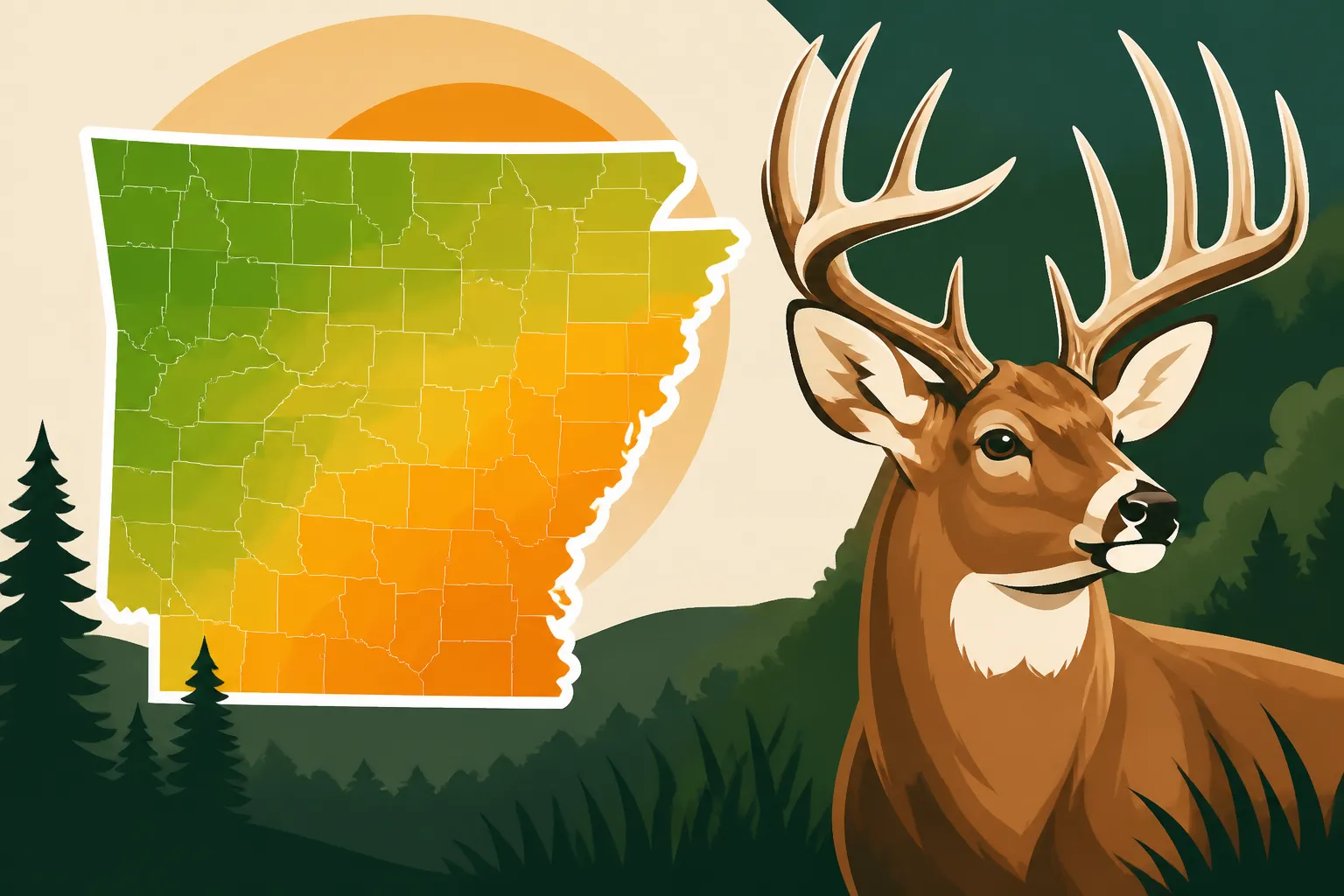
If there's one region that consistently stands out for producing truly exceptional whitetail bucks in Arkansas, it's the Delta. This sprawling, fertile plain along the Mississippi River is a deer hunter's dream, even with its unique set of challenges.
Rich Soils and Abundant Agriculture
The secret ingredient in the Delta is its soil. Composed of nutrient-rich alluvial deposits from centuries of river flooding, these soils are incredibly fertile. This directly translates to the plants that grow here, whether they are natural browse or cultivated crops. These plants are packed with essential minerals and proteins that are vital for antler development.
Coupled with this fertile ground are the vast expanses of agricultural land. The Delta is known for its incredible fields of soybeans, corn, and rice. These crops are a year-round grocery store for deer. During the growing season, deer feast on the lush, protein-rich plants. After harvest, the waste grain left behind provides a crucial energy source through the fall and winter. It’s this consistent, high-quality diet that explains Why Delta Bucks Grow Bigger. They have everything they need to grow large bodies and develop impressive racks. The sheer volume of this food also supports higher deer densities, meaning more deer overall, and consequently, a greater chance of older, bigger bucks.
Key Delta Counties and Their Appeal
When hunters talk about big bucks in the Delta, a few counties always rise to the top. Phillips, Desha, Arkansas, Jefferson, Chicot, Ashley, and Drew counties are consistently recognized for their potential. Further north, Mississippi and Poinsett counties also hold significant promise. These counties boast a mix of sprawling private farmlands, river bottoms, and extensive public land areas like the various Wildlife Management Areas (WMAs) and National Wildlife Refuges.
In these areas, you'll find large tracts of bottomland hardwoods alongside agricultural fields, creating that ideal edge habitat deer thrive on. Many of these counties contain major river systems like the Arkansas River, White River, and Mississippi River, whose floodplains contribute to the rich soil and diverse habitat. While private land access can be incredibly competitive and often involves hunting clubs or paid leases, these counties also host some of the state's premier public hunting opportunities, though these often come with higher hunting pressure. For those looking to understand land ownership and optimize their scouting, using tools like GoHunt's mapping features can be invaluable for identifying private vs. public boundaries and potential access points.
Challenges and Strategies for Delta Hunting
Hunting the Delta isn't without its unique set of hurdles. Foremost among them is access. Much of the prime big buck habitat is on private land, often leased by hunting clubs or closely managed by landowners. Gaining permission requires persistence, networking, and often a good reputation. However, for those willing to put in the work, public lands can still yield giant bucks. WMAs like Bayou Meto WMA, Trusten Holder WMA, or the Dale Bumpers White River Refuge offer fantastic opportunities, though they require careful scouting and a willingness to get away from the crowds.
Strategies here often involve targeting the edges of agricultural fields, especially during the early and late seasons. Learning how to identify Hunting Standing Corn and Beans in the Delta can be a game-changer as these fields provide both food and excellent cover for mature bucks. Moreover, understanding how water levels affect deer movement in bottomland areas is crucial. Knowing Where Delta Bucks Bed in Standing Water can give you a significant advantage, as they will often seek refuge in these less-disturbed areas. Patience is key, as is adapting your approach to changing water conditions and agricultural cycles.
The Ozarks and Ouachitas: Trophy Potential Beyond the Delta
While the Delta steals much of the big buck spotlight, Arkansas's more mountainous regions—the Ozark and Ouachita National Forests—offer a different kind of challenge and a different kind of trophy. These areas might not have the sheer numbers or average antler size of the Delta, but they produce truly magnificent, hard-earned deer.
Mountainous Terrain and Hardwood Forests
The Ozark and Ouachita mountains present a stark contrast to the flat, agricultural landscape of the Delta. Here, you'll find rugged terrain, steep ridges, deep hollows, and vast expanses of mixed hardwood and pine forests. While agriculture is present in the valleys, it's not the dominant food source for deer across the broad landscape. Instead, deer rely heavily on natural forage.
Acorns from various oak species, wild grapes, persimmons, and diverse browse are the primary food sources. While these provide excellent nutrition, they can be more sporadic and less concentrated than the endless buffets of the Delta. This means deer densities are generally lower in the mountains, and bucks often have to cover more ground to find food. However, this also contributes to their wild nature and resilience. These bucks are truly forest dwellers, masters of their challenging environment, and often grow large bodies to navigate the rugged terrain.
Notable Hill Country Counties
Within the Ozark and Ouachita regions, certain counties stand out for their big buck potential. In the Ozarks, counties like Newton, Boone, and Madison have a reputation for producing impressive deer, often in the context of the Ozark National Forest and its associated WMAs. These areas require a hunter who enjoys vast public land and is willing to put in the legwork.
In the Ouachitas, Garland, Montgomery, Yell, and Pope counties are worth exploring. These areas are characterized by the rolling hills and pine plantations of the Ouachita National Forest. Here, hunters can find a mix of public and private timber company lands. The bucks harvested from these regions might not always sport the massive frames of their Delta counterparts, but they are often older, thicker-necked, and represent a significant accomplishment for mountain hunters. Understanding the terrain with a mapping application like GoHunt, which shows topographic lines and public/private land ownership, is indispensable for navigating these areas.
Strategies for Success in Upland Areas
Hunting big bucks in the mountains demands a different approach. Instead of focusing on field edges, you'll be keying in on natural food sources, thick cover, and terrain features. Diligent scouting is paramount, especially for finding active mast crops. Learning to identify and understand Reading Red Oak Acorn Drops and other hard mast is crucial, as deer will congregate around these transient food sources.
Understanding deer movement along terrain is also vital. Bucks in the mountains often travel along benches, saddles, and ridge lines, using the contours of the land for cover and ease of travel. Mastering Hunting Ozark Ridges and Hollows for Deer means knowing how deer use elevation changes to their advantage. Furthermore, paying close attention to micro-climates and understanding Wind and Thermals in Ouachita Hollows is essential, as swirling winds can betray your presence quickly. Still-hunting, glassing vast areas, and long hours on stand are common and effective strategies for these older, warier mountain bucks.
Other Promising Regions and Key Factors
While the Delta and the core Ozark/Ouachita regions are primary big buck producers, Arkansas has other pockets and management strategies that contribute to trophy potential statewide. Smart hunters look beyond the obvious and leverage every advantage.
River Corridors and Transitional Zones
Beyond the main Delta, Arkansas is crisscrossed by numerous river systems and their associated bottomlands. These corridors, such as those along the Arkansas River, White River, and Black River, often create transitional zones that blend elements of the Delta's fertility with the timbered cover of the hill country. Counties like Faulkner, Conway, Crawford, and Franklin, which contain significant river bottom acreage, can offer excellent big buck hunting.
These areas often provide a mix of agriculture in the river valleys and more timbered uplands on either side. This varied habitat offers deer the best of both worlds: consistent food sources and dense cover. Bucks in these areas can thrive on agricultural output while still having large, secure areas to escape pressure and mature. It's in these often-overlooked river bottoms that persistent hunters can find surprising trophy potential, especially on smaller, less-pressured private tracts or remote public parcels.
The Role of Selective Harvest and Management Practices
One of the most significant factors in increasing big buck potential across the state, beyond just specific counties, has been the implementation of selective harvest regulations. The Arkansas Game and Fish Commission (AGFC) has actively worked to improve buck age structure through various rules. For instance, understanding The Three-Point Rule and What It Changes is crucial, as this regulation has fundamentally altered buck populations in many zones, allowing more younger bucks to survive and reach older age classes.
Private land management also plays an increasingly vital role. Landowners and hunting clubs are investing in food plots, timber stand improvement, and strict harvest criteria to produce bigger, older bucks. These practices complement state regulations and create local hotbeds of trophy deer. The AGFC's Arkansas Record Book Program also provides valuable insight into where these larger animals are being harvested, often highlighting consistent producers beyond just the major Delta counties.
Essential Tools for Scouting and Planning
In today's hunting world, leveraging technology and diligent preparation is more important than ever, especially when pursuing big bucks. You can't just stumble into a trophy; it takes planning. Modern mapping tools are indispensable. The AGFC provides a fantastic resource for planning and executing public land hunts, and learning to use Scouting With the AGFC Map Tool is a must for any serious hunter. This tool offers overlays for WMAs, public land boundaries, and habitat types.
Beyond state resources, private mapping applications like GoHunt offer incredibly detailed aerial imagery, topographic maps, and property ownership overlays that are invaluable for identifying overlooked spots, potential travel corridors, and bedding areas. Learning to interpret Reading Aerial Photos for Delta Deer or pinpointing remote benches in the Ozarks relies heavily on these tools. Couple this with diligent on-the-ground scouting, placement of trail cameras, and understanding deer movement patterns, like Hunting the Arkansas Rut by Zone, and you significantly increase your chances of finding that buck of a lifetime. Knowing Arkansas Deer Zones Explained is also crucial for understanding specific regulations that might impact buck quality in a given area.
Ultimately, hunting for a big buck in Arkansas is a journey of understanding the land, the deer, and yourself. It requires patience, persistence, and a willingness to adapt your strategies to the diverse landscapes our state offers.
Here's a quick comparison of some factors between the primary big buck regions:
| Factor | Arkansas Delta | Ozarks/Ouachitas | River Corridors/Transitional Zones |
|---|---|---|---|
| Soil Fertility | High (alluvial deposits) | Moderate to Low (rocky, forested) | Moderate to High (river bottom influence) |
| Primary Food | Agricultural crops (corn, beans, rice), mast | Hard mast (acorns), soft mast (persimmons), browse | Mix of agriculture and natural mast/browse |
| Deer Density | High | Moderate to Low | Moderate to High |
| Antler Potential | High (larger frames, often more mass) | Moderate to High (hard-earned, often mature) | High (can combine Delta nutrition with cover) |
| Terrain | Flat, bottomland, swamps, agricultural fields | Rugged, steep ridges, hollows, mixed timber | Rolling hills, river bottoms, mixed timber/fields |
| Access Challenge | High (private land, leases) | Moderate (vast public land, some private) | Moderate (mix of private and smaller public tracts) |
| Hunting Strategy | Stand hunting field edges, timber holes, water beds | Still-hunting, glassing, terrain features | Adapting to local mix of field/timber dynamics |
Disclaimer
This article is for general informational purposes only and does not constitute professional advice. Laws, prices and regulations vary by location and change over time. Consult a qualified professional for guidance on your specific situation.