Arkansas CWD Prevalence Rates
Chronic Wasting Disease (CWD) is a tough reality for Arkansas hunters, and understanding how widespread it is across our beautiful state can be confusing and, frankly, a bit disheartening. We all care deeply about the health of our deer herds and the future of hunting here. This guide is dedicated to breaking down what "prevalence rates" mean in the context of Arkansas CWD, where the disease tends to show up most, and what steps you can take to understand and respond to the situation when you're out in the woods.
Understanding CWD Prevalence in Arkansas
When we talk about CWD, especially in official reports, you’ll often hear the term "prevalence rate." For many of us, that just sounds like scientific jargon. But it's actually a crucial piece of information that helps us grasp the scope of the disease and how it's being managed.
Defining "Prevalence Rate"
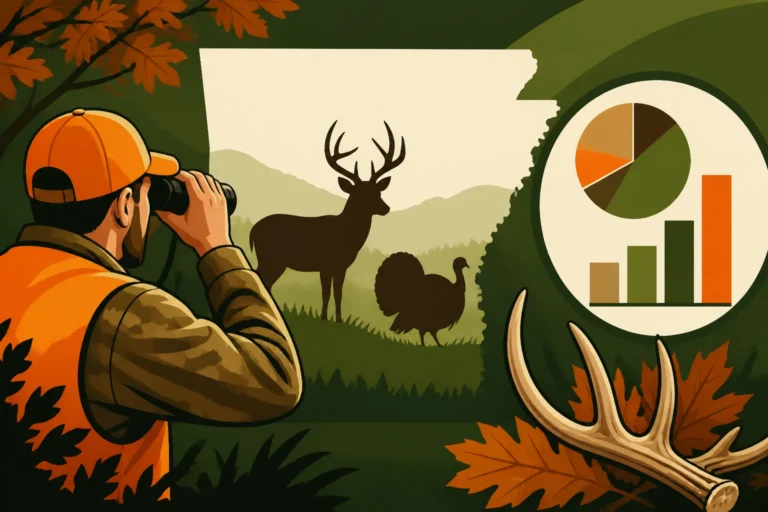
At its heart, the CWD prevalence rate is simply the percentage of animals tested within a specific population or geographic area that come back positive for the disease. It's not just a tally of how many deer have tested positive in total, but rather a snapshot of what proportion of the local herd is currently infected. For example, if the Arkansas Game and Fish Commission (AGFC) tests 100 deer in a particular county and 5 of them are positive for CWD, the prevalence rate for that sample is 5%. This number can vary wildly from one area to another, and even within different age or sex classes of deer. A higher prevalence rate indicates that the disease is more established and potentially spreading more rapidly within that specific deer population. It gives wildlife managers a clear indicator of where to focus their efforts and where hunters need to be most aware of the disease's presence.
Why Monitoring is Crucial
The continuous monitoring and calculation of these prevalence rates are absolutely vital for managing CWD in Arkansas. Without this data, wildlife agencies would be flying blind, unable to make informed decisions about herd health or implement effective management strategies. The AGFC invests considerable resources into sampling deer statewide, especially during modern gun seasons and through voluntary submissions. This ongoing surveillance allows them to track the disease's geographic spread and intensity. For instance, if the prevalence rate starts to climb in a certain county, it might trigger new regulations, increased testing efforts, or specific harvest recommendations to try and slow the spread. It also helps hunters understand the risk in the areas they frequent. Knowing the general prevalence in a particular deer zone can influence your decisions on whether to submit a sample or even how you plan your hunt. This commitment to data collection forms the backbone of all CWD management efforts, helping to protect the long-term health of our White-Tailed Deer Across Arkansas.
Geographic Distribution of CWD in Arkansas
CWD isn't uniformly spread across Arkansas. It tends to be concentrated in certain regions, and understanding these geographic patterns is key for any hunter planning their season. The disease first made its appearance in the state in particular areas, and its subsequent spread has created distinct management zones.
The CWD Management Zone
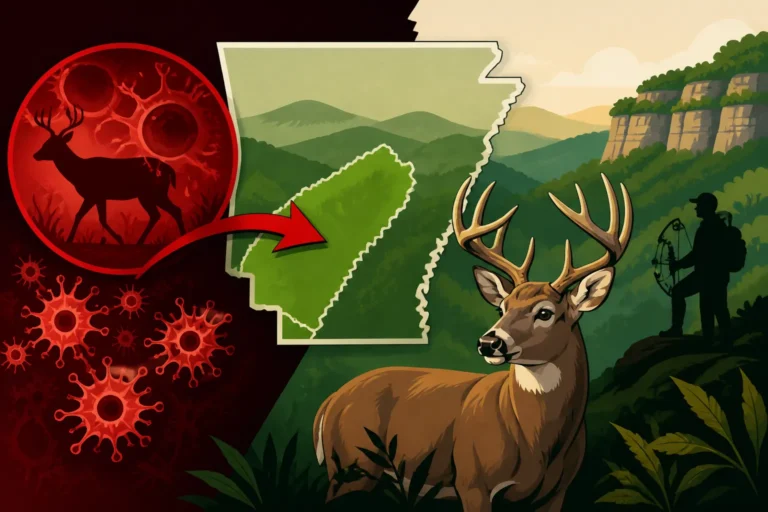
When CWD was first detected in Arkansas, specifically Where CWD Was First Found in Arkansas in the Ozark region, it necessitated the creation of a defined CWD Management Zone. This zone is a designated area, typically comprising multiple counties, where CWD has been confirmed and where specific regulations are put in place to manage the disease. These regulations are often more stringent than those in areas outside the zone, reflecting the higher risk and the need for focused control measures. For example, counties within the CWD Management Zone often have mandatory CWD testing requirements during certain periods, and specific rules apply to Baiting Rules in Arkansas CWD Zones. The boundaries of this zone can shift over time as new positive cases are detected, so it's always critical for hunters to check the most current AGFC regulations and maps before heading afield. Tools like the Using the AGFC Map Tool or platforms like GoHunt can be invaluable for pinpointing these zones and understanding the localized rules that apply. The existence of this zone acknowledges that CWD is an ongoing challenge in these areas, requiring a concerted effort from both wildlife managers and hunters.
Hotspots and Spreading Patterns
Within the broader CWD Management Zone, there are often specific "hotspots" where prevalence rates are notably higher. These are typically the areas where the disease has been present the longest or where factors like deer density and habitat characteristics might favor easier transmission. For example, some areas in the northern Ozarks have consistently shown higher prevalence rates compared to newly affected counties. The disease doesn't just pop up everywhere all at once; it often follows patterns of deer movement and connectivity between herds. Researchers and wildlife biologists continually analyze these patterns to predict where the disease might spread next and to implement preventative measures where possible. Understanding How CWD Reached the Arkansas Ozarks sheds light on these patterns. While natural deer movement is a primary vector, human activities, such as the improper disposal of deer carcasses, can also inadvertently contribute to the spread. This is why strict adherence to carcass transport rules and mandatory testing is so important, especially when traveling from a known hotspot. The AGFC works hard to keep hunters informed about these hotspots, often highlighting them in their annual deer hunting guides, so paying close attention to these updates is paramount.
Factors Influencing CWD Rates
The prevalence of CWD in a given area isn't a static number; it's influenced by a complex interplay of ecological, environmental, and even human factors. Understanding these dynamics helps us grasp why the rates might differ across Arkansas and what challenges wildlife managers face.
Deer Population Density and Movement
One of the most significant factors influencing CWD prevalence rates is the density of the deer population. When deer numbers are high, and animals are frequently in close contact—feeding, bedding, and interacting—the chances of disease transmission increase dramatically. CWD prions are shed through saliva, urine, and feces, making dense populations more susceptible to spread. Think about a crowded watering hole or a heavily used food plot: these are prime locations for indirect transmission. Additionally, the natural movement of deer, particularly during the rut when bucks might travel longer distances seeking does, plays a crucial role in spreading the disease to new areas. A buck might pick up prions in one valley and carry them miles away to a previously unaffected area. The AGFC's management strategies often consider these factors, sometimes implementing specific antlerless harvest quotas or liberalizing harvest opportunities to manage herd density in CWD-affected zones, hoping to reduce the likelihood of widespread transmission.
Environmental Factors and Transmission
Beyond deer themselves, the environment plays a subtle yet critical role in CWD transmission. The infectious prions that cause CWD are remarkably resilient and can persist in the soil for years, even decades. This means that an area where an infected deer has died or shed prions can remain contaminated, posing a risk to future deer that forage there. Factors like soil composition, moisture levels, and even specific mineral content can influence how long prions remain viable in the environment. For example, studies suggest that clay-rich soils might retain prions more effectively than sandy soils. Additionally, shared water sources and common mineral licks can become points of indirect transmission. While these environmental factors are harder to control directly, understanding their role underscores the long-term challenge of CWD. It's not just about managing the current deer herd; it's also about managing a contaminated landscape. This persistence makes eradicating CWD incredibly difficult and emphasizes the importance of continuous monitoring and cautious practices when dealing with Arkansas CWD Counties List.
Human Influence and Mitigation
As hunters and outdoor enthusiasts, our actions also have a significant impact on CWD prevalence and its spread. Unintentional human-assisted spread, while often not malicious, is a major concern. Moving carcasses from CWD-positive areas to CWD-negative areas, even for processing, can introduce infected material into new environments. This is why stringent Carcass Transport Rules Out of Arkansas are in place, often requiring hunters to leave the brain and spinal column at the harvest site or dispose of them properly. Furthermore, activities like feeding deer, while seemingly benign, can concentrate animals and increase their direct and indirect contact, creating ideal conditions for CWD transmission. This is why states like Arkansas have strict rules against Feeding Deer in Arkansas in CWD Management Zones. Thankfully, hunters are also a crucial part of the mitigation strategy. By participating in mandatory and voluntary CWD testing programs, adhering to carcass transport regulations, and understanding the local CWD status of their hunting grounds, we contribute directly to the AGFC's efforts. Using tools like the GoHunt app to quickly identify CWD zones and review regulations on the go helps streamline compliance, ensuring that hunters are informed partners in managing this disease.
What Hunters Need to Know About CWD Rates
Navigating CWD regulations can feel like a part-time job, but staying informed is crucial for protecting Arkansas's deer herd and ensuring responsible hunting practices. As a hunter, your active participation is one of the best defenses against the wider spread of CWD.
Mandatory Testing and Sampling Stations
In areas within the CWD Management Zone, or during specific timeframes, the AGFC often implements mandatory CWD testing. This means that if you harvest a deer in one of these designated areas or during a specific season (like certain opening weekends for modern gun), you are legally required to submit a sample from your deer for CWD testing. This isn't just a suggestion; it's a critical component of the state's surveillance program, allowing biologists to accurately assess prevalence rates and detect new outbreaks. You'll typically find designated sampling stations at various locations, often including check stations, wildlife management area offices, and sometimes even at participating taxidermists or processors. These stations are usually well-marked, and the process is straightforward: you provide specific information about your harvest location, and a trained technician collects the necessary tissue sample (usually from the lymph nodes or brainstem). It’s essential to know when and where these requirements apply. For detailed information on where to go and what to expect, always consult the current AGFC regulations or their website's section on Arkansas CWD Testing for Hunters. Planning your hunt around these testing requirements can save you a lot of hassle and ensure you comply with the law.
Carcass Transport Restrictions
One of the most important regulations tied to CWD prevalence is the restriction on carcass transport, especially when leaving a CWD Management Zone. These rules are designed to prevent hunters from inadvertently moving CWD-infected prions from a known positive area to a clean area, thus starting a new hotspot. Generally, hunters are often prohibited from transporting certain parts of a deer—specifically the brain, spinal column, spleen, and lymph nodes—out of the CWD Management Zone. These are the parts that harbor the highest concentration of CWD prions. What you can usually transport includes deboned meat, antlers, cleaned skull plates, teeth, hides, and taxidermy products that have been properly prepared. The rationale is to minimize the risk of leaving infectious material in new environments. Before you ever pack up your deer, particularly if you're hunting in or near a CWD-affected county and plan to travel any significant distance, you must review the most current Arkansas CWD Management Zone Rules and Carcass Transport Rules Out of Arkansas. Ignoring these rules, even unintentionally, can have serious consequences for the health of deer populations in new areas and can result in significant penalties.
Hunting in CWD-Affected Areas
Hunting in areas with known CWD prevalence requires a bit more thought, but it certainly doesn't mean you can't have a successful and ethical hunt. For one, knowing the prevalence rates in your hunting zone can influence your decision to harvest a particular animal. While CWD is not known to transmit to humans, health agencies generally advise against consuming meat from a CWD-positive animal. So, if you're hunting in a high-prevalence area, consider getting your deer tested, even if it's voluntary, before consuming the meat. Secondly, CWD management strategies might include specific harvest recommendations, such as encouraging antlerless deer harvest to help manage population density, or special hunts to remove potentially infected animals. Keeping up with these localized strategies can be a key part of your own hunting plan. Finally, simply being aware of CWD’s presence means you’re more likely to participate in testing, adhere to carcass rules, and avoid practices like concentrated feeding that can exacerbate the problem. Platforms like GoHunt can provide overlays for CWD zones directly on maps, helping you stay aware of regulations as you're planning your scouting trips and actual hunts. Whether you're planning Scouting Arkansas Public Land Before Season or just heading out to a familiar spot, understanding the current CWD situation in your specific hunting area empowers you to be a more responsible and effective conservationist.
Disclaimer
This article is for general informational purposes only and does not constitute professional advice. Laws, prices and regulations vary by location and change over time. Consult a qualified professional for guidance on your specific situation.