Weather Days and Who Absorbs Them
You've got your hunt booked, vacation time approved, gear packed, and then BAM! A massive cold front rolls in, or worse, an ice storm hits the Delta, and your dreams of green timber ducks or chasing an Ozark gobbler suddenly look bleak. It's a frustrating reality many hunters face, especially when traveling long distances to hunt in Arkansas. Understanding how unexpected weather impacts your hunt, and more importantly, who bears the financial and logistical burden when Mother Nature decides to throw a wrench in your plans, is crucial for a smoother experience. This guide will walk you through the ins and outs of "weather days" and how to prepare for them when booking an outfitted hunt in the Natural State.
The Unpredictable Hand of Arkansas Weather on Your Hunt
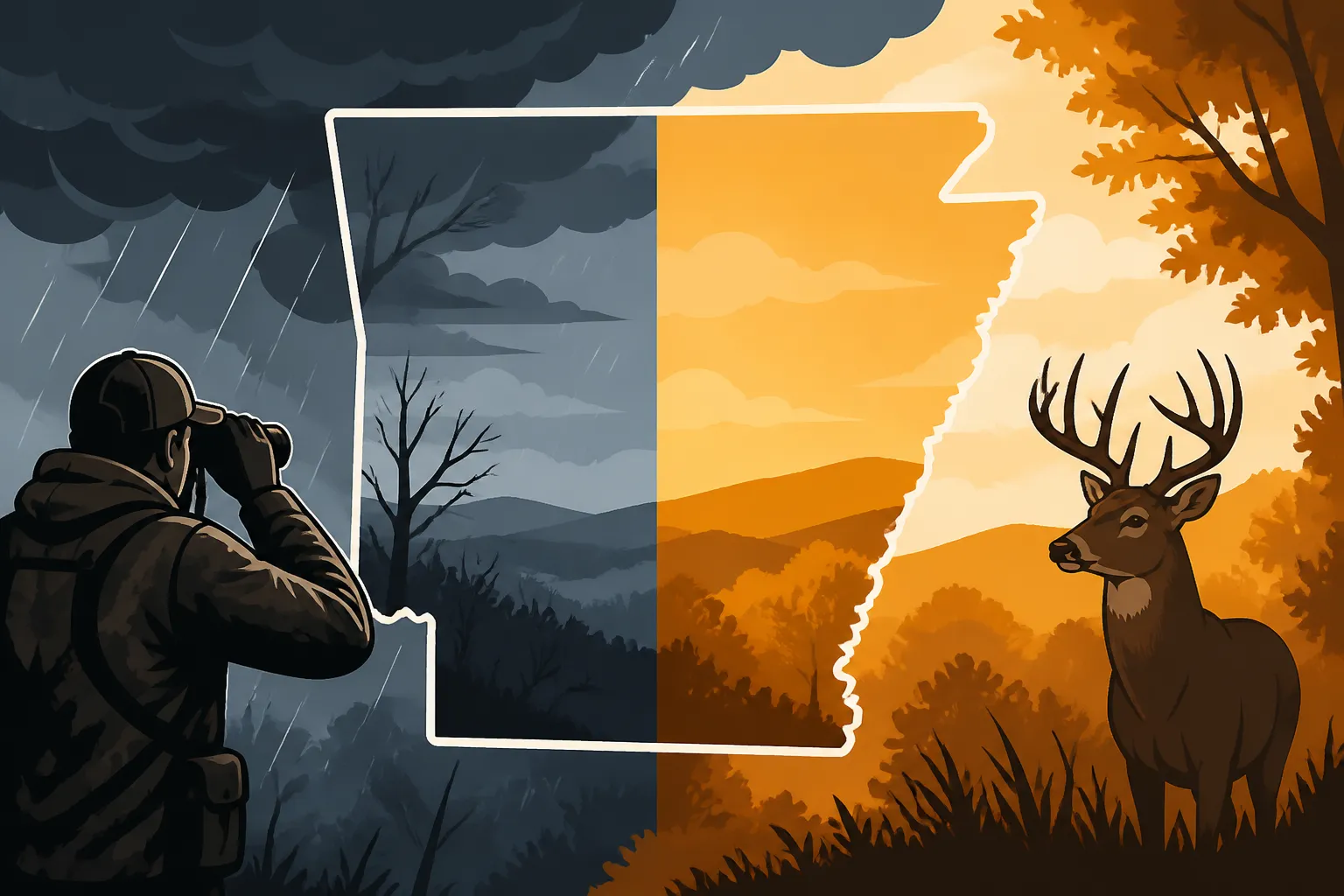
Arkansas is a state of incredible natural beauty and diverse hunting opportunities, but it's also a place where the weather can change on a dime, especially during hunting season. From scorching early-season heat to unpredictable winter ice storms, Mother Nature truly runs the show here, and that can significantly impact your hunting experience.
How Severe Weather Impacts Different Game
Different types of hunting are affected in unique ways by adverse weather. What might only be a minor inconvenience for one hunt could completely derail another.
For duck hunters in the Delta, water levels are paramount. Too much rain can flood areas beyond the ducks' preferred foraging depths, spreading them out across vast stretches of land and making it impossible to focus them into a blind. Conversely, a prolonged dry spell can mean a lack of standing water in key areas, forcing birds to bypass traditional hot spots. An unexpected deep freeze can lock up the water, making decoys useless and access impossible, effectively shutting down a hunt. Imagine arriving for your eagerly anticipated Arkansas Duck Season Dates only to find all the flooded timber frozen solid. It's a heartbreaking scenario that happens more often than you'd think.
Deer hunting, while perhaps less sensitive to exact water levels, is still heavily influenced by weather. Early archery season, particularly Bowhunting Arkansas in September Heat, can be brutal. Extreme heat reduces deer movement to nocturnal hours, making daytime sits unproductive and increasing the risk of spoilage if you do connect. Heavy, sustained rains can dampen scent trails, reduce visibility, and simply make for an uncomfortable, less enjoyable hunt. High winds can make hearing deer difficult, and also make bow shots tricky.
Even spring turkey hunting isn't immune. A sudden cold snap or heavy rain can silence gobblers, making them reluctant to leave the roost and respond to calls. Fog can obscure visibility, and high winds make it nearly impossible to pinpoint distant gobbling, making a run-and-gun strategy much tougher. If you've ever tried calling a turkey When Arkansas Gobblers Go Quiet, you know the frustration.
Common Arkansas Weather Scenarios That Disrupt Plans
Arkansas sees a wide range of weather conditions, and several common scenarios can throw a serious curveball into your hunting plans.
One of the most frequent issues, especially for those pursuing ducks, is unexpected flooding or drought. The White River, Cache River, and various bayous in the Delta are dynamic systems. A heavy rain event upstream can lead to rapid flooding downstream, making many traditional hunting spots inaccessible or pushing birds into new, unhuntable areas. Conversely, a lack of rain means impoundments might not be filled to optimal levels, impacting bird concentrations. Think about the challenges When the Delta Floods Too Much – it’s a logistical nightmare for outfitters and hunters alike.
Winter weather can also be a significant disruptor. While Arkansas might not get the same persistent cold as states further north, ice storms can be devastating. Roads become impassable, power lines go down, and travel grinds to a halt. Even if the hunting area itself is technically open, simply getting there becomes impossible. Freezing rain followed by a hard cold snap can turn entire flooded timber tracts into ice rinks, making any duck hunt impossible until a thaw occurs.
For deer and turkey hunters, prolonged severe thunderstorms or even the threat of tornadoes (which are sadly not uncommon in Arkansas during certain seasons) can force cancellations or evacuations for safety. No hunt is worth putting lives at risk. These scenarios, while less frequent than simple rain or cold, are often deemed "acts of God" in contracts and leave both parties in a difficult spot.
Deciphering Outfitter Contracts: The "Act of God" Clause
When you book a guided hunt, you're entering into a business agreement, and understanding the fine print of that agreement is absolutely critical, especially concerning unforeseen circumstances like adverse weather. Many hunters skip over this section, only to be caught off guard when a hunt is jeopardized by Mother Nature.
Standard Contractual Language Around Weather
Almost every reputable outfitter contract will include a clause, often referred to as an "Act of God," "Force Majeure," or "unforeseeable circumstances" clause. This provision is designed to protect both the outfitter and the client from liabilities when events beyond their reasonable control prevent the fulfillment of the contract. For an outfitter, this typically covers natural disasters like severe floods, blizzards, wildfires, or other extreme weather events that make the hunt impossible or unsafe. It might also extend to things like government-mandated closures of hunting areas.
The core of this clause is often about who "absorbs" the cost. In most cases, if an outfitter cancels a hunt due to an Act of God, they are not typically obligated to provide a full refund of your deposit or hunt fees. Why? Because the outfitter has already incurred significant costs. They've likely paid leases on their hunting ground, maintained equipment, hired guides and lodge staff, purchased food, and spent countless hours scouting and preparing. These are fixed costs that don't disappear just because a duck hole freezes over or a deer zone floods. Expecting a full refund in such circumstances often isn't realistic for the outfitter to remain in business. This is a tough pill to swallow for hunters who have invested time and money, but it's a fundamental aspect of how these contracts work.
When you're researching outfitters, perhaps through a platform like BookYourHunt or GoHunt, always delve into their specific weather policy. Don't assume anything. A good outfitter will be transparent about this.
Rescheduling, Refunds, and Credits: What to Expect
When a weather event forces a cancellation, full cash refunds are exceptionally rare in the outfitting world for the reasons mentioned above. Instead, outfitters typically offer alternatives:
- Rescheduling: This is the most common resolution. The outfitter will often offer to move your hunt to a later date within the current season or, more commonly, to a future season. The feasibility of this depends heavily on the outfitter's availability and your own schedule. Be prepared that rescheduling might come with a rebooking fee, especially if it requires significant administrative work or if the new dates are in a more prime time slot. Always clarify how far out you can reschedule and if there are any restrictions on new dates.
- Credits: Another option is a credit for the amount you've paid, to be used for a future hunt. This is essentially holding your money on account. Again, understand the terms: Is there an expiration date on the credit? Can it be transferred to another person? Can it be used for a different type of hunt (e.g., if your duck hunt is cancelled, can you use the credit for a deer hunt if the outfitter offers them)?
- Partial Hunts: What happens if the weather only affects part of your trip? Say, the first day of a three-day hunt is washed out, but the remaining two days are huntable. Some outfitters might offer a pro-rated credit for the lost hunting time, but many will simply proceed with the hunt on the remaining days, and no refund or credit will be issued for the partial disruption. It comes down to the outfitter's policy and what is stipulated in What an Arkansas Hunt Price Includes.
It's important to differentiate between an "Act of God" cancellation and an outfitter cancelling for their own reasons, such as overbooking, equipment failure, or a guide backing out. In the latter case, you generally have a stronger claim for a full refund or more favorable rescheduling terms, as the issue stems from the outfitter's operational problems, not external forces. The key is to have a clear understanding of the Cancellation Terms at an Arkansas Lodge before you commit.
Strategies for Hunters: Protecting Your Investment
While you can't control the weather, you can control how you prepare for its potential impact on your hunting trip. Being proactive and informed is your best defense against disappointment and financial loss.
Asking the Right Questions Before You Book
Before you even think about putting down a deposit, open a dialogue with the outfitter about their specific weather policy. Don't just read the contract; discuss it with them to ensure you understand every nuance. Here are some essential questions to ask, even if you find the outfitter through reputable sites like GoHunt or BookYourHunt:
- "What constitutes a weather-related cancellation for your operation? At what point do you decide it's unsafe or unhuntable?"
- "If my hunt is cancelled due to weather, what are my options? Is it reschedule, credit, or a partial refund? What are the timelines and any associated fees?"
- "Do you offer any guarantee for rescheduling availability, especially if I need to move it to a prime date in a future season?"
- "What happens if I've only completed part of my hunt, and then weather forces a cancellation?"
- "What are the typical weather challenges for the time of year I'm booking, and what are your contingency plans for them?"
- "Are there any specific situations, like excessive flooding or frozen conditions, where you automatically cancel certain types of hunts?"
Getting these answers in writing, even if it's just an email confirming your conversation, can save a lot of headaches later. This proactive approach is a critical part of doing your due diligence and avoiding Red Flags When Booking in Arkansas. Remember, the best outfitters will be happy to answer these questions transparently. For more guidance on this, check out Questions to Ask an Arkansas Outfitter.
The Role of Travel and Hunt Insurance
For many hunters, especially those investing a significant amount of money and travel time, hunt insurance and/or travel insurance can be a smart investment. These policies are designed to protect your financial outlay against unforeseen events, including certain weather-related disruptions.
- Hunt Insurance: This specialized insurance is designed specifically for hunting trips. It can cover things like trip cancellation due to severe weather, illness or injury (yours or an immediate family member's), lost luggage, or even lost days of hunting if you're unable to continue due to a covered event. Crucially, some policies may cover non-refundable outfitter deposits or fees if the outfitter cancels due to an Act of God, which your standard contract might not refund. Read the policy details very carefully to understand what specific weather events are covered and what the claims process entails.
- Travel Insurance: A general travel insurance policy might cover your flight costs, rental car, and pre- or post-hunt lodging if your trip is cancelled or delayed due to severe weather impacting travel infrastructure. While it might not cover the hunting portion itself, it can protect a substantial part of your overall trip expenses. The most comprehensive travel insurance policies are "Cancel for Any Reason" (CFAR) plans, which, as the name suggests, allow you to cancel your trip for almost any reason (including a change of heart about hunting in bad weather) and receive a percentage of your non-refundable costs back. These policies are more expensive but offer the most flexibility.
Always compare policies from different providers and understand the exclusions. Don't assume anything is covered. It's an extra cost upfront, but it could save you thousands if a severe weather event strikes. Considering Hunt Insurance Worth Buying is not just about peace of mind; it's about financial protection.
| Insurance Type | What It Typically Covers (Weather Related) | What It Might Not Cover | Key Benefit |
|---|---|---|---|
| Hunt Insurance | Outfitter fees if hunt cancelled by outfitter due to severe weather/natural disaster; lost hunting days. | Non-specific "bad weather" (e.g., just raining); change of mind. | Protects your direct hunting investment; specific to hunt scenarios. |
| Travel Insurance | Flight cancellations, rental car, hotel costs if travel is disrupted by severe weather. | Outfitter fees (unless CFAR policy); hunting success. | Protects your travel logistics and associated costs. |
| CFAR Policy | A percentage of non-refundable costs if you cancel for any reason (including weather preference). | 100% refund (usually 50-75% back); higher premium. | Maximum flexibility for cancellation, even due to minor weather. |
Flexibility and Realistic Expectations
Even with the best preparation and insurance, sometimes Mother Nature simply wins. The most successful hunters and travelers in Arkansas learn to embrace flexibility and maintain realistic expectations when faced with unpredictable weather.
Adapting Your Hunt to Suboptimal Conditions
Not every "weather day" results in a full cancellation. More often, it means dealing with less-than-ideal conditions. This is where your adaptability and mental toughness as a hunter come into play.
If a duck hunt is hampered by light rain or moderate wind, your guide might adjust decoy spreads, call sequences, or even the chosen blind. As a hunter, you need to be prepared for the elements – quality rain gear, appropriate layering, and waterproof boots are non-negotiable. Don't let a little discomfort ruin the experience. Sometimes, a dreary, rainy day can actually be fantastic for duck hunting, as birds fly lower and are less wary. The same goes for deer; a steady rain might keep other hunters home, giving you a solitary advantage. Perhaps Still-Hunting After a Delta Rain becomes a highly effective tactic when visibility is low and deer are moving quietly.
For green timber duck hunting, a "bluebird day" – clear skies and bright sunshine – can be notoriously tough. Birds might not fly as well, and the open canopy can make them incredibly wary. A seasoned guide might switch tactics, focusing on areas with more cover or using less aggressive calling. As a hunter, understanding these nuances and trusting your guide's experience is key. Being ready for Hunting Timber on a Bluebird Day means adjusting your expectations for non-stop action and appreciating the skill required to even get a few birds.
Communication and Building a Relationship
Open and honest communication with your outfitter throughout the booking process and leading up to your hunt is invaluable. If the forecast looks grim a week out, reach out. Discuss the situation, understand their current assessment, and talk through the options. A good outfitter will appreciate your proactive communication and will likely be just as concerned about your experience as you are.
Remember that outfitters are passionate about hunting and want their clients to succeed. When weather forces a cancellation or creates challenging conditions, they're often losing money and dealing with frustrated clients, all while having no control over the core issue. Approaching the situation with understanding and a willingness to work together can lead to a much better outcome than immediately demanding refunds or making threats. Building a good relationship can make all the difference if you need to reschedule or navigate a tricky situation. They might be more inclined to find you a prime spot next season if you've been a reasonable and understanding client, even when Mother Nature was not.
Ultimately, hunting is about embracing the wild, and that includes its unpredictability. While weather days can be frustrating, understanding the financial implications, knowing your contractual rights, and having a plan B (like insurance) can turn a potential disaster into a manageable bump in the road.
Disclaimer
This article is for general informational purposes only and does not constitute professional advice. Laws, prices and regulations vary by location and change over time. Consult a qualified professional for guidance on your specific situation.