Hanging a Stand in Bottomland Hardwoods
Hunting in Arkansas's bottomland hardwoods presents a unique challenge, one that many of us seasoned hunters know all too well. It's not like still-hunting ridge tops or setting up on a pine plantation edge; the constant battle with water, mud, and dense vegetation can make finding a good deer stand location feel like trying to solve a puzzle blindfolded. This guide is all about cutting through that frustration, helping you understand the unique characteristics of these fertile, wet woods and giving you actionable strategies to confidently hang a stand that puts you in the prime position for success.
Understanding the Uniqueness of Bottomland Hardwoods
Arkansas's bottomland hardwoods are truly a world unto themselves when it comes to deer hunting. These aren't your typical dry, upland forests; we're talking about rich, alluvial soils, often near major rivers like the Arkansas River or in the sprawling Delta region, that are prone to seasonal flooding. This constant interaction with water shapes everything, from the types of trees that thrive here to how deer navigate and survive.
The Dynamics of Water and Terrain
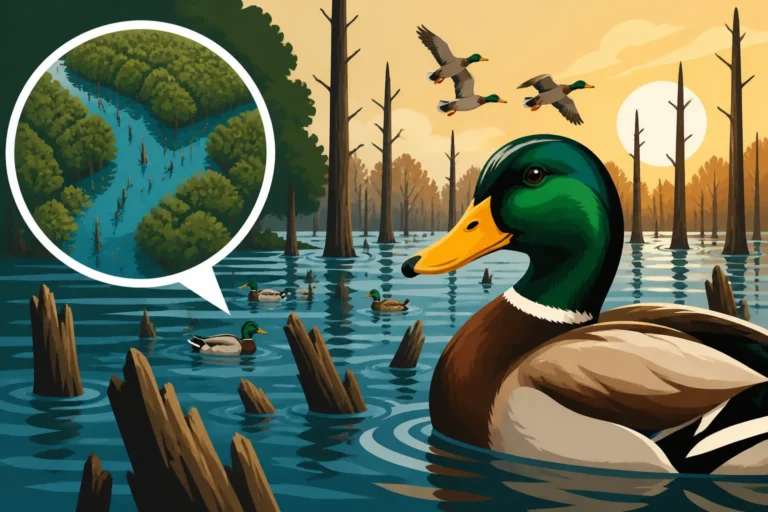
The most defining characteristic of bottomland hardwoods is, without a doubt, the water. Sloughs, oxbow lakes, and cypress brakes aren't just scenic features; they're integral parts of the deer habitat. These areas experience cycles of flooding and drying, which directly impact deer movement, bedding areas, and access points for hunters. A seemingly insignificant ditch during a dry spell can become an impassable barrier after a good rain, completely altering deer travel patterns. You might think you've found the perfect crossing, only for it to be underwater a week later. It's crucial to understand that deer in these environments are masters of adapting to water levels, often bedding in slightly elevated pockets of timber that might only be a foot or two higher than the surrounding flooded areas. This is where understanding concepts like Where Delta Bucks Bed in Standing Water becomes invaluable.
The soil itself is often rich, dark, and loamy, supporting a diverse canopy of trees like various oak species (willow, water, pin, Nuttall), sweetgum, hackberry, pecan, and sometimes even cypress and tupelo in the lowest, wettest depressions. This variety means different food sources becoming available at different times, from early-dropping willow oaks to late-season Nuttall oaks that can hold acorns well into winter. The understory can range from fairly open during dry periods to incredibly dense tangles of briars, vines, and regenerating hardwoods, creating impenetrable cover that deer will use to their advantage.
Deer Behavior in Wet Environments
Deer in bottomland hardwoods behave differently than their upland cousins. Their travel corridors are often dictated by the highest and driest ground available, even if it's just a subtle ridge or an old levee. They learn to use slight elevations as highways through otherwise flooded terrain, and these natural funnels become prime spots for stand placement. When water rises, deer often concentrate on the remaining dry islands, making these areas hotspots. Conversely, when water recedes, new feeding opportunities open up in previously submerged areas, and deer will disperse to take advantage of them.
Their diet is heavily influenced by what's available when. Acorns, especially the later-dropping varieties like Nuttall oaks, are absolute magnets. But they also browse heavily on green vegetation, privet, cane, and other woody browse that thrives in these fertile soils. Understanding these food sources and their seasonal availability is key to anticipating where deer will be, whether it’s finding Reading Red Oak Acorn Drops or knowing what other browse they prefer. Additionally, the rut can play out differently across various regions, so familiarizing yourself with Hunting the Arkansas Rut by Zone is critical for timing your hunts in these specific habitats.
Mastering the Art of Scouting Bottomland Hardwoods
Effective scouting in bottomland hardwoods is a year-round commitment, but it really ramps up in the late summer and early fall before the season opens. You're not just looking for deer sign; you're deciphering the landscape itself, predicting how deer will move based on water, food, and cover. This often means getting out there when it's hot and buggy, long before you ever think about Bowhunting Arkansas in September Heat.
Pre-Season and Early Season Reconnaissance
Your off-season and pre-season scouting should heavily rely on technology and then boots on the ground. Start with aerial maps. Tools like GoHunt (or similar platforms like onX Hunt) are invaluable here. They allow you to virtually explore vast tracts of land, identifying high ground, old levees, sloughs, and potential pinch points that might not be obvious from the ground. Look for subtle color changes that indicate higher, drier ground or breaks in the canopy that suggest a past logging operation that could now be dense, new growth providing excellent cover. Understanding Reading Aerial Photos for Delta Deer is a skill that will pay dividends.
Once you have a few promising spots identified on your map, it's time to put boots on the ground. This often means long, sweaty treks, battling mosquitos, and navigating through thick brush. During these early visits, focus on finding primary trails, especially those leading to and from known bedding areas (often those slightly elevated islands or dense thickets) and major food sources. Look for old rubs and scrapes from previous seasons, which can indicate persistent buck activity. Pay close attention to water crossings – subtle dips where deer consistently cross sloughs or creeks, leaving distinct trails on either bank. These are often funnel points that are goldmines for stand placement. Remember to also check for any specific WMA regulations regarding Blinds and Stands on Arkansas Public Land if you're on public ground.
Adapting to Changing Conditions In-Season
The challenge with bottomland is that it's constantly changing. Water levels can rise or fall dramatically overnight, completely altering deer movement. What was a hot trail one week might be underwater the next, forcing deer onto new routes. This means your scouting efforts can't stop once the season starts. You need to be a perpetual scout, always reading the land.
After a heavy rain, check the main water bodies and low-lying areas. Are new sloughs forming? Are old ones overflowing? Observe where deer are being pushed to higher ground. Look for fresh tracks in the mud along newly formed waterlines or on exposed patches of dirt. If you're seeing a lot of deer activity along a specific old logging road that's now the only dry path, that tells you something. Similarly, as the season progresses and different mast crops fall, you need to identify which oaks are dropping acorns and when. Deer will shift their focus accordingly. Don't be afraid to move your stand if conditions change dramatically; flexibility is your greatest asset in these dynamic environments. Leveraging tools like the AGFC Map Tool or GoHunt's mapping capabilities on your phone can help you monitor these changes and plan your next move.
Choosing and Setting Up Your Stand Safely and Effectively
Selecting the right stand for bottomland hardwoods is just as critical as finding the perfect tree. Given the often wet and muddy conditions, along with the specific tree types, not every stand will be ideal.
Stand Types for Bottomland Hardwoods
When you're hunting bottomland hardwoods, you generally have a few stand types to consider:
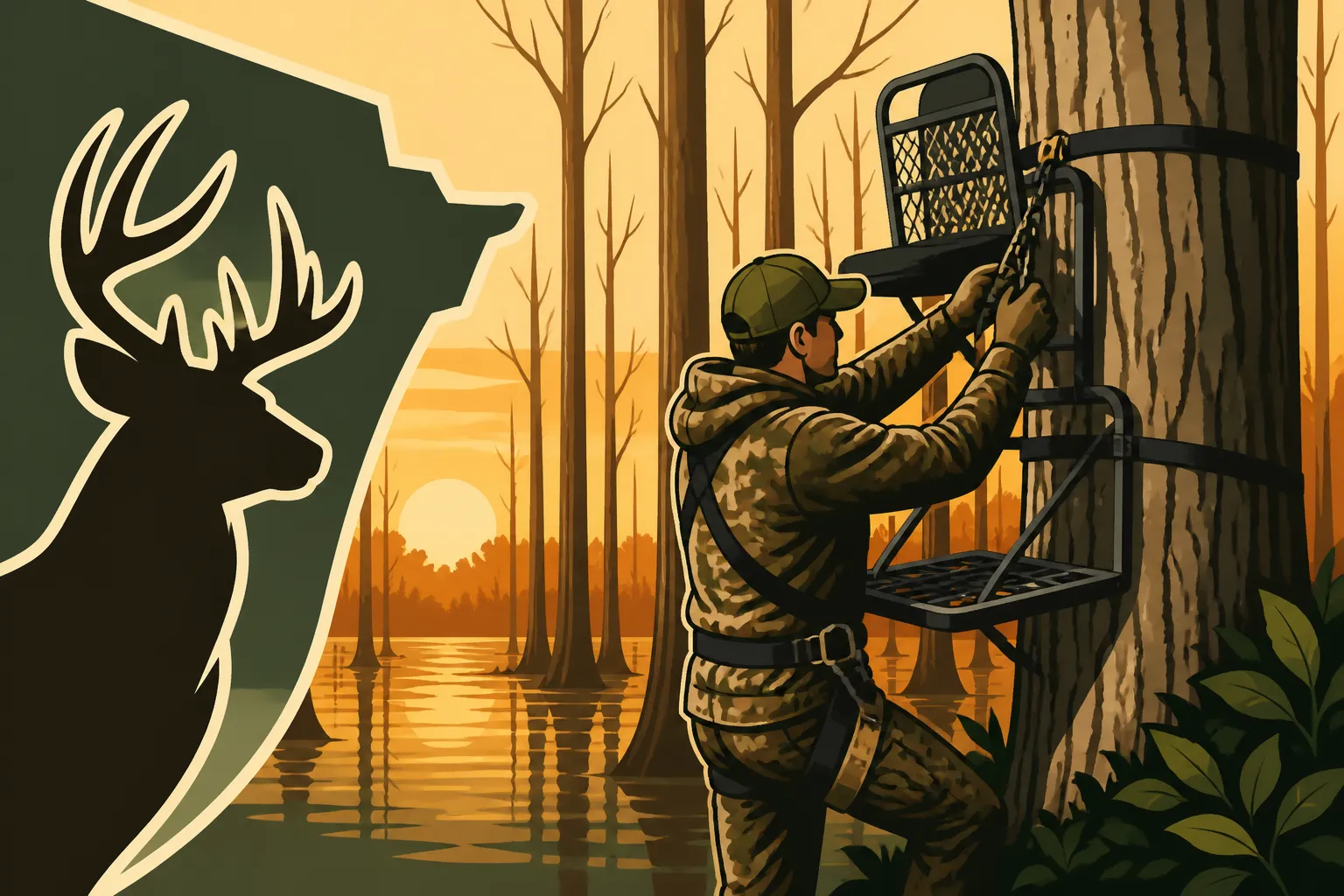
- Lock-on Stands (Hang-on Stands): These are perhaps the most versatile for bottomland. They are relatively lightweight, portable, and can be hung on a wide variety of trees, including those with irregular shapes common in bottomland. You'll need climbing sticks or sections of climbing ladder to get up to your desired height, which can be a bit more work but offers immense flexibility in tree choice. They are excellent for those areas where Treestand Setups in Delta Hardwoods really benefit from adaptability.
- Climbing Stands: While great for straight, limbless trees, these can be hit or miss in bottomland. Many bottomland trees, especially mature oaks, start branching lower or have irregular trunks, making climbers difficult or impossible to use. If you find a suitable tree, they offer quick setup and takedown, but don't count on them being your primary option everywhere.
- Ladder Stands: These offer stability and comfort, but their bulkiness makes them a challenge to transport and set up deep in the woods, especially through mud and water. They are best suited for areas closer to access points or on established food plots within bottomland tracts, rather than deep in the sloughs.
- Ground Blinds: Don't overlook ground blinds, especially in areas with very thick cover or where ideal trees for elevated stands are scarce. They can be incredibly effective when properly brushed in, offering concealment and warmth. This can be a great alternative if you're struggling with access or tree availability, especially when Hunting Arkansas Flooded Green Timber where dry ground might be limited.
Here's a quick comparison of these stand types for bottomland:
| Stand Type | Pros | Cons | Best Use in Bottomland |
|---|---|---|---|
| Lock-on (Hang-on) | Versatile, lightweight, adaptable to trees | Requires climbing sticks, more effort to hang | Deep penetration, irregular trees, strategic pinch points |
| Climbing Stand | Portable, quick setup/takedown | Requires straight, limbless trees (less common in bottomland) | Select straight trees near edges or open areas |
| Ladder Stand | Stable, comfortable, easy access | Bulky, heavy, difficult to transport deep, limited tree options | Near access roads, food plots, well-defined trails |
| Ground Blind | Excellent concealment, warm, adaptable | Limited visibility, requires thick cover, scent control is key | Dense thickets, low-lying areas without suitable trees |
Strategic Placement and Access
Once you've picked your stand type, placement is everything. You want to be at a location that intersects deer movement without alerting them to your presence.
- Funnels and Pinch Points: These are your bread and butter. Look for narrow strips of high ground between two sloughs, where a downed log forces deer to walk a specific path, or where a dense thicket funnels deer into a more open area. These natural bottlenecks concentrate deer movement.
- Edge Cover: Deer love to travel along the edges of different habitat types. Think the edge of a dense briar thicket and more open timber, or the transition from dry ground to a flooded cypress brake. These offer both cover and easier travel.
- Food Sources: Position your stand within shooting distance of preferred food sources, whether it's an active acorn drop from a cluster of Nuttall oaks or a field of agricultural crops adjacent to the bottomland. However, be mindful that deer often stage in thicker cover before entering a feeding area, so a stand positioned slightly back from the direct food source can be more effective for catching them moving during daylight.
- Entry and Exit Routes: This is perhaps the most overlooked aspect. Your stand means nothing if you spook deer getting to and from it. Plan your approach to use natural cover, wind direction, and terrain to your advantage. Try to use water or thick vegetation to hide your approach. In many bottomland scenarios, you might need waders, a kayak, or even a small boat to access your stand quietly, especially if you're navigating Entry Routes Through Flooded Timber. Always approach with the wind in your face or crosswind, never blowing your scent directly into the anticipated deer movement area.
Safety and Practical Considerations
Safety is paramount, especially when hanging stands deep in sometimes remote, wet areas. Always use a full-body harness, even when climbing to hang your stand. Practice hanging your stand in a safe environment first. Before you climb any tree, especially in bottomland where root systems can be compromised by water, check the tree's integrity. Look for dead limbs, rotting sections, or signs of disease that could make it unstable.
Consider the practicalities of a bottomland hang. Mud, water, and thick vegetation will slow you down. Bring all your tools with you – a saw or good pruning shears to clear shooting lanes, ropes for hauling up your stand and gear, and sturdy boots or waders. If you're going deep, a backpack designed for hauling stands can save you a lot of grief. It's also wise to inform someone of your hunting plans, especially if you're venturing into isolated areas. Always carry a fully charged cell phone (in a waterproof bag!) and a way to navigate, such as a GPS or a mapping app like GoHunt, as it's easy to get disoriented in dense, homogeneous bottomland timber. Understanding the nuances of areas like the Arkansas Delta, which has higher deer density than some parts of the Ozarks, for instance, mentioned in Delta Versus Ozark Deer Density, reinforces the importance of being prepared for varied hunting conditions and potential success.
Disclaimer
The information provided in this guide is for informational purposes only and is not a substitute for professional advice. Hunting regulations and conditions can change. Always consult the latest regulations from the Arkansas Game and Fish Commission (AGFC) and local authorities before engaging in any hunting activities. Ensure you have the proper Arkansas Hunting Licenses and What They Cost and abide by all safety guidelines. The author and publisher are not responsible for any accidents, injuries, or legal issues that may arise from using this information.