Woodcock in Arkansas Bottoms
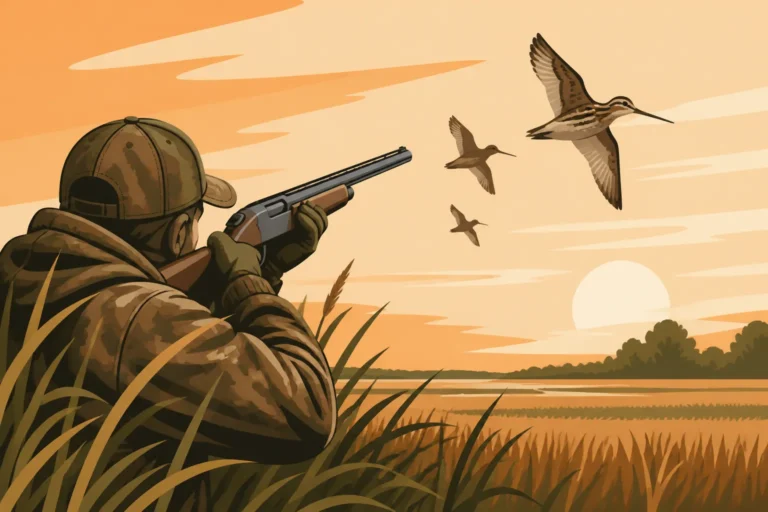
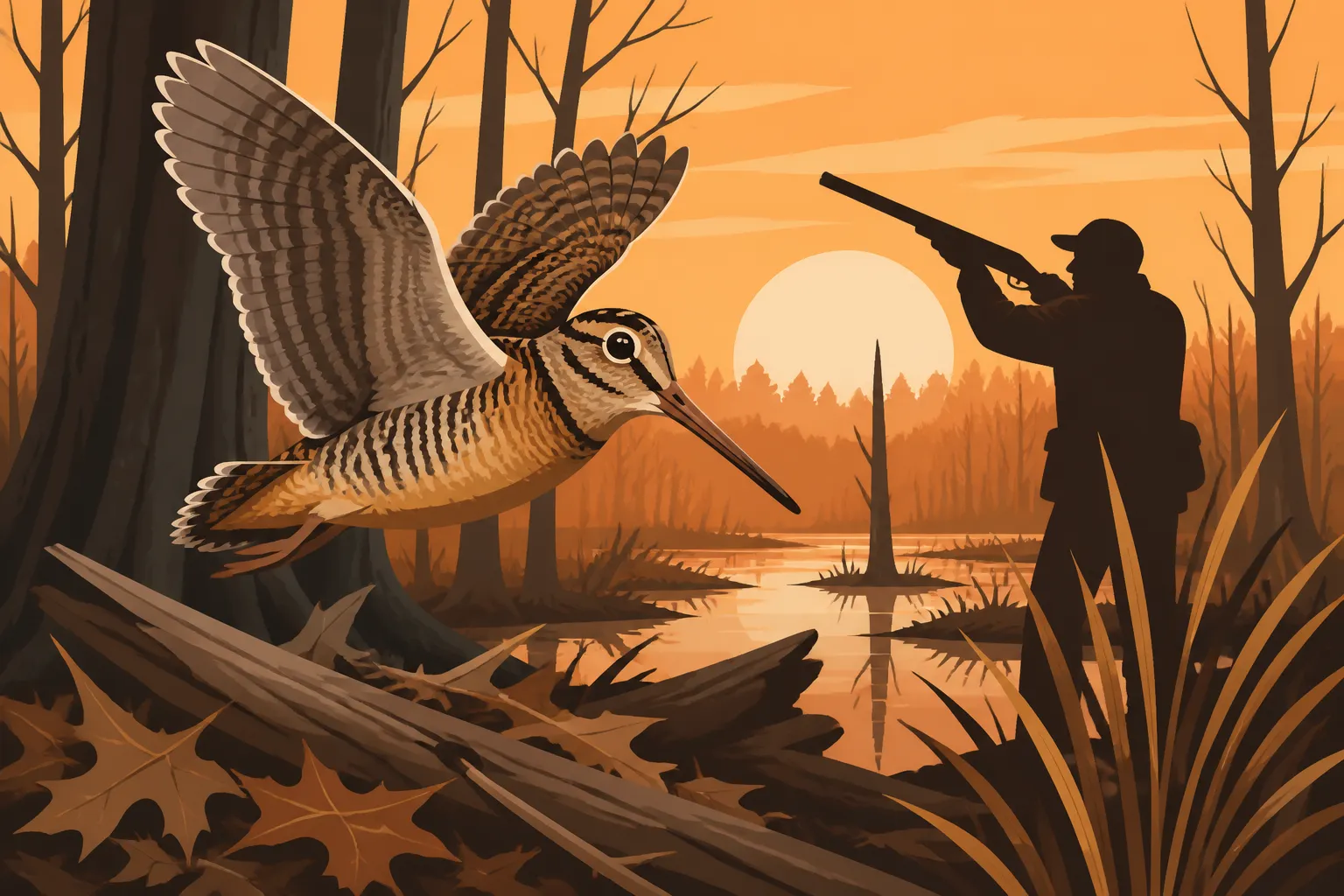
Trying to pinpoint where woodcock will be during their fleeting migration through Arkansas can feel like a genuine game of hide-and-seek. These quirky little birds, often called timberdoodles, have a knack for disappearing right before your eyes, making a successful hunt a rewarding challenge. This guide will walk you through understanding their preferred haunts in Arkansas's bottomlands, how to time your efforts, and the best tactics to bring a few home.
Understanding Woodcock Habitat in Arkansas Bottoms
Woodcock aren't just any bird; they're specialists, and their habitat preferences are quite specific, especially when they're making their way through the Natural State. Forget wide-open fields or mature, pristine forests; these birds are looking for something much more particular, and Arkansas’s river bottoms, with their unique composition, offer just that.
Why Bottomland Hardwoods are Prime Woodcock Territory
Arkansas’s bottomland hardwoods, especially those found along our major river systems like the White River, Arkansas River, and Cache River, are veritable magnets for migrating woodcock. What makes these areas so attractive? It all boils down to two critical factors: food and cover. Woodcock are voracious eaters of earthworms, and these river bottom soils, often rich with organic matter and consistently moist, are teeming with them. The alluvial soils found in these low-lying areas retain moisture incredibly well, even during drier periods, ensuring a steady supply of their primary food source. This soft, loamy earth also makes it easy for their long, sensitive bills to probe deep for worms, a key behavioral trait. Think about those areas where the ground feels almost spongy underfoot – that’s often ideal woodcock real estate.
Beyond the worms, these areas provide essential cover. Unlike some upland game birds that prefer open timber, woodcock seek out dense, young growth. They love thickets of young alders, dogwoods, sweetgums, and briar patches, especially where these form a canopy that’s not too tall, but also has enough open ground beneath for them to walk and feed. This dense understory offers protection from aerial predators and a safe place to rest during the day. Often, these are the forgotten corners of the woods, the places you might otherwise walk past, but for a woodcock, they're perfect. The mixture of mature trees overhead dropping leaves and creating organic matter, coupled with the dense, low-growing vegetation, creates a microclimate that’s precisely what these birds are looking for on their journey.
Recognizing Key Cover and Feeding Areas
Finding woodcock means knowing how to read the landscape. When you’re walking through Arkansas’s bottoms, keep an eye out for specific indicators. Young timber stands, particularly those that have been harvested a few years back and are now in the regeneration phase, are fantastic. These clear-cut areas, especially where they transition into slightly older growth, offer that perfect blend of dense cover and moist, disturbed soil. Look for areas with a good mix of saplings, from knee-high to head-high, intermingled with blackberry brambles, honeysuckle, and other thick brush. These tangled spots might be tough for you to navigate, but they offer woodcock the concealment they crave.
Another prime spot is along the edges of bottomland fields or sloughs, where the timber transitions to more open ground or water. These transitional zones often have softer soils and a good mix of cover. Think about the fringes of flooded timber or the higher ground adjacent to a seasonal wetland. You might also find them in old, neglected apple orchards or along creek bottoms with dense willows and alders. The key is that combination of moist, workable soil and a protective ceiling of dense vegetation overhead, but with enough clear ground at foot level for them to move and probe. A good general rule is to look for areas that are a little too thick for deer but not so thick a bird can't flush. Scouting Arkansas Public Land Before Season with tools like the AGFC map can help you identify these types of habitats from aerial photos before you ever set foot on the ground.
Timing Your Woodcock Hunts for Migration
Unlike our resident game birds, woodcock are migratory, which means their presence in Arkansas is seasonal and dependent on their journey south. Timing is everything when it comes to intercepting these birds, and understanding their migration patterns is crucial for a successful hunt.
The Peak Migration Window
For most of Arkansas, the prime window for woodcock hunting typically opens up in late October and continues through November and into early December. While a few birds might trickle in earlier, and some might stick around later, this period sees the highest concentrations as birds from the northern states and Canada push south. These birds are often passing through, stopping to rest and refuel before continuing their journey to their wintering grounds further south, including Louisiana and other Gulf Coast states. The exact timing can vary slightly from year to year, influenced by factors like early cold snaps up north or unusually warm weather.
It’s not just about when they arrive, but how long they stay. A good flight of woodcock might linger in an area for several days or a week if conditions are favorable, offering multiple hunting opportunities. However, a significant weather change can push them out just as quickly as they arrived. Keeping an eye on weather patterns to our north, particularly major cold fronts, can give you a heads-up on when a fresh push of birds might be headed your way. This migratory pattern is what makes them such an exciting challenge—you never know exactly when or where the next flight will appear.
Weather Factors and Their Impact
Weather plays an enormous role in woodcock migration. A strong, sustained cold front moving south from the central plains or upper Midwest is often the trigger for large numbers of woodcock to begin their journey or accelerate their movement. These fronts, especially when they bring freezing temperatures to their northern breeding grounds, essentially force the birds to move south in search of unfrozen ground where they can still access earthworms. When these cold fronts reach Arkansas, often accompanied by strong north winds, you can expect a fresh influx of birds within a day or two.
Conversely, mild, open autumns can delay their arrival or spread out their migration, making it harder to pinpoint concentrations. Heavy rains can also temporarily make some areas too wet, pushing birds to higher, drier ground within the bottomland system, while prolonged dry spells can harden the soil, forcing birds to seek out the most consistently moist areas, like creek bottoms or seeps. Paying attention to these weather patterns – not just locally, but also upstream of their migration path – can significantly improve your chances. It’s a dynamic dance with nature, where understanding the weather is as important as knowing the habitat itself.
Essential Gear and Tactics for Arkansas Woodcock
Woodcock hunting in Arkansas is a unique experience that often requires specific gear and a nuanced approach. It’s not about long-range shooting or sitting in a blind; it’s about close-quarters action in dense cover.
Shotguns, Ammunition, and Choke Choices
When you’re hunting woodcock in the thick bottomland cover of Arkansas, a fast-handling, open-choked shotgun is your best friend. These birds flush quickly, often right at your feet, and dart through tight timber. A 20-gauge or 28-gauge shotgun is incredibly popular because of its lighter weight and quicker swing, which is vital when you’re navigating tangled briars. If you prefer a 12-gauge, opt for a lighter model. As for action, over-unders, side-by-sides, and semi-automatics all have their fans, but the key is comfort and quick maneuverability.
Choke choice is critical for woodcock. They are typically shot at very close ranges, often within 15-25 yards. Therefore, an Improved Cylinder or even a Skeet choke is ideal. These open patterns spread quickly, giving you a better chance to connect with a bird flushing through a gap in the trees. For ammunition, small shot sizes are perfect. #8 or even #9 shot will provide a dense pattern with plenty of pellets to humanely take down these small, delicate birds without over-damaging the meat. Make sure you're using lead shot unless you're hunting on a federal refuge or WMA that specifically requires non-toxic shot for upland game; otherwise, lead is perfectly fine for woodcock. Consider using a lighter load, perhaps 7/8 oz or 1 oz, to reduce recoil and make for a more enjoyable day of shooting in the thick stuff.
Hunting with Dogs vs. Still-Hunting
Without a doubt, hunting woodcock with a good bird dog is the most effective and enjoyable way to pursue these elusive migrants. A well-trained pointing dog, like an English Setter, Brittany Spaniel, or German Shorthaired Pointer, can make all the difference. Their keen noses can locate the birds in the dense cover, holding them on point, which gives you time to get into position for a shot. Woodcock often hold very tight, allowing a dog to lock up on a solid point for extended periods. Once on point, approach cautiously, ready for the flush. A flushing dog, such as a Springer Spaniel, can also be very effective, though you’ll need to be quick on the draw when the bird bursts from cover. Having a dog also greatly aids in retrieving downed birds from the tangles, preventing lost game. This is similar in principle to running deer dogs in Arkansas, where the dog’s scenting ability is key to locating game in heavy cover.
If you don't have a dog, don't despair; still-hunting for woodcock is absolutely possible, though it requires more patience and a keen eye. You’ll need to walk slowly and deliberately, pausing often to scan the ground ahead and listen. Woodcock tend to sit very still, relying on their camouflage, so you might walk right past them. Focus on those ideal habitat patches: dense, young growth with moist soil. When walking, make sure to kick through briar patches and dense clumps of vegetation; this often encourages a hiding bird to flush. Pay close attention to the sound of flushing wings, and try to mark where the bird flies to, as they often don't fly far and may drop into another thicket. It's a much more labor-intensive approach but can be very rewarding when you successfully flush and bag a bird on your own.
Navigating Dense Bottomland Cover
Hunting woodcock in Arkansas's bottoms means you're going to be in some thick stuff. Seriously, some of these areas are a physical challenge, but that's precisely where the birds want to be. You'll need durable clothing that can stand up to thorns and briars, like briar pants or chaps, and a tough upland jacket. Waterproof boots are also essential, as the ground in these bottomlands is often damp or even muddy, especially near creeks or sloughs.
Movement needs to be slow and methodical. Crashing through the brush will not only wear you out quickly but also spook birds prematurely. Use your body to push through thickets, stepping over fallen logs and through dense tangles. Keep your shotgun at the ready, pointed in a safe direction but prepared for an instantaneous mount. Often, your shots will be quick, instinctive reactions to a bird that appears for a split second through a small opening. Good physical conditioning helps, as does carrying water and a small first-aid kit for inevitable scrapes and scratches. Don't forget a compass or a GPS mapping app like GoHunt to help you keep your bearings, as dense cover can quickly disorient you, especially when you're focused on working a bird.
Locating Public and Private Land Opportunities
Finding good woodcock hunting grounds in Arkansas means knowing where to look, whether you’re exploring public lands or seeking permission on private property. The good news is that Arkansas offers a variety of suitable options.
Identifying Productive WMAs and National Forests
Arkansas is blessed with a wealth of public land that provides excellent opportunities for woodcock. Our Wildlife Management Areas (WMAs) are often prime spots, especially those located within river bottoms or areas that have undergone recent timber management. For instance, WMAs along the White River or Cache River often have suitable habitat. Areas like Rex Hancock Black Swamp WMA or Dave Donaldson Black River WMA, while famous for ducks, also hold pockets of excellent woodcock cover, particularly on the higher ground adjacent to flooded timber or in young regenerating cuts. The key is to look for areas with mixed hardwood forests and early successional growth rather than just mature stands.
The Ouachita and Ozark National Forests also offer potential, particularly in creek bottoms, old logging areas, or where selective timber harvests have created dense regrowth. While these forests are perhaps better known for deer and turkey, many overlooked low-lying areas or recently disturbed sites will attract woodcock during migration. Using detailed mapping tools like GoHunt or the AGFC's own map tool can help you pinpoint these promising areas by identifying habitat features from satellite imagery, showing you forest type, density, and proximity to water sources. Always check specific WMA regulations for any special rules or restrictions before you hunt.
Gaining Access to Private Bottomlands
Private land in Arkansas, especially agricultural land with adjacent timbered creek bottoms or old field edges, can be incredibly productive for woodcock. Farmers who have bottomland property may have areas of dense, brushy regrowth that are perfect. The challenge, of course, is gaining permission. The best approach is always to ask respectfully and in person. Start by identifying landowners in areas you suspect might hold birds. A quick knock on the door, a polite introduction, and a clear explanation of what you're hoping to hunt (small, migratory birds that don't cause crop damage) can go a long way.
Offering to help with small tasks, sharing some of your harvest, or just being genuinely appreciative can help build a relationship. Many landowners are happy to grant access for woodcock or other small game, especially if they don't hunt it themselves. Always be mindful of their property, close gates, and leave no trace. Building these relationships is key, and sometimes, those overlooked private land thickets can hold the biggest concentrations of birds that see less hunting pressure. Remember that Arkansas law generally requires permission to hunt private land, so always secure it before heading out.
| Factor | Ideal Woodcock Habitat Description |
|---|---|
| Soil Type | Moist, soft, loamy soil rich in organic matter (earthworms!). |
| Vegetation | Dense, young deciduous saplings (alder, sweetgum, dogwood, willow) 5-15 feet tall. |
| Understory | Sparse ground cover below dense canopy, allowing easy movement for foraging. |
| Moisture | Proximity to water sources like creeks, sloughs, seeps, or moist depressions. |
| Sunlight | Areas with dappled sunlight hitting the forest floor, promoting invertebrate activity. |
| Disturbance | Recently logged areas (2-7 years post-harvest), old fields reverting to forest, or thicket edges. |
| Location | River bottoms, creek drainages, old orchards, and edges of agricultural fields. |
The pursuit of woodcock in Arkansas's bottomlands offers a uniquely satisfying hunting experience, blending the thrill of bird hunting with the challenge of navigating dense, wild landscapes. With a bit of scouting, an understanding of their elusive habits, and the right approach, you'll be well on your way to enjoying the timberdoodle tradition.
Disclaimer
Please ensure you are familiar with and adhere to all current Arkansas Game and Fish Commission regulations and seasons before planning any hunting trip. Always prioritize safety, ethical hunting practices, and respect for wildlife and private property. Regulations can change, so consult the official AGFC website or guidebooks.