Arkansas Black Bear Numbers Today
It's always fascinating to dive into the world of Arkansas black bears! For many years, the "Bear State" title felt more like a historical footnote than a living reality, but I'm thrilled to tell you that's no longer the case. People often wonder just how many bears are out there, especially as sightings become more common outside their traditional haunts. This guide will take a deep dive into the current black bear numbers in Arkansas, exploring their remarkable recovery, where they're thriving, the factors influencing their populations, and what it all means for those of us who share their woods.
The Resurgence of Arkansas Black Bears
The story of black bears in Arkansas is truly one of the most incredible wildlife success stories in the state's history. From near-extinction to a thriving population, it's a testament to dedicated conservation efforts and the resilience of these magnificent animals.
A Historical Perspective on Decline and Recovery
Arkansas earned its "Bear State" nickname centuries ago, when black bears were abundant across virtually the entire state. Early explorers and settlers frequently documented their presence in vast numbers, from the dense bottomland forests of the Delta to the rugged mountains of the Ozarks and Ouachitas. These bears were a critical part of the ecosystem and, for a long time, a readily available resource for sustenance.
However, as the 19th century gave way to the 20th, things took a drastic turn for the worse. Unregulated hunting, coupled with widespread deforestation and habitat destruction for agriculture and timber, pushed the Arkansas black bear population to the brink. By the 1930s, estimates suggested there were fewer than 50 bears left in the entire state, largely isolated in the most remote pockets of the Ouachita Mountains. It was a dire situation, a stark reminder of how quickly even seemingly endless wildlife resources can vanish without careful stewardship.
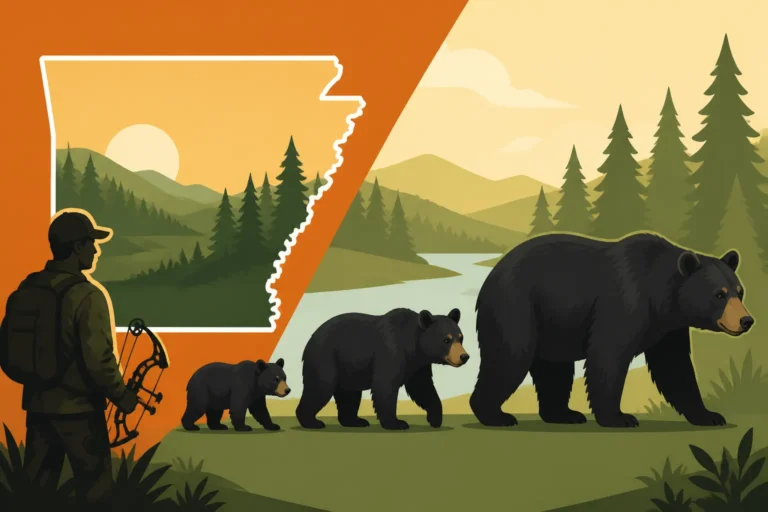
Recognizing the impending loss of an iconic species, the Arkansas Game and Fish Commission (AGFC) embarked on a groundbreaking conservation initiative: the 1958 Arkansas Bear Restoration program. This ambitious project involved trapping 254 black bears from Minnesota and Manitoba, Canada, and releasing them into the remote and suitable habitats of the Ozark and Ouachita National Forests between 1958 and 1968. These carefully selected areas provided the dense forest cover, abundant food sources, and minimal human disturbance necessary for the bears to establish new breeding populations. The program proved to be a resounding success, laying the foundation for the healthy bear population we see today.
Modern Population Estimates and Growth
Fast forward to the present, and the results of that restoration effort are truly astounding. While an exact, real-time headcount of every single bear is impossible, the AGFC utilizes a combination of sophisticated techniques to estimate the black bear population in Arkansas. These methods include population modeling based on harvest data, intensive den studies where cubs are counted and mothers are tracked, hair snare surveys for genetic analysis, and extensive camera trap grids across various habitats. All these data points are fed into models to provide the most accurate population figures possible.
Current estimates from the AGFC indicate that Arkansas is home to a robust and growing black bear population, generally ranging from 4,000 to 5,000 animals, and potentially even higher in peak years. This figure represents a monumental comeback from those critically low numbers of the mid-20th century. The consistent growth trends observed over the last few decades, particularly in the core bear zones of the Ozarks and Ouachitas, show that these bears are thriving. We're seeing healthy cub production, excellent survival rates, and an expansion of their range, all signs of a truly successful conservation story.
It's truly incredible to think about how much has changed. The efforts that began in the late 1950s have paid off in a big way, ensuring that future generations of Arkansans can experience the thrill of seeing a wild black bear. These numbers are constantly monitored and refined by the AGFC, ensuring that management strategies remain adaptive and effective in sustaining this cherished wildlife resource.
Understanding Bear Distribution Across Arkansas
While the overall numbers are impressive, it's equally important to understand where these bears are living and how their range has expanded over time. Arkansas's diverse landscape offers varying levels of suitable habitat, leading to distinct patterns of bear distribution.
Primary Bear Zones: Ozarks and Ouachitas
Historically and currently, the vast, rugged landscapes of the Ozark and Ouachita National Forests remain the primary strongholds for Arkansas's black bear population. These expansive national forests, with their dense timber, deep hollows, and abundant mast-producing trees, provide ideal habitat that supports high bear densities. The sheer size and remote nature of these areas offer the seclusion bears need to thrive, minimize human disturbance, and provide ample foraging opportunities.
Within these major zones, specific regions and counties are known for having particularly high bear numbers. In the Ozarks, counties like Newton, Johnson, Pope, and Van Buren frequently report significant bear activity and harvest. These areas are characterized by steep, forested terrain, often with limited road access, creating perfect sanctuaries. Similarly, in the Ouachitas, counties such as Yell, Garland, Montgomery, and Polk are prime bear country, boasting vast tracts of mixed pine and hardwood forests. The availability of acorns, hickory nuts, and various berries throughout these mountainous regions is a critical factor in supporting large, healthy bear populations, contributing significantly to the overall count of Where Arkansas Bears Range.
The topography of these regions directly influences bear behavior and population dynamics. Bears in the mountains often have larger home ranges due to more scattered food sources and the need to traverse rugged terrain. They utilize a network of dense cover for bedding and travel, moving between various elevations to exploit seasonal food availability. This habitat diversity is a key reason why the Ozarks and Ouachitas continue to be the backbone of Arkansas's bear population.
Expansion into Other Regions
One of the most exciting aspects of the black bear comeback is their gradual but undeniable expansion beyond these traditional mountain strongholds. As the populations in the Ozarks and Ouachitas reached healthy saturation levels, younger bears, particularly males, began to disperse in search of new territories. This natural phenomenon has led to established populations and increased sightings in areas that haven't seen bears in large numbers for generations.
The Arkansas River Valley, which essentially bisects the state between the Ozarks and Ouachitas, has become a significant corridor for bear movement and a new area of residency for many. Counties like Logan, Conway, and Franklin, with their mix of river bottoms, smaller mountain ranges, and forested tracts, now support stable breeding populations. Furthermore, bears have been spotted and occasionally harvested in even more unexpected places, including parts of the Delta, such as the areas bordering the Cache River and White River systems, and sections of south Arkansas. While these populations might not be as dense as in the national forests, their presence indicates a thriving and adaptable species.
This expansion isn't without its challenges. As bears move into more agricultural and suburban landscapes, the potential for human-bear conflicts increases. Bears, being opportunistic omnivores, are drawn to easily accessible food sources like garbage, pet food, and agricultural crops. The AGFC actively manages these situations through public education campaigns, hazing efforts, and, in some cases, relocating problem bears. Understanding the dynamics of this expansion is crucial for promoting coexistence and ensuring the continued health and growth of the black bear population across a broader spectrum of Arkansas landscapes.
Factors Influencing Black Bear Numbers
Understanding the raw numbers is one thing, but knowing why those numbers are what they are requires a deeper look into the environmental and management factors that shape bear populations. It's a complex interplay of nature's bounty and human stewardship.
Habitat Quality and Food Availability
The cornerstone of any healthy wildlife population is robust habitat, and for black bears, this largely revolves around the availability of high-quality food sources. Bears are omnivores with a diverse diet, but the abundance of mast crops – particularly acorns from various oak species, pecans, and other hard and soft mast like persimmons and wild berries – is absolutely critical for their survival, growth, and reproductive success. A banner year for acorns, for instance, means bears can put on significant fat reserves, which are vital for successful hibernation and for sows to produce healthy cubs.
Conversely, a poor mast year can have a ripple effect across the bear population. If natural food sources are scarce, bears might have smaller litters, cubs might have lower survival rates, and bears might emerge from hibernation in poorer condition. This can lead to increased conflicts with humans as bears venture closer to residential areas or agricultural fields in search of sustenance. The AGFC closely monitors mast crop production to anticipate these impacts.
Beyond food, the overall health and diversity of the forest ecosystem play a huge role. Forest management practices, including selective logging, controlled burns, and reforestation, can significantly impact bear habitat. While clear-cutting can initially reduce mature mast producers, it also creates new growth and thickets that provide excellent cover and browse for bears and other wildlife. A mosaic of forest ages and types offers a wider variety of food and cover throughout the year, supporting a more robust bear population. Factors like prolonged droughts or unusually wet springs can also affect berry and mast production, adding another layer of complexity to food availability.
Hunting Regulations and Management
The Arkansas Game and Fish Commission plays a pivotal role in ensuring the long-term sustainability of the black bear population through careful hunting regulations and proactive management strategies. Far from being detrimental, regulated hunting is a scientifically proven tool for maintaining healthy wildlife populations, preventing overpopulation, and mitigating human-wildlife conflicts. The AGFC's approach to bear management is highly data-driven and adaptive.
A key component of this management involves the establishment of Arkansas Bear Seasons and Zone Quotas. The state is divided into specific bear zones, each with its own designated hunting season dates, methods allowed, and a pre-determined quota for the number of bears that can be harvested. These quotas are not arbitrary numbers; they are meticulously calculated based on population estimates, harvest data from previous years, cub production rates, and overall population health. The goal is to allow for a sustainable harvest that removes a portion of the population without impacting its long-term viability or growth.
The AGFC constantly monitors the harvest during the season. For example, some bear zones have a "zone closes when quota is met" rule, meaning that if hunters reach the predetermined number of bears for that area before the season officially ends, the season in that specific zone will immediately close. This flexible approach, often announced through their website and social media, is critical for dynamic management and why hunters need to know When the Arkansas Bear Zones Close Mid-Season. Hunters are required to check their bears, and this harvest data is invaluable for the AGFC's population models and future management decisions. This robust system of monitoring and adjustment ensures that the bear population remains healthy and productive for generations to come.
| Aspect | Pre-1950s (Est.) | 1958-1968 Restoration | Current Estimates (2020s) | Recent Annual Harvest |
|---|---|---|---|---|
| Population Size | < 50 | 254 (released) | 4,000 – 5,000+ | 400 – 600 |
| Primary Range | Ouachita remnants | Ozarks & Ouachitas | Ozarks, Ouachitas, River Valley | Ozarks & Ouachitas |
| Status | Critically low | Rebuilding | Thriving, expanding | Sustainable |
| Key Factor | Habitat loss | Reintroduction | Habitat & Mgmt. | Quotas & Season |
Note: Population figures are estimates and can fluctuate year to year based on various factors including mast crop, cub production, and management actions.
Challenges and Conservation Efforts
While the black bear population in Arkansas is undoubtedly a success story, it's not without its ongoing challenges. As numbers grow and bears expand into new territories, the dynamic between humans and bears becomes increasingly important. Balancing conservation with public safety and economic concerns is a continuous effort.
Human-Bear Conflicts and Coexistence
One of the most significant challenges stemming from a growing and expanding bear population is the increase in human-bear conflicts. While bears are generally shy and avoid humans, their opportunistic nature means they are quickly attracted to readily available food sources, whether it's an overflowing garbage can, an uncovered compost pile, a pet food bowl left on the porch, or even bird feeders. These encounters can range from simple nuisances to more serious property damage or, rarely, aggressive behavior if a bear feels threatened or habituated to human food.
Residents in bear country, and even those in areas of expansion, often express frustration or fear when bears frequent their properties. This is a natural reaction, but it highlights the critical need for public education and proactive measures to prevent such conflicts. The AGFC actively promotes "bear-aware" practices, encouraging people to secure trash in bear-resistant containers, bring pet food inside, remove bird feeders during bear season, and clean barbecue grills thoroughly. By taking these simple steps, we can significantly reduce the likelihood of attracting bears to human spaces and help foster a more peaceful coexistence. It's about teaching humans to live smart in bear country, rather than always blaming the bear.
Another aspect of conflict arises in agricultural areas, where bears might raid crops like corn, fruit orchards, or beehives. The AGFC works with landowners to implement deterrents and, if necessary, trapping and relocating problem bears. These efforts are crucial for maintaining public support for bear conservation, demonstrating that the AGFC is actively managing the challenges associated with a thriving bear population.
Disease Monitoring and Research
Maintaining a healthy bear population isn't just about numbers; it's also about the health of individual bears and the overall population. While Chronic Wasting Disease (CWD) is a major concern for deer and elk, it hasn't been found to significantly impact black bears. However, the AGFC remains vigilant, continuously monitoring for any signs of disease that could potentially affect bears. This includes examining harvested bears for abnormalities and conducting necropsies on any bears found deceased due to unknown causes.
Beyond disease surveillance, research is a cornerstone of effective bear conservation. The AGFC, often in collaboration with universities and wildlife biologists, conducts various studies to deepen our understanding of black bear biology in Arkansas. This can involve intensive den surveys, where biologists locate hibernation dens to count and tag cubs, assess their health, and gather data on reproductive rates. Tracking studies using GPS collars provide invaluable insights into bear movements, habitat use, and seasonal activity patterns.
These research efforts inform and refine management strategies. For example, understanding the impact of mast crop failures on cub survival, or how different forest management techniques affect foraging opportunities, allows the AGFC to make more informed decisions about hunting quotas, habitat improvements, and public education initiatives. This commitment to scientific research ensures that Arkansas's black bear population remains robust and healthy for the long haul, showcasing the AGFC's dedication to sound wildlife management.
What Current Numbers Mean for Hunters
For those of us who enjoy hunting, the healthy and growing black bear population in Arkansas presents some incredible opportunities. It means that pursuing a bear in the Ozarks or Ouachitas isn't just a pipe dream; it's a realistic goal, provided you put in the effort and follow the regulations.
Opportunities in Bear Hunting
The robust Arkansas Black Bear Numbers Today translate directly into good hunting opportunities, particularly in the state's established bear zones. With a population that has expanded its range and shown consistent growth, hunters have a legitimate chance to harvest a bear, making it one of the most exciting big game hunts in the state. Many hunters who've been focused on deer are now turning their attention to bears, drawn by the challenge and the unique experience.
Arkansas offers various methods for hunting black bears, providing options for different preferences and skill levels. Hunters can choose to pursue bears through still-hunting, carefully navigating the woods in search of sign, or by using techniques like hunting over bait, which is permitted in specific zones and under strict regulations. If you're considering this, understanding the Bear Baiting Rules and Tactics in Arkansas is crucial for a legal and ethical hunt. Additionally, in designated zones, hunters can engage in Deer Hunting With Dogs in Arkansas which can extend to bears in certain situations, adding another dynamic layer to the experience. For a comprehensive overview of all regulations, it's always best to consult the AGFC's official guide or check resources like GoHunt for up-to-date information on specific zone rules.
Successfully harvesting a bear requires more than just showing up. It demands diligence, preparation, and a deep understanding of bear behavior and habitat. The good news is that with the healthy population, the odds are certainly in your favor if you're willing to put in the work. It's an opportunity to engage in a truly rewarding hunt and experience a unique aspect of Arkansas's wildlife.
The Importance of Scouting and Planning
Even with a healthy and expanding bear population, success in bear hunting, like any big game pursuit, hinges on meticulous scouting and thorough planning. Simply heading into the woods hoping to stumble upon a bear is unlikely to yield results. Bears are intelligent and often elusive, so understanding their movements and preferred habitats is paramount.
Start your preparation well before the season by scouting prospective areas. Look for natural food sources like acorns, persimmons, and various berries, which are magnets for bears in the fall. Focus your efforts on Finding Bear Sign in the Ozarks or Ouachitas, such as tracks, scat, claw marks on trees, and disturbed ground where bears have been rooting for grubs. Utilizing modern tools like the AGFC's interactive map tool or a mapping app like GoHunt can be invaluable for identifying potential bear habitat, understanding terrain, and finding public land access points. These tools allow you to visualize potential travel corridors, bedding areas, and feeding zones from the comfort of your home, saving precious time in the field.
Furthermore, it's absolutely critical to stay informed about the specific regulations for the bear zone you plan to hunt, especially regarding quotas. The AGFC frequently updates the status of bear zones, and as mentioned earlier, a zone can close mid-season once its quota is met. Always check "When the Arkansas Bear Zones Close Mid-Season" before heading out to avoid disappointment or, worse, a violation. This level of informed planning ensures you're hunting legally, ethically, and with the best possible chance of success. A well-planned hunt is a safe and satisfying hunt, and with Arkansas's impressive bear numbers, your efforts can certainly pay off.
Disclaimer
Please remember that hunting regulations and wildlife populations are subject to change by the Arkansas Game and Fish Commission. Always consult the most current AGFC hunting guide and regulations before planning any hunt. This article provides general information and should not be considered a substitute for official legal documents or expert advice.