Arkansas Bear Weights and Sizes
One of the most thrilling and often perplexing aspects of black bear hunting in Arkansas is trying to gauge the size and weight of an animal in the wild. It’s a common frustration, especially when you’re staring at a big, dark silhouette through thick timber, wondering if it's the mature bruin you've been dreaming of or just a hefty younger bear. This guide is here to unravel the mysteries of black bear weights and sizes in the Natural State, helping you understand what makes a bear grow big here and how to get a better read on them in the field.
What Influences Bear Size and Weight in Arkansas
Arkansas's black bears are truly magnificent animals, and their size isn't just about how old they are. A whole host of factors play into how big a bear ultimately gets, from the specific habitat they call home to the bounty of food sources available, and even their individual genetics. Understanding these elements can give you a better appreciation for the incredible diversity within our bear population.
Habitat and Food Abundance
The difference between a bear living in the rugged, mast-heavy Ozarks and one foraging in the more diverse, agricultural fringes can be stark. Our state boasts two primary bear zones: the Ozark and Ouachita mountain ranges, and then some scattered populations in the Delta. In the mountains, it's all about the mast crops. Acorns, hickory nuts, and various berries provide critical fat and protein, especially leading up to the denning period. A bumper crop year means bears go into winter heavier, and sows often have healthier cubs. Conversely, a poor mast year can mean bears are scrounging, potentially leading to lower weights or even postponed breeding. Black Bear Hunting in Arkansas can be directly influenced by these natural cycles.
Bears in areas with access to diverse food sources, like those occasionally venturing into areas near agricultural fields, might have a different diet profile. While not as common as in other states, if a bear finds consistent, high-calorie food, it's going to put on weight. The key takeaway here is that rich, consistent food sources are paramount. Without them, even a genetically gifted bear will struggle to reach its maximum potential size. It's a real testament to how resilient these creatures are, adapting their lives to what Mother Nature provides each year.
Age, Sex, and Genetics
Just like people, bears have individual genetic blueprints that dictate their potential for growth, but age and sex are huge determinants. A young male bear, say a 3-year-old, is going to be significantly smaller than a 9-year-old boar, even if they come from the same sow. Males generally grow larger and heavier than females (sows). A sow's life is also often dedicated to raising cubs, which takes an immense toll on her body, especially her weight. She'll often be leaner during years she's nursing.
Genetics, while harder to pinpoint in the field, certainly play a role. Some bloodlines simply produce larger animals. The Arkansas Black Bear Restoration program, which reintroduced bears from other states, undoubtedly contributed to the genetic diversity we see today, potentially enhancing the overall size potential within the population. It's a combination of these factors that truly shapes the individual bear. A long-lived, genetically gifted male bear living in a prime habitat with consistent food is the recipe for a truly enormous animal.
Typical Weights and Sizes for Arkansas Black Bears
When we talk about the typical size of a black bear in Arkansas, it’s important to remember that "typical" is a broad spectrum. There's a big difference between a yearling and a mature adult, and a sow with cubs will look and weigh quite different from a solitary boar. However, having a general understanding of these ranges can help you set realistic expectations and better evaluate bears in the field.
Average Weights by Age and Sex
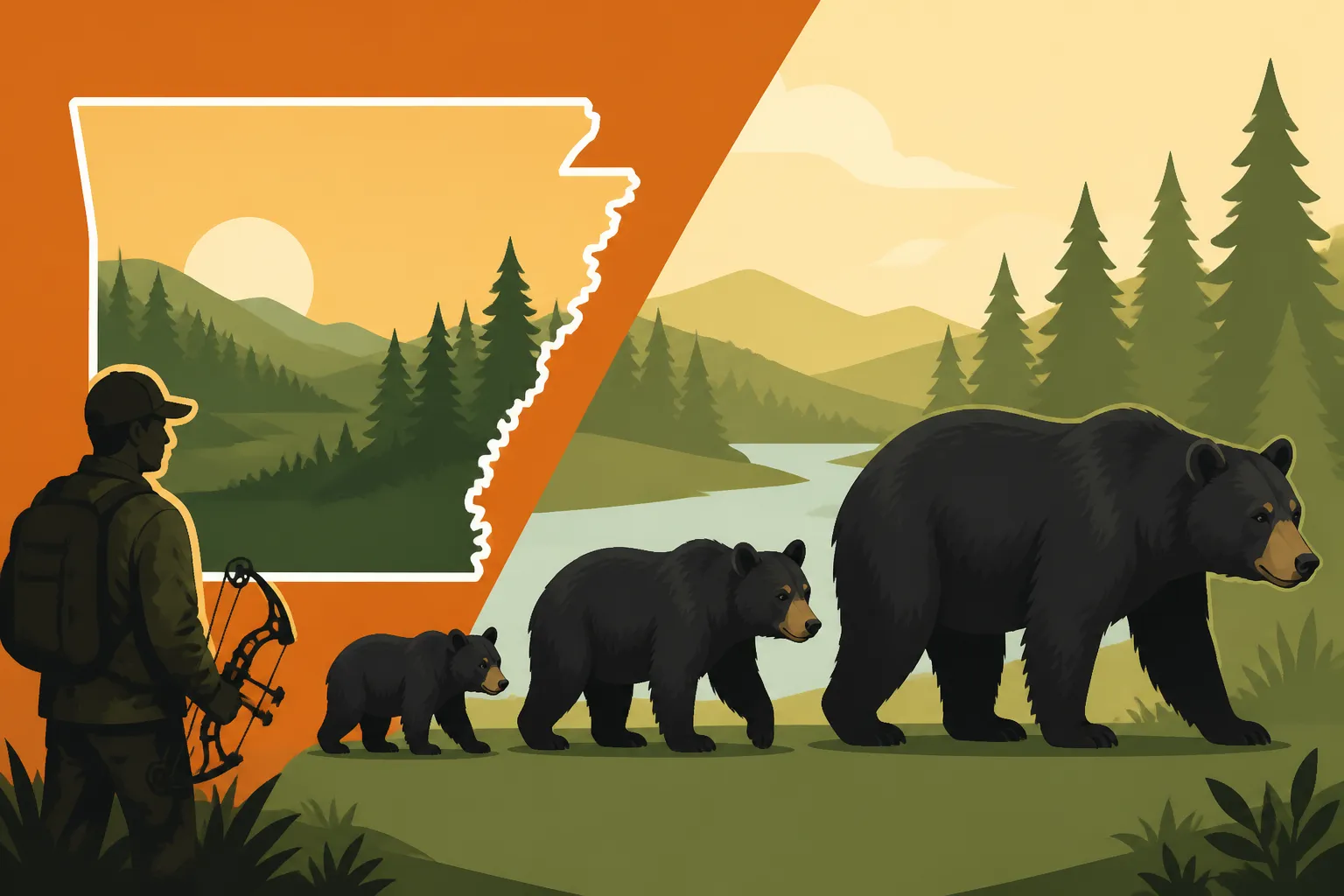
Most of the bears you’ll encounter in Arkansas are going to fall within certain weight ranges, depending on their age and sex. Cubs, when they emerge from the den, might only weigh a few pounds. By the time they're yearlings (around 1.5 years old), they could be anywhere from 60 to 150 pounds, still relatively small and lanky. Adult sows, particularly those that have reproduced multiple times, might typically range from 120 to 250 pounds, though some can certainly exceed that, especially if they are older and haven't had cubs recently.
The true heavyweights of the Arkansas woods are typically mature boars. These big males can easily tip the scales at 250 to 400 pounds. While 400-pound bears aren't seen every day, they are definitely out there. Bears will often continue to grow and put on weight until they are around 7 to 10 years old, sometimes even older, before their growth plateaus. This means an older bear almost always has the potential to be a bigger bear. Knowing How Many Black Bears Arkansas Has can help put these individual weights into perspective, as a healthy population often supports larger, older bears.
What Constitutes a "Trophy" Bear in Arkansas
For many hunters, a "trophy" bear isn't just about the sheer number on a scale. While impressive, a very heavy bear is often also an old bear, and age brings with it unique challenges and wisdom. A true trophy might also be judged by skull measurements for record books, which factor in length and width. A bear with a massive skull often correlates with a large body, but not always perfectly.
In Arkansas, a bear pushing well over 300 pounds is generally considered a significant animal. These bears usually have broad shoulders, thick necks, and a powerful, blocky appearance. They command respect in the woods and represent a lifetime of successful foraging and evading danger. It's a testament to the animal's longevity and the quality of the habitat it lives in. Many hunters spend years chasing these mature boars, recognizing the incredible challenge and reward involved in pursuing such an intelligent and powerful animal. When you're researching potential hunting areas, platforms like GoHunt can sometimes offer insights into historical harvest data or anecdotal reports that might give you a feel for where bigger bears are more frequently encountered.
Here's a general table summarizing typical Arkansas black bear weights and characteristics:
| Category | Age Range | Typical Weight (lbs) | Physical Characteristics |
|---|---|---|---|
| Cubs | < 1 year | 5 – 40 | Very small, dependent, often seen with sow. |
| Yearlings | 1 – 2 years | 60 – 150 | Lanky, still growing, disproportionately long legs for body. |
| Adult Sows | 3+ years | 120 – 250 | Varies greatly with breeding status; generally leaner than boars. |
| Adult Boars | 3+ years (mature 7+) | 250 – 400+ | Broad shoulders, thick neck, blocky body, large head. |
Record-Breaking Bears and Management Efforts
While average weights give us a baseline, the real excitement comes from those truly exceptional bears that exceed expectations. Arkansas has a long history with black bears, once known as "The Bear State," and through dedicated conservation efforts, we’ve seen a remarkable resurgence and sustained health in our bear population. This has, in turn, allowed some truly massive animals to roam our forests.
Notable Large Bears in Arkansas
Over the years, Arkansas hunters have harvested some incredibly large black bears. While I won't list specific weights or dates (as those figures can change and my data isn't live!), it's widely known that bears exceeding 500 pounds have been taken in the state. These giants are truly once-in-a-lifetime animals and represent the upper echelon of what our habitat can produce. They are typically very old boars, often 10 years or more, that have successfully navigated numerous hunting seasons and found consistently abundant food sources throughout their lives.
Achieving such size is a rare feat, a combination of ideal genetics, perfect habitat conditions, and sheer longevity. When a bear of that caliber is taken, it's often a significant event that highlights the success of the state's bear management programs. Hunters who pursue Black Bear Hunting in Arkansas often dream of encountering such a creature, knowing the challenge involved is immense.
How Management Programs Impact Bear Size
The Arkansas Game and Fish Commission (AGFC) plays a critical role in managing our black bear population. Through scientific research, habitat improvement, and carefully set Arkansas Bear Seasons and Zone Quotas, they strive to maintain a healthy and sustainable bear population. A healthy population isn't just about numbers; it's also about a good age structure within the population, which allows bears to mature and reach their full size potential.
For instance, managing hunting pressure in certain areas or setting specific quotas can help ensure that enough mature bears remain in the population to pass on their genes and simply grow older and larger. When you look up information on bear management or scouting for specific zones, tools like GoHunt can provide supplementary mapping data and historical context that aligns with AGFC's efforts. The goal is always to balance hunting opportunities with the long-term health and vitality of the species, ensuring future generations of hunters can still experience the thrill of pursuing truly magnificent Arkansas bears.
Estimating Bear Size in the Field
Alright, so you're out there, deep in the Ouachitas, and suddenly, a black form moves in the shadows. Your heart pounds. Is it a big one? Estimating a bear's size in the field is notoriously difficult, even for seasoned hunters. Bears are deceptive, and factors like light, terrain, and even the bear's posture can play tricks on your eyes. But with practice and a few key pointers, you can improve your chances of making an accurate assessment.
Challenges of Field Judging
First, let's acknowledge the challenge: everything about a bear seems designed to make it hard to judge. Their dark color absorbs light, making details hard to pick out. Their fur can make them look bigger than they are. They're often moving, or in thick cover, or at an awkward angle. A bear standing on a ridge can look immense, while the same bear in a deep hollow might appear smaller. The lack of a clear reference point is perhaps the biggest hurdle. Unlike deer, which have antlers you can count and compare, a bear's physical attributes are more subtle.
Another common mistake is underestimating the size of younger bears. A 150-pound yearling can look like a much larger animal when it's the only bear you've seen, especially if you're experiencing "buck fever." This is where knowing How Many Black Bears Arkansas Has comes in handy; understanding the general population structure helps you mentally calibrate. Don't rush your decision. Take a deep breath, use your binoculars or scope, and try to look for specific characteristics.
Key Indicators for Sizing Up a Bear
While it's tough, there are several key indicators that experienced bear hunters use to estimate size.
- Head Size vs. Body: This is a classic indicator. A big, mature boar will have a head that looks small in proportion to its body, almost disproportionately tiny on a massive, blocky frame. Younger bears and sows will typically have heads that look more "normal" or even large in comparison to their bodies. A mature boar's head will also often appear broad and blocky, with shorter, wider ears set further apart.
- Shoulders and Neck: Look for broad, thick shoulders and a short, stout neck that blends smoothly into the body. Younger bears will have a more defined neck and narrower shoulders. A big boar will look like a furry football player, all muscle and bulk.
- Belly Sag: Mature bears, especially those that have been feeding heavily before denning, will often have a noticeable belly sag. This isn't just fat; it’s the sheer volume of their internal organs and accumulated mass. Leaner, younger bears typically have a tighter, more athletic build.
- Legs: Pay attention to the thickness of their legs, particularly the forelegs. A mature bear will have powerful, thick legs that look substantial. Younger bears' legs might appear longer and spindlier in comparison to their body.
- Body Shape and Movement: A truly big bear will often have a "swaying" or "rolling" gait when it walks, a sign of its immense weight and muscle. They move with purpose and often don't appear as skittish or nervous as younger animals. Younger bears often move more fluidly and quickly.
- Reference Points: If possible, try to find something in the background to compare the bear to – a log, a tree stump, a bush of known size. This is often easier said than done, but if you have a moment, it can be incredibly helpful.
Remember, even with these tips, field judging remains an art, not a science. It takes countless hours of observation, and even then, you can be surprised. That's part of the thrill of hunting these incredible animals. When you do harvest a bear, make sure to follow all the Arkansas Bear Checking Requirements to help the AGFC gather valuable data that contributes to better management for everyone.
Disclaimer
This article is for general informational purposes only and does not constitute professional advice. Laws, prices and regulations vary by location and change over time. Consult a qualified professional for guidance on your specific situation.