Arkansas Bear Harvest by Zone
It can feel overwhelming to decipher all the nuances of bear hunting in Arkansas, especially when trying to understand where the best opportunities lie across the state's diverse landscapes. Hunters often struggle to connect general regulations with specific harvest data, leaving them guessing about prime locations and historical success. This guide will meticulously break down Arkansas's bear harvest by zone, helping you understand how these numbers are gathered, what they mean for your hunting strategy, and how to use this information to increase your chances of success in the woods.
Understanding Arkansas Bear Zones
Arkansas is affectionately known as the "Bear State," and for good reason. Our black bear population has seen an incredible resurgence, offering fantastic hunting opportunities. However, it's not a uniform landscape, and the state is divided into specific zones to manage the population effectively. Knowing these zones and their characteristics is the first step to a successful hunt.
The Ozark and Ouachita Bear Zones
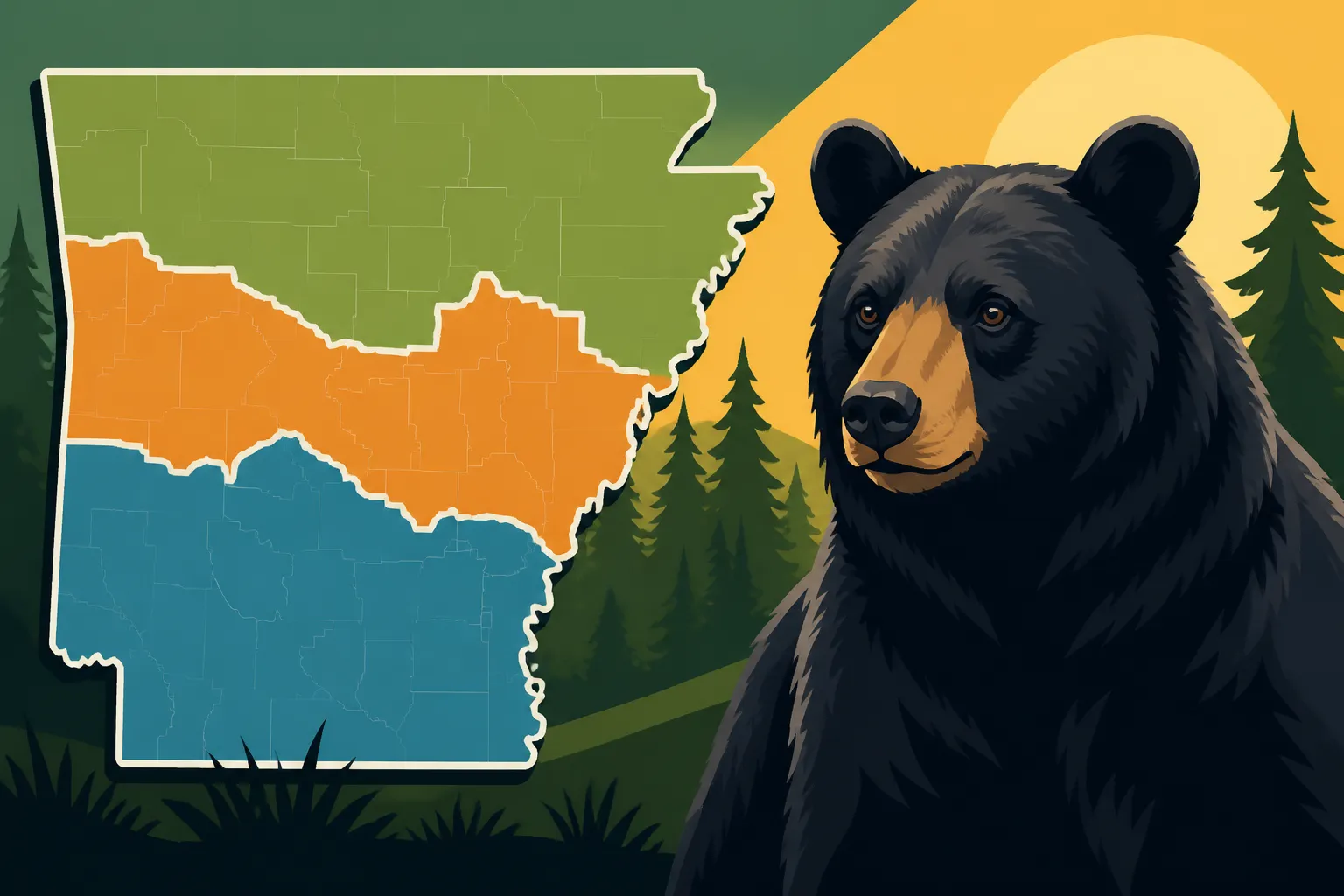
Arkansas's bear population is primarily concentrated in two major regions: the Ozark Mountains in the northern part of the state and the Ouachita Mountains stretching across the central-western region. These two mountain ranges define the primary bear zones. The Ozark Zone, encompassing counties like Newton, Searcy, and Madison, is characterized by rugged terrain, steep ridges, and dense hardwood forests interspersed with pine stands. Bears here thrive on the abundant acorn crops and thick cover. Historically, this region was pivotal in The Arkansas Black Bear Restoration efforts, and it continues to be a stronghold for our bruins.
The Ouachita Zone, on the other hand, covers counties such as Garland, Montgomery, and Polk. While also mountainous, the Ouachitas tend to feature more mixed pine and hardwood forests, with extensive timber company lands. Both zones offer significant public land access through national forests, which is a huge draw for bear hunters. The habitat diversity within these zones, from deep hollows to sun-drenched ridges, provides excellent forage and denning sites for bears, contributing to their healthy populations. Understanding the subtle differences in terrain and habitat between these two major zones is crucial for effective scouting and hunting.
Seasonal Zone Closures
One of the most critical aspects of bear hunting in Arkansas is the concept of zone closures. Unlike deer seasons that run for a fixed period, bear seasons in specific zones are regulated by quotas. This means that once a predetermined number of bears has been harvested in a particular zone, that zone's season is immediately closed, regardless of the published end date. This dynamic management strategy helps ensure the long-term health and sustainability of the bear population.
The Arkansas Game and Fish Commission (AGFC) constantly monitors harvest numbers during the season. It’s not uncommon for a bear zone, particularly in the prime early weeks, to close unexpectedly, sometimes even in the middle of a hunting day. This puts a significant responsibility on hunters to stay informed. Many seasoned bear hunters will check the AGFC website or their official app daily, sometimes multiple times a day, to get real-time updates on harvest totals and potential closures. Missing this critical information could lead to a wildlife violation. It's a system designed to be responsive, but it demands vigilance from every hunter. For more details on this, check out How a Bear Zone Closes Mid-Season.
How Bear Harvest Data Works in Arkansas
Understanding the "why" and "how" behind Arkansas's bear harvest data is just as important as knowing the numbers themselves. This data is the backbone of sound wildlife management and directly impacts future seasons and quotas.
Mandatory Checking and Reporting
Every bear harvested in Arkansas must be checked in with the AGFC. This isn't just a suggestion; it's a mandatory requirement. Hunters have a specific timeframe, usually within 24 hours of harvest, to report their bear. This can be done online, through the AGFC mobile app, or at designated check stations during specific seasons. When a bear is checked, important information is collected: the date and time of harvest, the county and zone where it was taken, the sex of the bear, and whether it was taken over bait or by other means.
This data is vital for wildlife biologists. It provides real-time information on harvest pressure, allows them to track the sex ratio of harvested bears, and gives insights into regional population trends. Without accurate and timely reporting from hunters, the AGFC wouldn't have the necessary information to make informed management decisions, such as setting future quotas or adjusting season lengths. So, when you check your bear, you're not just complying with the law; you're actively contributing to the conservation of Arkansas's black bear population. You can learn more about the specific requirements in Arkansas Bear Checking Requirements.
The Role of Zone Quotas
The AGFC sets specific harvest quotas for each bear zone before the season begins. These quotas are not arbitrary numbers; they are carefully calculated based on population models, past harvest data, habitat conditions, and management objectives. The goal is to allow for recreational hunting while ensuring the bear population remains healthy and sustainable. For instance, if a particular zone has shown consistent population growth, its quota might be slightly higher. Conversely, if there are concerns about localized population dips, the quota might be more conservative.
As hunters check in their bears, the AGFC continuously updates the running total for each zone. Once a zone's quota is met or appears to be nearing its threshold, the AGFC has the authority to close that zone's season, even if the general statewide season is still open. This is why knowing Arkansas Bear Seasons and Zone Quotas is crucial. This responsive management system allows the state to protect localized bear populations from overharvest while still providing ample hunting opportunities across the broader landscape. It’s a balancing act, and the accurate reporting of harvest data is what keeps that balance true.
Interpreting Harvest Numbers for Your Hunt
Looking at raw harvest numbers can be interesting, but learning to interpret them is where the real advantage for hunters lies. These figures tell a story about where bears are, how many are being taken, and what areas might offer the best odds for a successful hunt.
Comparing Zone Success Rates
When planning your hunt, simply knowing the total number of bears taken in a zone isn't always enough. A zone might have a high total harvest simply because it's massive in size or sees a tremendous amount of hunter pressure. What's often more telling is the relative success rate – the number of bears harvested compared to the number of hunters or hunting days. While the AGFC doesn't always publicize precise hunter effort data, you can infer a lot by comparing zone harvest totals with zone size and known hunter popularity.
For example, a smaller, less-pressured zone with a consistent, albeit lower, harvest total might offer a higher quality hunting experience or a better chance per hunter than a large, heavily hunted zone with a massive total. When researching for your trip, using tools like those found on GoHunt can help you overlay public land boundaries with historical harvest data, helping you identify pockets within larger zones that might be less impacted by pressure but still hold good numbers of bears. Looking at where Arkansas Black Bear Numbers Today are strongest can guide you. Remember, success isn't just about the highest numbers, but often about finding that sweet spot of bear density and manageable hunting pressure.
Historical Trends and Future Planning
Examining historical harvest trends over several years can provide valuable insights. Has a particular zone consistently produced a strong harvest, or have its numbers fluctuated wildly? Consistent success often points to stable populations and good habitat. A sudden dip might indicate a poor mast crop year, increased pressure, or other environmental factors that impacted bear movement and availability. Conversely, a steady increase might suggest a growing population that could sustain more hunting pressure in the future.
The AGFC also uses these long-term trends to plan future seasons. If a zone is showing strong population growth, they might slightly increase the quota or expand season length. If numbers are declining, more conservative measures might be implemented. As a hunter, understanding these trends allows you to adapt your strategy. For example, if you see a trend of higher harvests in early season archery, it might suggest focusing your efforts there. Conversely, if modern gun season consistently produces the most bears, that could influence your weapon choice and timing. Many platforms, including GoHunt, offer historical data analysis tools that can help visualize these trends, making complex information easier to digest and apply to your planning.
Factors Influencing Bear Harvest Success
Bear hunting success isn't solely about being in the right zone; it's also about understanding the myriad factors that influence bear behavior and hunter opportunity. From food sources to hunting pressure, many elements play a crucial role.
Natural Food Availability
Perhaps the single most significant factor influencing bear behavior, and consequently hunter success, is the availability of natural food sources, particularly acorns (mast crops). Bears are driven by their stomachs, especially in the fall as they prepare for hibernation. A bumper crop of acorns in a specific area will concentrate bears, making them more predictable and accessible. Conversely, a poor mast year can scatter bears as they search for alternative food, making them harder to locate and pattern.
Savvy hunters spend considerable time scouting before the season, not just looking for bear sign, but specifically for mast production. Identifying which oak species are producing and where those concentrations are can be a game-changer. Red oaks, white oaks, and various other hardwoods drop acorns at different times, creating a buffet that can hold bears in an area for weeks. Scouting for this means looking for fresh cuttings under oak trees, especially if you're Hunting Arkansas Bear Over Natural Food. If you find an area loaded with acorns, you've likely found where the bears will be spending a significant amount of their time feeding.
Hunting Pressure and Access
While Arkansas boasts extensive public land in both the Ozark and Ouachita National Forests, hunting pressure can still play a significant role in bear harvest success. Highly accessible areas, especially those near roads or popular trailheads, often see more hunters. This pressure can push bears into thicker, more remote cover, making them more nocturnal or causing them to vacate the area altogether. Hunters willing to put in the effort to hike further or access more remote sections of public land often find less pressured bears.
Understanding access points and using mapping applications can help you identify areas that might see less foot traffic. Rivers, steep bluffs, or dense thickets can act as natural barriers, creating sanctuaries where bears feel safer. Even within a high-harvest zone, finding these overlooked pockets can dramatically increase your odds. For private land hunters, having exclusive access can mean consistently higher success rates due to less pressure. Observing Finding Bear Sign in the Ozarks in areas with minimal human disturbance is key.
Baiting Rules and Tactics
Bear baiting is a legal and popular tactic in Arkansas, and it significantly influences harvest numbers in areas where it's permitted. The practice involves placing attractants like corn, pastries, or dog food to draw bears into a specific location for a shot. While highly effective, there are strict regulations surrounding bear baiting that hunters must follow, including specific dates, distances from roads, and types of bait allowed.
The impact of baiting on harvest is twofold: it concentrates bears, making them more vulnerable to hunters, and it also allows hunters to be more selective, potentially targeting specific bears. In zones where baiting is widely practiced, a significant portion of the harvest will often come from bait sites. For hunters who choose to utilize this method, understanding Bear Baiting Rules and Tactics in Arkansas is paramount. For those who prefer spot-and-stalk or still-hunting, they may need to focus on natural food sources or travel corridors away from common baiting locations, which can be difficult in heavily baited areas.
Here's a quick look at some key aspects of Arkansas bear hunting:
| Feature | Ozark Zone | Ouachita Zone | Key Considerations for Hunters |
|---|---|---|---|
| Primary Habitat | Rugged hardwoods, steep ridges, mixed pines | Mixed pine/hardwoods, extensive timberlands | Focus on acorn flats, dense creek bottoms, transition areas. |
| Typical Terrain | Very steep, rocky, deep hollows | Hilly to mountainous, often gentler slopes | Prepare for physical demands, utilize ridge lines for travel. |
| Public Land Access | Extensive (Ozark National Forest) | Extensive (Ouachita National Forest) | Use mapping tools like GoHunt to identify roadless areas. |
| Hunter Pressure | Can be high in accessible areas, less in remote | Varies; can be high on popular WMA/NF tracts | Scout thoroughly, seek out thick cover and remote basins. |
| Season Structure | Quota-based, can close early | Quota-based, can close early | Always check AGFC updates daily during open season. |
| Primary Food | Acorns (red & white oak), berries, insects | Acorns, pine nuts, berries, planted food plots | Locate active mast producers; bears follow food. |
| Baiting | Permitted (with regulations) | Permitted (with regulations) | Effective but requires specific setup and adherence to rules. |
| Average Bear Size | Healthy, good numbers of mature bears | Healthy, good numbers of mature bears | Dependent on age and food availability in a given year. |
Ultimately, a successful bear hunt in Arkansas, regardless of the zone, comes down to thorough preparation, understanding bear behavior, and staying informed about the dynamic regulations. Whether you're chasing them in the rugged Ozarks or the mixed forests of the Ouachitas, the thrill of the hunt for a black bear in the "Bear State" is an unforgettable experience. Don't forget to practice Shot Placement on a Black Bear before you head out!
Disclaimer
This article is for general informational purposes only and does not constitute professional advice. Laws, prices and regulations vary by location and change over time. Consult a qualified professional for guidance on your specific situation.