Bobwhite Quail in Arkansas
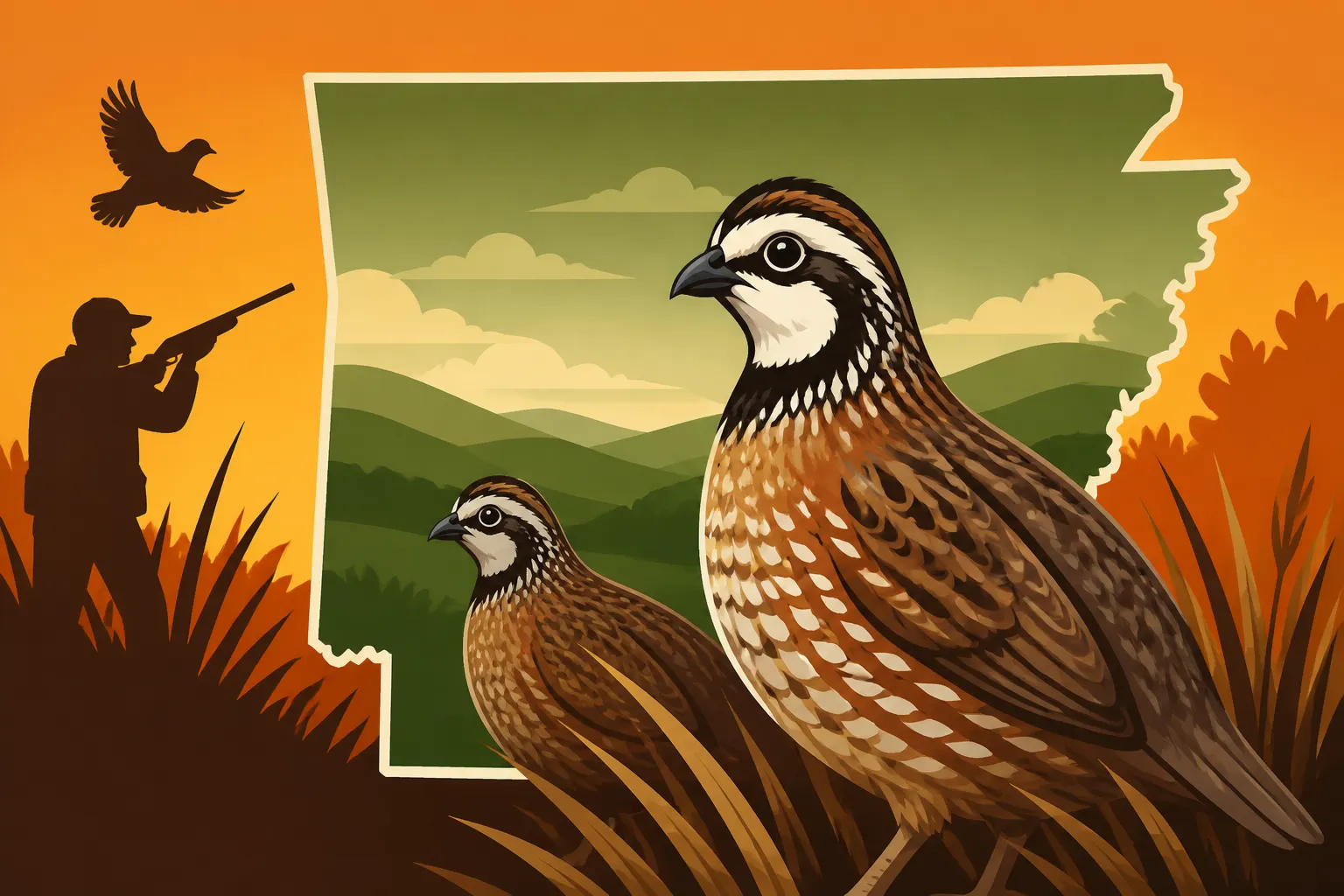
For many Arkansas hunters, the memory of a covey rise, the explosive flush of bobwhite quail from thick cover, is etched into their minds like a cherished photograph. Sadly, those experiences have become rarer, leaving many to wonder if they'll ever hear that iconic "bob-white" call ring through the fields again. This comprehensive guide delves into the challenging reality of bobwhite quail in Arkansas, exploring their history, the reasons behind their decline, the efforts being made to bring them back, and what hunters and conservationists can do to help.
The Fading Call of the Bobwhite: A Look at Arkansas Quail
The bobwhite quail holds a special place in the hearts of many Southern outdoorsmen. Their distinctive call, quick flight, and the sheer thrill of a covey rise made them a quintessential upland game bird. For generations, chasing bobwhites with a good bird dog was a rite of passage, a way to connect with the land and with family. But times have changed, and the landscape where these birds once thrived has undergone significant shifts.
Historical Abundance and Cultural Impact
Rewind several decades, and the fields and piney woods of Arkansas would have been alive with the calls and activity of bobwhite quail. They were incredibly abundant, often found in large coveys, offering plentiful hunting opportunities. This wasn't just a biological fact; it was a cultural phenomenon. Quail hunting was a social event, a chance for friends and family to gather, walk fields behind a pointing dog, and enjoy the crisp air. It was a simpler time when small farms, diverse agriculture, and less intensive land use created a mosaic of ideal habitat. The birds were a reliable resource, almost taken for granted, and their presence symbolized a healthy, vibrant rural ecosystem. Many hunting camps and traditions were built around the pursuit of these little brown rockets, shaping the very fabric of Arkansas's hunting heritage.
Current Population Trends in Arkansas
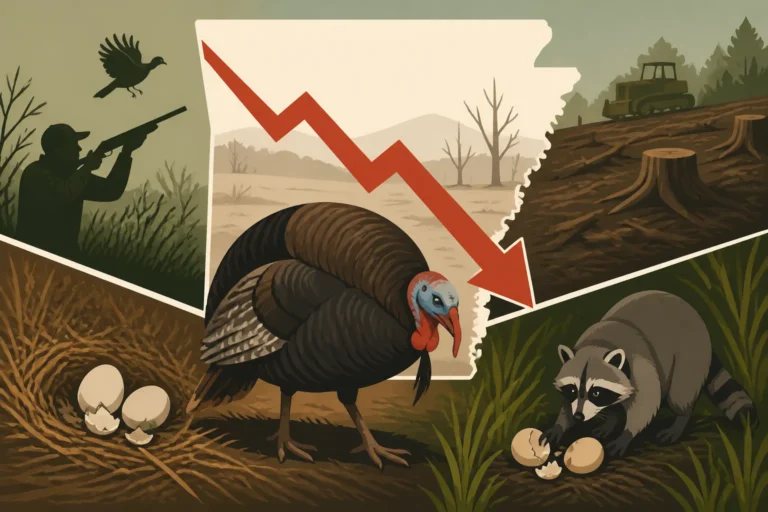
Today, the picture is far less rosy. Bobwhite quail populations in Arkansas, much like across the entire Southeast, have experienced a dramatic and sustained decline. While specific numbers can fluctuate slightly year to year based on localized conditions and weather, the long-term trend is unequivocally downward. We're talking about a significant reduction, estimated by the Arkansas Game and Fish Commission (AGFC) to be somewhere in the realm of an 80-90% decrease compared to their peak numbers in the mid-20th century. Hunters often report seeing fewer birds, finding smaller coveys, and having to cover much more ground to even locate a single covey. This decline isn't just an anecdotal observation from disappointed hunters; it's a scientifically documented trend that highlights a serious ecological concern for the species.
Why Their Numbers Declined
The decline of the bobwhite quail isn't a simple, single-cause problem; it's a complex web of interconnected factors. Fundamentally, it boils down to habitat loss and degradation. The shift from small, diversified farms to large-scale, monoculture agriculture has been devastating. Hedgerows, fencerows, small woodlots, and fallow fields—all crucial components of quail habitat—have largely disappeared, replaced by vast, unbroken expanses of single crops. This leaves birds with nowhere to nest, nowhere to hide from predators, and nowhere to forage for the insects and seeds they need. Pesticide use further reduces their insect food base, impacting chick survival. Beyond agriculture, changing forestry practices, fire suppression, and increased predation have all played significant roles in pushing these once-common birds to the brink.
Understanding Bobwhite Habitat in Arkansas
To truly appreciate the challenges facing bobwhite quail, we need to understand what makes ideal habitat for them. They aren't forest dwellers like squirrels, nor do they thrive in open plains like some other upland birds. Bobwhites are creatures of the "edge" – the transition zones between different types of cover.
Ideal Cover and Forage Needs
Bobwhite quail require a specific mix of habitat elements that provide food, nesting cover, escape cover, and loafing cover, all in close proximity. Think of a mosaic, not a monoculture.
- Nesting Cover: This is usually dense, herbaceous vegetation like native grasses (e.g., bluestems, switchgrass) and forbs (wildflowers). They need thick clumps where a hen can safely lay her clutch and incubate her eggs, hidden from the eyes of predators. Overgrown pastures or areas with old field growth often serve this purpose well.
- Brood Rearing Cover: Once chicks hatch, they need open, bare ground underneath a canopy of vegetation, often referred to as "weedy openings." This allows them to move easily and forage for the insects that make up the bulk of their diet during their first few weeks of life. This usually means areas with annual weeds and legumes, not thick thatch.
- Escape Cover: This is critical for survival. When a hawk swoops or a coyote approaches, quail need immediate access to dense, thorny thickets, plum hedges, or brush piles where they can dive for safety. This cover should be distributed throughout their home range.
- Loafing Cover: During the heat of the day or when resting, quail seek out overhead cover that still allows them to see predators approach. This might be a sparse brush patch, a low-hanging tree canopy, or even the edge of a timber stand.
- Food Sources: Their diet consists of seeds, fruits, and insects. Young quail rely heavily on insects for protein, while adults consume a wide variety of seeds from native grasses, weeds, and agricultural crops (like ragweed, lespedeza, partridge pea, and croton).
All these elements need to be within a relatively small home range, typically no more than a few acres, because quail don't travel far on foot. A good rule of thumb is that if a quail can't walk from nesting cover to brood cover to escape cover without exposing itself to predators for too long, the habitat is likely insufficient.
Regional Differences: Delta, Ozarks, Ouachitas
Arkansas's diverse geography means that even within the state, bobwhite habitat takes on different characteristics.
- Delta Region: Historically, the Delta region with its rich agricultural lands and bottomland hardwoods offered tremendous quail habitat, especially on the edges of fields, in unmanaged fencerows, and along small sloughs. However, the intensification of agriculture has heavily impacted this. Modern farming leaves little room for the "weedy" edges or native grass breaks that quail thrive on. Where patches of suitable habitat remain, they are often isolated.
- Ozark Region: The Ozarks, characterized by its rugged terrain, oak-hickory forests, and open glades, once supported quail populations in areas where timber harvesting, small-scale farming, and natural disturbances created openings. However, fire suppression has led to denser, closed-canopy forests, reducing the open understory and early successional growth that quail need. Glades and areas with thinning or controlled burning can still hold birds.
- Ouachita Region: Similar to the Ozarks, the Ouachita Mountains are primarily forested. However, commercial pine plantations are more prevalent here. While dense, mature pine stands are poor quail habitat, properly managed young pine plantations, especially those undergoing thinning and prescribed burning, can create excellent conditions. The ground cover in these areas, particularly when controlled burns are utilized, can support a diverse understory of grasses and forbs. This type of managed forest landscape offers some of the best potential for quail recovery in the state.
The Role of Early Successional Habitat
The term "early successional habitat" is crucial to understanding bobwhite quail needs. This refers to areas of land that are in the early stages of ecological succession, meaning they are characterized by herbaceous plants, grasses, and young shrubs, rather than mature trees. Think of old fields, clearcuts a few years post-logging, areas recently disturbed by fire or disking, or pastures that aren't regularly mowed or heavily grazed.
This type of habitat is vital because it provides:
- Dense ground cover: For nesting and protection from aerial predators.
- Abundant insect populations: Crucial for chick survival.
- Diverse seed-producing plants: For adult forage.
- Brushy escape cover: For protection from ground predators.
Unfortunately, modern land management often works against early successional habitat. Agricultural fields are kept clean, forests are allowed to grow dense without disturbance, and residential areas eliminate wild spaces. Reintroducing and maintaining this dynamic, ever-changing habitat type is the cornerstone of any successful quail restoration effort. Programs by the AGFC like those under the Arkansas Quail Restoration Efforts are specifically designed to help landowners create and maintain these essential areas.
Key Factors in Bobwhite Quail Decline
The decline of the bobwhite quail is a stark example of how large-scale changes in land use can impact wildlife. It's not just one thing, but a confluence of factors that have gradually eroded their populations over the last 70 years.
Agricultural Practices and Landscape Changes
The most significant driver of quail decline has been the evolution of agricultural practices. Post-World War II, farming in the United States underwent a revolution towards larger, more efficient, and often monocultural operations.
- Loss of Diverse Farms: Small, diversified farms that grew various crops and raised livestock naturally created a patchwork of fields, pastures, and wooded edges that were perfect for quail. These farms were often less "clean," leaving plenty of weedy areas and fallow ground.
- Monoculture and Larger Fields: Today, vast fields of corn, soybeans, and cotton dominate the landscape, especially in the Delta. These fields are often managed with intensive tillage, herbicides, and pesticides. Herbicides eliminate the native weeds and forbs that provide food and cover, while pesticides reduce the insect populations vital for quail chick survival.
- Removal of Field Edges and Hedgerows: Fencerows, hedgerows, and field borders—once teeming with quail—were deemed unproductive space and systematically removed to maximize crop acreage. These linear strips of cover were essential travel corridors and refuges for quail.
- Improved Pastures: Even pasturelands, traditionally offering some quail habitat, have been converted to dense, exotic grasses like Bermuda grass and fescue, which are too thick for quail to navigate and offer poor food value.
These changes effectively fragmented and eliminated millions of acres of suitable quail habitat, leaving isolated pockets where coveys struggle to survive and reproduce.
Predation Pressure and Introduced Species
While habitat loss is the root cause, increased predation pressure acts as a major limiting factor, especially when quail populations are already low. In fragmented landscapes, predators can become disproportionately effective.
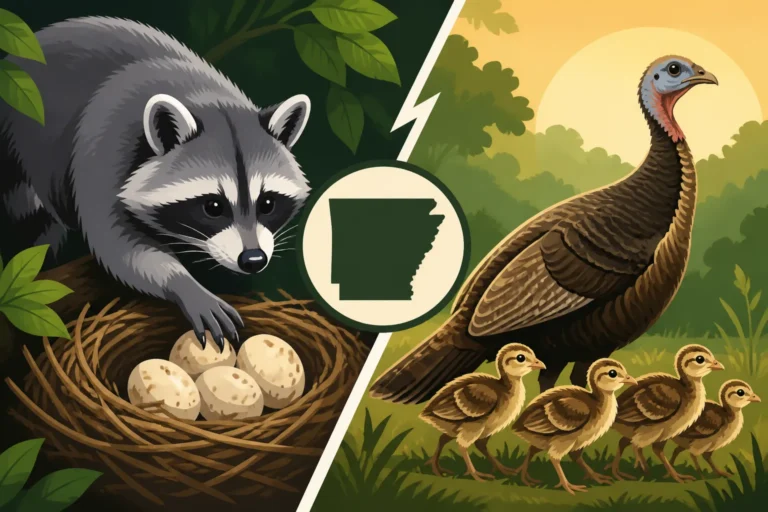
- Increased Predator Numbers: Coyote, bobcat, raccoon, opossum, and skunk populations, among others, can thrive in human-modified landscapes and urban interfaces. These generalist predators often take advantage of easy access to quail nests and adults, particularly when protective cover is sparse.
- Lack of Escape Cover: Without adequate, well-distributed escape cover (thick brush, thorny thickets), quail are highly vulnerable to both avian predators (hawks, owls) and mammalian predators. If a covey flushes and has nowhere safe to go, they are easily picked off.
- Feral Hogs: The proliferation of feral hogs across Arkansas presents a significant challenge. These destructive animals root up nesting cover, destroy nests, and directly prey on eggs and chicks. Their impact on ground-nesting birds like quail is substantial and widespread. While the state has efforts to curb their numbers, like allowing the hunting of Arkansas Feral Hog Numbers, their presence continues to be a problem for quail.
- Domestic Pets: Free-ranging domestic cats and dogs, especially near rural homes, can also exert considerable predation pressure on quail, particularly during nesting season.
It's important to remember that predation is a natural part of the ecosystem. However, when habitat quality is poor, and predator numbers are high relative to prey, it creates an unsustainable situation for vulnerable species like quail.
Weather Patterns and Disease Impacts
Weather plays a significant, though sometimes unpredictable, role in bobwhite populations.
- Heavy Rains During Nesting/Hatching: Prolonged periods of cold, wet weather during the spring and early summer nesting and hatching season can be devastating. Quail chicks are particularly vulnerable to hypothermia and drowning. Wet conditions can also reduce insect availability, leading to starvation.
- Drought Conditions: Conversely, severe droughts can reduce the availability of food and water, stress birds, and make them more susceptible to disease. It can also impact the growth of vegetation needed for cover.
- Extreme Winters: While Arkansas generally doesn't experience the harsh winters of more northern states, prolonged periods of snow and ice, especially when combined with a lack of adequate cover and food, can lead to significant mortality.
- Disease: While not as widely publicized as CWD in deer, quail are susceptible to various diseases and parasites. Overcrowding or stressed populations in limited habitat can make birds more vulnerable to outbreaks. Historically, diseases like quail enteritis could wipe out coveys.
- Climate Change: Long-term shifts in weather patterns due to climate change, such as more extreme weather events (intense storms, prolonged droughts), could further exacerbate these issues, making recovery more challenging.
These environmental factors, when combined with the ongoing habitat crisis and predation pressure, create a perfect storm that makes it incredibly difficult for bobwhite quail to rebound on their own.
Arkansas's Quail Restoration Efforts
The good news amidst the challenging trends is that there are dedicated individuals and organizations working tirelessly to bring bobwhite quail back to Arkansas. The Arkansas Game and Fish Commission (AGFC) recognizes the profound cultural and ecological value of these birds and has made quail restoration a priority.
AGFC Quail Focus Areas and Initiatives
The AGFC has shifted its strategy from generalized efforts to concentrated, targeted initiatives in specific "Quail Focus Areas." This approach recognizes that trying to manage for quail across the entire state is less effective than focusing resources where the potential for success is highest and where enough contiguous habitat can be created to sustain viable populations.
- Targeted Regions: These focus areas are typically found within larger tracts of public land, like national forests, or on clusters of private lands where landowners are enthusiastic about habitat restoration. For instance, the Ouachita National Forest, with its managed pine stands, has been identified as a prime area.
- Intensive Habitat Management: Within these focus areas, the AGFC implements intensive habitat management practices. This includes prescribed burning, timber thinning, disking, planting native grasses and forbs, and controlling invasive species. The goal is to create that mosaic of early successional habitat that quail desperately need.
- Research and Monitoring: Ongoing research helps refine management techniques and better understand population dynamics. Monitoring efforts track quail numbers, nesting success, and survival rates to evaluate the effectiveness of the restoration efforts. This data is crucial for adapting strategies and maximizing impact.
- Partnerships: The AGFC works closely with federal agencies like the U.S. Forest Service and private landowners to implement these large-scale habitat projects. These collaborations are essential because quail management often requires landscape-level changes.
Habitat Improvement Programs for Landowners
Private landowners hold the key to widespread quail recovery in Arkansas, as most of the state's land is privately owned. Recognizing this, the AGFC offers various programs and technical assistance to help landowners implement quail-friendly practices on their property.
- Technical Guidance: AGFC biologists provide free, on-site technical advice to landowners, helping them assess their property's potential for quail habitat and develop customized management plans. This often involves guiding them through the process of Arkansas Quail Restoration Efforts.
- Cost-Share Programs: Several state and federal programs (like those through the USDA's Natural Resources Conservation Service – NRCS) offer financial incentives and cost-share opportunities for landowners to implement habitat improvements. These can include practices like native grass plantings, prescribed burning, edge feathering, and shrub thicket development.
- Educational Workshops: The AGFC regularly hosts workshops and field days to educate landowners about the benefits of quail habitat and the practical steps they can take to create it. These events are invaluable for sharing knowledge and building a community of conservation-minded landowners.
- Specific Practices Promoted: Landowners are encouraged to create brush piles, plant beneficial cover crops, establish native warm-season grass buffers around fields, and avoid intensive mowing of fencerows during nesting season. Even small changes on individual properties can collectively make a big difference. Utilizing tools like GoHunt's mapping capabilities can help landowners visualize and plan these habitat improvements, identifying areas for new cover or food plots.
Prescribed Fire and Timber Management
Two of the most powerful tools in Arkansas for restoring quail habitat are prescribed fire and specific timber management practices.
- Prescribed Fire: Fire is a natural disturbance in many Arkansas ecosystems, particularly in the Ouachita and Ozark Mountains and pine woodlands. Prescribed burning (controlled, intentional fires) is used to:
- Reduce fuel load: Preventing catastrophic wildfires.
- Control woody encroachment: Keeping trees and shrubs from overrunning open areas.
- Promote native grasses and forbs: Fire stimulates the growth of beneficial herbaceous plants that provide food and cover.
- Improve foraging conditions: It creates open ground under the vegetation, making it easier for quail chicks to move and find insects.
- The AGFC actively uses prescribed fire on many of its Wildlife Management Areas (WMAs) and promotes its use on private lands.
- Timber Management: While dense, mature forests are poor quail habitat, thoughtful timber management can create excellent conditions.
- Thinning: Reducing the density of trees, especially in pine plantations, allows more sunlight to reach the forest floor, stimulating the growth of understory plants crucial for quail.
- Uneven-Aged Management: Instead of clearcutting large blocks, some forestry practices leave a mix of different-aged trees, creating a more diverse structure.
- Edge Feathering: This involves creating a soft transition zone between timber stands and open fields, often by cutting and piling trees to create brushy escape cover along the edges.
- Short-Rotation Pine Management: In areas like the Ouachitas, managing pine stands on shorter rotations with frequent thinnings and prescribed burns can continuously provide the early successional habitat quail need.
These proactive management techniques, often guided by science and experience, are vital for reversing decades of habitat degradation and creating landscapes where bobwhite quail can once again thrive.
Hunting Bobwhite Quail in Arkansas: Challenges and Rewards
For many, the idea of quail hunting in Arkansas conjures nostalgic images. While the abundance of past generations may be gone, there are still opportunities for those willing to put in the effort, understand the challenges, and appreciate the unique rewards of pursuing these elusive birds.
Finding Remaining Quail Hotspots
Locating bobwhite quail in Arkansas today is a far cry from simply walking into any field. It requires significant scouting, understanding habitat, and often a bit of luck.
- Focus on Managed Lands: The best places to look are typically on public lands (WMAs, National Forests) or private lands where landowners are actively managing for quail. Look for areas with a mix of native warm-season grasses, shrubby cover, and open timber stands that show signs of recent prescribed burns or thinning. The AGFC's website and WMA maps can often point to areas with active quail management.
- Edge Habitat is Key: Even on well-managed land, focus on the "edge" – where different habitat types meet. This could be the border between a young pine stand and a food plot, the transition from a native grass field to a brushy thicket, or along old logging roads.
- Scout Religiously: Before the season, scout for signs of quail. Listen for their distinctive "bob-white" call or "scatter call." Look for dusting bowls (small depressions in the dirt where they dust themselves), droppings, and tracks. In the fall, focus on areas with ample seed-producing weeds. Tools like the GoHunt app can be invaluable for identifying potential habitat, property boundaries, and recent timber activities like logging that might have created suitable conditions.
- Don't Overlook Isolated Pockets: Sometimes, small, forgotten patches of cover on the fringes of agricultural areas, or neglected corners of timber, can hold a covey. These might not be large enough for multiple hunts, but they can offer a rewarding find.
Hunting in areas with active habitat projects, such as those undertaken through Arkansas Quail Restoration Efforts, will generally yield the best results as these are specifically designed to support quail populations.
Essential Gear and Dog Work
Quail hunting in Arkansas is largely a dog sport. While a skilled hunter might occasionally walk up a single bird, finding and holding coveys requires trained bird dogs.
- The Right Dog: Pointers (e.g., German Shorthaired Pointers, English Pointers, Brittanys) are traditional choices, trained to range, locate birds, and then "point" or freeze when they scent a covey. Retrievers can also be trained for upland work. A good dog is patient, disciplined, and has a strong nose. The joy of watching a dog work a field, lock up on point, and then retrieve a downed bird is a huge part of the experience.
- Footwear and Clothing: Expect to walk a lot, often through dense cover and over uneven terrain. Comfortable, durable, waterproof boots are essential. Briar-resistant pants or chaps will protect your legs. Lightweight, breathable hunting clothes in earth tones are best.
- Shotgun: A lightweight 12-gauge or 20-gauge shotgun is typical, often with improved cylinder or modified chokes for quick, close-range shots. Load with smaller shot sizes, like 7.5 or 8, which are ideal for quail.
- Safety Gear: Eye protection is non-negotiable. Hearing protection is highly recommended. And, of course, Arkansas Hunter Orange Rules mandate wearing at least 500 square inches of hunter orange above the waist during modern gun season, which is a good safety practice even during archery or small game seasons if other hunters are present.
- Water and Navigation: Carry plenty of water for both yourself and your dog. A GPS device or a reliable mapping app (like GoHunt) is crucial for navigating often dense or unfamiliar terrain, especially on public lands where "Finding Unclaimed Water on Public Ground" can sometimes lead you far afield.
- Bell and Collar: Many hunters use a bell on their dog's collar to help locate them in thick cover, and a GPS collar can be a lifesaver for tracking a wide-ranging pointer.
Ethical Considerations and Conservation Mindset
Hunting bobwhite quail in Arkansas today comes with a heightened sense of responsibility.
- Conservation First: Given their reduced numbers, every quail hunter should be a quail conservationist. This means adhering strictly to bag limits, avoiding over-harvesting, and prioritizing the health of the covey. If a covey feels small or appears to be struggling, it's often best to leave them undisturbed and move on.
- Responsible Hunting: Shoot only birds that are clearly bobwhites and within safe range. Avoid "pot-shooting" birds on the ground.
- Respect for the Resource: Understand that the thrill of the hunt now lies more in finding the covey and watching the dog work than in filling a limit. A few birds from a hard-earned covey rise can be more satisfying than a full bag from a past era.
- Support Conservation Efforts: A portion of hunting license fees goes towards wildlife management. Consider supporting organizations dedicated to quail habitat restoration, like Quail Forever or the AGFC's specific quail initiatives. Get involved in local habitat projects if possible.
- Landowner Relations: If hunting on private land, always secure permission well in advance and be a respectful guest. Offer to help with habitat work in exchange for access.
Hunting bobwhite quail is not just about the harvest; it's about the experience, the bond with a dog, and the deep connection to the wild places where these birds still cling on. By embracing a conservation mindset, hunters can play a vital role in their recovery.
| Habitat Component | Description | Why it's Important for Quail |
|---|---|---|
| Nesting Cover | Dense, herbaceous vegetation (native grasses, clumps of weeds). | Protection for nests and incubating hens from predators and weather. |
| Brood Rearing Cover | Open ground under a canopy of light vegetation (weedy openings). | Allows chicks to move easily and forage for essential insects. |
| Escape Cover | Dense, thorny thickets, brush piles, plum hedges, dense shrub patches. | Immediate refuge from predators (aerial and terrestrial). |
| Loafing Cover | Overhead canopy with sparse understory (e.g., small saplings, low brush). | Shade and protection for resting birds, while allowing predator detection. |
| Food Sources | Diverse native seeds (ragweed, lespedeza, croton) & insects. | Energy and protein for adults; critical for chick growth and survival. |
| Dusting Areas | Bare patches of loose soil. | Helps birds rid themselves of parasites. |
| Water Source | Dew, succulent plants, or natural water sources. | Essential for hydration, especially during dry periods. |
The Future of Arkansas Bobwhite Quail
The future of bobwhite quail in Arkansas is a complex and challenging one, but it's not without hope. The journey back to anything resembling their historical numbers will be long and arduous, requiring sustained effort and a shift in land management practices across the state.
Partnerships and Collaborative Conservation
No single entity can reverse the decline of the bobwhite quail alone. True recovery will depend on strong partnerships and collaborative efforts among various stakeholders.
- Government Agencies: The AGFC, along with federal agencies like the U.S. Forest Service, NRCS, and the Fish and Wildlife Service, must continue to lead the charge, providing technical expertise, funding, and managing public lands.
- Non-Profit Organizations: Groups like Quail Forever, the National Wild Turkey Federation, and Ducks Unlimited (whose work in wetlands can indirectly benefit upland edges) play crucial roles in advocacy, fundraising, and on-the-ground habitat projects. Quail Forever, in particular, has dedicated staff working directly with landowners in Arkansas to implement habitat improvements.
- Private Landowners: As mentioned, private land is paramount. Encouraging and empowering landowners to adopt quail-friendly practices is perhaps the single most important factor. This involves not just financial incentives but also education and building a strong community of conservationists.
- Academic Institutions: Universities and research institutions contribute vital scientific data, helping to refine management strategies and understand the biological intricacies of quail populations, such as Arkansas Brood Survey Results.
- Industry Partners: Timber companies, which own vast tracts of land in Arkansas, can be powerful allies if they adopt sustainable forestry practices that benefit quail, such as prescribed burning and thinning on their properties.
These partnerships help leverage resources, share knowledge, and implement projects on a landscape scale, which is essential for species like quail that need large, interconnected habitat areas.
The Role of Hunters in Quail Recovery
Hunters, historically, have been the most ardent conservationists, and their role in quail recovery is absolutely critical.
- Financial Contribution: Through the purchase of hunting licenses and excise taxes on firearms and ammunition (Pittman-Robertson Act), hunters provide the primary funding source for wildlife management and habitat restoration efforts by the AGFC. Without this funding, many conservation programs simply wouldn't exist. Understanding Arkansas Hunting Licenses and What They Cost is the first step in contributing.
- Advocacy: Hunters can be powerful advocates for quail conservation. By speaking up, contacting elected officials, and supporting legislation that promotes habitat-friendly policies, they can influence decision-makers.
- Volunteerism: Many hunters go beyond just financial contributions and dedicate their time to volunteer efforts, participating in habitat workdays, prescribed burns, or monitoring programs.
- Responsible Harvesting: Practicing conservative harvest strategies, especially in areas with fragile populations, ensures that hunting remains sustainable and does not impede recovery efforts.
- Spreading the Word: Sharing knowledge about quail biology and habitat needs with non-hunting friends, family, and landowners can help expand the conservation ethic.
By actively participating in conservation, hunters move beyond being just consumers of a resource to becoming integral parts of its stewardship and recovery.
Supporting Quail Through Land Stewardship
Whether you own a small acreage or a large farm, every landowner in Arkansas has the potential to contribute to quail recovery through thoughtful land stewardship.
- Habitat Conversion: Consider converting marginal agricultural land or unproductive areas into native warm-season grass fields. These provide excellent nesting and brooding cover.
- Edge Feathering and Buffer Strips: Create feathered edges along field borders, forest lines, and roadsides. Plant native shrubs and small trees that provide loafing and escape cover. Establish vegetated buffer strips along streams and ditches.
- Prescribed Burning: If appropriate for your property and local regulations, consider implementing a prescribed burn regime. Consult with AGFC or NRCS experts for guidance and assistance.
- Food Plots: Plant small, diverse food plots with species like annual weeds, legumes, and grain sorghum that provide food throughout the year. Avoid monocultural plots that offer little diversity.
- Timber Management: If you own timberland, work with a forester to implement practices like thinning, selective cutting, and creating small clearings that promote understory growth.
- Invasive Species Control: Actively control invasive plants (e.g., privet, mimosa, kudzu) that outcompete native vegetation and offer poor cover for quail.
- Reduce Chemical Use: Minimize the use of broad-spectrum herbicides and pesticides, especially in areas managed for wildlife. Consider integrated pest management (IPM) strategies.
- Delay Mowing: If you have areas of native grasses or old fields, delay mowing until late summer or early fall (after August 1st) to protect nesting birds and young broods. This is particularly important for small game species covered under Small Game Seasons and Limits.
Every acre managed with quail in mind contributes to a larger network of habitat. This collective effort is the strongest hope for hearing the iconic "bob-white" call echo across Arkansas fields once again.
Arkansas Quail Seasons and Limits
If you're planning to pursue bobwhite quail in Arkansas, it's crucial to be aware of the current regulations, which are designed to allow for recreational hunting while also protecting the species given its vulnerable status. The Arkansas Game and Fish Commission (AGFC) sets these rules annually, and they can sometimes be adjusted based on population trends.
Season Dates and Bag Limits
Currently, the bobwhite quail season in Arkansas typically opens in early November and runs through late February. This timing allows for birds to complete their nesting and brood-rearing cycles, and ensures hunting occurs when coveys are generally more stable and mature.
- Season Dates: While specific dates can vary slightly year to year, expect the season to generally run from around November 1st to February 28th. Always double-check the current Arkansas Game and Fish Commission regulations guide for the precise dates before heading afield.
- Daily Bag Limit: The daily bag limit for bobwhite quail in Arkansas is typically 8 birds per hunter.
- Possession Limit: The possession limit, which refers to the maximum number of legally taken birds a hunter may have in their possession at any one time (including those at home, camp, or in transit), is generally 16 birds.
These limits are set conservatively to prevent over-harvesting and to support the long-term recovery efforts for the species. Hunters are strongly encouraged to consider self-imposed limits even lower than the state regulations, especially in areas where coveys are sparse or small. The focus should be on the experience and the dog work, not solely on the number of birds in the bag.
License Requirements and Hunter Orange
Before you even step foot in the field, you need to ensure you're legally prepared.
- Hunting License: All resident and non-resident hunters in Arkansas are required to possess a valid Arkansas hunting license. This typically means a Resident Sportsman's License or a Nonresident Alligator, Bear, Deer, Elk, Turkey, Small Game, and Furbearer License, or a specific small game license. Youth hunters may have different requirements. You can find detailed information on Arkansas Resident License Options and other permits on the AGFC website. Don't forget any necessary stamps or permits for specific WMAs if you plan to hunt public land.
- HIP Registration: If you plan to hunt any migratory birds (though quail are considered resident game), you would also need to complete the Harvest Information Program (HIP) registration, which is typically free and can be done when purchasing your license.
- Hunter Orange: Arkansas Hunter Orange Rules mandate that during deer modern gun seasons, hunters must wear at least 500 square inches of hunter orange above the waist. While quail season often overlaps with some deer seasons, it's a good safety practice to wear hunter orange any time you are afield, especially on public land, to increase your visibility to other hunters. Even outside of mandatory periods, hunter orange is a smart choice for upland hunting where dogs might be out of sight and other hunters might be nearby.
Always carry your license and identification with you while hunting, and be prepared to present them to a game warden if requested.
Specific WMA Rules for Quail
Hunting on Wildlife Management Areas (WMAs) in Arkansas often comes with additional rules and regulations that can differ from general statewide regulations. These specific WMA rules are designed to manage hunter pressure, protect sensitive habitats, or align with specific management objectives.
- WMA Permits: Some WMAs may require an additional WMA specific permit or a general WMA permit, even if you have a statewide license. Always check the AGFC regulations for the specific WMA you plan to hunt.
- Season Dates and Bag Limits: While statewide dates and limits apply to many WMAs, some areas may have shortened seasons, different bag limits, or specific days closed to certain types of hunting (e.g., closed to small game hunting during certain deer hunts).
- Access Restrictions: Vehicle access, ATV use, and even walking access might be restricted in certain areas or during specific times on WMAs. Check maps and signs carefully.
- Blinds and Stands: Rules regarding the placement and removal of hunting blinds and stands can vary. While typically not an issue for quail hunting, it's good to be aware of all regulations.
- Dog Training: Some WMAs have designated dog training areas or specific periods when dog training is allowed, which can also be a good indicator of potential quail presence.
- Quail Focus Areas: On WMAs designated as "Quail Focus Areas," there might be specific regulations or recommendations designed to support the restoration efforts. Hunters should be particularly mindful of these.
Always consult the current AGFC Hunting Guidebook or the AGFC website for the most up-to-date and specific WMA regulations before planning your hunt. Ignoring these rules can lead to citations and penalties.
Comparing Arkansas Quail to Other Small Game
While bobwhite quail hold a special place for many, Arkansas offers a diverse array of small game species that provide hunting opportunities throughout the fall and winter. Understanding how quail hunting fits into this broader picture can help hunters appreciate the unique challenges and rewards each species presents.
Quail vs. Rabbit Hunting in Arkansas
Rabbit hunting is arguably the most popular small game pursuit in Arkansas, offering a stark contrast to the challenges of quail hunting.
- Accessibility: Rabbits (cottontails and swamp rabbits) are far more abundant and widespread across Arkansas than quail. They can be found in a greater variety of habitats, from dense brush piles and thickets (prime areas for Rabbit Hunting Delta Brush Piles) to briar patches and open woods. This makes them much more accessible for most hunters, even those without extensive private land access.
- Dog Work: While both often involve dogs, the type of dog and their work differ significantly. Quail hunting relies on pointers or flushers to find and hold birds. Rabbit hunting, on the other hand, is dominated by beagles. These vocal hounds are trained to "jump" a rabbit and then "run" it in circles, allowing hunters to position themselves for a shot as the rabbit typically returns to its home range. The distinctive baying of a pack of beagles is an experience unto itself, a testament to Rabbit Hunting With Beagles.
- Pace of Hunt: Quail hunting can be a fast-paced, sometimes sporadic affair, punctuated by explosive covey flushes and quick shots. Rabbit hunting, while also demanding, often involves more waiting and listening as the dogs work, followed by quick action.
- Habitat Requirements: Rabbits thrive in dense, brushy, early successional habitats, much like quail, but they can tolerate areas with heavier cover and less specific forage needs. They don't require the same open understory that quail chicks do for insect foraging.
- Bag Limits & Seasons: Rabbit seasons in Arkansas are typically very liberal, often running from September or October through February, with higher daily bag limits (e.g., 8-10 rabbits per hunter). This reflects their higher population numbers and reproductive rates compared to quail.
In essence, rabbit hunting offers a more readily available, often higher-action small game experience, while quail hunting today is a more specialized, habitat-dependent pursuit.
The Pursuit of Squirrels in Arkansas Hardwoods
Squirrel hunting is another traditional and widely accessible small game activity in Arkansas, offering a different kind of challenge and experience.
- Habitat: Squirrels (gray and fox squirrels) are primarily arboreal and thrive in mature hardwood forests, particularly those rich in mast-producing trees like oak, hickory, and pecan. This means excellent squirrel hunting can be found in the Ozark and Ouachita National Forests, as well as many private timberlands and river bottoms across the state. This contrasts sharply with quail's preference for open, grassy, and brushy habitats. The tactics for Squirrel Hunting Arkansas Hardwoods involve patience and keen observation.
- Methods: Squirrel hunting can be done with or without dogs. Many hunters prefer still-hunting, slowly moving through the woods and listening for cutting nuts or rustling leaves, then Reading Cuttings Under an Oak to pinpoint a squirrel's location. Others use squirrel dogs (like curs or feists) to locate and "tree" squirrels, offering a different, often faster-paced hunt.
- Weaponry: Squirrel hunting is often done with small-caliber rifles (.22 LR) or shotguns, offering a precision shooting challenge or a quicker shot in the canopy.
- Season Length: Arkansas boasts one of the longest squirrel seasons in the nation, often running from May through late February. This extensive season provides ample opportunity for hunters to get afield.
- Population: Squirrel populations are generally robust across Arkansas, especially in areas with healthy hardwood forests. This makes them a more reliable target for many small game hunters, and a great way to introduce new hunters to the sport.
While quail hunting now often feels like a quest for a ghost of the past, rabbit and squirrel hunting remain vibrant traditions in Arkansas, providing accessible and rewarding experiences for small game enthusiasts. Each species, however, demands a different approach, habitat understanding, and often specialized equipment or canine companions, showcasing the incredible diversity of Arkansas Small Game and Squirrels.
Disclaimer
The information provided in this guide is for informational purposes only and is not a substitute for official regulations. Hunting laws and regulations in Arkansas, including season dates, bag limits, and licensing requirements, are subject to change. Always consult the most current Arkansas Game and Fish Commission (AGFC) regulations handbook or website before engaging in any hunting activity. Failure to comply with regulations can result in fines, penalties, and loss of hunting privileges. The author and publisher are not responsible for any errors or omissions, or for any actions taken based on the information presented herein. Hunters are responsible for knowing and abiding by all applicable laws.