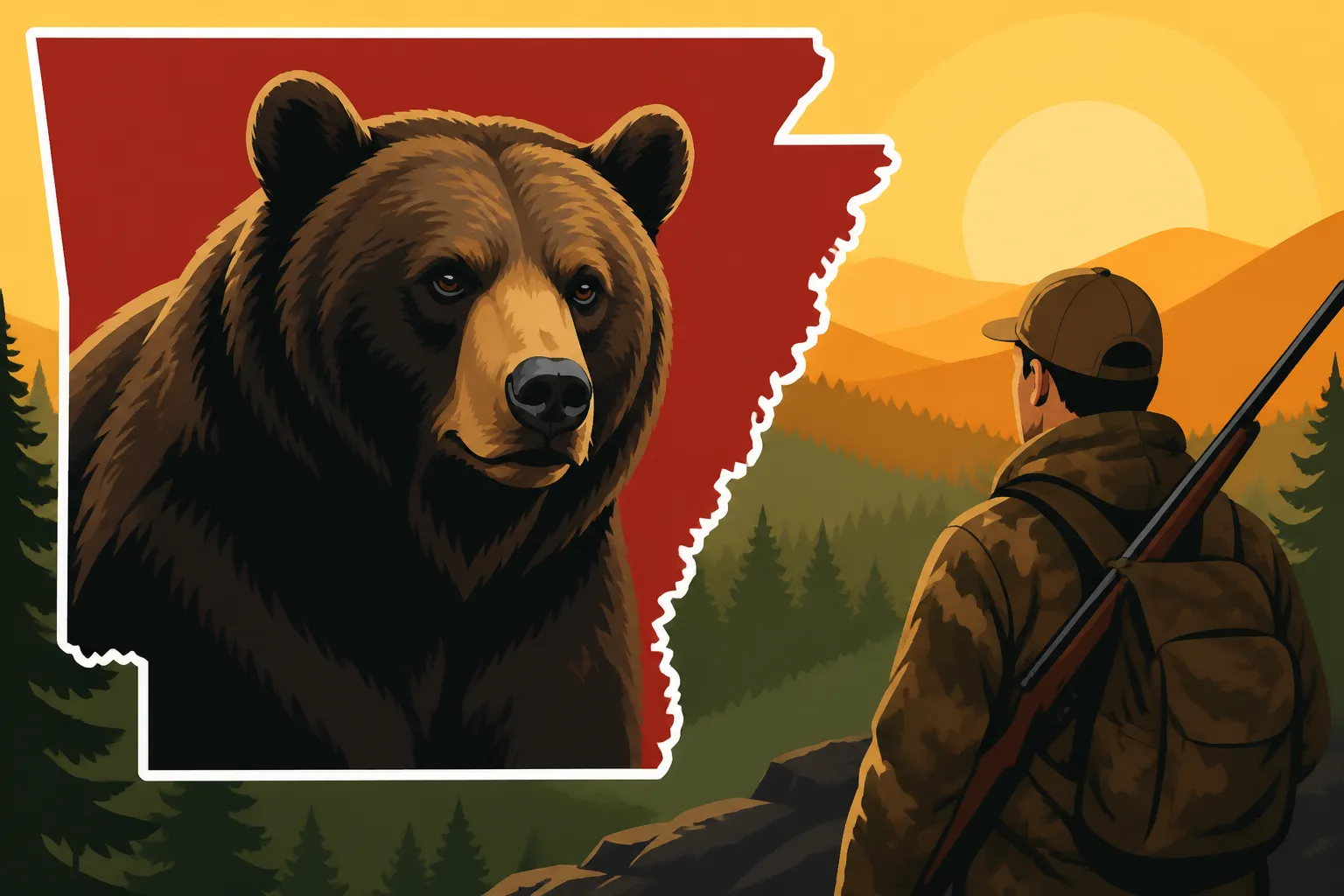
Why Arkansas Was Called the Bear State
Have you ever wondered why Arkansas is affectionately known as the "Bear State," especially when you're out hunting and might not spot a bear every day? It can feel a bit like a historical relic when you're trekking through the woods, knowing bears are there but aren't as omnipresent as, say, deer. This guide is going to peel back the layers of history and modern conservation to explain exactly why Arkansas earned its famous moniker, delving into the fascinating story of black bears in our great state, from their historical dominance to their near disappearance and remarkable comeback.
The Historical Reign of the Arkansas Black Bear
To truly understand why Arkansas was called the "Bear State," we have to rewind the clock to a time before widespread settlement, before logging cleared vast forests, and before agriculture transformed the landscape. In those days, Arkansas was truly a wilderness, and bears weren't just present; they were a dominant feature of the ecosystem.
A Landscape Ripe for Giants
Imagine Arkansas hundreds of years ago – a land of seemingly endless, sprawling bottomland hardwood forests, particularly in the eastern Delta region. These weren't just any woods; they were incredibly rich ecosystems, teeming with mast crops like acorns, pecans, and various berries. Interspersed within these grand forests were impenetrable thickets of cane, creating dense cover that offered perfect sanctuary. Rivers and sloughs crisscrossed the landscape, providing diverse food sources and secluded bedding areas. It was an environment perfectly tailored for black bears, offering everything a large omnivore could ever desire in abundance.
Early explorers, trappers, and settlers who ventured into what would become Arkansas were often astonished by the sheer numbers and size of the black bears they encountered. Accounts from the 18th and 19th centuries speak of bears being incredibly common, almost omnipresent in certain areas. They weren't just numerous; they were often massive, growing to impressive sizes thanks to the rich diet and vast, undisturbed habitat. These historical documents paint a picture where bears were not just an animal but a defining characteristic of the land itself. It was this undeniable prevalence and the imposing nature of these animals that firmly cemented the "Bear State" nickname into the collective consciousness of the fledgling state. The name wasn't just a quaint saying; it was a literal description of the wild abundance that greeted early Arkansans.
The Era of Market Hunting and Habitat Loss
Unfortunately, the very abundance that gave Arkansas its name also led to the black bear's dramatic decline. As more settlers moved into the territory, the demand for bear products grew exponentially. Bear meat was a valuable food source, bear hides were used for clothing and bedding, and perhaps most prized, bear oil was a commodity used for everything from cooking to lubrication and even as a hair tonic. This created a lucrative market for bear hunters, leading to unchecked and unsustainable hunting pressure. Hunters, often operating without any regulations, pursued bears relentlessly, driven by economic incentive rather than subsistence.
Compounding the problem was the rapid and extensive habitat destruction. As Arkansas developed, vast tracts of the pristine bottomland hardwoods were cleared for agriculture, particularly cotton and rice. The dense canebrakes were mowed down, and wetlands were drained to make way for farms. This wasn't just a gradual encroachment; it was a massive, systemic transformation of the landscape. Bears, which need large, undisturbed areas to thrive, found their world shrinking rapidly. They were losing both their homes and their food sources at an alarming rate. By the early 20th century, the combination of relentless market hunting and catastrophic habitat loss had pushed the Arkansas black bear to the brink of extinction. The "Bear State" was rapidly losing its bears, a sobering reminder of how quickly even seemingly endless natural resources can be depleted without careful management.
The Bear's Decline and the Fight for Survival
It's hard for many modern hunters to imagine, but there was a time when the "Bear State" was essentially barren of bears. The stories from our grandparents' generation often speak of deer being scarce, but imagine a time when black bears were practically a ghost of the past. The decline wasn't just a numerical drop; it was a fundamental shift in the wild character of Arkansas.
When the "Bear State" Lost Its Bears
By the early 1900s, the situation for black bears in Arkansas was dire. What was once a population numbering in the tens of thousands had dwindled to an estimated mere 50 individuals, possibly even fewer. These scattered remnants were clinging to survival in the most remote and rugged corners of the state, primarily in the deepest parts of the Ozark and Ouachita Mountains, areas that were simply too difficult to log or farm. Many counties that once boasted thriving bear populations saw them disappear entirely. For all intents and purposes, the "Bear State" had lost its namesake.
This wasn't just an ecological tragedy; it was a cultural one. A creature so integral to the state's identity and history was on the verge of vanishing forever. The few bears left faced immense pressure. Habitat fragmentation meant isolated populations struggled to find mates and expand their range. Every year, the future looked bleaker, and there was a real fear that the Arkansas black bear would become nothing more than a historical footnote, a symbol of what once was. It was a stark lesson in how quickly human expansion and unchecked exploitation can devastate wildlife populations, even those as robust as a large predator like the black bear.
Early Conservation Efforts and the Beginning of Hope
As the crisis deepened, a growing awareness began to emerge among a small but dedicated group of conservationists, biologists, and even some forward-thinking sportsmen. They recognized that if something wasn't done, and done quickly, the bear would be lost forever in Arkansas. The Arkansas Game and Fish Commission (AGFC), still a relatively young agency at the time, started to explore options, though resources were often limited and public understanding of wildlife management was nascent.
Early efforts included basic protections, like closing hunting seasons in certain areas or setting very restrictive limits. These initial steps, while important, were largely insufficient to reverse such a catastrophic decline. However, they laid the groundwork for future, more ambitious projects. The conversations started shifting from simply observing the decline to actively seeking solutions. It was a slow, uphill battle, but it marked a critical turning point where the idea of actively restoring a lost species began to take root. This glimmer of hope was essential, as it set the stage for one of the most remarkable wildlife conservation success stories in North America.
The Remarkable Arkansas Black Bear Restoration
The journey of the Arkansas black bear from near extinction to a thriving population is nothing short of incredible, a testament to dedicated conservation efforts. It's a story that truly makes the "Bear State" moniker ring true again, not just as a historical fact, but as a living legacy.
The 1958 Bear Restoration Program
The real game-changer for Arkansas bears came in 1958. Recognizing the dire situation, the Arkansas Game and Fish Commission launched an ambitious and unprecedented restoration program. The idea was bold: if Arkansas no longer had enough native bears to naturally repopulate, they would bring them in from elsewhere. This led to a partnership that saw bears trapped from robust populations in Minnesota and Manitoba, Canada, and then carefully transported to Arkansas. These were not just any bears; they were carefully selected individuals, brought in to be the foundation of a new future for the species in the state.
These transplanted bears, totaling 254 individuals over a decade, were released primarily into the vast, rugged, and then sparsely populated wilderness areas of the Ozark and Ouachita Mountains. It was a calculated risk, as relocating large, wild animals across such distances was a monumental undertaking with no guarantee of success. There was skepticism, of course; some wondered if the bears would survive, if they would adapt, or if they would simply wander off. But the AGFC pressed on, understanding the critical importance of this effort. This monumental undertaking is famously known as The 1958 Arkansas Bear Restoration, a pivotal moment in our state's conservation history. The success of this program would eventually redefine what it meant to be the "Bear State."
How the Population Rebounded
Against all odds and early doubts, the restoration program proved to be an astounding success. The transplanted bears not only survived but thrived in their new Arkansas homes. The rugged landscapes of the Ozark and Ouachita National Forests, while different from the Delta hardwoods of old, still offered abundant food sources like acorns, hickory nuts, and berries, along with vast tracts of dense forest for cover. The lack of natural predators for adult bears in these areas also played a significant role, allowing the population to grow without intense pressure.
Black bears are remarkably adaptable animals, and they demonstrated this resilience in Arkansas. Females began reproducing, and cubs born in Arkansas quickly learned to forage and navigate their new surroundings. Without the intense market hunting pressure of the past and with increasing habitat protection, the bear population exploded. What started as a few hundred transplanted individuals grew steadily into thousands. This rapid rebound is one of the most celebrated wildlife success stories in North America, highlighting the power of dedicated conservation efforts. If you're curious about where these foundational bears originated, you might want to read more about Where the Restoration Bears Came From.
Expanding Bear Range and Current Status
The success of the restoration program didn't stop at just increasing numbers in the release areas. As the bear population grew, individual bears began to disperse, expanding their range beyond the initial Ozark and Ouachita Mountains. They started moving into surrounding counties, exploring new territories, and establishing new populations. Today, black bears are found in a much broader geographic area of Arkansas than just the national forests. While the densest populations remain in the mountainous regions, bears are now occasionally sighted in unexpected places, even venturing towards the fringes of the Delta in areas that offer suitable habitat corridors.
The estimated black bear population in Arkansas today is a testament to this incredible recovery, with thousands of bears roaming the state. The AGFC continually monitors these numbers to ensure sustainable management. To get a current understanding of their distribution, you might use a tool like GoHunt's mapping features to see general bear activity areas. Their presence across a significant portion of the state solidifies Arkansas's claim to its historic nickname. Want to know more specifics about their numbers? Check out How Many Black Bears Arkansas Has or learn more about Where Arkansas Black Bears Live. It’s a conservation victory that every Arkansan should know about and be proud of.
Hunting Bears in Modern Arkansas: A Legacy Reclaimed
The incredible resurgence of the black bear in Arkansas has brought with it a renewed opportunity for hunters to engage with this magnificent animal. It's a privilege born from diligent conservation, and modern bear hunting in the "Bear State" is a carefully managed endeavor.
Managing a Thriving Population
With a healthy and expanding black bear population, the Arkansas Game and Fish Commission (AGFC) now actively manages the species through regulated hunting seasons. This isn't just about providing recreational opportunities for hunters; it's a crucial component of wildlife management. Hunting helps to control bear numbers, ensuring that the population remains within healthy ecological limits and that bears don't overpopulate their habitat. It also helps to minimize human-bear conflicts, which can arise when bear numbers become too high in proximity to human settlements or agricultural areas.
The AGFC uses scientific data, including harvest reports, population estimates, and habitat assessments, to set specific seasons, bag limits, and zone quotas. These regulations are designed to be dynamic, adjusting as population trends change, ensuring the long-term sustainability of the bear resource. Hunters play a vital role in this management, as their license fees fund conservation efforts, and their participation in regulated hunts directly contributes to the health of the overall bear population. Understanding these management strategies is key to appreciating the balance between hunting and conservation. You can always check the latest regulations concerning Arkansas Bear Seasons and Zone Quotas on the AGFC website.
Hunting Opportunities Today
For hunters in Arkansas, pursuing a black bear is a challenging and incredibly rewarding experience. The state offers diverse opportunities, primarily in the Ozark and Ouachita Mountain regions, where bear densities are highest. Hunters can choose from various methods, including still-hunting, stalking, and hunting over bait in designated zones, each requiring different skills and strategies. It's a hunt that demands patience, keen observation, and often significant physical exertion. Planning for a bear hunt involves detailed scouting and understanding bear behavior. Tools like GoHunt can be invaluable for researching historical harvest data or identifying potential public land access points that might hold bear sign. If you're interested in pursuing this thrilling game, you'll want to dive into Black Bear Hunting in Arkansas for tactics and insights.
The excitement of spotting a black bear, whether it's through careful glassing or tracking fresh sign, is unmatched. Securing a bear tag in Arkansas is a unique privilege, reflecting the success of decades of conservation work. Harvest numbers are carefully tracked, giving insight into population health; you can learn more about past results in Arkansas Bear Harvest Trends. Whether you're interested in Bear Baiting Rules and Tactics in Arkansas or learning how to identify Finding Bear Sign in the Ozarks, the modern Arkansas bear hunt is a true testament to the state's wild heritage.
Why the Nickname Still Rings True
So, why is Arkansas still called the "Bear State"? It's not because you'll trip over a bear every time you step into the woods, like perhaps early settlers might have. Instead, it's a testament to a phenomenal conservation success story. The nickname now represents not just the historical abundance of bears but the dedication and hard work that went into bringing them back from the brink of extinction. It's a symbol of resilience, both for the bears themselves and for the people who fought to save them.
Today, when we refer to Arkansas as the "Bear State," we're celebrating a vibrant, healthy, and actively managed black bear population. It's a source of pride, showcasing what is possible when science-based wildlife management and public support come together. The black bear is a powerful and iconic creature, deeply woven into the fabric of Arkansas's natural and cultural history. Its continued presence in our forests, whether you're actively hunting it or simply enjoying the knowledge that it roams our wild places, ensures that the "Bear State" nickname remains as relevant and meaningful as ever. Our state remains one of the best places to find Black Bears in the Arkansas Ozarks and Ouachitas.
Here's a quick look at the bear's journey in Arkansas:
| Aspect | Historical Status (Pre-1900s) | Modern Status (Post-Restoration) |
|---|---|---|
| Population Estimates | Tens of thousands (undocumented but abundant) | Thousands (managed and estimated by AGFC) |
| Primary Range | Widespread, especially Delta hardwoods | Primarily Ozark & Ouachita Mountains, expanding |
| Threats | Market hunting, rampant habitat destruction | Habitat fragmentation, human-bear conflict, managed hunting |
| Hunting Status | Unregulated, market-driven | Regulated seasons, bag limits, conservation focus |
| Conservation Status | Severely endangered, near extinction | Thriving, actively managed, sustained population |
| "Bear State" Meaning | Literal abundance and prevalence | Testament to conservation success and ongoing management |
Disclaimer
This article is for general informational purposes only and does not constitute professional advice. Laws, prices and regulations vary by location and change over time. Consult a qualified professional for guidance on your specific situation.