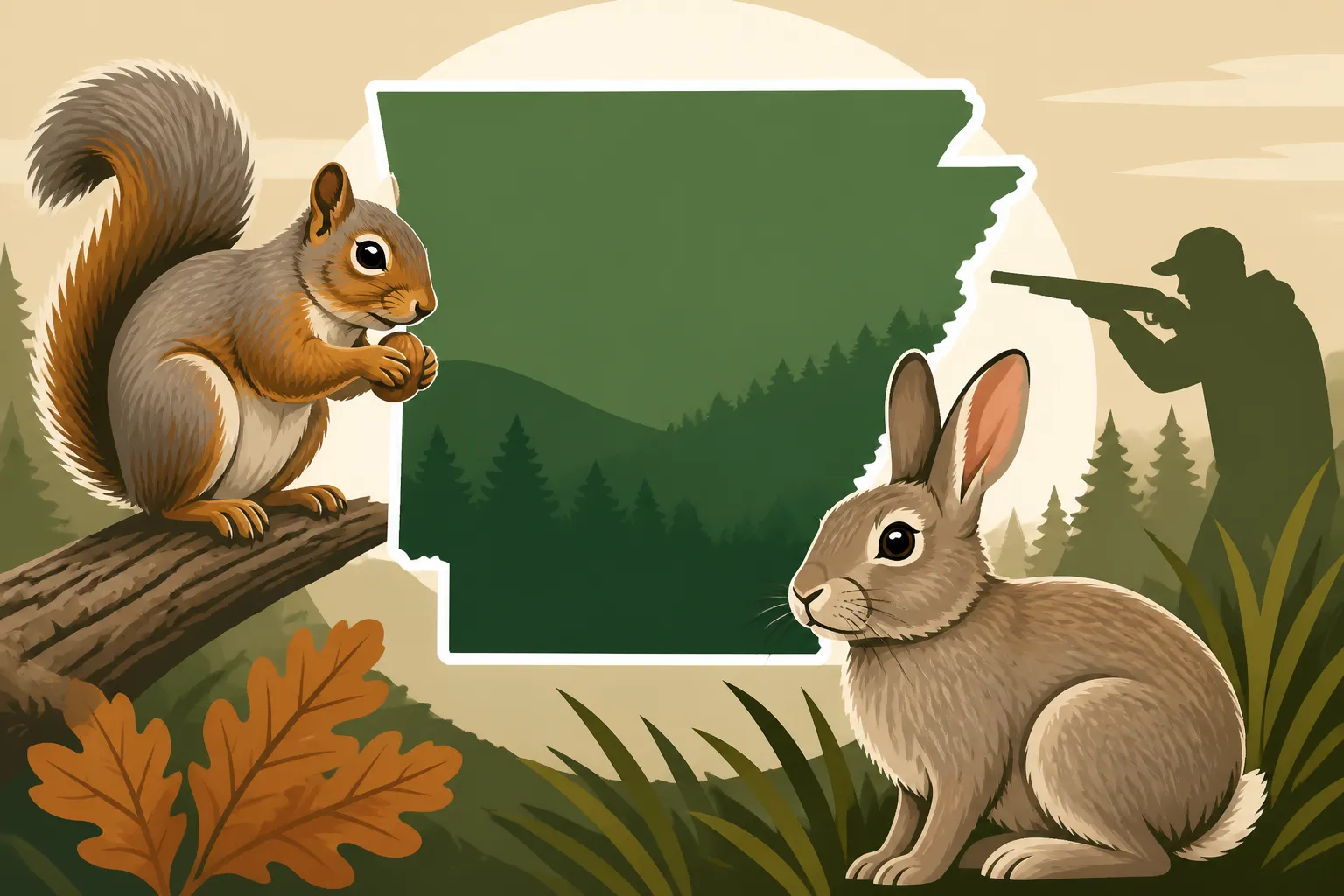
Squirrel and Rabbit Numbers
It’s easy to get caught up in the allure of big game like deer and turkey here in Arkansas, but I know many of you, like me, still cherish the foundational experiences of chasing squirrels and rabbits. There’s a quiet satisfaction, a purity, to small game hunting that harks back to simpler times. Yet, knowing where these critters are and how their numbers are doing can feel like a mystery sometimes, especially when you head to a favorite spot only to find it eerily quiet. This guide is all about pulling back the curtain on Arkansas's squirrel and rabbit populations, helping you understand the trends, the science, and what it all means for your next outing.
Understanding Arkansas Small Game Populations
When we talk about hunting, we often focus on deer or turkey populations, but the health of our small game populations—squirrels and rabbits in particular—is just as crucial for a vibrant ecosystem and for hunters who love the chase. It’s not just about how many you see on a given day; it’s about the bigger picture, the ebb and flow of nature that dictates how good your chances are.
Why Population Data Matters for Squirrels and Rabbits
For a long time, small game was almost taken for granted. You went out, you found squirrels or rabbits, and you harvested them. Simple, right? But the reality is far more complex. Population data for squirrels and rabbits gives us vital clues about habitat health, environmental changes, and even the impacts of predator populations. If squirrel numbers are consistently low in an area, for instance, it might signal a decline in hard mast production, like acorns and hickory nuts, which are their primary food source. For rabbits, a dip could point to a loss of the dense, brushy cover they need to escape predators and raise young.
Understanding these trends helps the Arkansas Game and Fish Commission (AGFC) make informed decisions about season lengths and bag limits, ensuring that we can continue to enjoy these pursuits for generations. For us hunters, it means we can be more strategic. If you know, for example, that a harsh winter followed a poor mast crop, you might anticipate lower squirrel numbers the following fall and adjust your expectations or scouting efforts accordingly. It validates that feeling you get when you're just not seeing the numbers you used to – it's not always just bad luck, but sometimes a reflection of wider population dynamics.
How AGFC Tracks Squirrel and Rabbit Numbers
Unlike deer or turkey, which often have intensive, hands-on survey methods, tracking small game like squirrels and rabbits presents a unique set of challenges. They're often numerous, elusive, and their populations can fluctuate quite rapidly. The AGFC employs a combination of methods, though they aren't always as high-profile as deer surveys.
One of the primary ways the AGFC gathers data is through hunter harvest reports. When you check your game, whether it's through the AGFC app or a phone call, that data contributes to understanding what's being harvested statewide. This helps track trends in hunter success and overall take, which can then be extrapolated to estimate population health. If harvest numbers are consistently declining over several years, it's a red flag. Beyond harvest data, biologists conduct field observations, sometimes using specific small game surveys that might involve spotlight counts for rabbits at night or timed counts for squirrels in particular habitat types. They also monitor mast crop conditions, especially for squirrels, because a boom or bust year for acorns can have a direct, almost immediate impact on squirrel recruitment and survival. Your participation in checking your game, no matter how small, is a direct contribution to this critical conservation effort. It helps paint a clearer picture of what's really happening out there in the woods and fields.
Arkansas Squirrel Population Trends
Squirrel hunting in Arkansas is a classic, deeply rooted tradition. Whether you're chasing the fast-paced gray squirrel through the oaks or the larger, more deliberate fox squirrel along a field edge, there’s a lot to learn about what drives their numbers here in the Natural State.
Gray Versus Fox Squirrels in Arkansas
Arkansas is home to two primary species of tree squirrels that hunters pursue: the Eastern gray squirrel and the fox squirrel. While both are squirrels, they have distinct preferences and characteristics that influence their numbers and where you'll find them.
The Eastern gray squirrel is likely what most people picture when they think of a squirrel. They're smaller, typically a grizzled gray color with white undersides, though you'll find some that are almost entirely black in certain areas. These guys are champions of the canopy, often found in dense hardwood forests, particularly those rich in oak and hickory. They are incredibly agile, quick, and often travel in groups. If you're hunting a big block of mature timber in the Ozarks or Ouachitas, or even a bottomland hardwood tract, you're primarily targeting grays. They thrive where there's a strong mast crop and plenty of mature trees for nesting and escape.
Fox squirrels, on the other hand, are the behemoths of the squirrel world. They are noticeably larger, often displaying a mix of rusty-orange, reddish-brown, and black fur, with a distinctive bushy tail. Their habitat preference leans more towards open woodlands, forest edges, and smaller woodlots, often bordering agricultural fields. They're not as inclined to live in dense groups as grays and are generally less skittish, moving with a slower, more deliberate pace. You'll often find them along the timber edges of a large soybean field in the Delta or scattered pines and oaks in central Arkansas. Understanding these differences is key because the factors that might impact one species' population might not have the same effect on the other. For instance, a clearcut that fragments a dense hardwood forest might negatively impact gray squirrels, but a new edge created could actually provide some benefit to fox squirrels seeking varied cover.
Factors Influencing Squirrel Abundance
Squirrel populations, perhaps more than many other game species, are heavily influenced by the availability of food, specifically hard mast. This means acorns, hickory nuts, pecans, and walnuts.
A booming acorn crop one fall often translates to a healthy, robust squirrel population the following year. Why? Because ample food means better survival rates through the winter, healthier breeding females, and more successful litters in the spring. Conversely, a poor mast year—perhaps due to a late spring freeze or drought during nut development—can lead to fewer squirrels the next season. Hunters often notice this directly. You might remember a fall where the ground was just littered with acorns, and then a year or two later, the woods felt alive with squirrels. This is not just anecdotal; it's a direct result of food availability.
Beyond food, timber management plays a massive role. Mature hardwood forests are crucial for gray squirrels, providing not only food but also den trees for shelter and raising young. Logging, especially clearcutting, can drastically alter squirrel habitat. While a clearcut might offer some benefit to species that thrive in early successional growth, it removes the mature mast trees that are the backbone of a robust gray squirrel population. However, selective timber harvesting that maintains a healthy mix of age classes and mast producers can actually be beneficial, promoting new growth and a variety of food sources over time. Predator populations, such as hawks, owls, bobcats, and even feral cats, also exert pressure on squirrels, though healthy squirrel populations can usually sustain some predation. Diseases, while less common than in deer or rabbits, can also occasionally impact local numbers.
Interpreting Arkansas Squirrel Harvest Numbers
When we look at harvest numbers for squirrels across Arkansas, it’s a delicate balance of data interpretation. These numbers, collected when hunters check their game, offer a snapshot of activity and success, but they don't always tell the whole story of the actual population size.
For example, a sudden spike in squirrel harvest numbers might not mean there's an explosion in the squirrel population; it could simply indicate increased hunter participation due to good conditions, or perhaps a particularly successful mast year that made squirrels more visible and easier to find. Conversely, a drop in harvest could be due to fewer hunters in the woods, or a genuinely tougher year for squirrels. That's why biologists look at trends over several years, not just isolated annual figures. Long-term trends are more indicative of population health. If the average hunter is consistently harvesting fewer squirrels over a decade, despite consistent hunting effort, then it suggests a potential decline.
What harvest data does reliably tell us is the distribution of hunting pressure and success across different parts of the state. We can see which counties are yielding the most squirrels, which often correlates with prime habitat. For instance, counties with extensive hardwood forests in the Ozarks or large tracts of mature bottomland in the Delta tend to show higher squirrel harvests. It also helps validate your own experiences. If you've been putting in the time and seeing fewer squirrels, checking the statewide or regional harvest reports might confirm that it's not just you; it could be a broader trend. This information, combined with mast surveys and habitat assessments, provides a comprehensive picture, guiding management decisions to ensure the future of squirrel hunting in Arkansas. You can often find detailed harvest reports on the AGFC website, which can be a valuable tool, especially if you're trying to figure out if your favorite spot is just having an off-year or if it's part of a larger, regional decline.
Arkansas Rabbit Population Dynamics
Rabbit hunting with beagles is another deeply cherished tradition here in Arkansas, conjuring images of crisp fall mornings and the excited yips of dogs on a hot trail. But like squirrels, rabbit populations are dynamic, sensitive to a different set of ecological pressures.
Cottontails and Swamp Rabbits in Arkansas
Just like squirrels, Arkansas is home to two primary rabbit species that hunters pursue: the Eastern cottontail and the swamp rabbit. While both are excellent game animals, their preferred habitats and behaviors are quite distinct.
The Eastern cottontail is the quintessential backyard bunny and the most common rabbit species across North America, including Arkansas. They are relatively small, grayish-brown with a fluffy white tail that flashes when they run. Cottontails are habitat generalists, meaning they can thrive in a variety of environments, but they absolutely prefer areas with dense, brushy cover. Think old fields, briar patches, fence rows, cutovers, and the edges of woodlands. They are prolific breeders, producing multiple litters a year, which helps them bounce back quickly from population dips, provided their habitat is intact. You'll find cottontails in almost every corner of Arkansas where suitable cover exists, from the suburban fringes to the agricultural fields of the Delta and the timbered hillsides of the Ozarks.
Swamp rabbits, on the other hand, are true specialists. They are larger than cottontails, often darker in coloration (more brownish-gray), with smaller ears and tail. As their name suggests, they are intrinsically linked to wetlands. Their preferred habitat includes flooded bottomland hardwoods, river bottoms, swamps, and dense cane thickets. They are excellent swimmers, often taking to the water to escape predators. If you're hunting in the low-lying river bottoms of the Arkansas Delta, particularly around areas managed for duck hunting, you're more likely to encounter swamp rabbits. Their distribution is much more restricted than cottontails, primarily found in the eastern and southern parts of the state where extensive wetland habitats persist. Understanding which species you're targeting is crucial because hunting tactics and habitat assessment will vary significantly between the two.
Key Drivers of Rabbit Populations
Rabbit populations are incredibly sensitive to habitat quality, perhaps even more so than squirrels. Their survival hinges on dense, escape cover.
The primary driver for robust rabbit numbers is the presence of early successional habitat—think young, regenerating forests, overgrown fields, briar thickets, and brush piles. This provides both food (young shoots and vegetation) and, crucially, protection from predators like coyotes, bobcats, hawks, and owls. If an area lacks this thick cover, rabbits simply can't survive, no matter how much food is available. Modern agricultural practices, which often involve clear-cutting fence rows and maximizing tillable acreage, have unfortunately contributed to habitat loss for cottontails in many areas.
Weather patterns also play a significant role. Severe, prolonged cold snaps with deep snow can make it difficult for rabbits to find food and shelter, leading to winter mortality. Conversely, mild, wet springs can sometimes lead to disease outbreaks. Disease is another critical factor. Rabbit hemorrhagic disease virus 2 (RHDV2), for instance, has impacted rabbit populations in various parts of the country, and while Arkansas closely monitors its wildlife health, any widespread outbreak could be devastating. Tularemia, a bacterial disease, is also present and can affect both rabbits and humans. The cyclical nature of rabbit populations, often referred to as "boom and bust" cycles, is also well-documented, influenced by a complex interplay of habitat, weather, and predation. For hunters, recognizing these habitat needs is fundamental. If you're scouting, you're not just looking for rabbits, you're looking for prime rabbit habitat.
Arkansas Rabbit Harvest Trends and Challenges
Looking at Arkansas rabbit harvest trends reveals a mixed bag and highlights some ongoing challenges for small game enthusiasts. Historically, rabbit hunting was a widespread and popular pursuit, providing consistent opportunities across the state. In many areas, especially the agricultural heartland, rabbit numbers could be quite high, sustained by a patchwork of brushy fencerows and neglected field edges.
However, over the past few decades, there has been a noticeable decline in rabbit harvest numbers in many regions. This isn't unique to Arkansas; it's a trend seen across much of the Southeast. The primary culprit for this decline is habitat loss and fragmentation. As agricultural practices become more intensive, and as land development expands, the dense, brushy "edge" habitats that rabbits rely on disappear. Fencerows are cleared, old fields are converted to monoculture crops or pine plantations, and the crucial early successional stages of forest regrowth are often suppressed. This leaves rabbits vulnerable to predation and reduces their breeding success.
The challenges in maintaining robust rabbit populations compared to species like deer or turkeys are significant. Deer and turkeys can often adapt to larger forest blocks or more open agricultural settings, but rabbits need that specific, dense, low-level cover to thrive. While the AGFC works to create and maintain rabbit habitat on public lands, such as some Wildlife Management Areas (WMAs), it's a constant battle against broad landscape changes. For hunters, this means that finding consistent rabbit numbers often requires more effort in scouting and seeking out specific pockets of ideal habitat. It’s no longer a given that every woodlot edge will hold a good rabbit population. Understanding these trends and challenges means that when you do find a strong rabbit population, you appreciate the unique ecological conditions that support it, and perhaps consider how you might help foster such conditions on private lands.
Localized Variability and Scouting for Small Game
While statewide population trends offer a useful overview, the real success in small game hunting, whether for squirrels or rabbits, boils down to understanding and identifying localized conditions. What's happening in Zone 12 for deer might not apply to the squirrel numbers in your particular timber block.
Why Local Conditions Trump State Averages
Imagine the AGFC reports a fantastic year for squirrels across the state due to a bumper mast crop. That's great news, right? But if your specific hunting spot consists mainly of young pine plantation or a mature hardwood stand that inexplicably had a poor acorn year, your local squirrel numbers might still be low. Conversely, if statewide numbers are average, but you've got an isolated pocket of prime habitat — a neglected field with thick briars for rabbits, or an ancient stand of oaks dropping heavily for squirrels — your personal experience could be exceptional.
Local conditions are everything. They determine where the food is, where the best cover is, and how much pressure the animals are experiencing. A small block of timber within a large agricultural area might become a squirrel magnet, concentrating them in a way that makes hunting incredibly productive, even if the surrounding landscape isn't ideal. Similarly, a sprawling WMA might have vast sections of mediocre rabbit habitat, but a few well-placed brush piles or early successional cuts could be teeming with cottontails. This means that while reading the broader reports is good, nothing beats boots on the ground to assess the specific conditions of your hunting area. That feeling of anticipation, of exploring new cover or a new patch of timber, is where the real fun of small game hunting lies. It's detective work, and the clues are all around you if you know what to look for.
Using Resources for Better Small Game Scouting
In today's hunting world, we have more tools at our disposal than ever before to pinpoint potential hot spots for small game. Gone are the days of just blindly wandering the woods, though that still has its charm!
Aerial maps and satellite imagery are your best friends when it comes to small game scouting. Services like GoHunt or other mapping apps allow you to virtually scan vast areas for the tell-tale signs of good squirrel or rabbit habitat. For squirrels, you're looking for mature hardwoods—identifying oak, hickory, and pecan trees from their canopy shape can be incredibly effective. Look for fingers of timber, creek bottoms, and areas with a diverse mix of tree species. For rabbits, focus on finding those critical brushy areas: thick fencerows, regenerating clearcuts, creek drainages choked with briars, and the tangled edges of fields. These apps often allow you to overlay property lines, helping you distinguish public land from private and find potential access points.
After you've done your digital scouting, it's time for the real work: boots-on-the-ground scouting. This means walking the areas you've identified, looking for actual sign. For squirrels, this involves "Reading Cuttings Under an Oak" or hickory tree—piles of gnawed nut shells indicate recent feeding activity. Listen for their barks and chattering. For rabbits, look for droppings, clipped vegetation, and, most importantly, thick escape cover. Inspect brush piles, dense plum thickets, and tall grass patches. Pay attention to "sign" like tracks in soft dirt or dew. Don't underestimate the value of scouting during the off-season, when leaves are down and sign is easier to spot, giving you a full picture before the season even opens. Checking out areas like this beforehand can save you a lot of time and frustration later.
Adapting to Fluctuating Numbers Season to Season
The beauty and the challenge of small game hunting often come down to their fluctuating numbers. Squirrel and rabbit populations can ebb and flow more dramatically than larger, longer-lived game. This means that a strategy that worked perfectly last year might fall flat this season.
Adaptability is your greatest asset. If you scout your favorite squirrel woods and find a dismal mast crop, or very few fresh cuttings, it's a strong signal that you might need to adjust your expectations or, better yet, shift your focus to a different area. Perhaps a different type of mast-producing tree, like pecans along a river bottom, had a better year. For rabbits, if an old brush pile has been cleared or overgrown into a dense, mature forest, it's no longer prime habitat, and those rabbits have likely moved on. You might need to seek out newer clearcuts or areas where habitat improvement projects, such as creating new brush piles, have taken place.
Staying informed about local conditions can also involve chatting with other hunters, checking local AGFC reports specific to certain WMAs, or even just driving around and observing habitat changes. If an area you usually hunt for squirrels suddenly feels dead, consider if there's been recent timber work, a disease outbreak, or simply a poor food year. If you hunt public land, scouting during the late summer can give you an invaluable head start on the mast crop situation for squirrels. For rabbits, heavy rains and subsequent flooding can push them to higher ground, concentrating them in certain areas. Embracing this variability and adapting your tactics is what makes small game hunting so engaging and ensures you're ready for whatever the season throws your way.
The Role of Habitat Management in Small Game Recovery
Many of us remember a time when small game seemed more abundant, when every woodlot and field edge held a healthy population of squirrels or rabbits. Habitat management is the key to ensuring those memories aren't just relics of the past but a preview of a vibrant future.
Timber Management for Squirrel Habitat
For squirrels, especially the prolific Eastern gray squirrel, timber management is synonymous with mast management. The health and diversity of our hardwood forests directly dictate how many squirrels an area can support.
Healthy squirrel populations thrive in diverse, mature hardwood forests. This means a good mix of mast-producing trees like various oak species (red oaks for late-season food, white oaks for early season), hickories, and pecans. Timber management practices that focus on promoting these species are crucial. Selective logging, for instance, can be beneficial if it removes less desirable trees and creates space and sunlight for mast producers to flourish. It's about thinning, not clearcutting. Prescribed burns, when managed carefully in hardwood forests, can also clear out understory competition, allowing mast-producing trees to grow stronger and produce more nuts. They also expose nuts on the forest floor, making them easier for squirrels to find.
However, unchecked logging, particularly clearcutting large blocks of mature hardwoods, can devastate squirrel habitat for decades. While some immediate benefit might exist for fox squirrels if new edges are created, it removes the essential den trees and consistent food sources that gray squirrels rely on. Foresters working on public lands, like those in the Ozark National Forest, often consider wildlife habitat in their management plans, aiming for a balance that benefits multiple species. For private landowners, choosing sustainable forestry practices that prioritize a healthy, diverse mast crop is one of the best things you can do for your squirrel populations.
Creating and Maintaining Rabbit Cover
Rabbit habitat management, particularly for cottontails, revolves around one core principle: creating and maintaining dense, brushy cover. Rabbits are not built for open spaces; they are prey animals that need constant access to thickets and escape routes.
One of the most effective ways to boost rabbit numbers is to create and maintain brush piles. These can be made from downed trees, limbs from logging operations, or even old Christmas trees. A properly constructed brush pile provides immediate shelter, nesting sites, and a microclimate for rabbits. The thicker and more tangled, the better. Planting native grasses and shrubs that provide both cover and forage is also incredibly beneficial. Think blackberry thickets, wild plum, and other woody cover.
Managing field edges, especially where agricultural fields meet woodlands, is another critical practice. Instead of mowing or clearing these edges, allowing them to grow into thick, brushy borders creates invaluable travel corridors and habitat. Historically, fencerows served this purpose beautifully. On larger properties, creating "strip cover" by planting linear bands of dense shrubs and grasses through open areas can connect otherwise fragmented rabbit habitat. The impact of modern agriculture, with its push for larger, unbroken fields, has significantly reduced these crucial edge habitats. However, even small efforts, like leaving a corner of a field un-mowed or dedicating a small parcel to native brush, can make a surprising difference for local rabbit populations.
Public Land Efforts and Private Land Opportunities
The task of improving small game habitat isn't solely on the shoulders of private landowners; public agencies like the AGFC and the U.S. Forest Service are constantly working on initiatives across our public hunting lands.
On many Arkansas Wildlife Management Areas (WMAs) and in the National Forests, the AGFC and partners implement habitat management plans that benefit small game. This can include prescribed burning to rejuvenate understory vegetation, selective timber thinning, or even creating food plots specifically designed to attract and support small game. These efforts often aim to reverse some of the habitat degradation that has occurred over time. If you're looking for productive small game hunting on public land, checking the specific WMA management plans can sometimes reveal areas where such work has been done. Knowing where the AGFC has been active in habitat restoration is like getting a cheat sheet to find prime hunting spots. For example, some WMAs might focus on specific areas for early successional growth, which would be perfect for rabbit hunters. You can often find details through the AGFC website or by using their AGFC Map Tool.
Beyond public lands, private landowners have a massive opportunity to make a difference. Even small property owners can create brush piles, plant native forage, and manage their woodlands with small game in mind. Collaborating with organizations that offer technical assistance for habitat improvement can also be valuable. The cumulative effect of many private landowners implementing small-scale habitat projects can have a significant impact on regional small game numbers. It's not just about what the state does; it's about what we all do, collectively, to nurture the environments that sustain these beloved game species.
| Feature | Eastern Gray Squirrel | Fox Squirrel | Eastern Cottontail | Swamp Rabbit |
|---|---|---|---|---|
| Size | Small to Medium (1-1.5 lbs) | Medium to Large (1.5-3 lbs) | Small to Medium (2-3 lbs) | Medium to Large (4-6 lbs) |
| Color | Gray with white belly (can be black) | Rusty-orange, brown, or black with pale belly | Grayish-brown, white fluffy tail | Darker brownish-gray, smaller tail |
| Habitat | Dense, mature hardwood forests | Open woodlands, forest edges, small woodlots | Brushy fields, thickets, fencerows, cutovers | Flooded bottomlands, swamps, cane thickets |
| Diet | Acorns, hickory nuts, pecans, fungi, buds | Nuts, seeds, fruits, fungi, insects | Grasses, forbs, bark, twigs, clover | Aquatic plants, grasses, woody browse |
| Behavior | Agile, often social, canopy dweller | More solitary, deliberate, often ground dweller | Nocturnal/crepuscular, hides in dense cover | Excellent swimmer, often found near water |
| Distribution in AR | Statewide, especially Ozarks, Ouachitas, Delta hardwoods | Statewide, more common in fragmented forests, Delta | Statewide, abundant in diverse habitats | Eastern and Southern AR (wetland areas) |
This article is for general informational purposes only and does not constitute professional advice. Laws, prices and regulations vary by location and change over time. Consult a qualified professional for guidance on your specific situation.