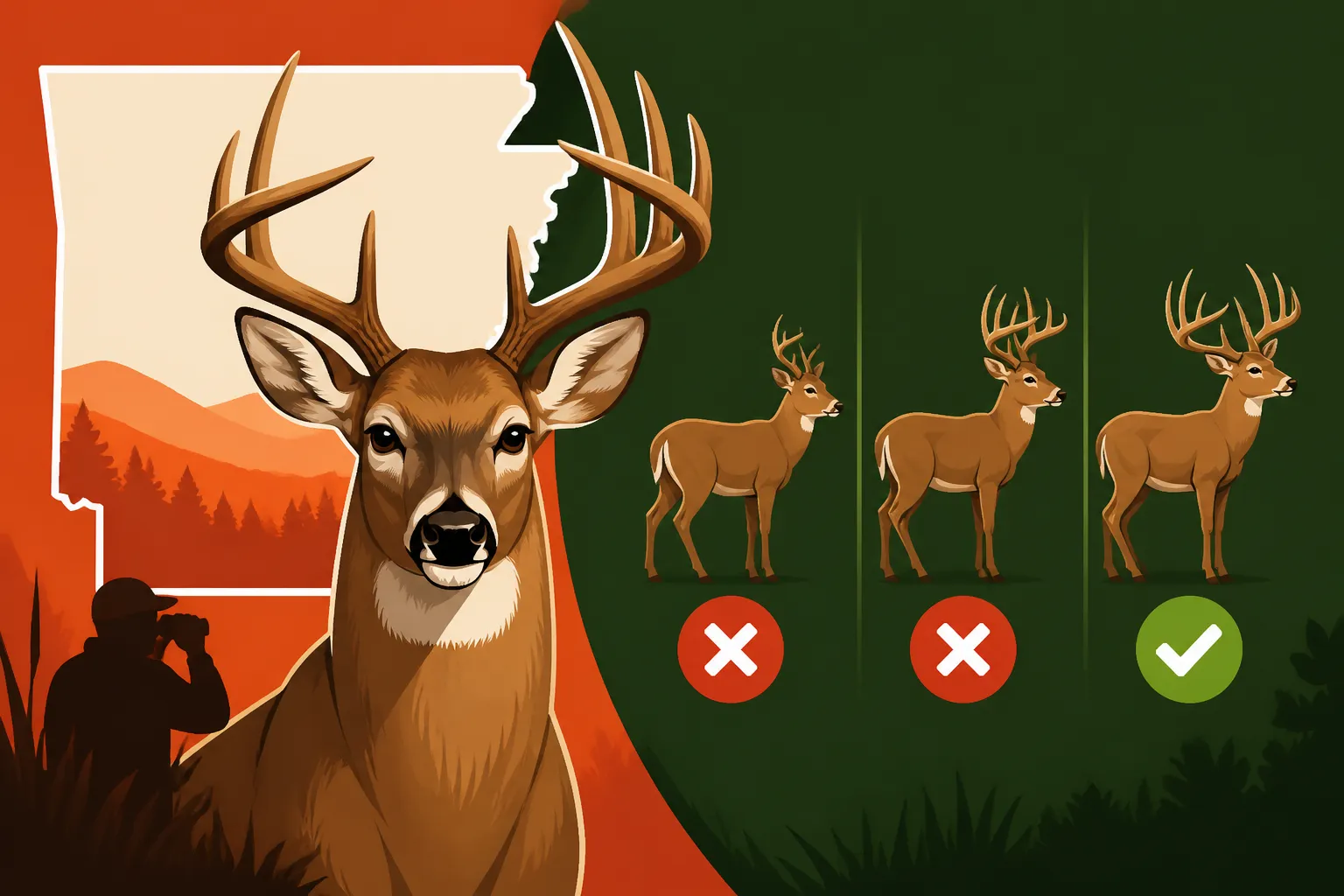
Buck Age Structure Under the Three-Point Rule
For many Arkansas deer hunters, the dream isn't just about punching a tag, but about encountering and ethically harvesting a mature buck. However, navigating the state's deer regulations, especially rules designed to influence herd dynamics, can sometimes feel like trying to solve a puzzle in the woods. This guide aims to demystify one of the most significant deer management tools in Arkansas: the three-point rule, exploring how it directly impacts the age structure of our buck population and what that means for your hunting success.
Understanding the Three-Point Rule in Arkansas
It's easy to hear about a "three-point rule" and assume everyone knows exactly what it entails. But like many hunting regulations, the details matter, and misunderstanding them can lead to missed opportunities or, worse, unintended violations. This rule is a cornerstone of deer management in specific parts of our state, aimed squarely at fostering a healthier, more balanced deer herd.
What the Rule Actually Means
At its heart, the three-point rule dictates that any antlered buck harvested in designated zones must have at least three points on one side of its antlers, or a main beam length of at least 15 inches. This isn't just about counting tines; it's a specific definition that often catches new hunters or those unfamiliar with the zones off guard. A "point" typically refers to an antler projection at least one inch long, measured from its base, and it must be longer than its width at one inch or more from the tip. So, that tiny bump on a brow tine or a burr that's just a nubble doesn't necessarily count. It's crucial to be able to identify legal antlers quickly in the field, often under less-than-ideal lighting or during a fast-paced encounter. For detailed rules and a visual guide, always check the current AGFC regulations before heading afield.
The Goal Behind the Regulation
The Arkansas Game and Fish Commission didn't just pull the three-point rule out of a hat. It's a strategic management tool, primarily focused on influencing the age structure of the buck population. In areas without antler restrictions, younger bucks—especially those yearling deer that are 1.5 years old—are often the most vulnerable to harvest. They're typically less wary, more prone to movement, and simply present more opportunities for hunters. The result, over time, can be a buck population heavily skewed towards younger age classes, meaning fewer bucks live long enough to reach their full potential in terms of body size and antler development.
The three-point rule acts as a filter, allowing a significant number of these younger bucks to survive another year or two. The hope is that by protecting these 1.5-year-old and some 2.5-year-old bucks, they'll grow into the 3.5, 4.5, and even older age classes. This isn't necessarily about producing "trophy" bucks for every hunter, but about creating a more natural and resilient deer population with a broader range of age classes among the antlered segment. This maturity can also lead to more consistent rutting behavior and healthier does, as older bucks tend to be more effective breeders.
Where the Three-Point Rule Applies
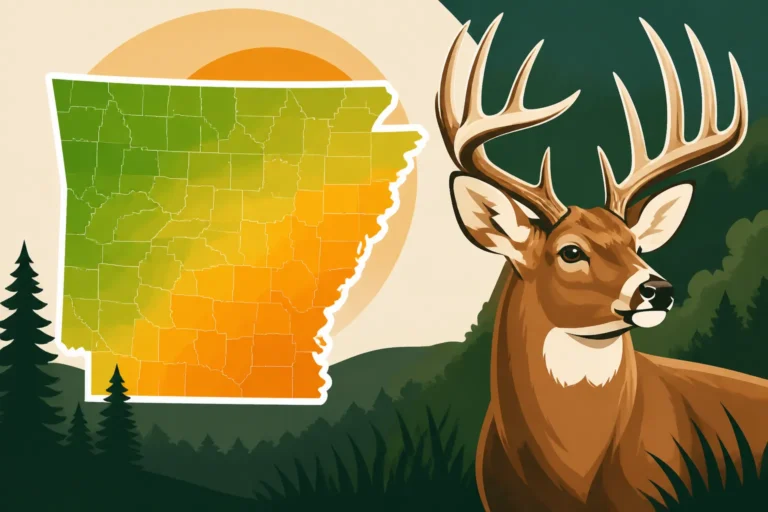
One of the most critical aspects of this rule is that it's not statewide. Arkansas is divided into specific Deer Zones, and the three-point rule applies only in certain ones. These are typically zones where deer managers have identified a need to protect younger bucks and enhance the age structure. For instance, many of our Ozark zones, where deer densities might be lower and habitat can be more challenging, have historically employed antler restrictions. Conversely, some of our high-density Delta zones might have different, or no, antler restrictions, focusing instead on antlerless harvest to control overall numbers.
Before every season, it’s imperative to consult the AGFC hunting guide or use online resources like the AGFC map tool to pinpoint exactly which zones are under the three-point rule. Imagine making a trip to a new WMA or a piece of public land only to realize your usual understanding of antler rules doesn't apply there. This could mean passing on a perfectly legal buck in a different zone, or worse, making an illegal harvest. Always know which Arkansas Deer Zones Explained you are hunting in and their specific regulations.
How the Three-Point Rule Shapes Buck Age Structure
The implementation of antler restrictions like the three-point rule creates a ripple effect throughout the deer herd, fundamentally altering the proportion of bucks in different age classes. This shift is the primary objective of such regulations, and understanding it is key to anticipating deer behavior and planning your hunt.
Protecting Young Bucks
The most immediate and direct impact of the three-point rule is on the survival rate of young bucks. A significant portion of 1.5-year-old bucks, and even some 2.5-year-olds, simply won't meet the three-point or 15-inch main beam minimum. This effectively removes them from the harvest pool, giving them a "free pass" to grow another year. Think about a typical yearling buck in the Ouachitas or Ozarks; he might be a spike, a fork horn, or a basket-racked six-point. Many of these simply don't qualify under the rule, allowing them to gain another year of growth, putting on more body mass and, crucially, developing more complex antlers.
This protection is vital for replenishing the ranks of older deer. Without it, continuous harvest pressure on yearlings can lead to a phenomenon often described as "hunter-driven evolution," where bucks with smaller antlers at a young age are more likely to survive and breed, potentially selecting for genetics that produce smaller antlers earlier. The three-point rule aims to reverse this by allowing bucks with strong genetics a chance to express that potential, regardless of their yearling antler size. This means that hunters are more likely to see What the Three-Point Rule Did to Arkansas Bucks by providing more time for growth.
Impact on Older Buck Presence
The cumulative effect of protecting young bucks is an increase in the number of older bucks in the population. If more 1.5-year-olds survive to 2.5, and more 2.5-year-olds survive to 3.5, then the percentage of bucks in the 3.5-year-old and older categories will naturally rise. This doesn't mean every young buck will become a Boone and Crockett monster, but it significantly increases the likelihood of encountering mature deer.
This shift in age structure brings several benefits beyond just bigger antlers. Older bucks typically have larger body weights, offering more venison. They also exhibit more developed rutting behaviors, which can make for more exciting hunting, especially during the peak rut. When the buck population includes a healthy contingent of older, dominant animals, it can also lead to a more intense and predictable rut, as these bucks are more active in seeking out and breeding does. This changes the game for hunters who are Hunting the Arkansas Rut by Zone, making their strategies more effective.
Shifting Hunter Mindsets and Strategy
Beyond the biological impact on the deer, the three-point rule also profoundly influences hunter behavior and strategy. Gone are the days in these specific zones where any antlered deer was a legal deer. Now, hunters must exercise patience and discretion. This requires more careful observation in the field and a willingness to pass on younger animals that don't meet the criteria.
For many, this shift has been a positive one, encouraging a greater appreciation for deer management and the quality of the hunting experience. Instead of just "filling a tag," hunters are often more focused on the pursuit of a specific class of animal. This can lead to more intentional scouting, a deeper understanding of deer movement patterns, and a greater emphasis on ethical shot placement once a legal buck is identified. Hunters may spend more time glassing, using apps like GoHunt to analyze habitat, or practicing their range estimation to ensure they can confidently identify a legal buck. This also impacts how one approaches tactics like Rattling and Grunting in Arkansas, as you might be trying to appeal to more mature deer.
Practical Implications for Arkansas Deer Hunters
Hunting under the three-point rule isn't just about following the law; it's about adapting your entire approach to become a more effective and successful deer hunter. This includes everything from how you scout to how you manage your expectations.
Adjusting Your Hunting Approach
First and foremost, hunters need to hone their antler identification skills. Before the season, spend time looking at photos and videos of bucks of different age classes and antler configurations. Understand how to quickly count points and estimate main beam length. In the excitement of the moment, a small, legal buck can easily look larger, and vice-versa. Practicing with photos of young bucks that might be borderline can be invaluable.
Your hunting methods might also need adjustment. Since you're targeting older, wiser deer, tactics that emphasize stealth, scent control, and precise stand placement become even more critical. Older bucks are far more susceptible to hunting pressure and are experts at avoiding danger. This might mean:
- Longer Walks: Getting away from easy access points on public land, which is a key part of Scouting Arkansas Public Land Before Season, to find areas where bucks feel safer.
- Strategic Stand Locations: Focusing on pinch points, funnels, and cover transitions that mature bucks use to travel undetected.
- Patience: Being prepared to sit longer and observe more, waiting for the right buck to present itself.
- Using technology: Tools like GoHunt can help you analyze aerial imagery, terrain features, and even historical weather patterns to predict mature buck movement.
Scouting for Mature Bucks Under the Rule
Scouting becomes an even more vital component of success when hunting under antler restrictions. You're not just looking for deer sign; you're looking for mature buck sign. This includes:
- Larger Tracks: Mature bucks often have noticeably larger hooves.
- Bigger Rubs: Older bucks will typically rub larger diameter trees, often tearing them up with more aggression.
- Heavy Scrapes: While all bucks make scrapes, consistently re-opened, large scrapes with dominant scent can indicate an older buck's territory.
- Bedding Areas in Thick Cover: Mature bucks are masters of using dense cover for bedding, often on ridge lines or in remote thickets where they can detect danger from multiple directions.
Remember that a buck's home range might be quite large, especially in less-dense populations. A buck you see on your trail camera might not be a regular visitor, but rather passing through. Look for consistent patterns of movement and sign to indicate a buck's preferred core area. Utilizing trail cameras in strategic locations, particularly near food sources, travel corridors, and bedding cover, can give you a better understanding of the age structure and antler characteristics of the bucks frequenting your hunting grounds.
Managing Expectations and Enjoying the Hunt
It's easy to get caught up in the "trophy fever" that antler restrictions can sometimes foster. While the three-point rule aims to increase the opportunity for mature bucks, it doesn't guarantee one on every sit. It's essential to manage your expectations realistically. Not every buck you see will meet the criteria, and passing on younger bucks, even when they're the only deer you see all day, requires discipline.
Focus on the overall hunting experience: the time spent in nature, the challenge of the pursuit, and the satisfaction of ethical hunting. Embrace the learning process, understanding that each year under these regulations can refine your skills and deepen your connection to the woods. The journey of chasing a mature buck in Arkansas, whether it's in the vastness of the Ozarks or the delta hardwoods, is a reward in itself. Learning about the Arkansas Antlered Buck Limit for your specific zone is crucial for this.
Challenges and Criticisms of Antler Restrictions
While the three-point rule and similar antler restrictions are widely accepted as effective management tools, they are not without their complexities and critics. Deer management is a nuanced field, and what works well in one area might present unforeseen challenges in another.
Genetic Factors and Antler Growth
One common debate centers around genetics. Critics sometimes argue that antler restrictions could inadvertently lead to a reduction in the "antler quality" of a herd over time. The theory is that if hunters are consistently harvesting bucks that do meet the minimum antler size, they might be removing the bucks with the best antler genetics, while allowing bucks with poorer antler genetics (which might still be older, but have less impressive antlers) to survive and breed.
However, most modern deer management research suggests that environmental factors like nutrition, habitat quality, and overall deer density play a much larger role in antler development than genetics alone. A buck with excellent genetic potential living in a poor habitat with limited food will likely never express his full antler potential. Conversely, a buck with average genetics in a prime habitat might grow impressive antlers. The three-point rule, by protecting young bucks, gives all bucks more time to grow, allowing their potential (whatever it may be) to be more fully realized. Therefore, in Arkansas, improving habitat and controlling overall deer numbers often have a greater impact on antler quality across the herd than concerns about genetic culling.
Hunter Pressure and "Trickle-Down" Effects
Another challenge can be the "trickle-down" effect of hunter pressure. In areas where antler restrictions are in place, hunters who are accustomed to shooting any legal buck suddenly have to be more selective. This can lead to increased hunting pressure on the mature bucks that do meet the legal criteria. If every hunter is looking for that specific type of buck, it can make those older, wiser animals even more reclusive and harder to harvest. This intensified pressure might mean that even though more bucks are making it to older age classes, they become incredibly difficult to find and harvest, leading to frustration for some hunters.
Additionally, some hunters might engage in "ground checking," where they shoot a buck and then determine if it's legal afterward, leading to potential waste if the buck doesn't meet the requirements. This highlights the importance of ethical decision-making in the field and the need for clear identification before the shot. The AGFC continually monitors these pressures and makes adjustments, sometimes creating different regulations for Arkansas Deer Bag Limits by Zone to balance harvest and management goals.
The Continuous Evolution of Deer Management
Deer management is a dynamic science, constantly evolving with new research, changing environmental conditions, and shifting hunter demographics. The three-point rule, while effective in many contexts, is not a static solution for all time or all places. The AGFC regularly evaluates its regulations, looking at harvest data, deer population surveys, and habitat health. What works in the Delta with its abundant food sources and high deer density might not be suitable for the rugged, less fertile terrain of the Ozarks.
Understanding this continuous evolution means that hunters should always stay informed. Regulations can change from year to year, and what was legal last season might not be this season. Tools like the GoHunt app are fantastic for staying up-to-date with current regulations, season dates, and zone-specific rules. The ultimate goal is always to ensure a healthy, sustainable deer population for future generations of Arkansas hunters, and that often means adapting our strategies and expectations along with the landscape and the deer themselves.
| Factor | Before Three-Point Rule | After Three-Point Rule (in affected zones) |
|---|---|---|
| Yearling Buck Harvest | High | Significantly Reduced |
| 2.5-Year-Old Buck Presence | Moderate | Increased |
| 3.5+ Year-Old Buck Presence | Low | Significantly Increased |
| Average Antler Size | Smaller | Larger (due to age) |
| Hunter Selectivity | Low | High |
| Rut Intensity | Variable | Potentially More Intense |
| Body Weight of Harvested Bucks | Lower (due to younger age) | Higher (due to older age) |
Disclaimer
This article is for general informational purposes only and does not constitute professional advice. Laws, prices and regulations vary by location and change over time. Consult a qualified professional for guidance on your specific situation.