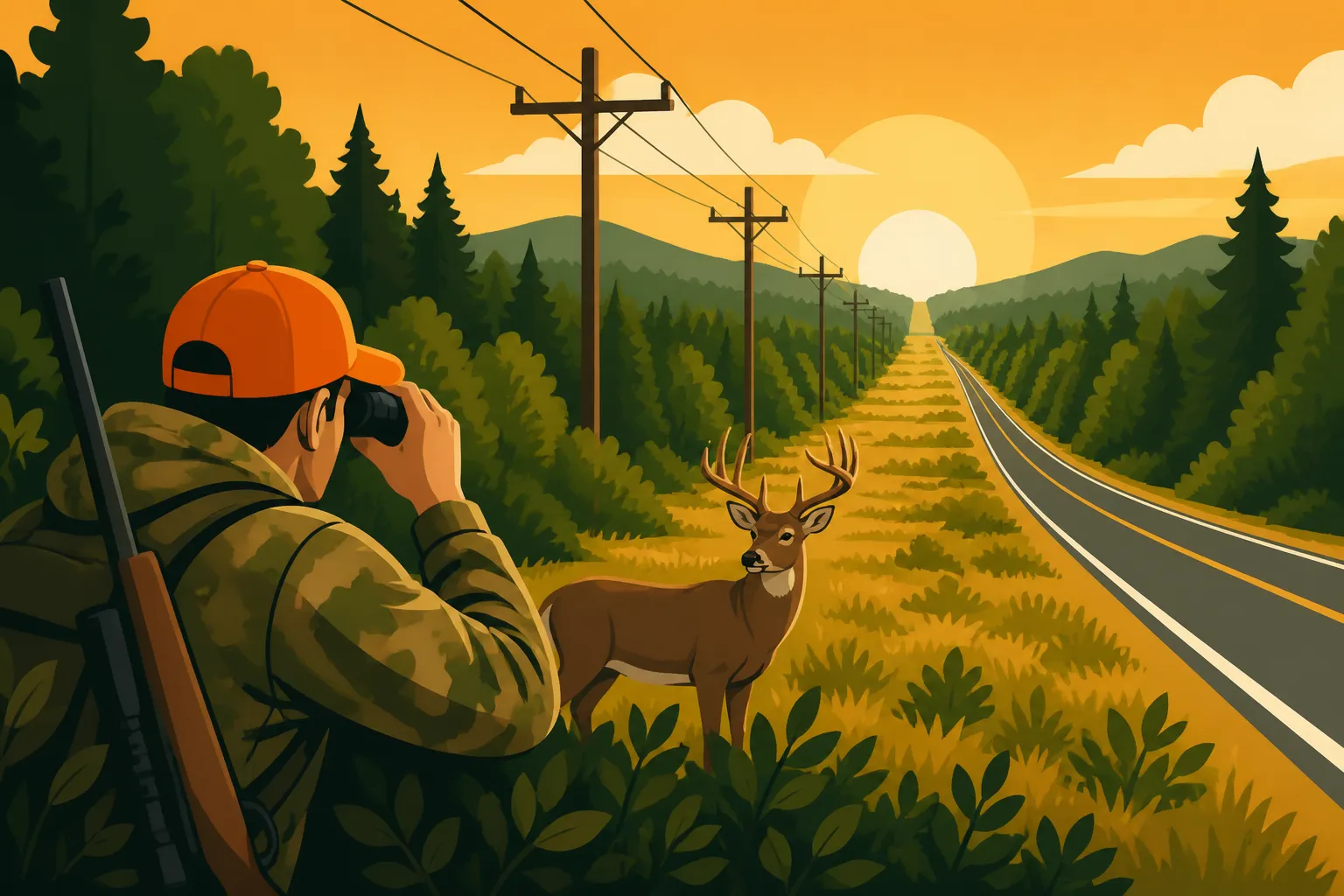
Hunting Arkansas Road Right-of-Way
For many hunters in Arkansas, the ribbons of land alongside our countless miles of roads can look like tempting access points, or at least easy travel corridors for game. But the truth is, hunting these "road rights-of-way" is often fraught with legal perils and ethical dilemmas that far outweigh any perceived convenience. This guide is here to untangle the confusion, lay out the facts, and help you understand exactly why you need to be extremely careful when considering hunting anywhere near an Arkansas roadway.
Understanding What "Right-of-Way" Actually Means for Hunters in Arkansas
When we talk about a "right-of-way" in Arkansas, especially concerning roads, it's easy to assume it means public land, open for whatever activity you might have in mind. However, for hunters, this is a dangerous assumption that can quickly land you in hot water. The legal definition and practical implications of a right-of-way are far more nuanced than simply "public access."
The Legal Definition and Practical Implications
At its core, a road right-of-way is a legal easement that grants the public the right to pass over private land for travel. This easement is typically granted to the state, county, or municipality for the purpose of building and maintaining roads, utilities, and ditches. What many don't realize is that while the public has the right to use the road, the land underneath that road and extending out a certain distance on either side often remains privately owned. Think of it like a path through someone's backyard: you have permission to walk on the path, but the backyard itself is still private.
This distinction is absolutely critical for hunters. Just because the highway department mows the ditch line or the power company runs lines through the area, it doesn't automatically transform that strip of land into public hunting ground. The landowner still holds the title to that property, and without their express permission, hunting on it is considered trespassing. The width of these rights-of-way can vary dramatically, from just a few feet beyond the pavement on older county roads to much wider easements along state highways and federal routes, encompassing ditches, shoulders, and even adjacent strips of timber or field edge. It’s not a consistent boundary by any stretch, which makes relying on a visual guess incredibly risky.
The Overlap with Private and Public Lands
Adding another layer of complexity, road rights-of-way can run through all kinds of property. You'll find them carving through vast tracts of private farmland in the Delta, winding through family-owned timberland in the Ouachitas, or even bisecting portions of public lands like Wildlife Management Areas (WMAs) or National Forests. While the road itself provides public access for travel, the adjacent land, even if it looks wild and unkempt, may be private, or if it's public, it might still have specific restrictions regarding its proximity to roads.
The default assumption for any hunter in Arkansas should never be that a road right-of-way is open for hunting. Even if you're on a major public land tract, say the Ozark National Forest or a specific WMA, the land immediately bordering the road might still fall under special regulations or even a different ownership structure. This is where tools become invaluable. For instance, a mapping application like onX Hunt can layer property ownership data right onto your GPS, showing you exactly where property lines lie relative to the road. This helps hunters avoid accidentally crossing onto private ground where the right-of-way ends, or identifying parcels where hunting might legitimately be allowed but still requires careful attention to the road. Without such tools, navigating these overlaps is akin to walking a tightrope blindfolded, with potential trespass penalties waiting on either side. Many a hunter has learned this the hard way, thinking a patch of woods bordering a county road was open only to discover it was part of a private timber company's lease.
Arkansas's Strict Rules on Hunting Near and From Roads
Even if by some slim chance you find yourself on a strip of land technically within a right-of-way that is also part of huntable property (like a large WMA), Arkansas has very clear and strict regulations about hunting near roads and especially about discharging firearms or bows from or across them. These rules are in place for the safety of the public, other hunters, and to maintain ethical hunting standards.
Safety Zones and Setback Distances
Arkansas doesn't have a universal "no hunting within X feet of a road" rule that applies everywhere, but it does have critical regulations related to public safety and the discharge of weapons. The most important rule to remember is that you cannot shoot from or across a public road. This means even if you're on private land with permission, if your line of fire crosses a road, it's illegal. This also extends to shooting from the roadway itself. You'll also find specific safety zone rules around occupied dwellings, businesses, and often around developed recreational areas, regardless of whether they are near a road.
Consider a scenario: you're hunting private land with permission, and a deer steps out 75 yards away. Between you and the deer is a dirt county road. Even if the deer is on the same private property, firing across that road is prohibited. This isn't just about avoiding cars; it's about the inherent danger of projectiles leaving a controlled area and the perception of danger to the non-hunting public. These setback distances, though not universally tied to all roads, become incredibly important in populated or frequently traveled areas. Always prioritize safety and a clear, safe background for any shot you take. Arkansas Hunter Orange Requirements are also about public safety, but this is a separate and distinct rule regarding where and how you can actually discharge a weapon.
Discharge of Firearms and Bows from or Across Roads
This is perhaps the most unambiguous and strictly enforced rule regarding roads and hunting in Arkansas. It is illegal to discharge a firearm or bow from, on, or across any public road or highway in the state. This includes gravel county roads, paved state highways, and major federal routes. There's no grey area here. This rule is designed to prevent accidents, property damage, and to ensure the safety of motorists, pedestrians, and nearby residents.
Imagine this: you're driving down a rural county road and spot a turkey strutting just off the shoulder. Slamming on the brakes, jumping out of your truck, and taking a shot from the road is not only incredibly dangerous but also a clear violation. The same goes for setting up your stand 20 yards from the centerline of a less-traveled road, where your shot might send an arrow or bullet traveling over or near the road surface. Game and Fish Commission (AGFC) officers take these violations very seriously. Penalties can include substantial fines, confiscation of your equipment, loss of hunting privileges, and even criminal charges depending on the severity and intent. It's a risk simply not worth taking, especially when Arkansas Wildlife Violation Penalties can be quite severe. Always think about your shot angle and background, and never let a road be part of that equation.
| Road Type | Ownership Status (Under ROW) | General Hunting Permissibility (on ROW) | Discharge From/Across Road |
|---|---|---|---|
| Interstate Highway | State/Federal | No | Strictly Prohibited |
| State Highway | State/Private | No | Strictly Prohibited |
| County Road (Paved) | County/Private | No (unless specific exception) | Strictly Prohibited |
| County Road (Gravel) | County/Private | No (unless specific exception) | Strictly Prohibited |
| Private Driveway/Road | Private | By Owner Permission Only | Not across public roads |
| WMA Road | Public (AGFC) | Check specific WMA rules | Often prohibited |
Note: "No" for hunting on ROW means without explicit permission or specific WMA rules allowing it, and always subject to discharge rules.
Navigating Roadsides: Staying Legal and Ethical While Hunting in Arkansas
So, if hunting on or from a road right-of-way is mostly out, how can you responsibly and effectively hunt near them? Roadsides often feature different types of vegetation, edge habitat, and can indeed be pathways for deer, turkeys, and other game. The key is understanding the boundaries and adhering to all regulations.
When Hunting Near a Right-of-Way is Permissible
Hunting adjacent to a road right-of-way is absolutely permissible, provided you are on legally huntable land and have the necessary permission. This means if you're on private land where you have permission to hunt, or within a designated public hunting area like a National Forest or WMA, you can set up near a road. Many hunters recognize that road edges can act as natural travel corridors, transition zones, or food sources, making them attractive spots for game. However, this comes with a huge caveat: your shot must remain entirely within the huntable property, with a safe and clear background, and never cross over the right-of-way or public road itself.
For example, a hunter with permission on a large tract of timber might find a deer trail running parallel to a logging road that also serves as a county road. Setting up a stand 50 yards back into the timber, aiming away from the road, would be a legal and potentially effective strategy. The crucial part is maintaining a clear understanding of your boundaries and your line of fire. Always scout thoroughly before season, utilizing maps to pinpoint where the legal hunting ground begins and ends relative to the road. Scouting Arkansas Public Land Before Season becomes even more critical when hunting areas bordering roads.
Tools and Practices for Staying on the Right Side of the Law
In today's hunting world, there's no excuse for accidental trespass or violating road hunting rules, thanks to modern technology. Mapping applications are your best friends here. I can't stress this enough: invest in a reliable mapping app like onX Hunt or GoHunt. These tools provide detailed property ownership overlays, showing parcel boundaries, landowner names, and even different land classifications (public, private, WMA) right on your phone or GPS device. This allows you to literally see where the right-of-way ends and where private land begins, or if you're indeed on public land. Finding Arkansas Property Lines accurately is paramount.
Before heading into the field, spend time studying these maps. Identify clear legal access points that don't require you to walk down a road shoulder for miles. If you're hunting private land, make sure you have explicit, ideally written, permission, and understand the landowner's expectations about hunting near roads. If you're a landowner yourself, consider clearly posting your property boundaries, especially near roads, to prevent confusion and accidental trespass, as per Arkansas Trespass and Permission Law. Using features like "off-grid mode" in apps like onX Hunt means you'll have access to this critical information even when cell service is spotty in the more remote parts of Arkansas. It's all about being prepared and proactive to avoid any legal entanglements and ensure you're hunting responsibly.
The Serious Consequences of Misjudging Road Rights-of-Way
The temptations of hunting near roads—ease of access, perceived game movement—are rarely worth the very real and severe consequences that can arise from misinterpreting or ignoring the rules. The risks extend beyond just a slap on the wrist, impacting your wallet, your hunting privileges, and the reputation of all hunters.
Legal Penalties and Enforcement
Violating Arkansas's hunting regulations related to roads can lead to a host of legal troubles. As mentioned, discharging a firearm or bow from or across a public road is a serious offense. This could result in significant fines that quickly add up, easily costing you hundreds or even thousands of dollars. Beyond monetary penalties, you risk having your hunting license suspended or revoked, potentially for several years, which for a passionate hunter is a devastating blow. In some instances, especially if property damage occurs, a person is injured, or there's reckless endangerment, you could face criminal charges, leading to jail time, a permanent record, and further legal battles.
AGFC enforcement is vigilant, particularly around public access points and areas that generate frequent complaints from landowners or the public. Game wardens are patrolling these areas specifically because of the common misconceptions surrounding road rights-of-way. They are highly trained and experienced in investigating these types of violations. Remember, you might think you're alone, but a concerned citizen's call, or even just the sound of a shot from a questionable location, can bring enforcement quickly. Reporting a Poacher in Arkansas is something the public takes seriously, and wardens act on those tips. It's simply not worth the gamble.
Ethical Considerations and Hunter Image
Beyond the legal ramifications, there's a significant ethical component to hunting road rights-of-way. Our actions as individual hunters reflect on the entire hunting community. When non-hunters see someone hunting too close to a road, hear shots too near a vehicle, or perceive any unsafe behavior, it erodes public trust and fuels negative perceptions of hunting. This can lead to increased calls for stricter regulations, loss of access to private land as landowners become more hesitant to grant permission, and a general decline in the public's understanding and acceptance of hunting.
An ethical hunter prioritizes safety above all else, always ensures they have a clear understanding of property boundaries and regulations, and strives to represent the sport positively. Hunting a road right-of-way, even if it were technically legal in some obscure circumstance (which it rarely is), often presents an image of opportunism, disrespect for safety, and disregard for private property. We have a collective responsibility to uphold high standards. Every time a hunter makes a bad decision related to hunting near roads, it becomes a headline or a local rumor that impacts all of us. Let's make sure we're contributing to a positive image of conservation-minded, responsible hunters in Arkansas.
Disclaimer
This article is for general informational purposes only and does not constitute professional advice. Laws, prices and regulations vary by location and change over time. Consult a qualified professional for guidance on your specific situation.