Arkansas Turkey Subspecies and Range
Eastern wild turkey populations across Arkansas mountainous regions, river bottoms, and agricultural edges require specific habitat components.
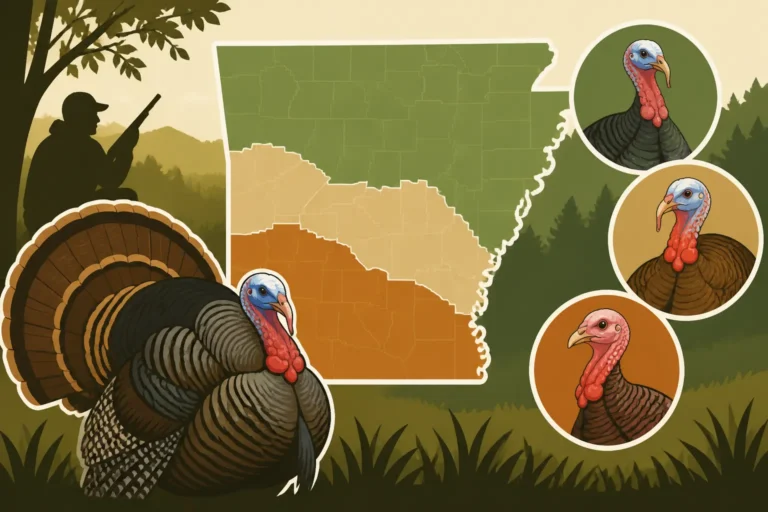
Eastern wild turkey populations across Arkansas mountainous regions, river bottoms, and agricultural edges require specific habitat components.
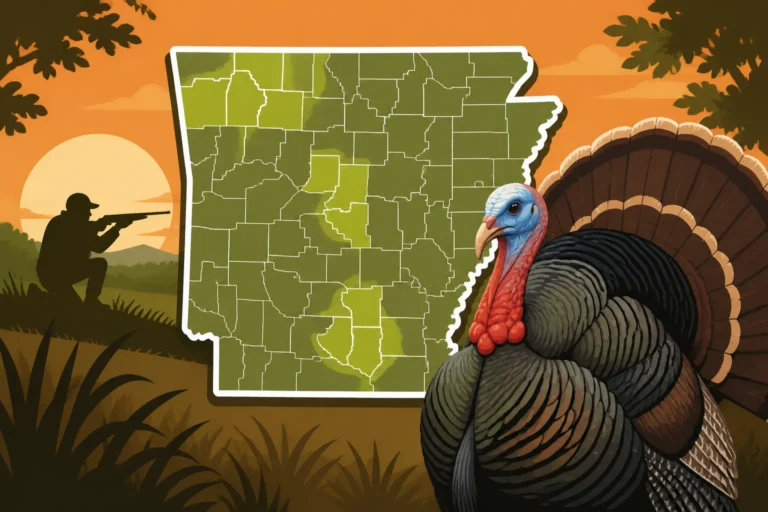
Arkansas wild turkey populations, regional habitat factors, and specific counties help hunters locate promising gobblers and plan successful seasons.
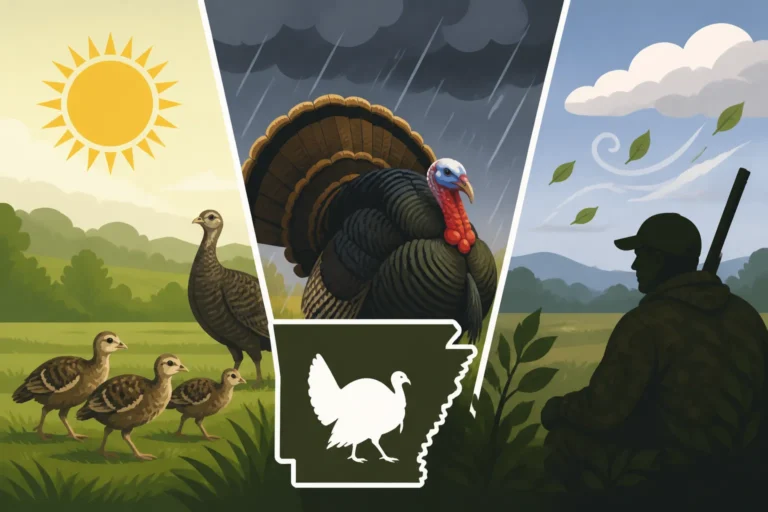
Wild turkey poult survival relies on warm, dry post-hatch weather, directly driving Arkansas population trends and future hunting success.

Wild turkey nest predation and poor nesting cover in Arkansas reduce poult survival rates and lower overall population numbers.

Poult-to-hen ratios explain wild turkey population health, breeding success, and future hunting expectations in Arkansas.

Wild turkey brood surveys and poult-to-hen ratios reveal the best Arkansas nesting seasons and population trends since 2013.
Arkansas brood surveys track wild turkey poult-to-hen ratios to measure reproductive success and population health for future hunting seasons.
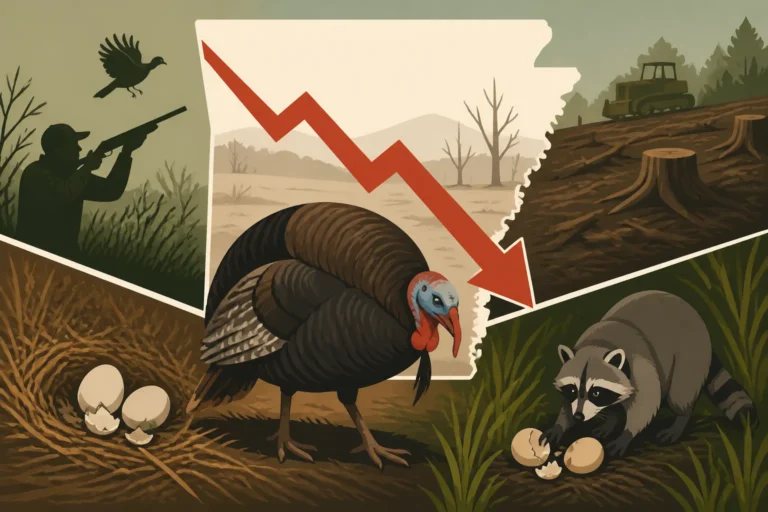
Wild turkey population declines in Arkansas stem from habitat loss, forest management changes, surging predators, and harsh weather.
Arkansas spring turkey harvest numbers reflect wild turkey population health, influencing seasonal management and local hunting strategies.
Wild turkey population trends and monitoring data in Arkansas are explained using annual brood surveys and harvest reports.