Cache River National Wildlife Refuge
Hunting the Cache River National Wildlife Refuge can feel like stepping into a wild, untamed corner of Arkansas, a place where the cypress knees rise from tannin-stained water and the echoes of ducks' wings beat through ancient timber. But for many hunters, the thought of tackling a large, federally managed refuge can be daunting, bringing up questions about complex regulations, challenging access, and navigating truly wild country. This comprehensive guide aims to peel back those layers, offering you a realistic look at what it takes to successfully hunt this iconic Delta gem, helping you understand its unique ecosystems, navigate its rules, and prepare for an unforgettable experience.
A Haven for Waterfowl: What Makes Cache River Special
The Cache River National Wildlife Refuge (NWR), stretching through several counties in eastern Arkansas, isn't just another piece of public land. It's a crown jewel of the Lower Mississippi River Valley, a critical stopover point on the Mississippi Flyway that funnels millions of migratory birds right through its flooded timber and sloughs. If you've ever dreamt of hunting ducks in classic Arkansas bottomland, the Cache is likely what you picture.
The Landscape: Flooded Timber and Cypress Swamps
Imagine dense forests of ancient cypress and tupelo gums, their massive trunks emerging from water that can range from ankle-deep to chest-deep, depending on the season and recent rainfall. Beneath the canopy, buttonbush and water locust create thick, often impenetrable cover. This isn't your typical open-water duck hunting; this is true green timber, where the woods themselves are the hunting grounds. The Cache River itself, a meandering waterway, forms the backbone of the refuge, feeding numerous oxbow lakes, bayous, and sloughs that wind through the landscape. These varied water features, from the deep, slow-moving river to shallower sheet water in the timber, provide diverse habitats for ducks and other wildlife. The challenge and allure of hunting here are intrinsically tied to navigating this unique, flooded environment. It's a place where you truly earn every bird, not just from your shooting skills but from your ability to read the water, understand the timber, and endure the elements.
Migration Magnet: Why Ducks Love the Cache River
So, why do ducks, particularly mallards, flock to the Cache River NWR year after year? It's a combination of ideal habitat, abundant food sources, and its strategic location. The refuge protects some of the largest remaining contiguous tracts of bottomland hardwood forest in the Mississippi Flyway. These forests are rich in mast crops, especially acorns from various oak species, which are a primary food source for wintering ducks. When these acorns flood, ducks have an accessible, high-energy buffet. The intricate network of wetlands, from the river and its oxbows to seasonally flooded agricultural fields on the refuge periphery, offers diverse resting and feeding opportunities. This mosaic of habitat, managed with conservation in mind, creates an irresistible draw for weary migrants flying south. Understanding this natural magnet is key to predicting where ducks might be concentrated, especially when the weather starts to push new birds into the region, filling the skies with the promise of a great hunt. Mallards in the Arkansas Delta are a phenomenon, and the Cache River NWR is at the heart of it.
Navigating the Refuge: Access and Regulations
Hunting any national wildlife refuge comes with its own set of rules, and the Cache River NWR is no exception. These aren't just suggestions; they're strictly enforced regulations designed to balance conservation with public access. Getting familiar with them before you ever step foot on refuge land is crucial for a successful and legal hunt.
Understanding Permit Requirements and Draw Hunts
Unlike many state-managed WMAs, some hunting on the Cache River NWR may require specific refuge permits or participation in a draw hunt system. This is especially true for highly sought-after species like waterfowl. These draw hunts are designed to limit pressure and provide quality experiences. It's not uncommon for these draws to have specific application periods, often months in advance of the season, and they can be competitive. You'll need to check the official Cache River NWR website or visitor center for the most up-to-date information on permit requirements, application deadlines, and hunt units. Don't assume your general state hunting license and stamps are enough; federal refuges often have an additional layer of administrative requirements. Missing a deadline or misunderstanding a permit type can lead to disappointment or, worse, a violation. Always keep an eye on the Arkansas WMA Waterfowl Permit Rules as a general guide, though NWR rules will have their own distinct differences.
Entry Points and Water Access
Accessing the Cache River NWR isn't always straightforward. Much of the refuge is wild, remote bottomland, meaning designated entry points might be limited, and navigating to your hunting spot often involves considerable effort. Many areas are accessed primarily by boat, especially during waterfowl season when water levels are high. Knowing the various boat ramps, their accessibility during different water conditions, and any restrictions on boat types (e.g., motor size limits) is vital. For walk-in access, be prepared for long treks through thick cover, often wading through water. A good GPS unit or a mapping app like onX Hunt is absolutely invaluable for navigating the refuge's interior, identifying public access points, and avoiding private land enclaves. It’s not just about finding your way in, but also knowing how to get back out after a successful, and often tiring, hunt in the dark.
Vehicle and Boat Restrictions
The refuge takes its mandate to protect sensitive habitat seriously, which means strict rules on vehicle use. Generally, vehicles are restricted to designated roads and parking areas. Off-road vehicle use, including ATVs or UTVs, is typically prohibited except in very specific, often permit-only, circumstances. For boats, watch out for horsepower limits or "no-wake" zones, especially in smaller sloughs or sensitive areas. Some parts of the refuge might even be closed to motorized boats entirely, requiring canoes, kayaks, or push poles. These rules are in place to minimize disturbance to wildlife and protect the fragile ecosystem. Violating these rules can result in significant fines and impact your ability to hunt on the refuge in the future. Always consult the refuge's specific regulations for the area you intend to hunt, as rules can vary by unit and season. You might find yourself wading or pulling a boat a lot more than you expect.
Hunting Opportunities on the Cache River NWR
While the Cache River NWR is synonymous with waterfowl, it actually offers a broader range of hunting opportunities for those willing to explore beyond the duck blind. Each species presents its own unique challenges and rewards, rooted deeply in the refuge's diverse habitat.
Duck Hunting: The Primary Draw
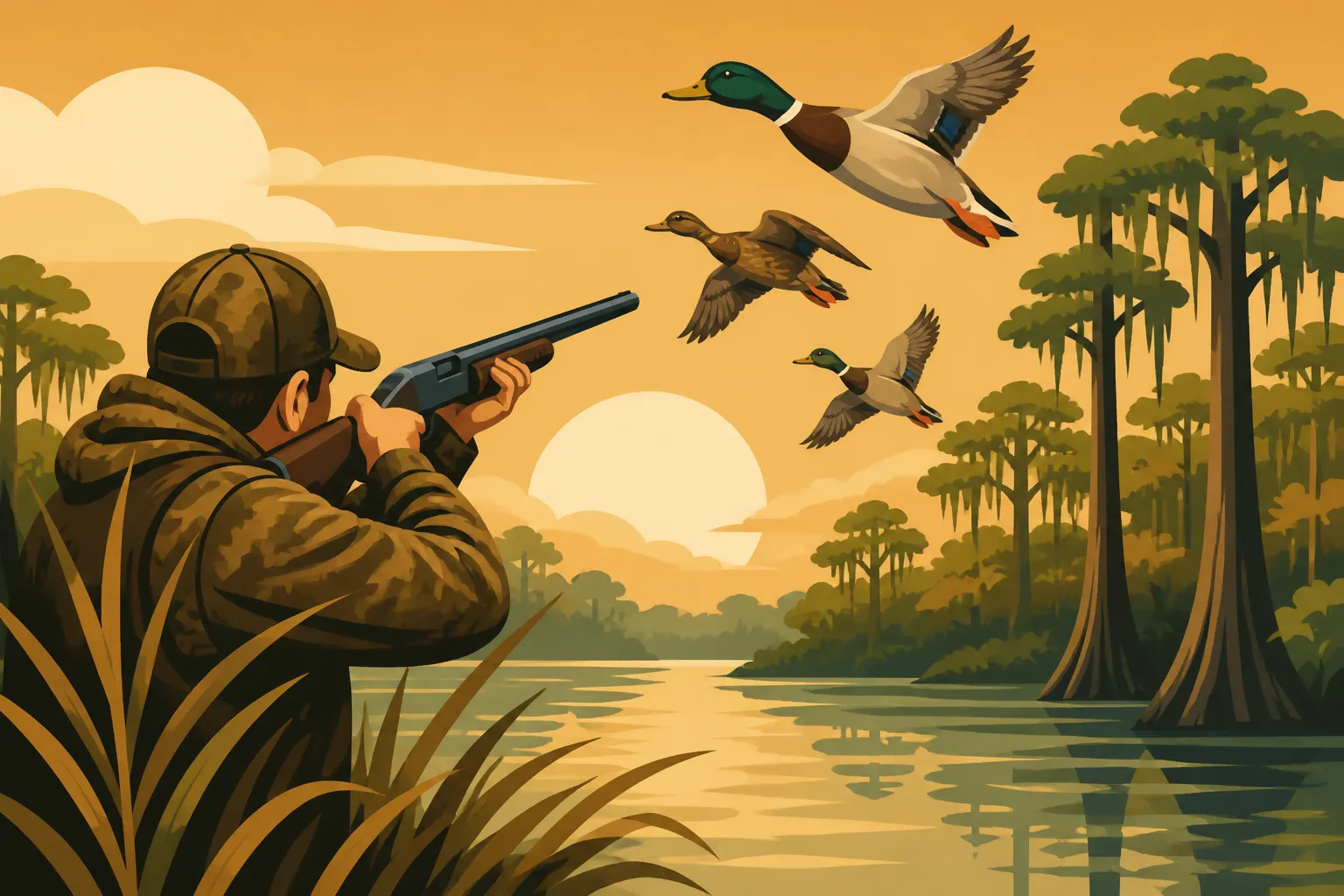
Let's be real: most hunters eyeing the Cache River NWR are thinking about ducks. And for good reason. The refuge offers some of the most iconic green timber duck hunting in the state. Imagine standing among towering oaks, the sun barely piercing the canopy, listening to the subtle splashes of feeding mallards, then the sudden rush of wings as a small flock dips into your hole. It's an experience unlike any other. Hunting here usually involves wading to your spot, setting a handful of decoys, and mastering timber calls. Success often hinges on getting deep into the less-pressured areas, understanding duck movement patterns, and adapting to ever-changing water levels. Many of the best hunts occur when colder weather pushes new birds down the flyway, especially during the middle to late parts of Arkansas Duck Season Dates. Remember, this is a refuge, so expect limits on shooting hours, zones, and sometimes even the number of shells you can carry. And don't forget your non-toxic shot; it's mandatory on all federal lands. Hunting Arkansas green timber is a skill you'll hone here.
Deer Hunting: A Different Challenge
While often overshadowed by the waterfowl fame, the Cache River NWR also offers deer hunting, though it presents a distinctly different challenge. The dense bottomland hardwood forests, thick undergrowth, and sometimes standing water make for tough deer hunting. This isn't wide-open agriculture; it's a grind. Deer density can be high in certain areas, particularly along the fringes of higher ground or where timber transitions to fields. However, the sheer difficulty of navigating the terrain and extracting a deer can be formidable. Hunters willing to put in the effort, scout extensively, and penetrate deeper into the refuge might find some fantastic opportunities for a Delta buck. Still-hunting, ambushing pinch points, or hunting near transition zones are common tactics. Given the demanding environment, having a solid mapping tool like GoHunt or onX Hunt to mark trails and recovery routes becomes even more critical for deer hunters here. White-Tailed Deer Across Arkansas certainly have a different character in the bottomlands of the Cache.
Small Game and Other Species
Beyond ducks and deer, the Cache River NWR provides opportunities for small game hunting, although these can be less publicized. Squirrel hunting, for instance, can be excellent in the mature hardwood forests, particularly around acorn crops. Gray squirrels and fox squirrels thrive in this environment, offering a fun, challenging hunt for those who enjoy bushytail action. Rabbit hunting can also be productive in areas with dense brush and briar thickets, often found along the edges of timber or in regenerating clearings. These pursuits offer a chance to connect with the refuge in a different way, experiencing its quieter rhythms away from the waterfowl crowds. Always check the refuge's specific regulations for season dates and bag limits for any small game you plan to pursue, as they may differ slightly from statewide rules.
Planning Your Cache River Hunt: Essential Tips
A successful hunt on the Cache River NWR isn't just about showing up with a gun and some shells. It demands meticulous planning, the right gear, and a deep respect for the unique environment you're entering. This is a place that rewards preparation.
Scouting and Preparation
Before you even load your boat, thorough scouting is paramount. This refuge is vast and unforgiving if you're unprepared. During the off-season, take trips to explore potential access points, learn the river's bends, identify high ground, and locate promising timber holes. Look for old sloughs, beaver activity, and areas with good mast crop potential. Aerial maps are your best friend here; tools like onX Hunt allow you to layer satellite imagery with property boundaries, showing you public access and potential hunting spots. Understanding water levels is also crucial; what's dry in August might be three feet deep in December. Check local river gauges for the Cache River and its tributaries. When seasons approach, scouting closer to the hunt will reveal current duck patterns or deer sign. Remember, getting into the refuge often means wading, so practice walking in waders or hip boots with your gear to build endurance. Scouting Arkansas Public Land Before Season is not just good advice, it's a necessity on the Cache.
Gear Essentials for Refuge Hunting
The Cache River NWR is not a place for lightweight gear or cutting corners. Here's a breakdown of what you'll absolutely need:
- Waders/Hip Boots: Good quality, chest-high waders are non-negotiable for duck hunting and often helpful for deer. Make sure they fit well and are leak-free.
- Boat: For many areas, a shallow-draft boat (jon boat, duck boat, kayak, canoe) is essential. Ensure it's stable and capable of handling logs and stumps. Consider a mud motor if you plan to access very shallow, thick areas.
- Navigation: A reliable GPS unit or a smartphone with a mapping app like onX Hunt or GoHunt with downloaded offline maps is critical. The timber looks the same in every direction, and it's easy to get disoriented, especially in the dark.
- Lights: Headlamps and handheld lights are vital for navigating pre-dawn and post-hunt. Carry backups.
- Decoys: For ducks, a small to medium spread of mallard decoys, often with some motion decoys (jerk strings or spinning wings), is effective.
- Calls: A good timber call is key for ducks. Practice calling to mimic various duck vocalizations. Calling Ducks in Tight Arkansas Timber is different from open water.
- Game Cart/Sled: If deer hunting, a sturdy game cart or sled will be a lifesaver for extracting your animal through mud and water.
- Safety Gear: Life jackets, a first-aid kit, waterproof matches/lighter, and an emergency whistle are must-haves. Tell someone exactly where you're going and when you expect to return.
- Waterproof Bags: Keep all electronics, extra clothes, and anything you don't want wet in dry bags.
Respecting the Resource and Other Hunters
Hunting on a national wildlife refuge comes with a shared responsibility. The Cache River NWR is a public resource, meaning you'll likely encounter other hunters. Practice good etiquette: give other groups ample space, avoid sky-busting or shooting over their decoys, and minimize noise when traveling to and from your spot. Pack out everything you pack in, including spent shells, and leave no trace. This isn't just about being a good sport; it's about preserving the quality of the hunting experience for everyone and protecting the fragile ecosystem. Report any violations you witness to refuge staff. By acting as responsible stewards, we ensure these precious hunting grounds remain viable for future generations.
Common Challenges and How to Overcome Them
Hunting the Cache River NWR is often as much about overcoming adversity as it is about calling ducks or tracking deer. This wild environment presents unique obstacles, but with a bit of foresight and flexibility, you can turn potential frustrations into successful strategies.
Dealing with Crowds and Pressure
Let's face it: prime public hunting land, especially for ducks in Arkansas, attracts crowds. The Cache River NWR is no exception. Opening weekends and peak migration periods can see significant hunter numbers, making it tough to find an unpressured spot.
Strategies:
- Go Deep: Most hunters won't venture far from easy access points. The deeper you're willing to wade or push your boat, the more likely you are to find less-pressured birds or deer. This requires physical stamina and good navigation skills.
- Hunt Mid-Week: If your schedule allows, hunting on weekdays significantly reduces competition. The quiet of a Tuesday morning in the timber can be vastly different from a Saturday.
- Hunt Later in the Season: While early season can be good for local birds, many hunters taper off after the initial rush. Late-season hunting can offer opportunities, especially if cold fronts push new ducks in.
- Adapt Your Tactics: If ducks are flaring from traditional calling, try softer calls. If they're avoiding open holes, find thicker cover. Sometimes, just sitting quietly and letting them come to you is best when they're pressured.
- Use Mapping Tools: With onX Hunt or GoHunt, you can identify remote pockets or areas less accessible by road, helping you find those hidden gems that other hunters might overlook.
Navigating Changing Water Levels
The Cache River and its associated wetlands are incredibly dynamic, with water levels fluctuating dramatically based on rainfall and river stages. What was dry ground last week could be flooded timber today, and vice-versa. This constant change is both a blessing and a curse for hunters.
Strategies:
- Monitor River Gauges: Regularly check online river gauges for the Cache River and nearby tributaries. Understand what different water levels mean for access and hunting areas. Reading Water Levels on the White River offers similar principles you can apply here.
- Flexibility is Key: Be prepared to change your plans. Your scouted spot might be too deep or too dry on hunt day. Have backup locations in mind for different water conditions.
- Understand Duck Preferences: When water is rising, ducks often spread out into newly flooded areas. When it's falling, they might concentrate in remaining sloughs and deeper pockets. Learn to read these patterns.
- Use the Water to Your Advantage: High water can open up new areas for boats, allowing you to access previously unreachable timber. Low water might expose mudflats where ducks feed on invertebrates.
- Wade Safely: Always be aware of the depth and current, especially in flooded timber where footing can be treacherous. A sturdy wading stick can be a lifesaver.
Understanding Refuge-Specific Rules
Refuge rules often differ from general statewide hunting regulations, and ignorance is no excuse for a violation. Federal refuges have their own sets of regulations that hunters must follow.
Strategies:
- Read the Brochure: Before you hunt, obtain and thoroughly read the Cache River NWR's specific hunting regulations brochure. These are usually available online or at the refuge headquarters.
- Pay Attention to Maps: Refuge maps will delineate hunting zones, closed areas, and specific access points. Use your mapping app to overlay these boundaries if possible.
- Know Your Dates and Times: Shooting hours on a refuge might be different from statewide hours. Be absolutely certain of the legal shooting and retrieval times.
- Permit Compliance: Double-check all permit requirements, draw results, and tagging procedures.
- Nontoxic Shot: Remember, nontoxic shot is always required for waterfowl hunting on federal refuges, and often for all hunting with shotguns. Nontoxic Shot Rules in Arkansas are critical here.
- Contact Refuge Staff: If you have any questions or are unsure about a rule, don't guess. Call the refuge office and ask. They are a valuable resource for clarification.
| Hunting Type | Primary Season | Typical Access | Key Challenges | Special Considerations |
|---|---|---|---|---|
| Waterfowl | Fall/Winter | Boat/Wading | Changing water levels, crowds, dense timber | Nontoxic shot, timber calling |
| Deer | Fall | Wading/Walking | Thick cover, difficult extraction, navigation | Mapping tools, physical stamina |
| Small Game | Fall/Winter | Walking | Finding clear areas, navigating dense brush | Respect other hunters |
Beyond the Hunt: Conservation and Community
Hunting on the Cache River NWR isn't just about the harvest; it's about being part of a larger conservation success story and understanding the impact of this unique place on the local communities.
The Refuge's Role in Conservation
The Cache River NWR stands as a testament to dedicated conservation efforts. It was established primarily to protect and restore the vital bottomland hardwood forests and associated wetlands, which are critical habitats for migratory birds, including ducks, geese, and a multitude of songbirds. The refuge actively manages water levels, conducts prescribed burns, and works on reforestation projects to enhance habitat. It's a living laboratory and a sanctuary that ensures a future for these ecosystems and the wildlife that depend on them. When you hunt here, you are participating in a tradition that helps fund and support these crucial conservation initiatives. Every duck stamp purchased and every license fee paid contributes directly to the maintenance and expansion of places like the Cache, solidifying its role as a jewel of the Mississippi Flyway.
Local Impact and Supporting the Area
The presence of the Cache River NWR, and the hunting opportunities it provides, has a tangible impact on the surrounding communities. Towns like Clarendon, Augusta, and Brinkley see an influx of hunters during the seasons, benefiting local businesses from gas stations and restaurants to tackle shops and motels. Hunters often rent cabins, buy groceries, and frequent local establishments, injecting vital revenue into these rural economies. As hunters, we have a role to play in supporting these communities. Buying your supplies locally, stopping for a meal, or even just sharing stories with local residents fosters goodwill and strengthens the bond between hunters and the places they visit. The Cache River isn't just a place to hunt; it's a part of Arkansas's identity, a place where nature's bounty and human connection intertwine.
Disclaimer
This article is for general informational purposes only and does not constitute professional advice. Laws, prices and regulations vary by location and change over time. Consult a qualified professional for guidance on your specific situation.