Finding Access Near Arkansas Cities
Living in one of Arkansas's bustling cities doesn't mean you have to abandon your hunting passion or spend hours driving to find a decent spot. We all know the frustration: you hear the distant call of geese or see deer tracks in a local park, yet finding a legal, ethical place to hunt within a reasonable drive feels like a monumental task. This guide is designed specifically for you, the urban-adjacent hunter, to uncover accessible opportunities and strategies to get you in the field closer to home.
The Unique Challenges of Hunting Near Arkansas Cities
Let's be honest, hunting near a city isn't the same as slipping into a vast wilderness area in the Ouachitas. It comes with its own set of distinct hurdles that can make finding success, or even just peace and quiet, a real test of patience. We've all been there, wondering if it's even worth the effort when you know what lies just beyond the subdivision.
Dealing with Limited Space and High Pressure
One of the biggest realities when you're looking for hunting land close to populated areas is the sheer lack of sprawling, undeveloped acreage. Urban growth means that prime wildlife habitat gets fragmented into smaller, often isolated pockets. This creates a challenging dynamic where the available land, both public and private, tends to see a lot more human activity. Think about it: if a WMA is within a 30-minute drive of a major metro area, you can bet it's going to draw a crowd on opening day, and likely throughout the season.
This high pressure isn't just about other hunters; it's also about dogs running loose from nearby homes, hikers and mountain bikers using public trails, and the general hum of traffic and urban noise. Deer and other game animals in these areas become incredibly wary, developing acute senses and adapting their movements to avoid human encounters. They learn quickly when and where to move, often becoming more nocturnal or utilizing dense, overlooked cover that other hunters might pass by. It forces us to rethink our tactics, to be more patient, and to look for those subtle, easily missed opportunities.
Navigating Access and Property Lines
Another significant stressor for the city hunter is the constant anxiety about property boundaries. In rural areas, a fence line might stretch for miles without a house in sight. Near a city, one landowner's woodlot can butt up against a suburban backyard, a church, a business, or even a small public park. The margin for error is incredibly thin, and no hunter wants to inadvertently trespass or create a nuisance.
This proximity to developed areas makes it absolutely critical to know precisely where you are at all times. A misplaced step, a retrieved bird that drifts across a line, or even just setting up too close to a visible dwelling could lead to serious problems. The legal ramifications of Arkansas Trespass and Permission Law are clear, and ignorance is no excuse. This heightened risk often makes hunters shy away from otherwise promising spots, leading to a feeling of being hemmed in and unable to explore. It's a genuine frustration, knowing there might be game, but feeling like you can't get to it safely and legally.
Unlocking Public Land Opportunities Near Urban Centers
Even with the challenges, Arkansas offers some incredible public land opportunities surprisingly close to many of our cities. It just takes a little more research and often a bit more effort to scout out the less obvious spots.
Closer Wildlife Management Areas (WMAs)
The Arkansas Game and Fish Commission (AGFC) manages a fantastic network of Arkansas Wildlife Management Areas across the state, and many of these are surprisingly accessible from urban centers. While they might not be the sprawling wilderness you envision, they can still offer quality hunting experiences. For instance, if you're in the Little Rock area, places like Bell Slough WMA or even Camp Robinson WMA (which operates on a draw system for deer hunts, making it less pressured for those who get a spot) can be within a relatively short drive. Further north, near Fayetteville, you have Wedington WMA, while those in Northeast Arkansas near Jonesboro might look towards sections of the Dave Donaldson Black River WMA or even parts of Big Lake NWR, though these can be intensely competitive.
The key to success on these WMAs close to cities is understanding that "pressure" isn't necessarily a deal-breaker. It just means you have to be smarter than the average hunter. Don't stop at the first easy-to-access spot near the parking lot. Instead, dig into maps, look for areas that require a longer walk, or that are surrounded by thick, nasty cover that deters others. Sometimes, the nastiest, most impenetrable thicket that no one wants to push holds the biggest, most overlooked buck. Early season bowhunting in particular, like during Bowhunting Arkansas's Five-Month Archery Season, can be excellent on these pressured WMAs if you pick your spots carefully.
National Forests and Corps of Engineers Lands on City Edges
Arkansas is blessed with significant acreage in the Ouachita and Ozark National Forests, and while large portions are deep in the mountains, some areas brush up against or are within a reasonable drive of several cities. For example, the western edge of the Ouachita National Forest can be quite accessible for folks in the Fort Smith area or even near Hot Springs. Similarly, parts of the Ozark National Forest might be within reach of some communities in Northwest Arkansas, like portions of White Rock WMA. These national forests offer a different kind of challenge, with often steeper terrain and different timber types, but they provide vast expanses where game can roam more freely. You can read more about the differences in terrain and hunting styles in Hunting Ozark Ridges and Hollows for Deer.
Beyond the national forests, the U.S. Army Corps of Engineers manages extensive lands around many of Arkansas's major reservoirs, and often, these lands are open to public hunting. Think about the areas around Beaver Lake near Fayetteville, Lake Ouachita near Hot Springs, or Greers Ferry Lake in Central Arkansas. While rules can vary significantly from one Corps property to another, and certain areas might be designated for recreation only, many tracts of timber and shoreline offer fantastic, often overlooked hunting opportunities. It’s imperative to consult the specific regulations for each Corps lake as they can be complex. You can often find maps and information on the Corps' local office websites. These areas are truly gems if you take the time to learn their specific rules and boundaries.
The Art of Gaining Private Land Access
While public land is a fantastic resource, don't underestimate the potential of private land, especially when hunting near cities. Many smaller, overlooked tracts can offer incredible opportunities for the diligent and respectful hunter.
Targeting Smaller Private Tracts and Farmlands
Forget trying to secure a multi-thousand-acre lease right outside the city; those are usually tied up by clubs or well-established hunters. Instead, focus your energy on those smaller, often ignored pieces of private land. We're talking about woodlots behind a farmer's soybean field, overgrown creek bottoms that cut through suburban property, or even just a few acres of timber that a homeowner bought years ago and has no intention of hunting themselves. These are the forgotten corners where deer, turkeys, and small game often seek refuge from the development around them. They provide excellent cover, food, and water, and because they're small or less obvious, they often go completely unpressured.
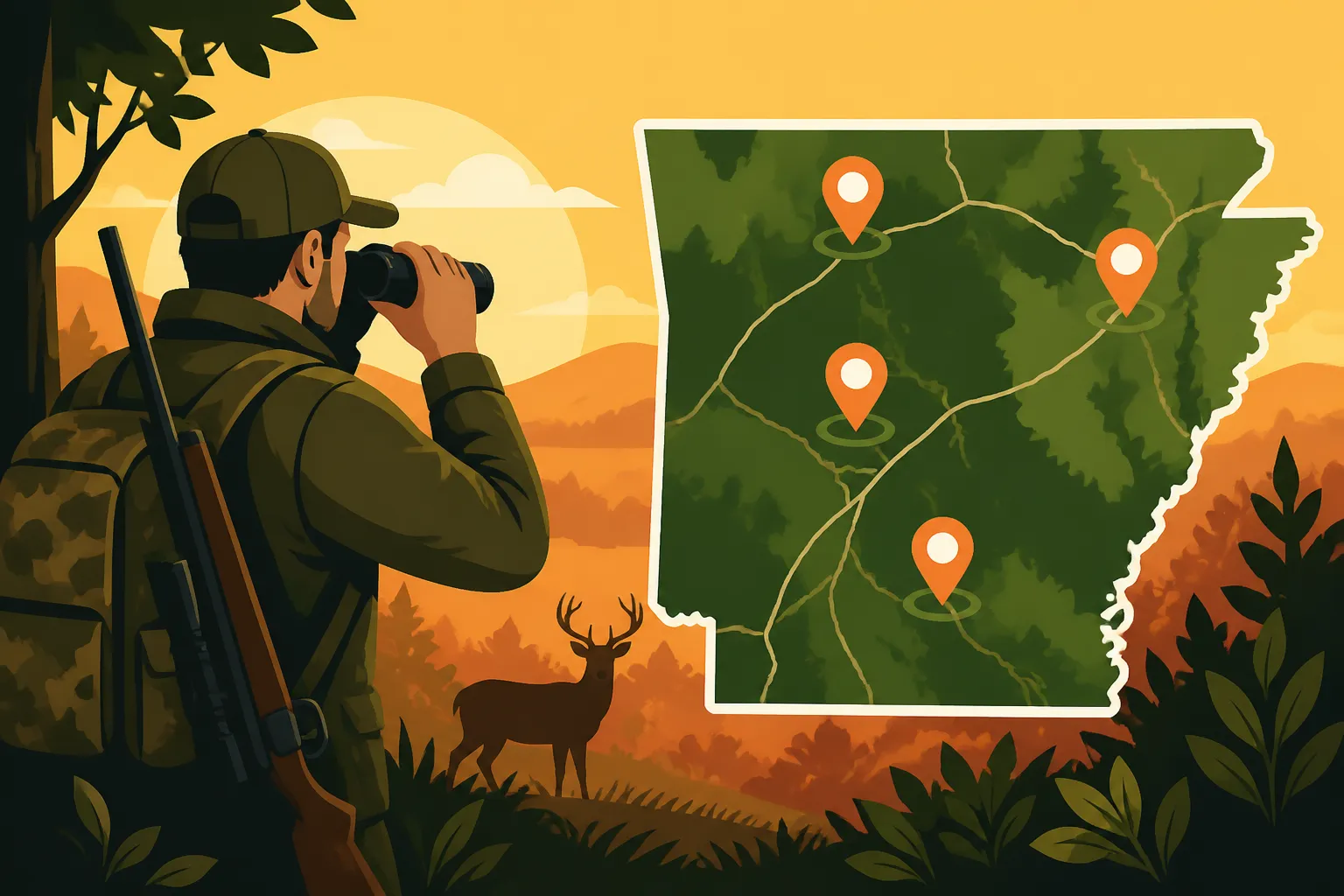
The trick is to identify these spots. This is where modern mapping applications really shine. Tools like onX Hunt or GoHunt allow you to overlay property lines with satellite imagery, showing you exactly who owns what, and revealing these hidden pockets of habitat. You might spot a narrow strip of woods connecting two larger timber blocks, a brushy fence row, or a small slough that holds water, all on private ground. These small pieces can act as natural travel corridors or bedding areas, especially for more elusive mature bucks. Owners of these smaller tracts often aren't "hunters" themselves, but might have problems with deer eating their landscaping, feral hogs rooting up fields, or simply don't mind someone quietly and respectfully hunting for management purposes.
The "Knocking on Doors" Strategy
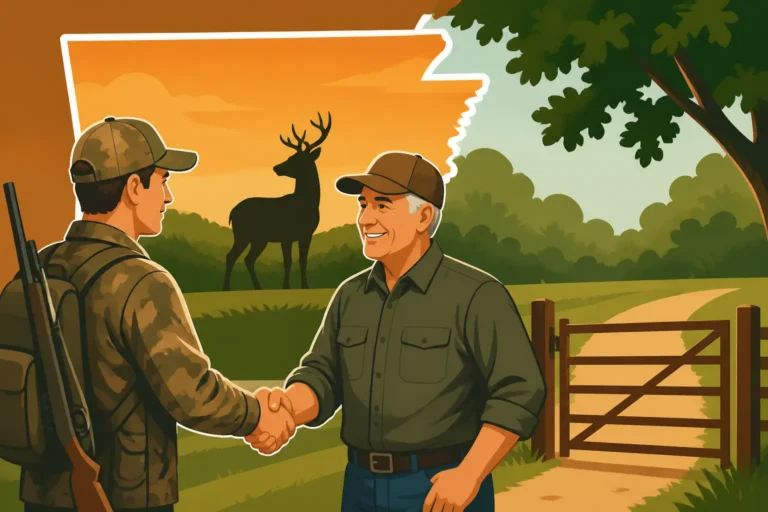
This is where the rubber meets the road, and it's perhaps the most intimidating but rewarding strategy for gaining private land access. Approaching a landowner cold requires courage, but it's often the only way to get permission on those smaller, unleased tracts. First, use your mapping app to identify the landowner's name and address. Then, choose your moment. Avoid busy times like dinner or early mornings. A good time might be a Saturday afternoon or a weekday evening when they're likely home but not rushed.
Dress respectfully – not in hunting camo, but neat and presentable. Have a clear, concise pitch. Start by introducing yourself, stating that you're a local hunter (if you are), and that you noticed their property while scouting. Politely ask if they ever allow ethical, responsible hunting. Emphasize what you won't do (no ATVs, no littering, will respect boundaries, will share game if they're interested). Be prepared for a "no," and accept it graciously. A polite "no" today doesn't mean a "no" forever. You can always try again in a few years, or ask if they know anyone else who might allow hunting. For a deeper dive into this, check out Asking an Arkansas Landowner for Permission. Remember, you're not just asking for a place to hunt; you're asking for a privilege, and your demeanor reflects on all hunters.
Building Relationships and Trust
Getting permission is just the first step; maintaining it is what truly pays off. This is a long game, built on mutual respect and trust. If a landowner grants you access, make sure you follow through on every promise you made. Leave their property cleaner than you found it. If they mentioned a problem animal, prioritize trying to harvest it. If you have success, offer to share the meat. A package of deer sausage or backstraps can go a long way in solidifying a positive relationship.
Even if you don't hunt their property often, touch base with them periodically. Send a Christmas card, drop off a pie during the holidays, or offer to help with a chore if you see them working in the yard. Being a good steward of their land, and a genuinely good neighbor, even if you don't live next door, will make them far more likely to grant permission again in the future. They might even refer you to friends or family who own land. In a world where private land access is becoming increasingly difficult, these relationships are invaluable.
Essential Tools and Mindset for Urban Hunters
Succeeding in urban-adjacent hunting requires more than just knowing where to go; it demands a strategic mindset and the right tools in your belt.
Digital Mapping and Scouting
Gone are the days when a paper topo map and a compass were your only allies. While those skills are still vital, modern digital mapping applications are absolutely indispensable for hunting near cities. onX Hunt and GoHunt are two prime examples of apps that have revolutionized how hunters scout and navigate. These platforms allow you to see detailed property ownership information, which is critical when navigating the patchwork of public and private parcels common around urban areas. You can clearly identify public land boundaries, private property lines, and even landowner names in many cases.
Beyond ownership data, these apps provide incredible satellite imagery, topo maps, and custom waypoint features. You can literally sit at home and digitally "scout" an area, identifying potential bedding thickets, subtle creek drainages, pinch points, and natural funnels that animals might use to travel between fragmented habitats. Mark potential stand locations, escape routes, and entry/exit paths. This kind of detailed, pre-season reconnaissance is non-negotiable for finding success on pressured ground. It allows you to maximize your limited time in the field, moving with purpose rather than just wandering aimlessly. For a deeper dive into using these tools effectively, check out Using the AGFC Map Tool.
Pre-Season Scouting and Observation
No amount of digital scouting can replace boots-on-the-ground reconnaissance, even if that ground is relatively close to a highway. The urban-adjacent deer, turkey, or rabbit is a creature of habit and opportunity. Spend time observing during the off-season. Drive or walk the perimeter of potential hunting areas (from public roads, of course) looking for sign like tracks, rubs, scrapes, or droppings. Pay attention to what agricultural crops are planted in nearby fields, or what natural food sources are abundant in the woodlots.
Animals near cities often become more nocturnal, but they still have to move during daylight hours to feed and breed. Look for subtle travel corridors that might provide cover: an overgrown ditch, a fenceline with tall weeds, or a creek bank. Pay attention to how the wind and thermals will affect these areas. By understanding these subtle movements and how they relate to the surrounding human activity, you can pick a strategic ambush point that might be overlooked by other hunters. A deer that feels secure in thick cover might only move a couple of hundred yards during daylight, but if you're set up on that small travel corridor, your chances go way up.
Adapting Your Tactics to Pressure
Hunting close to cities inevitably means dealing with more pressure, whether from other hunters, dog walkers, or general human activity. This demands a flexible and often counter-intuitive approach to your hunting tactics. Instead of hunting during peak hours or in obvious spots, consider targeting midday periods, especially on weekdays. Many hunters are in and out for the morning and evening, leaving the middle of the day quieter. Deer, feeling less disturbed, might take advantage of this lull to move and feed.
Also, focus on entry and exit strategies that are as quiet and non-intrusive as possible. Park further away than others, use natural cover to screen your approach, and consider using a ground blind that blends in seamlessly rather than a highly visible treestand. Scent control becomes even more paramount when you're dealing with wary, pressured animals that are constantly bombarded with human scent. Patience is also key; pressured game often moves slowly and cautiously. You might only get one shot, so make it count. Don't be afraid to try different areas or shift your setup if you're seeing too much human disturbance. Understanding Hunting Pressure on Arkansas WMAs is vital for adapting your strategy.
Specific City-Adjacent Hunting Scenarios
Let's dive into some specific examples of what hunting near Arkansas cities might look like, offering a glimpse into the diverse opportunities across the state.
Little Rock and Central Arkansas
For hunters residing in or near the capital city, finding accessible hunting often revolves around the Arkansas River corridor and the various Wildlife Management Areas within a reasonable drive. Public Hunting Ground Near Little Rock includes places like Bell Slough WMA, located north of the city near Mayflower. While not massive, Bell Slough offers bottomland hardwoods and sloughs that attract deer and ducks, though it can get considerable pressure. Camp Robinson WMA, also nearby, is primarily accessed via a draw system, which helps manage hunter density and can lead to quality deer opportunities if you're drawn. For ducks, some smaller, less publicized AGFC areas or Corps of Engineers lands along the river might offer jump-shooting or small-scale decoying opportunities.
Beyond the public lands, central Arkansas also features a significant amount of private agricultural land, particularly as you move away from the immediate metro sprawl. The river bottoms, often too wet for development, can hold surprisingly good numbers of deer and turkey. These areas are prime targets for the "knocking on doors" approach mentioned earlier. Farmers dealing with crop damage from deer or feral hogs might be more receptive to a respectful hunter offering to help manage the population. It's about looking for those overlooked patches of cover: an unkempt fenceline, a creek meandering through a field, or a small block of timber that seems isolated but provides essential cover for game.
Northwest Arkansas (Fayetteville, Springdale, Rogers)
The rapid growth of Northwest Arkansas presents unique challenges, but also distinct opportunities. While the immediate urban footprint expands, the region is still nestled against the Ozark National Forest, offering some excellent public land prospects. Public Hunting Ground Near Fayetteville often means heading to areas like Wedington WMA, west of Fayetteville, which provides diverse habitat for deer and turkey, or exploring the fringes of the Ozark National Forest, such as sections of White Rock WMA. These areas offer a mix of timber, clearcuts, and sometimes steep terrain, requiring a more physically demanding hunt.
The large lakes like Beaver Lake also have extensive Corps of Engineers land around them, which can be open to hunting. While popular for recreation, diligent scouting can reveal pockets of timber along the shorelines or in larger coves that see less foot traffic. Private land opportunities might be found by looking towards the more rural edges of Benton and Washington counties, particularly as you approach the Oklahoma or Missouri borders. Smaller cattle farms with woodlots, or properties with creek bottoms and thick cover, can be excellent for deer and turkey. The key here is persistence in scouting, both digitally and on foot, to pinpoint those less obvious travel routes and bedding areas that pressured game rely on.
Northeast Arkansas (Jonesboro, Paragould)
Northeast Arkansas, with its flat delta landscape dominated by agriculture, offers a different flavor of hunting near its urban centers. Public Hunting Ground Near Jonesboro often points to the renowned Dave Donaldson Black River WMA, a mecca for waterfowl hunters, but also offering deer and turkey opportunities in its timbered areas. Further east, Big Lake National Wildlife Refuge can provide public waterfowl hunting, though it's incredibly competitive. While these areas are well-known, smart hunters can still find success by working harder and exploring areas that are less convenient to access.
For deer and small game, the numerous river corridors and sloughs that cut through the vast agricultural fields are crucial. These ribbons of timber and brush provide the only significant cover and travel routes for wildlife. This is where private land permission becomes extremely valuable. Farmers in the Delta are frequently plagued by deer eating crops, or the ever-present problem of feral hogs. A hunter willing to target these animals can often find an open door. Look for unharvested corners of fields, drainages, or isolated patches of woods on mapping apps, and be ready to approach landowners with a solution to their wildlife issues. Duck hunting in flooded rice fields or small timber patches on private land is also a huge draw here, making landowner connections even more prized.
Fort Smith and Western Arkansas
Fort Smith sits right on the edge of the Ouachita National Forest, offering immense public hunting opportunities almost immediately to its south and east. While the deeper parts of the forest require more travel, substantial sections are within easy reach. WMAs like Galla Creek, though a bit further east in the Arkansas River Valley, can be accessible and offer diverse habitat. The terrain here can be rugged, with rolling hills and timbered mountains, which can actually help distribute pressure, as many hunters stick to easier-to-access areas. Ouachita National Forest Hunting provides a wealth of information for this region.
Private land around Fort Smith leans towards smaller farms and ranches, often with good mixes of timber and pasture. Asking for permission in these areas means looking for those creek bottoms and woodlots that offer cover and food. Deer will use these areas heavily, especially if they are adjacent to more open grazing land. The key to successful urban-adjacent hunting in this region is to embrace the topography. Don't shy away from walking up and down hills; often, the best hunting is found a short distance off the beaten path, where the terrain acts as a natural deterrent to less ambitious hunters.
City-Adjacent Public and Private Hunting Opportunities
Here's a quick overview of what you might expect when looking for hunting access near some of Arkansas's major cities:
| City | Closest Public Land Examples | Typical Challenges | Potential Private Land Opportunities |
|---|---|---|---|
| Little Rock | Bell Slough WMA, Camp Robinson WMA (draws) | High pressure, suburban encroachment, limited acreage | River bottoms, small woodlots, agricultural field edges |
| Fayetteville | Wedington WMA, Ozark NF (White Rock WMA) | Residential growth, steep terrain, increased recreation | Rural fringes, smaller cattle farms, isolated timber patches |
| Jonesboro | Dave Donaldson Black River WMA, Big Lake NWR | Delta flatland, heavy agricultural pressure, competitive | River corridors, overlooked sloughs, unharvested field corners |
| Fort Smith | Ouachita NF, Galla Creek WMA | Steep terrain, logging activity, rough access | Foothills, smaller ranches, creek bottoms, mixed timber and pasture |
| Hot Springs | Ouachita NF, Lake Ouachita Corps land | Recreationists, fragmented forest | Timber tracts bordering resorts, managed forest lands |
| Texarkana | Sulphur River WMA, Bayou Meto (further east) | Limited local public land, private timber leases | Small woodlots, river bottoms, timber company lands (check for leases) |
Disclaimer
This article is for general informational purposes only and does not constitute professional advice. Laws, prices and regulations vary by location and change over time. Consult a qualified professional for guidance on your specific situation.