Treestand Setups in Delta Hardwoods
Hunting deer in Arkansas's Delta hardwoods presents a unique set of challenges that can leave even seasoned hunters scratching their heads. The fluctuating water levels, the thick, often uniform timber, and the sheer vastness of these bottomland areas make finding and effectively setting up on a deer incredibly difficult. This guide is dedicated to breaking down the intricacies of treestand setups in these specific environments, helping you navigate the sloughs and timber to get your arrow or bullet on target.
Understanding Delta Hardwoods and Deer Behavior
The Arkansas Delta isn't your typical whitetail country. Forget the rolling hills or dense pine plantations; here, you're dealing with flat expanses of oak, cypress, and other water-tolerant trees, often interspersed with sloughs, bayous, and seasonally flooded timber. This unique ecosystem dictates almost everything about deer behavior, and understanding it is the first step to a successful treestand setup.
Deer Movement Patterns in Flooded Timber Versus Dry Ground
When the water rises in the Delta, deer don't just disappear; they adapt. Their travel routes shift dramatically, often concentrating on the highest available ground. This could be a subtle rise in elevation you can barely discern, the top of a levee, or the narrow strip of dry land bordering a slough. Instead of wide-ranging movements, deer might stick to these "highways," creating distinct trails that become obvious once you learn to look for them. In contrast, when the ground is dry, deer disperse more, using the thick cover of the timber as security. They'll browse more widely, and their movements might seem less predictable, but they'll still gravitate towards areas with good food and cover.
It's a constant puzzle, almost like a chess game with nature. One week, deer might be using a certain elevated ridge to get from a bedding area to a food source, and the next, after a good rain, that ridge could be underwater, forcing them to find a new path. This means your scouting isn't a one-and-done deal; it's an ongoing process that often requires you to be boots-on-the-ground, checking water levels and deer sign right up until opening morning. You might think you've found the perfect spot, only to have a significant rain event change everything, rendering your carefully planned setup useless.
Impact of Water Levels on Bedding and Feeding
Water isn't just a travel impediment; it directly influences where deer choose to bed and feed. During times of high water, bedding areas are often restricted to islands of high ground, slight knolls, or even areas of thick, impenetrable cane or briar patches that offer just enough elevation to stay dry. These spots become sanctuaries, and deer will often lay up in them for extended periods, especially during daylight hours. Similarly, feeding opportunities become concentrated. Deer will seek out acorns that have dropped onto dry ground or browse that remains above the water line.
Consider a scenario where a large section of timber becomes flooded. Deer that once roamed freely across this area will now be pushed to the higher fringes. You might find several deer bedding on a small, dry hump no bigger than your living room. Their feeding will also be limited to whatever browse and acorns are available on that same high ground or nearby elevated levees. Recognizing these subtle changes, perhaps with the help of a detailed mapping application like GoHunt, can help you predict where deer will be concentrated, making your treestand placement much more effective and turning what seems like an endless swamp into a predictable hunting ground.
Key Food Sources and How They Influence Deer
Delta hardwoods are often characterized by a rich mast crop, particularly acorns from various oak species like willow oaks, Nuttall oaks, and water oaks. These acorns are a primary food source for deer, especially in the fall and early winter. Identifying which oak species are dropping when, and which trees are producing a good crop, is crucial. Deer will often focus heavily on a particular type of acorn until that crop is depleted before moving to another. Beyond acorns, deer also browse on a variety of plants, shrubs, and saplings found in the understory.
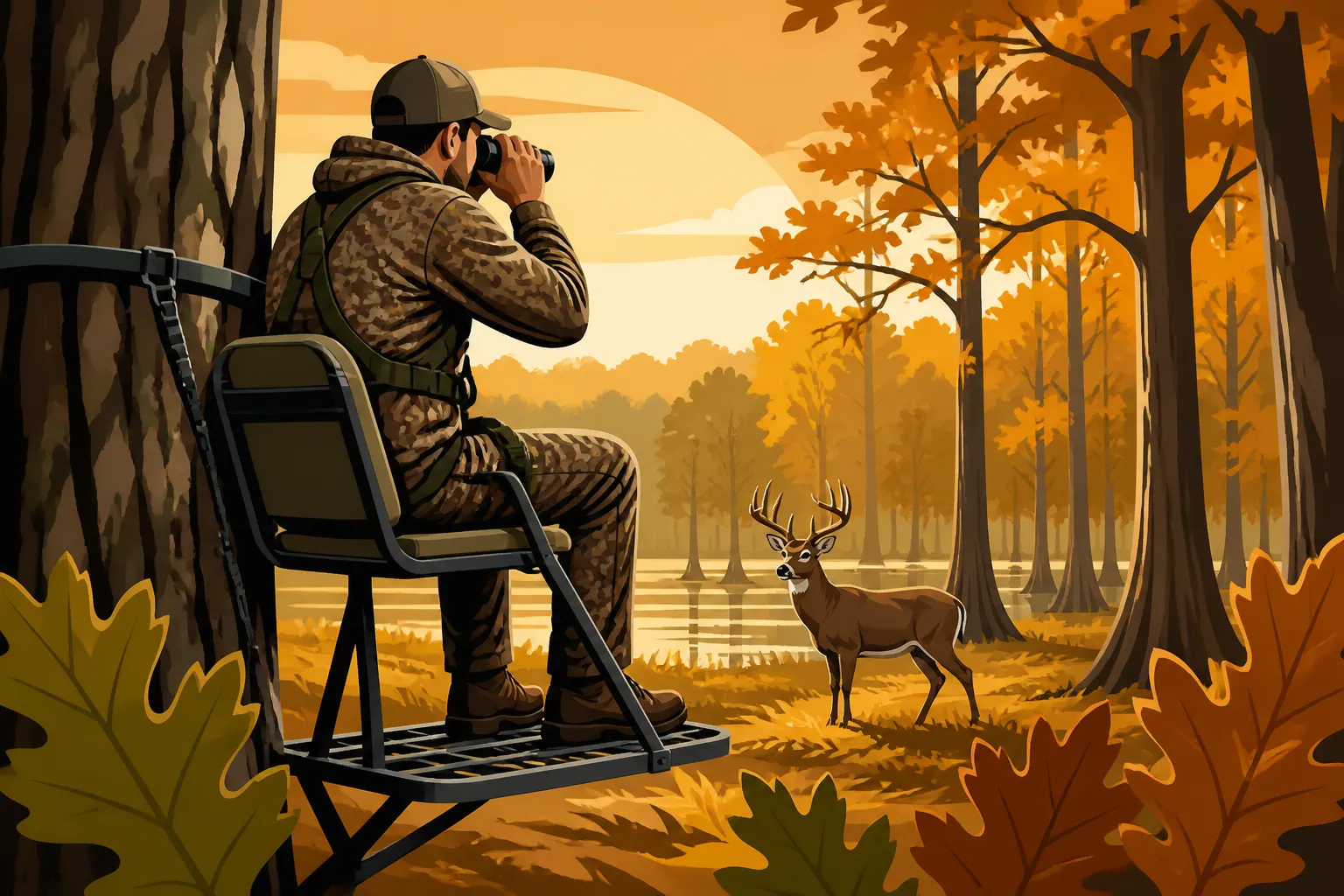
Imagine you're scouting in late October. You've walked miles through the timber, and you notice deer tracks are consistently leading to a specific group of water oaks that are raining down acorns. This is your cue. Deer will return to these concentrated food sources religiously, particularly in the mornings and evenings. Setting up a stand with a clear view of these active feeding areas, preferably with the wind in your favor, can put you directly in their path. It's not just about finding an acorn tree, but finding the active acorn tree—the one with fresh cuttings and droppings underneath, indicating it's currently being heavily utilized.
Choosing the Right Treestand Location
Once you understand how Delta deer operate, the next challenge is translating that knowledge into practical treestand placement. This isn't just about finding a good tree; it's about anticipating deer movement and maximizing your shot opportunities while remaining undetected.
Identifying Pinch Points, Funnels, and Natural Travel Corridors
In the vast, flat landscape of the Delta, deer tend to follow the path of least resistance or the most secure route. This creates natural pinch points and funnels that are goldmines for treestand locations. A pinch point might be where a slough narrows, forcing deer to cross at a specific spot. A funnel could be a strip of dry ground between two flooded areas, directing deer traffic through a confined corridor. Even subtle changes in elevation, like a slightly higher ridge, can act as a travel corridor, especially when the surrounding areas are inundated.
Think about a long, winding slough that cuts through a section of timber. While deer might cross it at several points if it's shallow enough, there will often be one or two spots where the banks are lower, or the water is shallower, making for an easier crossing. These are your pinch points. Similarly, a thick band of brush or a dense stand of cane might run parallel to a more open timber area, and deer will often walk the edge of that dense cover for security. These natural edges and transitions become superhighways for deer. Observing rub lines or well-worn trails will confirm these as active travel corridors.
Locating Rub Lines and Scrape Lines
Buck rubs and scrape lines are invaluable indicators of active deer sign, especially during the pre-rut and rut phases. Rubs, where bucks strip bark from trees with their antlers, mark territory and advertise their presence. Scrapes, patches of bare earth pawed by a buck, often with an overhanging branch (a "licking branch") he's scent-marked, serve a similar communication purpose, signaling his availability to does and challenging other bucks.
When you find a fresh rub line or an active scrape, you've hit pay dirt. These are not random acts; they're deliberate communication points that bucks will often revisit. If you find a series of fresh rubs leading in a certain direction, you're likely on a buck's preferred travel route. A line of scrapes along a logging road or the edge of a field in a dry area of the Delta can indicate a buck's patrol route. Setting up a stand overlooking such a line, particularly if it's near a bedding area or a food source, can offer a high-probability encounter. Just remember that activity at scrapes can be primarily nocturnal, so a stand that catches a buck coming to or from a scrape line in low light is often more effective.
Considering Access Routes and Wind Direction
This is where many hunts go wrong. You can find the perfect deer sign, the ideal tree, but if you can't get to and from your stand without spooking deer, or if the wind constantly betrays you, it's all for naught. Your access route needs to be as quiet and concealed as possible. This might mean wading through water, using an old logging road that sees little traffic, or even crossing open areas in the dark.
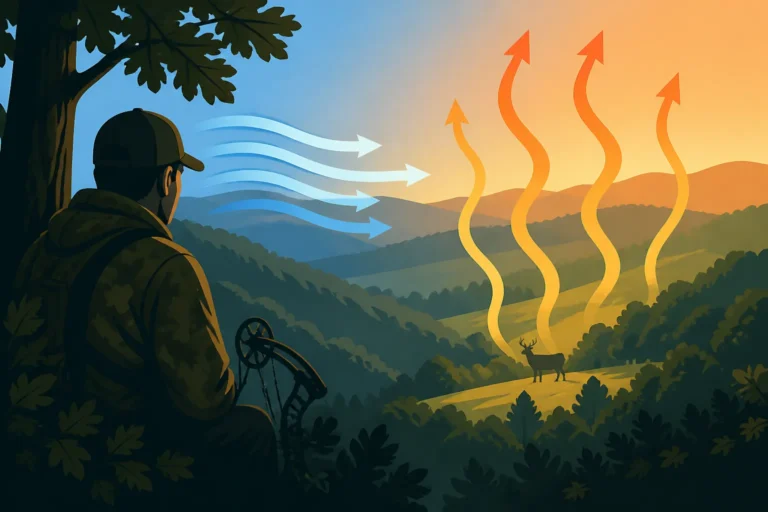
Wind direction is paramount, particularly for a deer's keen sense of smell. You must position your stand so your scent cone blows away from where you expect deer to approach or pass through. This means having multiple stand locations for different wind directions is almost a necessity in the Delta. What might be a perfect morning stand with a north wind could be a disaster in the afternoon with a south wind. Many hunters rely on apps, including tools available through GoHunt, to predict wind direction and plan their routes accordingly, ensuring they can slip into their spot undetected. Always have an exit strategy that also minimizes disturbance, even if it means taking a slightly longer or wetter route back to your vehicle.
Types of Treestands Best Suited for Delta Hardwoods
Choosing the right treestand for Delta hardwoods isn't a one-size-fits-all decision. The unique terrain—muddy, uneven ground, and often flooded conditions—demands stands that are versatile, stable, and, above all, safe.
Climbing Stands Versus Hang-Ons Versus Ladder Stands
Each type of treestand has its pros and cons in the Delta.
- Climbing Stands: These are popular for their portability and ability to quickly adapt to changing conditions. If water levels shift, or deer move to a new area, a climber allows you to pick up and move. However, they require a tree free of limbs from the base to your desired height, which can be a challenge in the gnarled, often low-limbed hardwoods of the Delta. They also require you to be proficient and comfortable climbing.
- Hang-On Stands: Offering greater versatility in tree selection, hang-ons can be used in trees with more irregular trunks or low branches. They are typically lighter than ladder stands and, when combined with climbing sticks or screw-in steps, can be very mobile. This adaptability makes them a strong contender for the dynamic Delta environment. You can set them up a bit more permanently or use them for run-and-gun tactics, especially useful for hunting the Arkansas Early Buck-Only Archery Days.
- Ladder Stands: While comfortable and stable, ladder stands are generally not ideal for the vast, wilder Delta hardwoods due to their bulk and lack of portability. They are best suited for private land where they can be left for the season, in areas with consistent dry ground access. Moving one through deep mud or across water is a significant undertaking.
| Treestand Type | Portability | Tree Versatility | Setup Difficulty | Delta Suitability |
|---|---|---|---|---|
| Climbing Stand | High | Low (straight, limb-free) | Moderate | Good (if tree allows) |
| Hang-On Stand | High | High (can use climbing aids) | Moderate | Excellent |
| Ladder Stand | Low | High | High | Limited (fixed spots) |
Given the frequent need to adapt to changing conditions and the often-challenging terrain, hang-on stands, paired with quality climbing sticks, often prove to be the most versatile and effective choice for hunting Delta hardwoods. They allow you to select a wider range of trees and offer the flexibility to move your setup as deer patterns change, whether it's due to shifting water or changing food sources. You can precisely control your height, a key factor when considering shooting lanes and concealment.
Considerations for Muddy, Uneven Terrain and Water
The Delta isn't known for firm, even ground. You'll encounter deep, clinging mud, uneven root systems, and often standing water. This makes any kind of stand setup more difficult and potentially hazardous. When using a hang-on or ladder stand, ensuring a stable base is critical. You might need to clear mud or brace the stand against roots to prevent shifting. For climbing stands, getting a stable platform to start your climb from can be tricky if you're standing in several inches of water or knee-deep mud.
Consider using lightweight, non-absorbent materials for your stands and climbing sticks, as they will get wet and muddy. Anything that retains water will only add weight and make your job harder. If you're setting up over water, think about how you'll reach the stand and retrieve game. Sometimes, strategically placing a few logs or even bringing a small jon boat to access your stand might be necessary, especially for Entry Routes Through Flooded Timber. This isn't just about convenience; it's about safety and efficiency, ensuring you can access your spot and recover your harvest without unnecessary struggle or risk.
Portable Stand Features for Delta Hunting
When selecting a portable stand for the Delta, look for specific features that cater to this environment:
- Lightweight Construction: Every pound matters when you're slogging through mud or wading water. Aluminum stands are often preferred over steel for this reason.
- Quiet Operation: Squeaky chains or rattling parts will give you away. Look for stands with silent attachments and non-metallic components where possible.
- Ease of Setup/Takedown: The quicker you can get in and out, the less disturbance you cause. Quick-attach systems for hang-ons and climbing sticks are a big plus.
- Comfort: You might be sitting for long hours, so a comfortable seat is important, but don't sacrifice portability for excessive padding. A simple mesh or sling seat is often sufficient.
- Corrosion Resistance: Constant exposure to moisture, particularly in flooded areas, means your stand needs to be able to withstand rust and corrosion.
Brands like Summit Treestands, Lone Wolf, and X-Stand offer models that are well-regarded for their portability and quiet design, making them excellent choices for the demanding conditions of Arkansas's Delta hardwoods. Investing in a good quality, lightweight, and sturdy stand will pay dividends in comfort, safety, and effectiveness over the long hunting season.
Strategic Setup and Concealment
Once you've picked your location and your stand, the real artistry of treestand hunting begins: setting it up perfectly to maximize your chances and minimize your footprint.
Optimal Stand Height and Tree Selection
Choosing the right tree is about more than just finding one that's straight enough for a climber or sturdy enough for a hang-on. In Delta hardwoods, you're often dealing with trees that are relatively uniform in size and density. The ideal tree offers good concealment, a clear shot, and is on or near an active travel route. Optimal stand height is typically between 18-25 feet, but this can vary. A higher stand gives you a wider field of view and helps your scent dissipate, but it also makes shot angles steeper, especially for archery. Lower stands offer easier shots but demand more concealment.
When selecting a tree, look for one that has natural cover around it, perhaps some low-hanging branches or a thick vine growth, to help break up your outline. Avoid "standing out" by choosing the tallest, most isolated tree in an area unless it offers a truly unique advantage. Sometimes, a double-trunked tree or one with a few extra limbs can offer better concealment than a perfectly straight, bare trunk. Remember, deer are constantly looking up for predators, so blending into the canopy is vital. This is especially true when you're Hanging a Stand in Bottomland Hardwoods, where canopy openings can draw a deer's eye.
Cutting Shooting Lanes and Minimizing Disturbance
Before you even think about setting up your stand, consider your shooting lanes. There's nothing worse than having a big buck walk into your effective range only to be obstructed by a small limb you didn't trim. Bring a good set of limb trimmers, and carefully clear lanes that cover all your likely shot angles. Don't go overboard and clear too much, as this can make your setup obvious and reduce concealment. The goal is to open up just enough space for an ethical shot.
The key here is minimizing disturbance. Do all your cutting and clearing before the season, or at least several days to a week before you plan to hunt that stand. Deer are incredibly sensitive to changes in their environment. The sound of a saw or clippers, and the sight of freshly cut limbs, can put them on high alert. If you absolutely must clear a limb during the season, do it quickly and quietly, and consider waiting a few days for the area to "cool down" before hunting it. This careful approach is crucial to avoid educating the wary deer that frequent these pressure-prone areas, a concept deeply understood by those experienced in Scouting Arkansas Public Land Before Season.
Utilizing Natural Cover and Camouflage
Even after you've chosen a good tree and cleared your lanes, you still need to become part of the forest. This is where natural cover and camouflage come into play. Your treestand itself should ideally be a drab, non-reflective color that blends with the bark. Beyond that, use the natural environment to your advantage. Hang small branches or leafy vegetation around your stand to further break up your silhouette. Make sure your face and hands are covered to prevent glare or movement from standing out.
Think about the sun's position throughout the day. A stand that's perfectly concealed in the morning might be silhouetted against the sky in the afternoon. Try to position your stand so that a large tree trunk or a dense patch of cover is at your back, further obscuring your outline. Your clothing is also critical. Good quality camouflage that matches the patterns and colors of the Delta hardwoods will help you disappear. The objective is to become a "bump on a log" – an unidentifiable part of the tree that a deer's eye will simply pass over.
Safety and Logistics in a Delta Environment
Hunting Delta hardwoods is not without its unique logistical and safety concerns. The environment itself presents challenges that hunters in other regions might not typically face.
Water Safety, Waders, and Boat Access
Water is an ever-present factor in the Delta, ranging from ankle-deep mud to chest-deep sloughs. Investing in good quality, comfortable waders is non-negotiable. Look for durable, breathable waders that can withstand thorns and rough use. Always carry a wading stick to test water depth and stability of the bottom, as concealed drop-offs or deep mud can be dangerous.
For accessing remote areas, a small boat – typically a jon boat or an airboat – is often essential. If you're using a boat, wear a PFD (personal flotation device), even in shallow water. Always be aware of strong currents in bayous or rivers, especially after heavy rains. Before you head out, tell someone exactly where you're going and when you expect to return. Getting stuck, capsized, or lost in the vast, often featureless flooded timber can quickly turn a hunt into a survival situation. Mapping apps that show water features and access points can be incredibly useful here.
Dealing with Mosquitoes and Other Pests
Arkansas, particularly the Delta, is notorious for its insect population. Mosquitoes, ticks, and chiggers are more than just an annoyance; they can transmit diseases and make an otherwise enjoyable hunt miserable. Proper insect repellent is an absolute must. Consider a thermacell or similar device to create a mosquito-free zone around your stand. Permethrin-treated clothing can be highly effective against ticks and chiggers.
Layering your clothing, even in warm weather, can help protect against bites and stings. Carry a small first-aid kit with antihistamines and creams for bites. While often overlooked, dealing with these small pests effectively can make a huge difference in your comfort and ability to focus on the hunt. Nothing ruins a patiently planned ambush faster than being swarmed by mosquitoes, causing you to shift and spook deer.
Pre-Season Scouting Challenges and Solutions
Scouting in Delta hardwoods is tough. The dense cover, the water, and the sheer scale of the landscape can be intimidating. Traditional scouting methods, like walking every square inch, are often impractical or impossible. This is where modern technology and strategic planning become indispensable.
Utilize satellite imagery and digital mapping tools like those offered by GoHunt extensively during the off-season. Look for subtle changes in elevation, old logging roads, sloughs, and areas of thicker cover. These maps can help you identify potential travel corridors, bedding areas, and pinch points from the comfort of your home. Focus on "Reading Aerial Photos for Delta Deer" to gain an advantage. Drop pins on promising spots, and plan your scouting trips to maximize efficiency, perhaps by focusing on one key area at a time.
When you are on the ground, focus on finding high-traffic areas and concentrations of fresh sign. Look for heavily used trails, fresh rubs and scrapes, and areas with concentrated acorn drop. Consider using trail cameras, but be mindful of placement in relation to water levels and security. Always remember that conditions can change rapidly in the Delta, so what was a hot spot in September might be completely different in November. Consistent, adaptive scouting is the key to success in these challenging but rewarding environments. The sheer amount of ground that can look identical makes finding those critical deer magnets a real effort.
Disclaimer
Hunting involves inherent risks, including but not limited to injuries from falls, wildlife encounters, and improper equipment use. Always prioritize safety, follow all local and state regulations, and ensure your equipment is in good working order. The advice provided here is for informational purposes only, and individuals should exercise their own judgment and consult with experienced professionals as needed.