Piney Creeks and Ozark WMAs
Finding a great public hunting spot in the rugged, beautiful Ozark Mountains of Arkansas can feel like searching for a needle in a haystack, especially if you're not intimately familiar with the sprawling landscapes. It's easy to get overwhelmed by the sheer size of the national forest or feel lost trying to decipher maps. This guide aims to cut through that confusion, offering a deep dive into Piney Creeks Wildlife Management Area (WMA) and other fantastic Ozark WMAs, helping you unlock their potential for a successful deer or turkey hunt.
Understanding the Ozark National Forest Landscape for Hunting
The Ozark National Forest, which encompasses many of Arkansas's prime WMAs, is a truly unique and often challenging hunting environment. Unlike the flat, agricultural lands of the Delta, the Ozarks are defined by their dramatic elevation changes, dense timber, and winding creek bottoms. This landscape shapes everything from deer movement to effective hunting tactics, and understanding it is the first step to success.
The Rugged Terrain and Its Challenges
Imagine standing on a ridgetop, looking out over a sea of hardwood trees stretching for miles, only to realize that between you and that distant ridge are countless hollows, steep draws, and rock outcroppings. This is the reality of hunting in the Ozarks. The terrain isn't just scenic; it's physically demanding. Hunters need to be prepared for steep ascents and descents, often navigating rocky ground, fallen timber, and thick underbrush. This ruggedness can be a challenge, but it also creates pockets of undisturbed habitat where mature animals can thrive, escaping pressure from less-determined hunters. Water sources, often abundant in creeks and springs, are key features to pinpoint, especially during drier spells, as they draw in wildlife. Understanding Wind and Thermals in Ouachita Hollows is crucial here, as these currents can play tricks on your scent, making approaches and stand placements even more critical in such broken country.
Navigating this terrain requires more than just a good pair of boots; it demands careful planning. A deer's movement patterns are often dictated by these contours – they'll use benches, saddles, and drainages to travel efficiently and stay hidden. Turkey roosts will often be found high on a ridge overlooking a hollow, providing safety and a clear morning flight path. Without a solid understanding of the topography, you might find yourself constantly walking past prime ambush locations or busting game without even knowing it. This is where tools like onX Hunt become invaluable, allowing you to visualize elevation changes and potential travel corridors from the comfort of your home before you even set foot in the woods.
Key Habitat Features for Deer and Turkey
The Ozark National Forest is primarily characterized by its diverse hardwood forests, dominated by oak and hickory species, interspersed with pine stands, cedar thickets, and smaller clearings. For deer, the mast crop – acorns from various oak species – is a critical food source, especially in the fall. Finding areas with a good acorn drop can be like hitting the jackpot. Look for mature white oaks and red oaks, as their acorn production can vary, and deer will key in on whatever is most available. Beyond acorns, deer browse on a variety of woody plants and forbs found in the understory. Clear-cuts or areas that have been timbered a few years back can also be magnets, offering thick cover and new growth browse.
For turkeys, the mature hardwoods are equally important for roosting and foraging for insects and mast. Openings like old logging roads, small fields, or even sparse timber stands can serve as strutting grounds. River and creek bottoms, with their richer soils, often hold more diverse vegetation and can be excellent places to find both deer and turkey. Cedar thickets provide crucial thermal cover during colder months and escape cover year-round. When you're Hunting Ozark Ridges and Hollows for Deer, keep an eye out for these specific habitat elements, and don't just hunt the woods; hunt the habitat features within the woods.
Diving Deep into Piney Creeks WMA
Piney Creeks WMA, a substantial tract within the Ozark National Forest, offers a quintessential Ozark hunting experience. It's a place where you can truly immerse yourself in the wilderness, but it demands respect and preparation.
Access Points and Navigating Piney Creeks
Piney Creeks WMA covers a large area, spanning parts of Johnson, Pope, and Newton counties. Its boundaries can feel a bit convoluted without a good map, often bordering private land, which can lead to confusion if you're not paying attention. The WMA is crisscrossed by a network of forest service roads, some maintained, some less so. These roads serve as your primary access points, but don't expect to drive to every prime spot. Many of the best hunting areas require significant hiking deep into the timber.
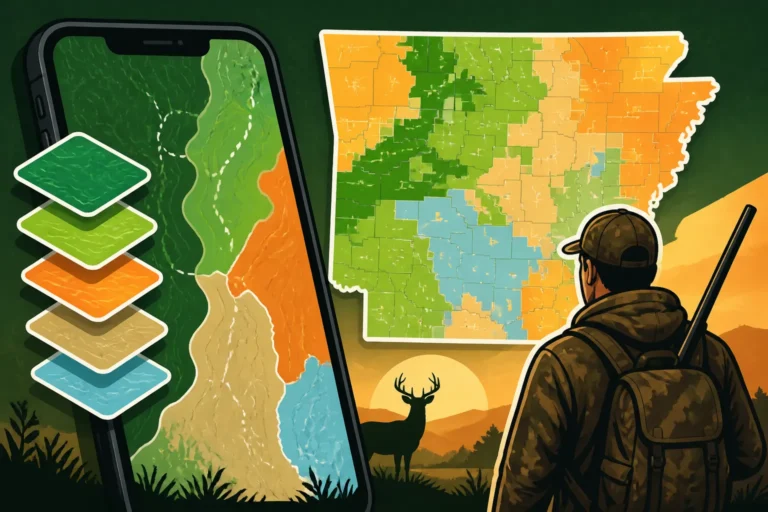
Before your trip, spend time with the AGFC's interactive map tool or a mapping application like onX Hunt. Seriously, this step is non-negotiable. Pin potential parking areas, identify major trails or old logging paths, and most importantly, mark WMA boundaries to avoid trespassing. You'll often find small pull-offs or designated parking areas along the main roads, but these can fill up quickly during peak season. Getting an early start or being willing to walk a bit further from a less obvious access point can make a huge difference in avoiding crowds. Understanding Ozark Forest Road Closures in Season is also critical, as some roads may be closed seasonally or due to weather, limiting your access plans.
Deer and Turkey Strategies for Piney Creeks
Hunting deer in Piney Creeks WMA requires a blend of patience, persistence, and strategic thinking. Forget wide-open shots; this is primarily timber hunting. Focus on identifying natural funnels created by the terrain, such as saddles between ridges, creek crossings, or benches on steep hillsides. Deer will use these travel corridors, especially during the rut. Scouting for fresh sign – rubs, scrapes, and tracks – is paramount. Remember, deer are creatures of habit, and their patterns in the rugged Ozarks often revolve around the most energy-efficient ways to get between bedding and feeding areas. Try focusing on the downwind side of known bedding areas, especially during the early morning or late afternoon. Reading an Ozark Bench for Deer can be particularly effective here, as deer often use these flatter sections on steep hillsides as travel routes or temporary bedding.
For turkeys, Piney Creeks offers excellent opportunities, particularly in the spring. Early mornings are about listening for gobblers on the roost. Once you pinpoint a bird, your approach becomes crucial. Use the terrain to your advantage, moving quietly to get as close as possible without being seen, and try to get ahead of the gobbler's likely path off the roost. The key is to get set up before he flies down, giving him a reason to come to you rather than wander off. Decoy use can be effective in open timber, but often, just strategic calling from a well-hidden position is all you need. Don't be afraid to try some aggressive calling to spark a response, especially if the birds are being stubborn. Calling Arkansas Gobblers in the Ozarks involves understanding the cadence and urgency of various calls.
Exploring Other Notable Ozark WMAs
While Piney Creeks is a fantastic option, the Ozarks are home to other impressive WMAs that offer diverse hunting experiences. Expanding your knowledge of these areas can provide more opportunities and spread out your hunting pressure.
Sylamore WMA: River Hills and Big Timber
Sylamore WMA, located in the north-central Ozarks, is another gem offering vast expanses of public hunting land. It's characterized by its steep, forested hillsides that plunge down to the White River and its tributaries. This topography creates a unique set of challenges and opportunities. The river bottoms often hold some incredibly dense habitat, while the higher ridges are a mix of mature hardwoods. Deer will frequently move between these elevation extremes, seeking food and cover. During the fall, acorn production along these ridges can be phenomenal, drawing deer out of the thicker bottoms.
Hunting Sylamore often means working hard, but the rewards can be significant. Look for signs of activity along the smaller creek drainages that feed into the White River; these act as natural corridors. Also, don't overlook areas near the river itself, as deer will often utilize these travel routes, particularly where the terrain isn't quite as steep. Turkey hunting here can be fantastic, with birds often roosting in tall timber along the river bluffs. The sounds of the river can sometimes make pinpointing gobblers tricky, but once located, these birds can be very responsive to calling, especially if you can get into a good setup on a ridge overlooking their likely travel path.
Gene Rush WMA: More Than Just Elk Country
Gene Rush WMA, situated near the Buffalo National River, is most famous for being at the heart of Arkansas's elk country. However, many hunters overlook its potential for deer and turkey. While you won't be hunting elk without a special permit, the WMA's diverse habitat, managed for a variety of wildlife, provides excellent conditions for other game. The terrain here is classic Ozark – rugged, with deep ravines, forested slopes, and picturesque vistas. The presence of elk means the habitat is generally healthy and rich in forage, which benefits deer and turkey populations immensely.
Hunting deer in Gene Rush can be a game of patience, as the deer densities might not be as high as in some other regions, but the potential for mature bucks exists. Focus on the same principles: finding food sources, pinch points, and bedding areas. The WMA is known for its beautiful hardwood timber, so finding fresh mast crops is key. For turkeys, Gene Rush is truly a hotspot. The rolling hills and numerous small clearings, combined with abundant water sources, create ideal conditions. You'll find birds actively using ridge tops for strutting and lower elevations for feeding. If you're looking for a challenging but potentially very rewarding turkey hunt in a beautiful setting, Gene Rush WMA should definitely be on your radar.
Essential Tools and Tactics for Ozark WMA Success
Hunting these beautiful, but sometimes daunting, Ozark WMAs requires more than just showing up. Proper preparation and the right tools can significantly increase your chances of success and safety.
Scouting and E-Scouting the Ozarks
In the Ozarks, scouting is your secret weapon. The sheer scale of these WMAs means you can't just wander in and expect to find game quickly. Scouting Arkansas Public Land Before Season is crucial. This means physically walking the land, looking for deer trails, rubs, scrapes, turkey tracks, and strut marks. Pay attention to water sources, potential bedding areas (often on south-facing slopes for warmth, or in thick cedar stands), and feeding zones (acorn flats or areas with heavy browse). Look for funnels, pinch points, and saddles – these are natural travel corridors that animals use to move through the rugged terrain.
However, modern technology has revolutionized scouting, allowing you to "e-scout" extensively before you ever step foot in the woods. Platforms like onX Hunt or GoHunt provide satellite imagery, topographical maps, and public/private land boundaries right on your phone or computer. You can mark potential stand locations, plan your entry and exit routes, and identify key habitat features from your couch. Look for subtle terrain changes that might create a travel corridor, or hidden benches where a buck might bed. Pay close attention to north-facing slopes, which tend to hold moisture longer and can offer different browse, versus south-facing slopes, which get more sun. By combining e-scouting with physical boots-on-the-ground reconnaissance, you build a comprehensive understanding of your hunting area, saving valuable time and effort during the season. Using the AGFC Map Tool is another fantastic resource for official WMA boundaries and specific regulations.
Navigating Public Land Regulations and Pressure
Hunting on Arkansas WMAs means adhering to specific rules that can differ from general statewide regulations. Always, always check the current Arkansas Game and Fish Commission (AGFC) regulations guide for the specific WMA you plan to hunt. These guides detail everything from season dates and bag limits (which can vary by WMA) to restrictions on ATVs, camping, and even the type of firearm you can use. Some WMAs might have special deer or turkey seasons, or require a WMA-specific permit. Ignorance of the rules is not an excuse, and violations can lead to hefty fines or loss of hunting privileges.
Public land, especially accessible tracts like WMAs, can experience significant hunting pressure, particularly on opening weekends. If you want to escape the crowds, be prepared to walk further than most. Deer and turkey quickly learn to avoid easy-to-reach areas. Look for those overlooked pockets, the steep draws, or the areas deep off the main roads that few hunters bother to explore. Often, the best hunting in a WMA starts where the pavement ends, and the trails get tough. Consider hunting mid-week if your schedule allows, as pressure typically drops considerably.
Here's a quick comparison of some Ozark WMAs:
| WMA Name | Primary Counties | Dominant Habitat | Key Game Species | Notable Feature | Hunting Pressure Tendency |
|---|---|---|---|---|---|
| Piney Creeks WMA | Johnson, Pope, Newton | Hardwood Forest, Draws | Deer, Turkey | Rugged terrain, excellent for remote hunting | Moderate to High |
| Sylamore WMA | Stone, Izard, Baxter, Searcy | River Hills, Hardwoods | Deer, Turkey | White River frontage, steep bluffs | Moderate |
| Gene Rush WMA | Newton, Boone, Carroll | Hardwood Forest, Hills | Deer, Turkey, Elk | Buffalo River proximity, managed for elk | Moderate (except during elk hunts) |
| White Rock WMA | Franklin, Crawford, Johnson, Madison | High Ridges, Hardwoods | Deer, Turkey | High elevation, part of Ozark National Forest | Moderate |
Staying Safe and Prepared
Hunting in the Ozarks, especially on large WMAs, demands a focus on safety. Cell service can be spotty or nonexistent in many areas, so don't rely solely on your phone for navigation or emergencies. Carry a physical map and compass, and know how to use them, or download offline maps on your GPS device (like onX Hunt allows). Always let someone know where you're going and when you expect to return. Pack enough water, snacks, a first-aid kit, and appropriate clothing layers for unpredictable mountain weather. The temperatures can swing dramatically from morning to afternoon, and a sudden rain shower can make a cold day even colder. Remember, you're often miles from the nearest road, and self-sufficiency is key.
For gun deer seasons, remember that Arkansas has specific Arkansas Hunter Orange Requirements, usually requiring 400 square inches of hunter orange visible above the waist. Even if it's not legally required for archery or turkey season, wearing some blaze orange when traveling through the woods during firearms seasons is a smart safety practice to make yourself visible to other hunters.
Hunting these public lands is a privilege and a challenge, but with the right mindset and preparation, Piney Creeks WMA and its Ozark counterparts offer some of the most rewarding hunting experiences in Arkansas. Don't be intimidated by the ruggedness; embrace it, and you might just find your new favorite honey hole.
Disclaimer
This article is for general informational purposes only and does not constitute professional advice. Laws, prices and regulations vary by location and change over time. Consult a qualified professional for guidance on your specific situation.