Mississippi River Island Hunting
There's a wild, untamed frontier right on our eastern border that many hunters either overlook or feel intimidated by: the shifting, often mysterious islands of the Mississippi River. Getting out there to hunt these ever-changing pieces of land presents a unique set of challenges, from navigating powerful currents and uncertain water levels to deciphering complex jurisdictional boundaries and figuring out exactly who owns what. This guide will walk you through everything you need to know to safely and successfully hunt the Mississippi River islands in Arkansas, turning those daunting unknowns into exciting opportunities.
Navigating the Legalities and Access for Mississippi River Island Hunting
Hunting the Mississippi River islands isn't like heading to your local timber block. You're dealing with a dynamic landscape where land appears and disappears, and where state lines are drawn right down the middle of a constantly moving river. Before you even think about loading your boat, you need a solid grasp of the legalities and how to ensure you're hunting legally. It's a bit of a bureaucratic maze, but totally worth it for the unique experience.
Understanding State Line Jurisdictions
The first, and arguably most confusing, hurdle is the state line. The Mississippi River forms the boundary between Arkansas and Mississippi (and Tennessee, further north). However, the legal state line doesn't always follow the current main channel of the river. Over centuries, the river has meandered, cut new channels, and abandoned old ones, leaving "relict" state lines that snake across what now appear to be solid land masses or even across what seems to be a single, continuous island.
This means an island that looks entirely within Arkansas from the bank might actually have a segment that legally belongs to Mississippi. Conversely, parts of what appear to be the Mississippi side could actually be Arkansas. Always remember that hunting regulations, license requirements, and even specific season dates can vary significantly between states. Ignorance of these boundaries is no excuse, and a violation could land you in hot water with wildlife enforcement from either side. Tools like onX Hunt can be incredibly valuable here, as their mapping layers often include detailed state and county lines, helping you visualize these complex boundaries in real-time on your phone or GPS device.
Identifying Public Versus Private Islands
Once you've wrapped your head around the state lines, the next big question is ownership. Many islands along the Mississippi River are considered public domain, often managed by the U.S. Fish and Wildlife Service, the U.S. Army Corps of Engineers, or the state wildlife agencies. However, some islands, or portions of them, are privately owned. Just because an island is remote and difficult to access doesn't automatically make it public land.
Identifying public versus private property on these ever-changing landforms can be challenging. Old survey maps might not reflect current river morphology, and boundaries can be obscure. Your best bet is to combine official state wildlife agency maps (like those found Using the AGFC Map Tool) with advanced mapping applications like onX Hunt or GoHunt. These apps often have property boundary overlays that can help you distinguish between public land, private tracts, and even areas managed under specific federal or state programs. Always cross-reference multiple sources if you have any doubt, and if you can't definitively confirm public access, err on the side of caution. It's far better to skip a spot than to risk a trespass violation.
Permits, Licenses, and Regulations Specific to River Islands
Beyond knowing where you can legally stand, you need to ensure you're properly licensed and adhering to all relevant regulations. Just like hunting any other part of the state, you'll need your basic Arkansas Hunting Licenses and What They Cost. If you’re targeting deer, make sure you understand the specific Arkansas Deer Seasons and Zone Limits that apply to the county adjacent to the river, as most river islands fall under the regulations of the nearest adjacent mainland county.
Some islands might be part of a larger Wildlife Management Area (WMA) or National Wildlife Refuge (NWR) system, which could come with additional permit requirements, specific hunting hours, or even limitations on methods or game species. It's not uncommon for federal refuges along the river to have specific hunting seasons that differ from statewide regulations. Always consult the Arkansas Game and Fish Commission's (AGFC) current regulations booklet, paying close attention to any sections related to federal lands, WMAs, or specific river corridor rules. Check for rules regarding temporary structures, such as ground blinds or tree stands, as these can also be restricted on public lands, especially on lands managed by federal agencies.
Essential Gear and Logistics for River Island Hunts
Hunting the Mississippi River islands demands a level of preparation far beyond what you might need for a typical public land hunt. The river itself is your biggest obstacle and your primary mode of access. Success hinges not just on hunting skill, but on meticulous planning for transportation, gear, and self-sufficiency in an often isolated and unpredictable environment.
Boat Selection and River Navigation Skills
Your boat is your lifeline. This isn't the place for a small johnboat with a leaky transom. You need a reliable, stable, and adequately powered vessel capable of handling strong currents, unexpected debris, and potentially swift changes in weather. A substantial aluminum flat-bottom boat (often called a "river rig" by locals) with a powerful outboard motor is usually the minimum. Consider one with a shallow draft if you plan to navigate sloughs or backwaters that might get low, but also enough freeboard to handle chop from barge traffic or sudden storms.
Navigation on the Mississippi is a skill in itself. You're dealing with constantly shifting sandbars, submerged snags (called "sawyers" by rivermen), and an unpredictable main channel. A good GPS unit, loaded with up-to-date river charts and bathymetric data, is non-negotiable. Knowing how to read river markers, understand current dynamics, and safely approach and beach an island are critical. Always be aware of commercial barge traffic; they cannot stop or turn quickly, and their wakes can be significant. Never assume they see you. A basic understanding of river hydrology, like how water levels affect access and currents, will serve you well. Reading Aerial Photos for Delta Deer can also help you identify potential landing spots and hidden channels.
Packing for Remote and Isolated Hunts
When you venture onto a Mississippi River island, assume you are completely self-sufficient. There are no convenience stores, no nearby gas stations, and often no cell service. Your packing list needs to reflect this isolation, especially if you plan an overnight or multi-day trip. Think wilderness camping, but with river-specific concerns.
| Category | Essential Items | Notes |
|---|---|---|
| Navigation | GPS with spare batteries, detailed paper maps, compass, river charts, anchor | Redundancy is key. A lost GPS or dead battery can turn a minor inconvenience into a major emergency. |
| Safety | Life jackets (worn!), signaling devices (whistle, flare kit), first-aid kit, waterproof flashlight/headlamp, air horn, emergency blanket, extra rope | Don't skimp on safety. The river is unforgiving. |
| Hunting | Hunting gear (bow, rifle, shotgun), ammo, knife, field dressing kit, game bags | Plan for Field Dressing a Deer in Warm Weather if hunting early season. |
| Survival | Water (ample supply!), purification tablets, non-perishable food, fire starter, shelter (tent, tarp), insect repellent | Assume you'll be stranded longer than planned. Water is paramount. |
| Clothing | Layers for varying temperatures, waterproof outerwear, waders or hip boots, extra dry socks | River environments are often damp and prone to sudden weather changes. |
| Tools/Repair | Basic tool kit for boat, duct tape, zip ties, small axe/saw, rope, fuel filter | A broken shear pin or clogged fuel line can ruin your trip. |
| Communication | Satellite messenger (e.g., inReach, Zoleo) or marine VHF radio, fully charged cell phone (for emergency only if service permits) | Cell service is spotty at best. A satellite device is your best link to the outside world for emergencies. Marine radio is for river traffic and Coast Guard. |
Setting Up Camp on an Island
Overnight stays on a Mississippi River island can be an incredible experience, but they come with their own set of considerations. First, choose your campsite carefully. Look for high ground that is well above current and anticipated river levels. The river can rise quickly, and you don't want to wake up in a flooded tent. Avoid setting up camp directly under large, dead trees ("widowmakers") or on unstable banks prone to erosion.
Security of your gear is paramount. Everything, especially your boat, needs to be secured against the current and potential thieves. Anchor your boat well, ideally with multiple lines to trees, and consider camouflaging it if it's visible from the main channel. Keep food secured in critter-proof containers, as raccoons and other animals are abundant on these islands. Plan for waste management; pack out everything you pack in, including human waste if necessary, to keep these wild places pristine. Remember, you're a visitor in a wild, transient ecosystem.
Hunting Strategies for Deer and Small Game on Mississippi River Islands
The hunting on Mississippi River islands can be fantastic, precisely because of their dynamic nature and often difficult access. Less pressure often translates to more mature animals. However, the strategies you employ need to be adapted to this unique environment. It's about understanding how game uses these transient habitats and leveraging the river itself as both a barrier and a pathway.
Scouting Island Habitats for Game Sign
Effective scouting is the bedrock of successful island hunting. Before the season, or even the day before a hunt, you need to put in time. Start with digital scouting using satellite imagery from tools like onX Hunt. Look for distinct features:
- Elevation changes: Even a few feet can make a difference in flood events, creating natural travel corridors.
- Vegetation types: Look for mature timber that provides mast, brushy thickets for bedding, and open areas or sandbars.
- "Cutouts" and sloughs: These can offer protected travel routes for deer and excellent waterfowl opportunities.
- Old river scars: Sometimes these areas retain water longer, attracting wildlife.
Once on the ground, or rather, on the island, focus on finding fresh sign. Look for heavily used deer trails that often run parallel to the island's edge or connect different habitat types. Scrapes and rubs are always a good indicator of buck activity. Pay close attention to food sources. Islands often feature cottonwoods, willows, and various mast-producing trees like pecans or oaks, depending on the age and stability of the island. Since these islands are often subject to flooding and erosion, the vegetation can vary wildly from dense, impenetrable thickets to open, regenerating clearcuts. This diversity creates unique challenges and opportunities, similar to Hunting Arkansas Cutovers and Clearcuts, just with water defining the boundaries. Scouting Arkansas Public Land Before Season is crucial here, even more so given the constantly changing nature of these river environments.
Tactics for Deer Hunting on Islands
Deer on Mississippi River islands are often less pressured and can be older and larger than those on mainland public land. Their patterns, however, are dictated by the island's unique geography and the river's influence.
- Travel Corridors: Deer will use the path of least resistance. Look for trails along the higher ridges, through less dense brush, or even along the edge of sloughs. If the island is narrow, the deer may simply follow the length of it.
- Bedding Areas: Thick cover is key. Look for dense briar patches, young growth, or areas where fallen timber creates a maze of security cover. Deer will often bed on the highest ground available, especially if water levels are fluctuating.
- Entry and Exit: Plan your approach and departure to minimize disturbance. Use the boat to access areas that are difficult to reach on foot. Consider wading shallow sloughs or using a kayak to get deeper into the island without alerting game. Wind direction is critical when using a boat for access, as the sound will carry.
- Still-hunting: With the often dense cover and varied terrain, still-hunting can be very effective. Move slowly, stopping frequently to glass and listen. The river provides a natural barrier, so deer often feel safer and might hold tighter than on the mainland.
- Stands and Blinds: If you find a promising area, a mobile tree stand or ground blind can be invaluable. Remember to check regulations on placing temporary structures on public lands. Since islands can be difficult to access with large blinds, portable options are usually best.
Pursuing Small Game: Squirrels and Rabbits
While deer are a primary draw, these islands can also offer fantastic small game opportunities, particularly for squirrels and rabbits.
- Squirrels: Look for islands or parts of islands with mature timber, especially pecans, oaks, or hickories that provide food. River bottoms are often prime squirrel habitat, and these islands are no exception. Early mornings are best, as squirrels are most active then. A good pair of binoculars and a .22 rifle or a shotgun with light loads are your friends.
- Rabbits: Dense briar patches, brush piles, and areas of thick undergrowth are rabbit magnets. These are common on newer islands or areas of older islands that have been disturbed by floods or erosion. Hunting with a small game dog can be incredibly productive for rabbits, but be mindful of the dense cover and potential for your dog to get into tricky situations near the water.
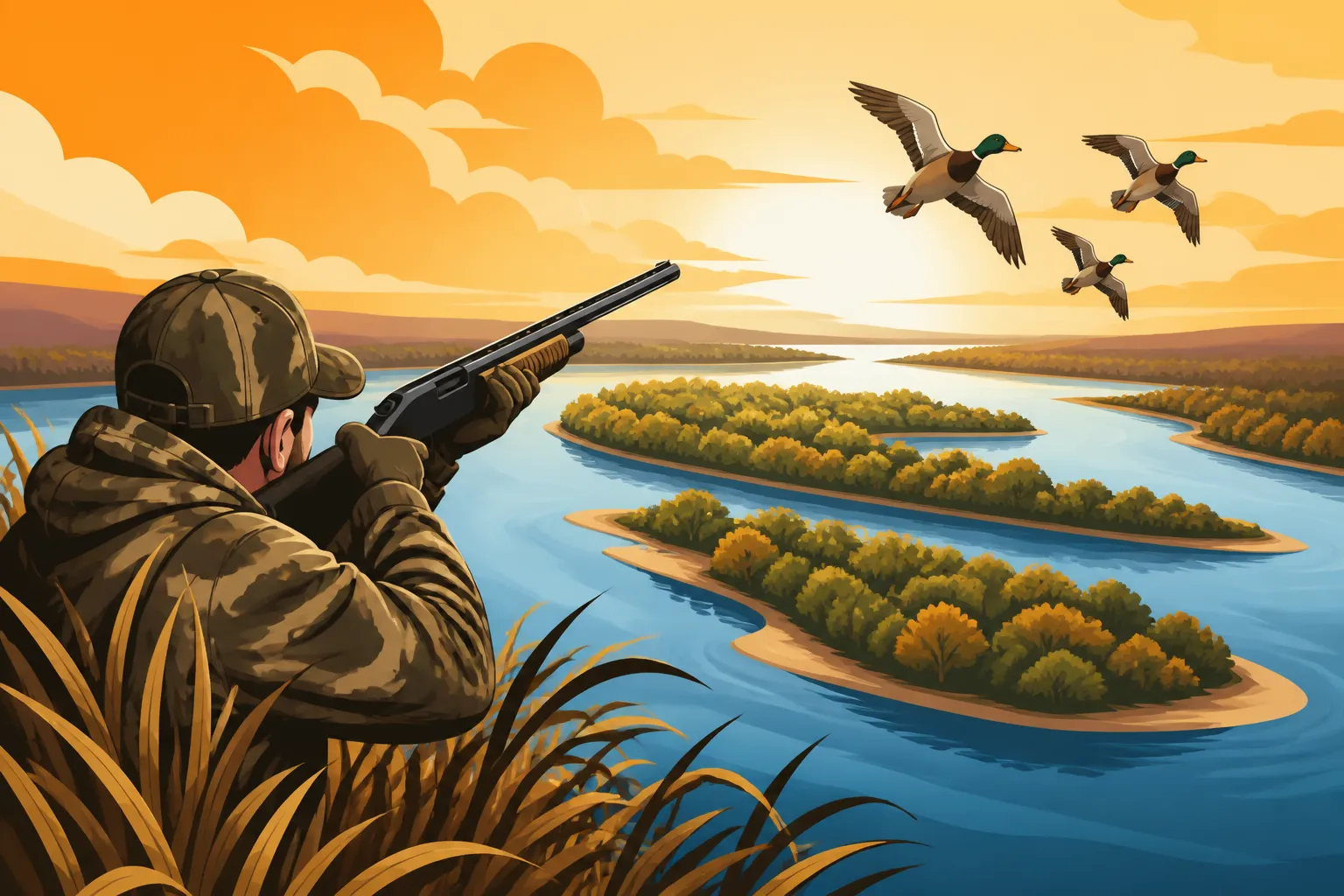
While these islands aren't typically known for large concentrations of waterfowl, persistent hunters can find opportunities. Small backwater sloughs, interior ponds, or areas where the river creates eddies can attract wood ducks, mallards, and other species. Setting a few decoys and using calls can be effective, especially if you can find a secluded spot. Always check Arkansas Waterfowl Seasons and Zones if you plan to target ducks or geese.
Safety and Environmental Considerations for River Island Hunters
The allure of hunting wild, isolated islands on the Mississippi River comes with a significant responsibility for safety and environmental stewardship. The river is a powerful, unpredictable force, and being prepared for its challenges is just as important as knowing where to find game.
Understanding River Currents and Weather Risks
The Mississippi River has an immense current. Even seemingly calm stretches can hide powerful eddies and undertows. When beaching your boat or retrieving game from the water, always be acutely aware of the current. Never assume you can easily swim against it. If your boat breaks down or capsizes, the current can quickly carry you miles downstream.
Weather on the river can change rapidly. Clear skies can turn to violent thunderstorms in a matter of minutes, bringing high winds, heavy rain, and dangerous lightning. These conditions can quickly make river navigation treacherous, turning calm water into a choppy, dangerous expanse. Always check the detailed marine weather forecast before you leave, and watch the sky constantly while you're out there. If a storm rolls in, seek immediate shelter on the nearest secure island or bank. Waiting it out in a boat on open water is a recipe for disaster. Heavy rains further upstream can also lead to rapidly rising water levels days later, potentially flooding your camp or stranding you.
Emergency Preparedness and Communication
Because of the isolated nature of these hunts, robust emergency preparedness is non-negotiable. Beyond the first-aid kit and signaling devices mentioned earlier, you need a plan for worst-case scenarios.
- Communication: As noted, cell service is often unreliable. A satellite messenger device (like those offered by
Garmin inReachorZoleo) is your best bet for communicating with the outside world, especially in an emergency. These devices allow you to send SOS signals and text messages even when out of cell range. A marine VHF radio is also excellent for communicating with other boaters or emergency services on the water. - Emergency Kit: Include items for an unexpected overnight stay: fire starter, water filter, emergency blanket, and extra high-energy food. Assume you might have to spend a night or two longer than planned if your boat breaks down or weather prevents safe travel.
- Know Your Location: Always know your exact coordinates. If you have to call for help, providing precise location data is critical for rescue efforts. Mark your camp, boat, and any other important waypoints on your GPS.
- Inform Others: Always tell a trusted person your float plan: where you're going, your planned route, who you're with, and when you expect to return. Give them instructions on when to call for help if they don't hear from you.
Respecting the Environment and Other Users
Hunting these wild islands is a privilege, and it's our responsibility to keep them pristine. That means practicing strict Leave No Trace principles. Everything you bring in, you must pack out. This includes all trash, spent casings, and any food waste. If you're staying overnight, properly dispose of human waste away from water sources and traffic areas.
You'll likely encounter other river users, including fishermen, pleasure boaters, and commercial traffic. Always be courteous and respectful. Be especially mindful of your presence if you're hunting in areas where others might be camping or fishing. When setting up a blind or stand, ensure it's not obstructing navigation or creating a hazard. And crucially, understand What Arkansas Trespass Law Requires for any potential private land within the river system. These islands are a shared resource, and responsible behavior ensures they remain available for all to enjoy for generations to come.
Disclaimer
This article is for general informational purposes only and does not constitute professional advice. Laws, prices and regulations vary by location and change over time. Consult a qualified professional for guidance on your specific situation.