Galla Creek and River Valley WMAs
Finding quality public hunting land in the central part of our beautiful state, especially around the Arkansas River Valley, can sometimes feel like trying to find a needle in a haystack – or, more accurately, a trophy buck in a sea of thick cover and mixed-use areas. It’s a challenge many of us face, trying to balance accessibility with the desire for a rewarding hunt. This guide is here to unravel the mysteries of Galla Creek WMA and other fantastic public hunting opportunities nestled within the Arkansas River Valley, giving you the insights you need to plan your next successful outing.
The Allure of Arkansas's River Valley WMAs
The Arkansas River Valley is a unique and often overlooked hunting region in our state, sitting right there between the rugged Ozarks and the rolling Ouachitas, before gently transitioning into the Delta. It’s not quite the mountainous terrain of the national forests, nor is it the vast, flat agricultural landscape of the Delta. Instead, you'll find a captivating mix of bottomland hardwoods, pine plantations, upland forests, and agricultural fields often bordering the river itself. This diverse habitat creates a mosaic of opportunities for a variety of game species, but it also presents its own set of challenges for hunters.
For folks who live in or around cities like Russellville, Morrilton, or even Conway and Little Rock, these River Valley Wildlife Management Areas (WMAs) are often the closest public lands available. This proximity is a double-edged sword: convenient access means more hunters, especially on opening weekends. But with careful scouting and an understanding of the terrain, you can still find pockets of solitude and productive hunting. The key is knowing what to expect from the landscape, how the game animals use it, and how to adapt your tactics. Scouting Arkansas Public Land Before Season is always a wise move, no matter where you hunt, but it's especially critical here.
We're talking about areas that are shaped by the Arkansas River and its tributaries, leading to rich, fertile soils in the lowlands that support dense vegetation. Higher up, you'll find sparser woods, often with more rocky outcrops. This transition zone is where deer, turkeys, and small game thrive, moving between cover, food sources, and water. It's a dynamic environment that rewards observation and adaptability.
Galla Creek WMA: A Deep Dive into Its Hunting Potential
Galla Creek WMA, located primarily in Pope County near Russellville, is one of the shining stars of the Arkansas River Valley. It's a place many locals know well, and for good reason. This WMA boasts a significant amount of acreage, offering a diverse array of habitats from mature bottomland hardwoods along Galla Creek itself to upland pine and mixed hardwood forests, and even some old fields that are managed for wildlife.
Deer hunting is probably the most popular pursuit here. The mixture of dense cover, various mast-producing trees (oaks and hickories), and nearby agricultural lands creates an ideal environment for whitetails. You'll find deer utilizing the creek bottoms for bedding and travel corridors, moving up into the hills to browse and feed on acorns. Early season archery hunters might focus on natural funnels and pinch points where deer move between these different habitat types. During modern gun season, understanding deer movement patterns, perhaps even employing Deer Drives in Arkansas Bottomland on smaller blocks of timber, can be effective. Just remember to always check the specific WMA regulations for any limitations on deer drives.
Turkey hunting also draws a dedicated crowd to Galla Creek. The mix of mature timber and open areas provides excellent roosting and strutting habitat. During the spring, gobblers can be heard echoing through the valleys. Finding those birds requires patience and good listening skills, often focusing on ridges and along the creek system where they frequent. Small game hunters will find squirrels abundant in the mature hardwoods, especially during good mast years. Squirrel Hunting Arkansas Hardwoods is a classic pursuit in these parts, and Galla Creek offers ample opportunity.
Access to Galla Creek WMA is generally good, with numerous roads and parking areas. However, some interior sections require a bit of a hike, which can be exactly what you need to escape the crowds. Utilizing mapping tools like onX Hunt can be invaluable here. Its various layers can show you property boundaries, access roads, and even topographic features that reveal subtle drainages or ridges where deer might travel. Before you ever set foot on the ground, you can use these tools to identify potential stand locations, escape routes for pressured game, and the best entry and exit points.
Beyond Galla Creek: Exploring Other River Valley Public Lands
While Galla Creek WMA is a cornerstone of public hunting in the Arkansas River Valley, it's certainly not the only game in town. The region is dotted with other WMAs and parcels of public land, each with its own character and hunting opportunities. These areas often share some commonalities with Galla Creek – mixed forests, proximity to water, and varied terrain – but also offer unique twists that can appeal to different hunting styles or target different species.
For example, areas like Petit Jean River WMA or parts of the Ozark National Forest that dip into the River Valley, while not strictly "River Valley WMAs" in the same vein as Galla Creek, still offer valuable public access. These areas might lean more heavily into upland oak-hickory forests, or feature more dramatic topography. It's crucial to consult the AGFC map tool for specific boundaries and regulations for each area. This tool is a fantastic resource for understanding the nuances of different WMAs and identifying potential new spots to explore.
Consider the diverse nature of these WMAs, which can range from large expanses of timber to smaller, more fragmented blocks near private agricultural fields.
- Smaller Tracts: Some WMAs might be smaller, requiring a more focused approach. These can be great for quick morning or evening hunts, or for targeting specific game like rabbits or squirrels.
- Floodplain Forests: Areas directly adjacent to the Arkansas River or larger creeks often feature extensive floodplain forests, which can be phenomenal for deer and turkeys. These areas can sometimes be challenging to navigate due to dense undergrowth or seasonal flooding, but they often hold less pressured game.
- Upland Mixed Woods: Away from the major water bodies, the uplands present a different challenge. These areas might be steeper, rockier, and require more vigorous hiking. Deer often bed in these less disturbed areas, and turkeys might roost on prominent ridges.
It's a mistake to think all River Valley WMAs are the same. Each has its own rhythm and personality. Some might see heavy pressure, especially early in the season, while others, perhaps with more challenging access, might offer a more solitary experience. A helpful resource like GoHunt can provide insights into game populations and success rates in different regions, helping you make informed decisions about where to focus your efforts. Arkansas River Valley Public Land offers a broad spectrum of experiences, and by doing your homework, you can unlock some truly special hunting.
Here's a quick look at some general characteristics you might find:
| WMA Type / Feature | Primary Habitat Focus | Typical Game Species | Common Hunting Challenges |
|---|---|---|---|
| Galla Creek WMA | Mixed bottomland/upland hardwoods, pine, old fields | Deer, Turkey, Squirrel, Rabbit | Moderate pressure, varied terrain |
| Floodplain WMAs | Mature bottomland hardwoods, dense undergrowth | Deer, Squirrel, Waterfowl (seasonal) | Seasonal flooding, dense cover, mosquitoes |
| Upland River Valley WMAs | Oak-hickory forests, rocky outcrops, pine | Deer, Turkey, Squirrel, Predator | Steep terrain, dispersed game, scouting |
| Mixed-Use WMAs | Farmland edges, timber blocks, brushy areas | Deer, Rabbit, Dove (seasonal) | Private land boundaries, limited access |
Strategic Approaches for Hunting the River Valley WMAs
Hunting the River Valley WMAs successfully often boils down to a few key strategies: thorough scouting, adapting to pressure, and utilizing the right tools. These aren't pristine wilderness areas, but they offer fantastic opportunities for the hunter willing to put in the effort.
Pre-Season Scouting and Digital Tools
Before hunting season even kicks off, you need to be out there, either physically or digitally. For the River Valley, understanding access points, terrain changes, and potential food sources is paramount.
- Physical Scouting: Walk creek bottoms, identify deer trails leading to and from agricultural fields (if adjacent to private land), look for rub lines and scrapes, and pinpoint potential bedding areas in thickets or on secluded benches. In the spring, listen for gobblers on the roost to get a feel for turkey activity.
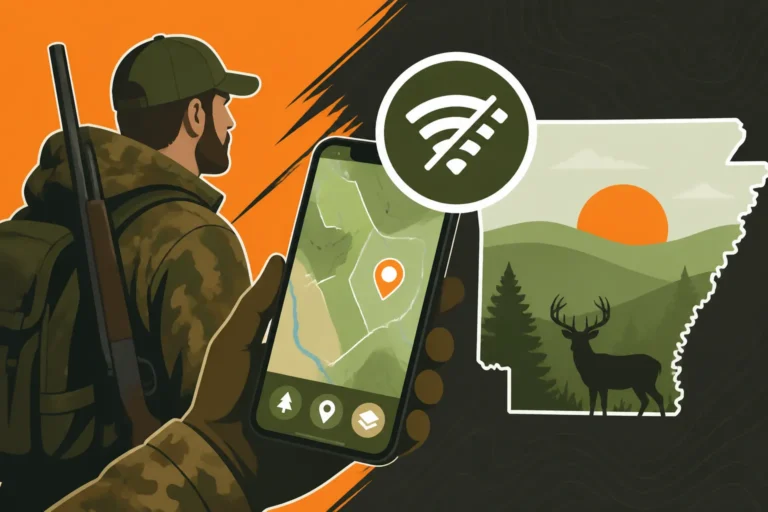
- Digital Scouting with onX Hunt: This is where digital mapping applications truly shine. Layers showing public/private land boundaries are critical in these mixed landscapes. You can mark potential stand sites, food plots (if present), water sources, and access routes. Use the topographic feature to identify subtle saddles, draws, or ridge lines that act as travel corridors for deer. You can even drop pins for good spots to park your vehicle and plan your approach, minimizing disturbance. Using the AGFC Map App Offline is also a good habit, ensuring you have your maps even without cell service.
Adapting to Hunting Pressure
Let's be realistic: public land in Arkansas, especially near population centers, will see hunting pressure. The River Valley WMAs are no exception. This doesn't mean you can't be successful, but it means you need to adjust your tactics.
- Hunt Mid-Week: If your schedule allows, hunting on a Tuesday or Wednesday can significantly reduce the number of other hunters you encounter.
- Go Deeper: Most hunters don't venture far from their vehicles. If you're willing to walk an extra mile or two into areas with challenging access, you'll often find less disturbed game. Look for those hidden pockets in the interior of the WMA that others overlook.
- Hunt Thick Cover: Pressured deer quickly learn to seek refuge in the densest, nastiest cover available. Don't shy away from thickets, briar patches, or areas with heavy blowdowns. This is often where mature bucks will bed during daylight hours.
- Consider Timing: Early morning and late evening hunts are always productive, but consider mid-day still-hunting, especially if you're in heavy cover and have a good understanding of wind direction. Pressured deer might move during the quietest parts of the day.
Species-Specific Tactics
The River Valley WMAs offer varied opportunities, so tailoring your approach to the game you're after is key.
- Deer: For deer, focus on transition zones. A small patch of woods next to an open field, a bench on a hillside overlooking a creek bottom, or a funnel created by topography. During the rut, rattling and grunting can be effective in areas where bucks are cruising. Rattling Volume in Thick Cover is often more effective than loud, aggressive calls in these areas.
- Turkey: Spring turkey hunting demands patience. Focus on areas with good roost trees (often mature hardwoods near water) and nearby open areas where gobblers might strut. Calling can be very effective, but sometimes just being in the right place at the right time, especially on high ground where sound travels, is your best bet. Calling an Arkansas Gobbler Off the Roost requires an understanding of how birds use the terrain.
- Small Game: Squirrels will be found wherever there's an abundant mast crop – look for oaks and hickories, especially along creek drainages. Rabbits prefer thick brush piles, fencerows, and briar patches, often near the edges of fields or clearings. A good pair of hunting boots and a willingness to push through cover is essential.
Hunting these River Valley WMAs is an adventure into the diverse heart of Arkansas. It demands a bit more planning and adaptability than some of our more straightforward hunting grounds, but the rewards are absolutely there for those who embrace the challenge.
Disclaimer
This article is for general informational purposes only and does not constitute professional advice. Laws, prices and regulations vary by location and change over time. Consult a qualified professional for guidance on your specific situation.