Arkansas Posted Land Rules
There’s nothing quite like the feeling of being out in the Arkansas woods or fields, the promise of a hunt in the air. But that feeling can quickly turn to anxiety when you’re unsure if the land you’re on, or the land your game just ran onto, is private and off-limits. Understanding Arkansas's posted land rules is absolutely essential for every hunter to avoid an unwanted encounter or, worse, a legal issue. This guide is all about clearing up that confusion, giving you the solid facts you need to hunt confidently and respectfully.
Understanding Arkansas Posted Land Law
Let's face it, hunting isn't just about knowing where the deer are; it's also about knowing where you are and where you can be. Arkansas law is pretty clear when it comes to private property, but sometimes the ways that property is marked can be a little ambiguous, leading to honest mistakes. It’s not enough to just hope you’re in the right place; you need to understand what constitutes legally posted land and how to recognize it, especially when navigating unfamiliar territory. The last thing any of us wants is a confrontation with a landowner who feels their boundaries have been disrespected.
What Constitutes "Posted" in Arkansas?
In Arkansas, land is generally considered "posted" if it's clearly marked to indicate it's private and entry is prohibited without permission. This isn't just about a rusty old "No Trespassing" sign nailed to a tree, though those certainly count! The law allows for several methods of posting, and it's important to be familiar with all of them. The most common is, of course, a sign, typically placed at intervals along the boundary. These signs should be reasonably visible and indicate that entry is forbidden. Think about walking a property line and seeing these every couple of hundred yards or so, especially at obvious entry points like gates or old logging roads.
Another common and legally recognized method is purple paint. This one often surprises folks not from states that use it. In Arkansas, a landowner can mark their property boundaries with purple paint on trees or fence posts. These marks need to be vertical lines at least eight inches long and at least one inch wide, placed no more than 100 feet apart, and between three and five feet off the ground. If you see purple paint stripes, consider that land posted, just as if it had "No Trespassing" signs plastered everywhere. It's a method designed to be long-lasting and clear, especially in wooded areas where traditional signs might be shot up or fall down.
Sometimes, especially in more remote or less frequently accessed areas, a landowner might consider their land effectively "posted" through common understanding or traditional signage that isn't as uniformly placed. However, for a hunter, relying on these less formal methods can lead to trouble. Always assume the stricter interpretation, and if there's any doubt, err on the side of caution. Remember, ignorance of the law is no excuse, and an honest mistake can still carry penalties, especially if you're carrying a firearm. For more details, you might want to look into What Arkansas Trespass Law Requires.
The Importance of Clear Marking
For a landowner, clear marking is their primary defense against trespass. For a hunter, it's our guide to staying legal and respectful. Ambiguous or missing markings are a recipe for conflict. Imagine you're still-hunting a ridge, moving slowly and quietly, focused on deer sign. You come to what looks like an old fence row, but half the signs are gone, and the remaining ones are faded and shot full of holes. Is it posted? Has it always been posted? This is where the frustration sets in for hunters who genuinely want to do the right thing.
The burden of proof, to a certain extent, often falls on the landowner to demonstrate their property was adequately marked. However, as a hunter, you can't just ignore questionable markings and claim you didn't know. If there's enough evidence that a reasonable person should have understood the property was private and off-limits, you could still be in violation. This is why paying close attention to any sign of demarcation, whether it's a freshly painted purple stripe, a new wire fence, or even just old, faded signage, is so crucial.
It's also worth noting that some land, like certain federal or state lands, might have different posting conventions or specific rules about access that are detailed at entry points or on official maps. For instance, some wildlife management areas might have designated walk-in only sections or areas with restricted vehicle access. These aren't "posted" in the traditional private land sense, but they still dictate where you can and cannot go, and the penalties for violating those rules can be just as serious. Always check the specific regulations for any public land you plan to hunt.
Navigating Private Land and Public Access
The patchwork quilt of land ownership in Arkansas, especially in areas bordering national forests or WMAs, means hunters often find themselves right up against private boundaries. One minute you're on public ground, the next you're staring down a well-tended food plot that clearly belongs to someone else. This is where vigilance and preparation become your best friends. It’s easy to get absorbed in the hunt, but maintaining an awareness of your surroundings and your exact location is paramount.
Accidental Trespass and Its Consequences
Accidental trespass can happen to even the most careful hunter. You might be tracking a wounded deer, following a game trail that seems to lead indefinitely, or simply misread your map in dense cover. One minute you’re focused on the fresh tracks, the next you’re standing in someone’s backyard or well-established hunting area. The key here is intent. Arkansas law distinguishes between knowingly entering posted land and accidentally straying onto it. However, even accidental trespass can lead to complications, especially if you're found carrying a firearm.
While an honest mistake might not lead to the same severe penalties as intentional poaching or defiance, it can still result in fines, confiscation of game, and even legal action from an upset landowner. Imagine spending hours tracking a buck, finally taking a shot, and then realizing it ran onto clearly posted private land. The temptation to "just quickly" retrieve it can be immense, but that's precisely when you need to pause, assess, and make the right call. Always prioritize getting permission before crossing that line, even for retrieval. A quick phone call or a knock on a door, even if it delays your recovery, is always the better option. Retrieving Game From Private Land delves into this tricky situation in more detail.
| Action/Scenario | Legally Posted? | Permission Needed? | Potential Consequence (if no permission) |
|---|---|---|---|
| Entering for Hunting | Yes (signs/purple paint) | Always | Fines, game confiscation, legal action |
| Entering for Scouting | Yes (signs/purple paint) | Always | Fines, legal action |
| Retrieving Wounded Game | Yes (signs/purple paint) | Always | Fines, game confiscation, legal action |
| Crossing for Access | Yes (signs/purple paint) | Always | Fines, legal action |
| Unmarked but private land | No (legally posted) | Best practice | Potential civil trespass (less severe) |
Using Technology to Stay Legal
In this day and age, there's really no excuse for not knowing exactly where you are and what land surrounds you. Mobile apps like onX Hunt have revolutionized how hunters navigate the woods and fields. I can’t tell you how many times I’ve been out in a new area, or even one I thought I knew well, and pulled up my phone to see precisely where a property line runs. These apps provide detailed plat maps, showing public and private land boundaries, landowner names, and even different land classifications. It’s like having a hyper-detailed property deed map right in your pocket.
Before I head out, I always download the offline maps for the area I plan to hunt on my onX Hunt app. This way, even if I lose cell service deep in a hollow or out in the Delta, I still have access to all the critical information. You can drop waypoints, mark boundaries you want to avoid, and even track your path to ensure you're staying within legal hunting areas. It takes a lot of the guesswork out of navigating unfamiliar territory and gives you peace of mind. I've heard stories from other hunters who use GoHunt for similar purposes, especially for scouting and identifying access points on larger tracts of land. These tools are invaluable for planning your approach and knowing exactly where you can set up a stand without infringing on someone else's property.
Beyond just avoiding trespass, these apps can help you identify potential access points to public land that you might not have noticed otherwise, or find corridors between private parcels that lead to isolated public timber. They're also incredibly useful for scouting during the off-season, allowing you to mark bedding areas, travel corridors, and food sources, all while staying aware of property lines. Checking satellite imagery layers can reveal hidden fields, dense cover, or water sources that might influence deer movement and help you pinpoint the best spots to hunt. Scouting Arkansas Public Land Before Season is a great companion read for getting the most out of these mapping tools.
Retrieving Game from Posted Land
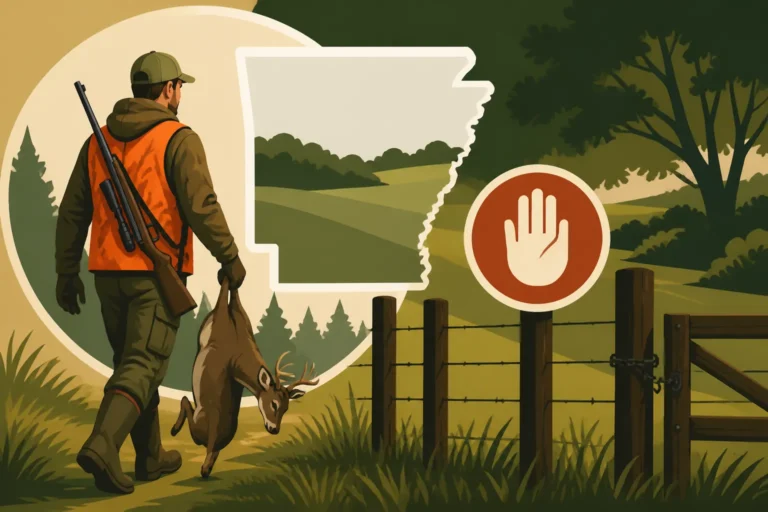
This is arguably one of the most stressful situations a hunter can face: you've made a good shot, the deer is down, but it's run onto land that's clearly marked as private and posted. Your immediate instinct might be to go after it, but stopping and thinking about the legalities and ethics involved is crucial. Rushing in without permission can quickly turn a successful hunt into a legal nightmare and give all hunters a bad name.
Legal Requirements for Game Retrieval
In Arkansas, there is no specific law that grants a hunter the right to trespass on private land, even for the purpose of retrieving wounded or dead game, without the landowner's permission. This is a critical point that often trips up hunters, especially those from other states with different regulations. Your best bet, and the only legal one, is to contact the landowner and request permission. If you don't know who owns the land, apps like onX Hunt can often provide that information, or you might need to contact the local county assessor's office.
If you can't reach the landowner or they deny permission, you are in a tough spot. While it's heartbreaking to potentially lose game, illegally entering posted property for retrieval can lead to charges of criminal trespass. This could result in fines, the loss of your hunting license, and potentially civil penalties. It's a lose-lose situation, but violating the law is never the answer. The Arkansas Game and Fish Commission (AGFC) strongly advises hunters to obtain permission before entering private land, emphasizing that a phone call or conversation is always the preferred method over simply crossing the fence.
Sometimes, especially in areas with very large landholders or timber companies, getting immediate permission can be difficult. It might take hours, or even days, to reach the right person. In such cases, you might consider reaching out to the local game warden. While they cannot grant you permission to trespass, they might be able to assist in contacting the landowner or offer advice on the best course of action. They are often familiar with local landowners and their preferences regarding game retrieval.
The Importance of Communication
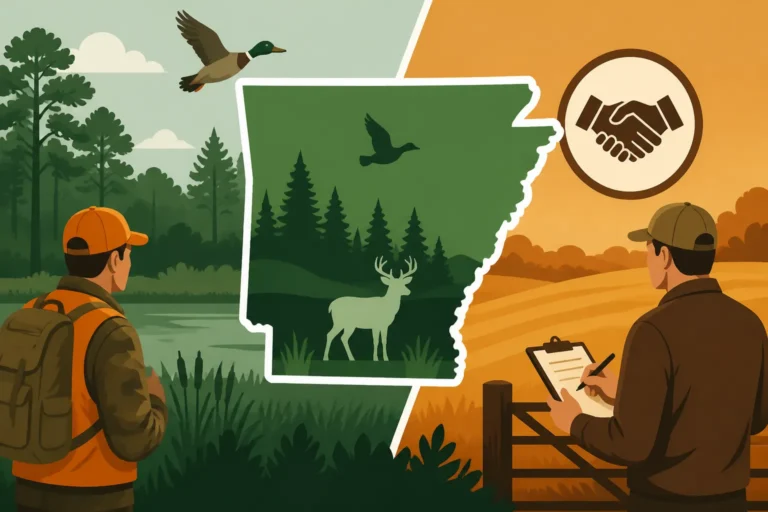
Good communication is paramount when dealing with game retrieval on posted land. Approaching a landowner respectfully and explaining the situation can often make all the difference. Knock on their door, or call them, clearly state who you are, what happened, and why you need to enter their property. Be prepared to show them your hunting license, the location of the animal on a map (your onX Hunt app can be a huge help here), and offer to take them with you. Many landowners, if approached with courtesy and respect, will grant permission, understanding that hunters want to recover their game.
However, be prepared for the possibility of being denied. Landowners have the right to refuse access for any reason. Their property might be actively hunted by others, they might have livestock, or they simply might not want strangers on their land. If denied, it's frustrating, but you must respect their decision. Arguing or trying to pressure them will only create animosity and reflect poorly on all hunters. This is a difficult pill to swallow, but maintaining a positive relationship with landowners is vital for the future of hunting access.
It’s always a good idea to build relationships with landowners in areas you frequently hunt, even if it's just public land nearby. Introduce yourself before the season, offer to help with small tasks, or simply say hello when you see them. A friendly face is much more likely to grant permission in a pinch than a stranger. Think about it: if you ran a deer onto a neighbor’s land, and you’d been friendly with them for years, they’d probably be much more amenable than if you showed up out of the blue. Remember, we as hunters are ambassadors for our sport. Our actions reflect on everyone who carries a license. Building a rapport and being a good neighbor can open doors, both literally and figuratively. You can also explore Getting Private Land Permission in Arkansas for more tips on this.
Landowner Rights and Hunter Responsibilities
The laws around posted land are designed to protect private property rights, a cornerstone of our society. As hunters, we operate within these boundaries, and understanding them isn't just about avoiding trouble, it's about being a responsible, ethical steward of the land and the sport. Respect for private property is fundamental to maintaining a good relationship between hunters and landowners, which ultimately benefits everyone.
Landowner Protections
Landowners in Arkansas have clear rights to control access to their property. This means they can post their land with signs or purple paint, and anyone who enters without permission is trespassing. The law provides remedies for landowners, including fines, and in some cases, even jail time for repeat offenders or those causing damage. It’s also important to remember that a landowner can legally remove or detain someone who is trespassing until law enforcement arrives, though this is rare and usually only happens in extreme circumstances. Their primary goal is to protect their property, their privacy, and their peace of mind.
Furthermore, landowners are often concerned about liability. If a hunter gets injured on their property, even if they were trespassing, there could be legal implications. This is another reason many landowners are hesitant to grant access, or why they might ask you to sign a waiver if they do. They also have concerns about property damage, littering, fire risks, and simply the disruption of their daily lives. Understanding these concerns can help hunters approach landowners with greater empathy and a better chance of securing permission. Showing that you understand and respect their concerns can go a long way.
Finally, some landowners lease their hunting rights to clubs or individuals. If a property is leased, the person you initially contact might not even have the authority to grant you permission. They would have to defer to the leaseholder. This can add another layer of complexity, but again, patience and polite communication are key. Always clarify who has the authority to grant access.
Hunter's Role in Respecting Property
As hunters, our responsibility goes far beyond simply not trespassing. It's about embodying a spirit of respect and stewardship. When you encounter posted land, even if it seems like a prime spot for a stand, that sign or purple stripe is a hard stop. We need to respect those boundaries, even when it means changing our hunting plans or abandoning a trail. Our behavior directly influences how the general public, and especially landowners, perceive hunting. One bad interaction can sour a relationship for years, potentially affecting access for countless other hunters down the line.
Here's a quick checklist for every hunter to ensure they're respecting posted land and private property:
- Always know where you are. Use your mapping apps like onX Hunt, study physical maps, and understand landmarks.
- Look for signs and purple paint. Assume any such markings mean no entry without permission.
- If in doubt, stay out. It’s always better to be safe than sorry.
- Obtain explicit permission. Never assume implied permission. Get it in writing if possible, especially for multi-day hunts or if multiple people are involved.
- Leave no trace. If you are granted access, be meticulous about not leaving trash, damaging fences, or disturbing anything unnecessarily.
- Communicate respectfully. If you need to contact a landowner, be polite, clear, and understanding of their rights and concerns.
- Report violations. If you witness someone else trespassing or poaching, report it to the AGFC. It helps protect the resource and supports ethical hunting. Reporting a Poacher in Arkansas is the right way to handle such situations.
By adhering to these principles, we not only ensure our own legal safety but also help foster a positive image for hunting in Arkansas. This collaborative effort to respect boundaries and cultivate good relationships is what will sustain hunting opportunities for generations to come.
Disclaimer
This article is for general informational purposes only and does not constitute professional advice. Laws, prices and regulations vary by location and change over time. Consult a qualified professional for guidance on your specific situation.