How Timber Calling Differs From Open Water
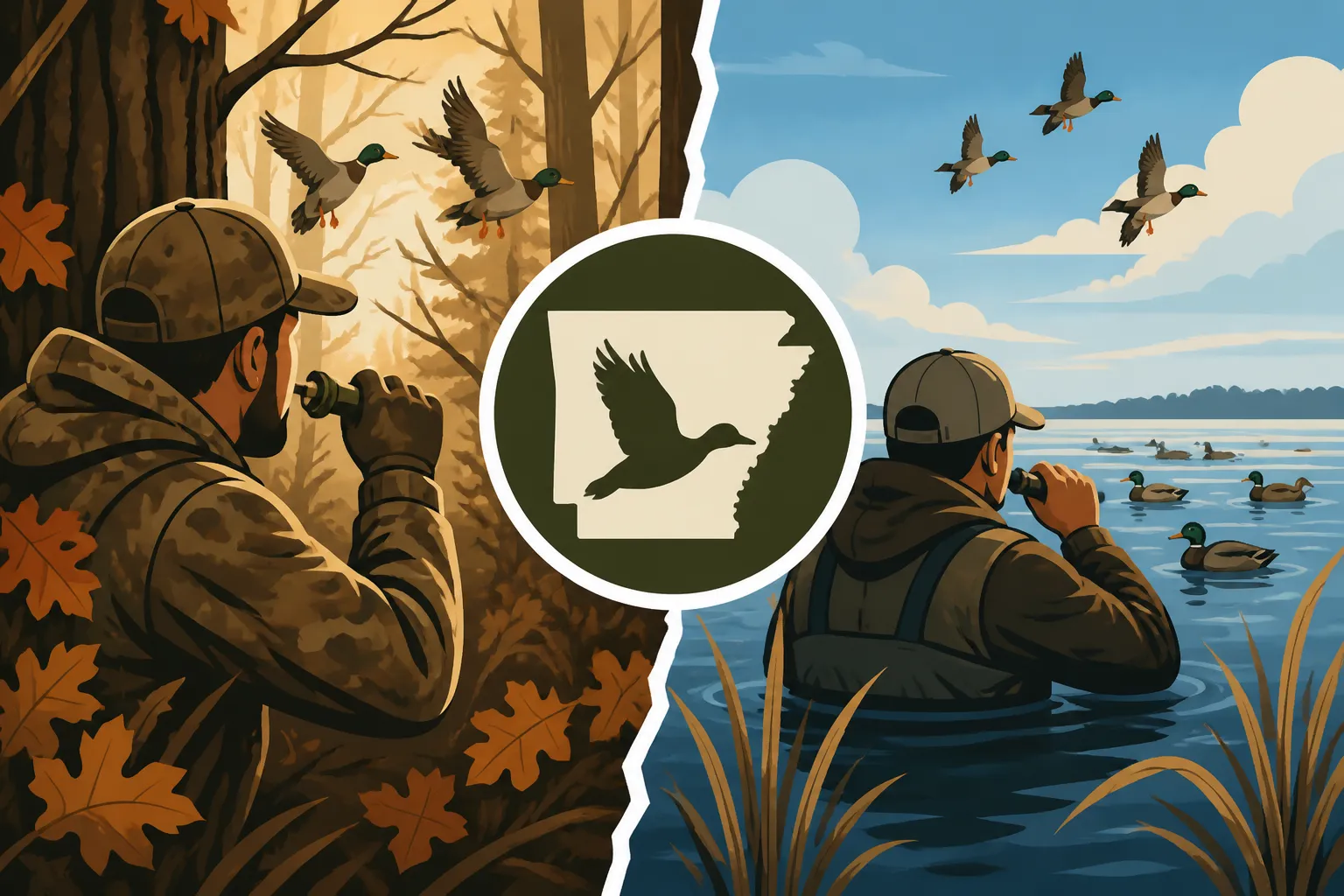
There's nothing quite like the sound of ducks circling overhead, but if you've ever found yourself struggling to get those birds to commit, you know the frustration. Many hunters fall into the trap of using the same calling techniques regardless of whether they're nestled in a flooded timber hole or braving the wide-open expanse of a rice field. The truth is, ducks behave and react entirely differently in these varied environments, and your calling strategy needs to adapt accordingly. This comprehensive guide will dissect the fundamental differences between calling ducks in tight timber and across open water, helping you refine your approach and fill your strap more consistently here in Arkansas.
The Acoustic Labyrinth of Flooded Timber
Hunting flooded timber in Arkansas is an iconic experience, but it comes with its own unique set of challenges, especially when it comes to calling. The dense canopy and maze of trees create an acoustic environment unlike any other, demanding a nuanced and often counter-intuitive approach to your duck calls.
Sound Absorption and Directionality in the Woods
Imagine shouting in an open field versus shouting in a dense forest. The difference is immediate and profound. In flooded timber, every tree trunk, every limb, and every patch of undergrowth acts like a sound sponge, soaking up your calls and preventing them from traveling far. The water itself, while reflecting some sound, also contributes to a more muffled, contained acoustic space. This means that the booming hail calls you might use on a wide lake are essentially wasted effort in the woods; they simply won't carry to distant birds, and if a duck is close, such volume can be jarring and unnatural.
Furthermore, the labyrinthine structure of the timber makes sound direction incredibly difficult for ducks to pinpoint. A call might seem to come from one direction, only to bounce off a tree and appear to originate from another. This can confuse birds, making them hesitant to commit. Instead of trying to project your voice across a quarter-mile, think about drawing ducks in from a much closer range, often within 100-200 yards. Your goal isn't to blast out a message to the world, but to create an inviting, natural conversation that birds can easily locate once they're already within the canopy. Hunters often find themselves working birds that they can barely see through the trees, relying on soft quacks and clucks to guide them into the hole.
Close-Quarters Communication and Soft Tones
Given the sound-absorbing nature of flooded timber, aggressive, loud calling is almost always counterproductive. Ducks that are already working a timber hole are typically quite close, often having committed to the general area. Blasting a loud call at a duck that's 50 yards away is like yelling directly into someone's ear – it's alarming, not inviting. The name of the game in timber is subtlety and realism. You want to emulate the soft, contented chatter of ducks already on the water, feeding and loafing.
This means focusing on soft quacks, contented clucks, and realistic feed calls. The short, sharp "cluck" is incredibly effective, signaling safety and presence. A series of soft "quacks" can sound like a hen reassuring her flock. Learning to produce soft, authentic-sounding "greeting calls" without excessive volume is also crucial. Even comeback calls, used to turn birds that might be drifting away, must be scaled down dramatically in volume and intensity. You're not trying to stop a freight train; you're gently nudging a canoe. Many seasoned timber hunters will tell you the best call in the timber is often no call at all once the birds are locked in and heading your way. For more specific timber tactics, check out our guide on Hunting Arkansas Flooded Green Timber.
The Advantage of Motion and Natural Sounds
Since your calls don't carry far in the timber, visual cues and natural sounds take on an elevated importance. A duck might not hear your soft clucks from 300 yards out, but it might catch a glimpse of a subtle decoy movement or hear the splash of another duck. This is where motion decoys, like jerk strings, truly shine. The slight ripple of water or the bob of a decoy can be just enough to catch a duck's eye through the branches, drawing them closer to investigate the source of that soft chatter. Setting Decoys in Timber Holes correctly can make all the difference.
Beyond artificial motion, incorporating natural sounds into your setup can significantly enhance your timber calling efforts. The subtle rustle of leaves, the splash of your waders as you shift weight, or even gently sloshing water around in the hole can all contribute to a more realistic and inviting scene. These are the ambient noises that ducks expect to hear in their natural habitat. Combined with your soft, contented calls, these natural sounds create an irresistible illusion of a peaceful, occupied feeding ground, encouraging wary birds to drop down through the canopy with confidence. When using a tool like GoHunt to scout public land, pay attention to areas with good canopy cover and natural water features where these subtle cues can be maximized.
The Expansive Stage of Open Water
In stark contrast to the intimate, muffled world of flooded timber, hunting open water like a vast flooded field or a large reservoir presents an entirely different acoustic landscape. Here, your calls need to cut through distance and often battle the elements, demanding a much more assertive and far-reaching approach.
Projecting Sound Across Wide-Open Spaces
Over open water, there are no trees, no dense underbrush, and no immediate obstacles to absorb your calls. This means sound travels much further, and ducks might be spotted hundreds of yards, or even a quarter-mile, away. The biggest challenge then becomes projecting your calls with enough volume and clarity to grab the attention of those distant birds. You can't whisper a greeting across half a mile; you need to shout it with conviction.
Wind is another critical factor on open water. A strong headwind can carry your calls away from approaching birds, rendering them inaudible, while a tailwind can push your calls further than you intended. Learning to gauge wind direction and speed, and adjusting your calling volume and angle accordingly, is paramount. This environment demands calls that can produce significant volume and a sharper tone to cut through the vastness and the elements. Unlike timber, where less is often more, open water frequently requires you to be aggressive and persistent to even get on a duck's radar. Our guide to Field and Flooded Rice Duck Hunting in the Delta offers more insight into these expansive environments.
Aggressive Calling to Grab Attention
When ducks are distant on open water, your primary goal is to get their attention and make them aware of your spread. This is where aggressive calling truly shines. A loud, sharp "hail call" – often a series of pleading, high-pitched quacks – is your initial tool to turn birds that might otherwise fly right by. You're essentially yelling across the stadium to get someone to look your way.
Once you've got their attention and they begin to turn, you'll transition to more basic quacks and perhaps some softer clucks, trying to coax them closer. However, if birds swing wide or start to lose interest, a powerful "comeback call" becomes your best friend. This is an assertive, often louder series of quacks designed to make them think they're leaving behind a prime feeding spot. The key is to be confident and authoritative with your calls. You're not just communicating; you're actively trying to manipulate their flight path across a large area. This contrasts sharply with the subtle, reassuring tones used in close-quarters timber.
Decoy Spreads as a Visual Anchor
While strong, aggressive calling is vital on open water, it works in concert with a large, visible decoy spread. Ducks flying high over vast fields or reservoirs have an unobstructed view for miles. Your spread needs to be big enough and realistic enough to stand out and act as a visual magnet from a distance. Think dozens, if not hundreds, of decoys arranged in patterns that mimic natural duck behavior. Brands like Avian-X and Dakota Decoy are popular among serious open water hunters for their realistic paint schemes and anatomical accuracy. For specific strategies on this, see our article on Hunting Rice Fields and Levees.
Motion decoys, such as spinning wing decoys (spinners) and jerk cords, are even more critical on open water than in timber. The flash and movement of spinners can catch the eye of ducks from miles away, signaling active life on the water. Jerk cords add realistic ripples and bobbing motion, further enhancing the illusion. Ducks might not hear your call perfectly from half a mile out, but they will almost certainly see the flash of a spinner. These visual anchors give your calls something tangible to draw birds towards, making your aggressive calling efforts much more effective in luring birds down from the sky.
Call Selection and Tuning for Different Environments
Just as you wouldn't wear waders to a formal dinner, you shouldn't use a timber call for open water hunting, and vice versa. The physical design and inherent sound characteristics of duck calls are engineered for specific acoustic environments, and understanding these differences is key to effective calling.
Timber Calls: Short Reeds and Mellow Tones
When you're duck hunting in the intimate setting of flooded timber, the calls you choose should reflect that close-quarters environment. Timber calls are typically designed to produce softer, more realistic, and less abrasive sounds. This is often achieved through shorter reeds and barrel designs that restrict airflow, making it harder to produce high volume. Single-reed calls are often favored for timber due to their greater range of finesse and ability to produce subtle clucks and murmurs. However, some double-reed timber calls are also available, specifically tuned for mellower tones.
The key with a timber call is tuning. You want a call that allows you to easily produce soft quacks, contented clucks, and realistic feed chatter without sounding forced or too loud. A call that's too "screechy" or "raspy" will sound incredibly unnatural in the close confines of a cypress brake or an oak flat. The goal is to mimic the natural, soft sounds of ducks casually feeding and communicating just a few yards away. Brands like Echo Calls and RNT Calls often offer models specifically designed and tuned for timber hunting, such as the Echo Timber or the RNT Timber Hawg, which are known for their rich, throaty, and realistic timber sounds. When practicing with these calls, focus on low-volume control and precise air delivery to achieve the nuanced sounds that truly draw ducks in close.
Open Water Calls: Long Reeds and Volume
Conversely, open water hunting demands a call that can produce significant volume and project sound across vast distances. These calls typically feature longer reeds and a more open barrel design, allowing for greater airflow and thus, louder, more piercing sounds. Many open water calls are double or even triple-reed designs, which provide increased volume and a more aggressive tone that can cut through wind and distance effectively. The goal is to be heard from afar, to grab the attention of ducks that are mere specks on the horizon.
Tuning an open water call is all about projection and power. While it still needs to sound like a duck, the emphasis shifts from subtle realism to sheer auditory presence. Hunters often use more air pressure and a different lip-and-tongue technique to maximize the call's volume. A well-tuned open water call will produce clear, sharp hail calls and aggressive comeback sequences that are audible even against a stiff breeze. Popular open water calls include the Zink N-Series or the Foiles Migrator, which are known for their raw power and ability to carry sound across large expanses. If you're struggling to reach distant birds, chances are your call isn't designed or tuned for open water.
Versatile Calls and When to Use Them
Some call manufacturers offer "all-around" or "versatile" calls that claim to perform adequately in both timber and open water. These calls typically strike a balance, aiming for a medium volume and tone that can be adjusted with varying air pressure. While such calls can be a decent starting point for new hunters or those who primarily hunt smaller, mixed habitat areas, they often represent a compromise. A truly exceptional timber call is rarely an exceptional open water call, and vice versa.
For serious hunters who frequent both environments, investing in specialized calls for each scenario is almost always more effective. Having a dedicated timber call allows for the subtlety and realism required in tight quarters, while a dedicated open water call provides the power and projection needed for expansive areas. The key is to practice extensively with each call in conditions that simulate your hunting environment. What sounds incredible in your truck might be too loud in a swamp or too weak on a lake. Understanding the nuances of each call and dedicating time to mastering both will significantly improve your overall success, whether you're hiding deep in the woods or out on a levee while Setting a Spread on a Levee.
Reading Duck Behavior and Adapting Your Approach
Ducks aren't robots; their behavior changes based on their environment, the weather, and the hunting pressure. Recognizing these subtle cues and adapting your calling and hunting style accordingly is a hallmark of an experienced Arkansas duck hunter.
Timber Duck Approach: Decisive and Close
Ducks approaching flooded timber typically do so with a certain level of confidence once they decide to commit to a hole. They often drop altitude quickly, weaving through the tree line, and are ready to pitch in relatively fast. This decisive approach means your calling sequence needs to be concise and confidence-building. The goal is to reassure them that the hole is safe and inviting, not to aggressively work them through multiple long passes.
A common mistake in timber is over-calling, particularly once birds are within easy range. When ducks are circling directly over your hole or cupped up and dropping in, it’s often time to “shut up.” Too many calls can make the birds suspicious, indicating that something isn't quite right. A few soft, contented quacks or clucks, or even just leaving the birds alone to commit, is often the most effective strategy. Think of it as a final, gentle coaxing rather than a loud command. They've made their decision; now just let them finish the job. Remember, when you're Calling Ducks in Tight Arkansas Timber, less is often more.
Open Water Duck Approach: Circling and Scouting
Ducks approaching open water behave very differently. They often circle at higher altitudes, sometimes making several passes over the spread, intently scouting the area for any signs of danger. They have a panoramic view, which makes them warier, and they use this advantage to observe everything. This extended circling behavior gives you more time and opportunity to work them with a variety of calls and sequences.
Your calling sequence on open water will often start with a loud hail call to grab their attention from afar. As they turn and make their first pass, you'll transition to more basic quacks and perhaps some rhythmic feed calls, trying to mimic a happy, active group of ducks. If they swing wide or appear to lose interest, that's when you unleash your aggressive comeback calls to try and pull them back into range. As they get closer and show signs of committing, you'll soften your calls, using landing calls and soft clucks to guide them the final distance. It's a dynamic, multi-stage conversation, constantly adapting to their flight path and reactions. The wind, which can be a significant factor over open water, also influences their approach. Keep an eye on wind direction and how it affects their flight path as you're Scouting Arkansas Public Land Before Season.
Adjusting to Wind and Weather
Wind and weather are undeniable forces that dictate how ducks fly and react, and consequently, how you should call. In timber, strong winds can cause ducks to approach from unexpected directions or to fly lower through the canopy, making them harder to spot. In these conditions, you might be able to get away with slightly louder calls than on a calm day, as the wind helps to dissipate the sound. However, on calm, bright "bluebird" days, extreme subtlety is required, as every sound carries and shadows are stark.
Over open water, wind direction is critical. Ducks almost always land into the wind, so your spread and blind placement must account for this. A strong headwind can make your calls seem weaker, requiring more volume, while a tailwind can push your calls out too far ahead of approaching birds, confusing them. Nasty, cloudy, or rainy days often make ducks more willing to commit to a spread on open water, and you can often call more aggressively. Bright, sunny days, however, require more finesse, as birds are warier. Learning to "read" the weather and its impact on duck behavior is just as important as mastering your call, influencing whether you rely more on volume or subtle sounds. Understanding wind and thermals is key, particularly if you are in the Ouachita Hollows.
Strategic Placement and Calling from the Blind
The physical position of you and your call in relation to the ducks and your decoys also changes dramatically between timber and open water. The blind itself, and how it influences your ability to project sound and observe birds, is a crucial consideration for successful calling.
Timber Blind Considerations and Restricted Views
Hunting in flooded timber often means your "blind" is a lot less formal than what you might find in an open field. It could be as simple as leaning against a large cypress tree, tucked into a natural brush pile, or in a hastily constructed natural blind. The key characteristic of timber blinds is their restricted view. You're typically looking through a narrow lane, often with limited peripheral vision, making it challenging to spot birds until they are relatively close. This means your ears become incredibly important; listening for the whistling of wings or the distant chatter of approaching ducks is paramount.
When calling from these timber blinds, directionality is critical. You want the sound of your calls to appear to originate from within or very close to your decoy spread, not from your hidden position. This might mean subtly turning your head or even adjusting your body to direct the sound away from your hiding spot and towards the decoys. If ducks are working a particular opening in the canopy, you'll want to aim your calls towards that opening. The goal is to draw their attention to the welcoming sight of the decoys, making your calls seem like part of the natural scene, rather than a sound coming from an unseen threat. Always remember, whether you are Hanging a Stand in Bottomland Hardwoods or sitting on a stump, your concealment is key.
Open Water Blind Positioning and Wide Angles
Open water blinds, whether they are permanent pit blinds in a rice field, boat blinds on a reservoir, or portable panel blinds on a levee, are generally designed to offer a wide field of view. This allows hunters to spot distant birds, observe their reactions to calls and decoys, and anticipate their flight path. Positioning your blind is crucial; it's almost always best to be downwind of your decoy spread, as ducks will land into the wind directly in front of you. This setup maximizes your shooting opportunities and allows you to work birds effectively as they approach.
Calling from an open water blind also offers more freedom for aggressive and varied calling. Since birds are often at a greater distance, the initial sounds of your calls aren't as likely to instantly spook them. You can use your full range of calls – loud hail calls, aggressive comeback calls, and then softer landing calls – without the same concern about over-calling as in timber. The wide-open space allows your calls to carry, and the clear sightlines enable you to see precisely how ducks are reacting, letting you adjust your calling in real-time. For a comprehensive list of public hunting areas suitable for both timber and open water hunting, you can use the GoHunt platform to identify prime locations.
Below is a table summarizing the key differences in calling techniques between flooded timber and open water.
| Feature | Flooded Timber Calling | Open Water Calling |
|---|---|---|
| Acoustic Environment | Sound absorption by trees, muffled, contained. | Sound travels far, unobstructed, open. |
| Primary Goal | Reassurance, subtle guidance, close-quarters attraction. | Attention-grabbing, long-distance communication, turning birds. |
| Call Volume | Soft, low-volume, mellow. | Loud, high-volume, sharp. |
| Call Types Used | Soft clucks, contented quacks, subtle feed calls, light whistles. | Hail calls, aggressive comeback calls, long series of quacks. |
| Call Frequency | Less frequent, often "shut up" when birds are close. | More frequent, persistent, especially for distant birds. |
| Decoy Importance | Visual motion (jerk cords) and realistic splash sounds. | Large, visible spreads with spinners and motion. |
| Duck Approach | Decisive, quick commitment, lower flight path through canopy. | Circling, scouting from high altitude, multiple passes. |
| Wind Impact | Affects flight path unpredictably, slightly dissipates sound. | Carries calls, dictates landing direction and decoy movement. |
| Blind Style | Natural, camouflaged, restricted view. | Structured (pit, boat, panel), wide field of view, downwind placement. |
| Common Mistake | Over-calling, too loud. | Not calling loud enough, not enough variety. |
Disclaimer
Hunting is an inherently dangerous activity. Always prioritize safety by following all local, state, and federal hunting regulations. Ensure you have the proper licenses and permits before heading afield. The information provided in this guide is for informational purposes only and does not constitute professional advice. We strongly recommend completing a hunter education course.