Arkansas’s Long Squirrel Season Explained
Ah, the humble squirrel season in Arkansas! For many of us, the end of deer season or a slow duck hunt can feel like the end of our time in the woods, leaving a real hole in our outdoor schedule. But what if I told you that one of the most consistent, lengthy, and enjoyable hunting opportunities often gets overlooked? Navigating all the different season dates and limits can be a headache, but understanding Arkansas's incredibly generous squirrel season opens up months of additional adventure. This guide will take a deep dive into why this season is so long, what you can expect, and how to make the most of every minute in the woods chasing these feisty critters.
The Generous Span of Arkansas's Squirrel Season
It's easy to get caught up in the fervor of deer and duck seasons, with their specific dates, zones, and often short windows. This can lead to a sense of frustration when those seasons close, leaving many hunters feeling like their time afield is over. But here in Arkansas, we're blessed with a truly remarkable opportunity: a squirrel season that stretches for months, providing consistent action from late summer right through the heart of winter. This isn't just a short filler hunt; it's a significant chunk of the calendar offering engaging outdoor activity.
Why the Long Season? Understanding Squirrel Biology and Management
The sheer length of Arkansas's squirrel season often surprises hunters, especially those new to small game or accustomed to the much stricter limits on bigger species. The reality is, squirrel populations, primarily referring to gray and fox squirrels here in Arkansas, are incredibly resilient and prolific. Unlike white-tailed deer or wild turkeys, which have lower reproductive rates and require careful population management to ensure healthy herds, squirrels bounce back quickly. They can have multiple litters of young each year, and their population densities are generally high across much of the state's forested habitat. This biological advantage means that even with a lengthy hunting season and consistent pressure, their overall numbers remain robust.
Furthermore, squirrel hunting is a deeply traditional pursuit in Arkansas, ingrained in the culture of woodland communities. It provides an accessible entry point for new hunters, often serving as a training ground for younger generations learning woodcraft, marksmanship, and ethical hunting practices. The Arkansas Game and Fish Commission (AGFC) manages squirrel populations with these factors in mind, recognizing their abundance and the minimal impact hunting has on the broader ecosystem, allowing for a much more liberal framework. It’s a classic example of sustainable hunting that has been going on for generations.
Key Dates and Season Structure
While it's always critical to double-check the most current AGFC regulations each year, Arkansas's squirrel season is renowned for its consistency and generous length. Typically, the season kicks off in mid-May and runs all the way through the end of February. Think about that for a moment: that's over nine months of hunting opportunity! This incredible span overlaps with a huge portion of other hunting seasons, from the earliest archery deer days to the coldest waterfowl hunts, making it a perfect complement to other outdoor pursuits or a standalone focus.
For instance, the season usually opens in the cooler, leaf-dense days of May, offering a chance to shake off the cabin fever and get back into the woods. It then sails right through the heat of summer, providing unique challenges and opportunities before transitioning into the glorious fall. When November rolls around and most hunters are fixated on deer, the squirrel woods are often at their absolute peak, brimming with activity as nuts rain down. Even in January and February, when many seasons have closed and temperatures plummet, squirrel hunting remains wide open, offering a final chance to fill the freezer and enjoy the quiet winter woods. This consistent, long window is a true gift to Arkansas hunters.
Species Targeted and Their Habitats
When you head into the Arkansas woods for squirrels, you're primarily going to encounter two distinct species: the gray squirrel and the fox squirrel. While they share some similarities and can sometimes be found in the same areas, they each have their own quirks, preferences, and challenges for hunters. Understanding these differences can significantly improve your chances of success and enrich your appreciation for these remarkable animals.
Gray Squirrels: The Nimble Forest Dweller
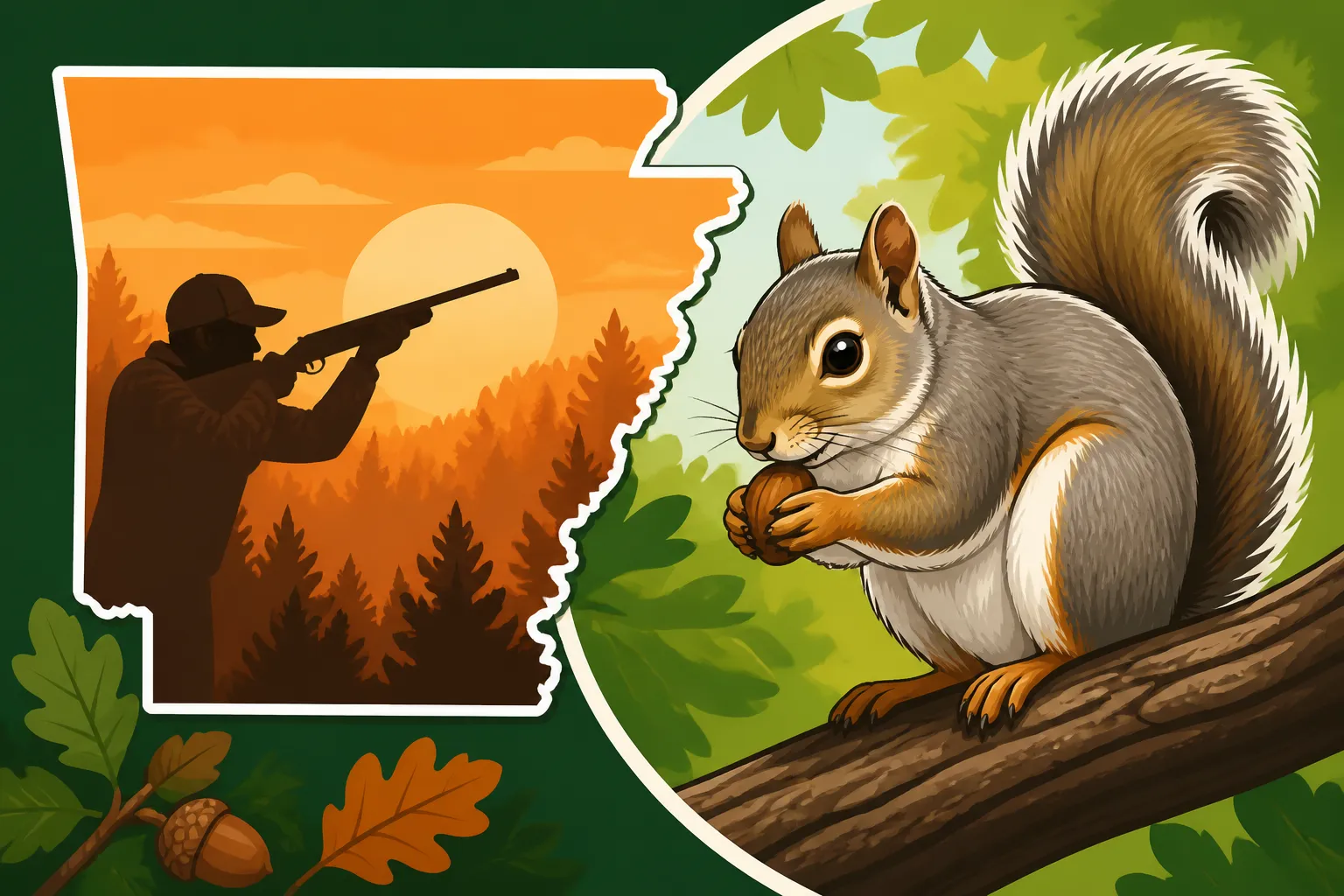
The gray squirrel, often simply called a "cat squirrel" by many old-timers, is perhaps the most iconic and widespread squirrel species in Arkansas. They are known for their sleek, silvery-gray fur, distinct white belly, and that famously bushy tail that seems to have a mind of its own. They are incredibly agile, capable of breathtaking acrobatics as they navigate the canopy, and lightning-fast on the ground. When startled, they can disappear into the densest foliage or scramble up the highest tree in a blink.
Gray squirrels are most at home in dense, mature hardwood forests, particularly those dominated by a good mix of oak and hickory trees. You'll find them thriving in the rich bottomlands along rivers and creeks, as well as the hardwood ridges of the Ozarks and Ouachitas. These environments provide the abundant mast crops—especially acorns and hickory nuts—that form the backbone of their diet. They'll also feast on a variety of other seeds, berries, and even fungi. They are often seen foraging on the forest floor, digging for buried nuts, but they are never far from the safety of a tree, ready to ascend at the slightest perceived threat. If you're hunting in thick timber, these are likely the squirrels you'll encounter most often.
Fox Squirrels: The Larger, More Colorful Cousin
Fox squirrels, on the other hand, are the behemoths of the Arkansas squirrel world. They are noticeably larger and stockier than their gray squirrel cousins, often weighing twice as much. Their coloration is also far more varied and striking, typically featuring a reddish or orange belly, and coats that can range from grizzled gray to rusty brown, with some individuals even sporting black phases, especially in parts of the Delta. Their movements tend to be a bit slower and more deliberate than the frenetic grays, though they are certainly no slouches when they need to be.
Unlike the dense hardwood preference of gray squirrels, fox squirrels often gravitate towards more open woodlands, particularly those with a mix of pine and oak, or along the edges of forests, fields, and even urban parks. You'll find them in smaller woodlots, along fencerows, and in areas where larger, mature trees are more scattered. Their diet includes bigger nuts, corn from agricultural fields, and even pine seeds. They tend to be more solitary than grays, and while they can be found on the ground, they often spend more time up in the trees, basking in the sun or slowly moving along limbs. Hunting them can be a different experience, requiring a bit more patience and keen eyesight to spot their often less frantic movements.
Strategies for a Season-Long Squirrel Harvest
The beauty of Arkansas's extended squirrel season is that it offers diverse hunting experiences as the landscape and squirrel behavior change throughout the year. What works in May won't necessarily be effective in December, and adapting your tactics is part of the fun and challenge. Whether you prefer still-hunting, waiting, or working with a trusty squirrel dog, there's a strategy for every phase of the season.
Early Season Tactics: Beating the Heat and the Leaves
When the squirrel season opens in late spring or early summer, hunters face a unique set of challenges. The Arkansas heat can be relentless, humidity can be suffocating, and the woods are incredibly dense with new growth. Thick foliage makes spotting squirrels a true test of patience and sharp eyes, and the ever-present gnats and mosquitoes can be a real nuisance. It's easy to get frustrated, feeling like you're fighting the elements more than hunting.
However, these early months offer fantastic opportunities if you know where to look. Focus your efforts on the cooler parts of the day, typically early mornings or late evenings, when squirrels are most active. Seek out areas with reliable water sources, as squirrels will need to drink frequently in the heat. Target early-ripening food sources like mulberries, wild cherries, or persimmons, which can attract concentrations of squirrels before the main nut crop drops. Still-hunting slowly through these areas, or finding a comfortable spot to sit and wait near a known food tree, can be highly productive. A good pair of binoculars or a spotting scope can be invaluable for picking out subtle movements in the thick canopy. Remember to dress lightly, stay hydrated, and carry plenty of bug spray!
Mid-Season Strategies: The Fall Feast
As summer transitions into fall, the squirrel woods come alive in a way that's hard to beat. The leaves begin to thin, providing better visibility, and the cooler temperatures make for much more enjoyable hunting. This is the prime time when acorns, hickory nuts, and pecans begin to drop in earnest, turning the forest floor into a smorgasbord for hungry squirrels. This period often coincides with the general small game season and even the opening of deer archery season, so you can often combine trips. You can find more detailed information about this period in our guide to Squirrel Hunting Arkansas Hardwoods.
During this "fall feast," observing "cuttings" on the ground is a key strategy. These are the chewed remnants of nuts that squirrels have recently processed, indicating active feeding areas. Finding a tree with fresh cuttings means squirrels are in the vicinity. Still-hunting becomes incredibly effective now; move slowly, stopping frequently to scan the trees and listen for the telltale sounds of gnawing squirrels or falling nut shells. Many hunters also find that this is the best time to incorporate a good squirrel dog, like a feist or a cur. These dogs excel at locating and treeing squirrels, adding an exciting dimension to the hunt. For an even deeper dive into this technique, check out our guide on Reading Cuttings Under an Oak.
Late Season Opportunities: Cold Weather Challenges
Don't hang up your squirrel rifle just because deer season ends or the cold really sets in. The late season, stretching through January and February, offers some truly unique and rewarding squirrel hunting. While the challenges shift—it's colder, food sources might be scarcer, and squirrels may den up more—the bare trees provide unparalleled visibility. This is where patience and observation really pay off.
During the colder months, squirrels often seek out den trees with cozy cavities for warmth. They'll also sun themselves on exposed limbs on clear, cold days to soak up what little warmth they can find. Focus your efforts around these den trees or on south-facing slopes that receive more sunlight. Reliable, late-dropping mast crops, if any remain, will also be hotspots. Using bark-barking calls can often draw out curious or territorial squirrels from their dens, giving you a shot. The lack of leaves makes spotting a treed squirrel much easier, allowing for more precise shots. This is a fantastic time for a quiet, contemplative hunt, and a chance to truly hone your woodsmanship. Finding unpressured areas, perhaps by utilizing resources like GoHunt to scout remote corners of public land, can make a big difference in late season success.
Regulations, Limits, and Ethical Hunting
Understanding the rules and exercising ethical practices are paramount in any hunting pursuit, and squirrel hunting in Arkansas is no exception. While the seasons are long and generous, adhering to the regulations ensures the continued health of the squirrel population and the positive image of hunters. Checking the latest regulations is always your first step, and knowing your limits is crucial.
Daily Bag and Possession Limits
Arkansas hunters are afforded a very liberal daily bag limit for squirrels, which is a testament to their abundance across the state. Typically, the daily bag limit is 12 squirrels. This means you can harvest up to a dozen squirrels per hunter, per day. The possession limit is usually twice the daily limit, meaning you can have up to 24 squirrels in your possession (e.g., at your home or camp) after multiple days of hunting. It's important to understand the difference: you can only shoot 12 in a single day, but if you hunted for two days and harvested 12 each day, you could possess 24.
These generous limits mean you can put a lot of delicious, wild game meat in your freezer over the course of the long season. However, always remember to verify the exact numbers in the current Arkansas Game and Fish Commission (AGFC) hunting guide before you head afield, as regulations can occasionally be adjusted. Tools like GoHunt can be excellent for quickly looking up the most current regulations and understanding any regional specifics, ensuring you're always on the right side of the rules. Keeping track of your harvest is also a good practice for personal accountability.
Equipment and Methods
The beauty of squirrel hunting is its accessibility; you don't need a ton of specialized gear to get started. The most popular firearms are the venerable .22 LR rifle, beloved for its accuracy, low recoil, and quiet report, making it ideal for headshots that preserve meat. Many hunters also opt for small-gauge shotguns, such as a .410 or 20-gauge, particularly in dense cover where a quick, scattering shot might be necessary. Air rifles, with their increasing power and precision, have also become a popular and quiet alternative, especially on public lands where noise might be a concern.
Regardless of your chosen firearm, the principles of ethical hunting remain the same: quiet movement, good camouflage to break up your outline, and making clean, humane shots. A good pair of boots, comfortable clothing, and a small backpack with water and snacks are really all you need. For those exploring new areas, especially public lands like the Ozark National Forest Hunting or Ouachita National Forest Hunting, a reliable mapping app or GPS can be invaluable. This not only helps you navigate but also allows you to identify potential squirrel hotspots, food sources, and even find new, unpressured areas. Remember, scouting before the season, as highlighted in our guide to Scouting Arkansas Public Land Before Season, will always boost your success.
Squirrel Hunting: A Year-Round Opportunity Table
| Aspect | Gray Squirrel Hunting | Fox Squirrel Hunting | Early Season (May-Aug) | Mid-Season (Sept-Nov) | Late Season (Dec-Feb) |
|---|---|---|---|---|---|
| Habitat | Dense hardwoods, bottomlands | Open woods, pine-oak, field edges | Near water, early fruit trees | Mast-heavy hardwoods (oak, hickory) | Den trees, sunny slopes, persistent food |
| Visibility | Challenging (dense foliage) | Moderate (more open woods) | Very low (thick leaves) | Improving (falling leaves) | Excellent (bare trees) |
| Tactics | Still-hunting, quiet stalking | Patience, focused observation | Sit-and-wait, slow still-hunting | Still-hunting, dog hunting, cuttings | Locate dens, bark calls, sunning spots |
| Best Ammo | .22 LR for precision, small shotgun for quick shots | .22 LR for precision, small shotgun for quick shots | .22 LR for quiet, precise shots | .22 LR or shotgun with dog hunting | .22 LR for long, precise shots |
| Challenges | Speed, camouflage, agility | Size, solitary nature | Heat, bugs, thick cover | Other hunters, finding prime mast | Cold, less activity, deeper woods |
Making the Most of Arkansas's Squirrel Season
Arkansas's exceptionally long squirrel season is a real treasure, offering continuous opportunities for outdoor enjoyment, skill development, and filling your freezer with delicious wild game. Don't let the focus on bigger game overshadow the consistent action and quiet satisfaction that squirrel hunting provides. From the humid early season to the crisp, bare woods of winter, each period presents its own unique charm and challenge. Whether you're a seasoned hunter looking for extra time afield or a beginner seeking an accessible entry point, the squirrels of Arkansas are waiting. Just grab your rifle, check the regulations for Small Game Seasons and Limits, and enjoy the woods! You can learn more about general small game hunting in our comprehensive guide to Small Game and Squirrel Hunting in Arkansas.
Disclaimer
Please remember that hunting regulations, season dates, and limits can change. Always consult the official Arkansas Game and Fish Commission (AGFC) regulations guide for the most current and accurate information before planning any hunt. This article is intended for informational purposes only and does not supersede official AGFC regulations.