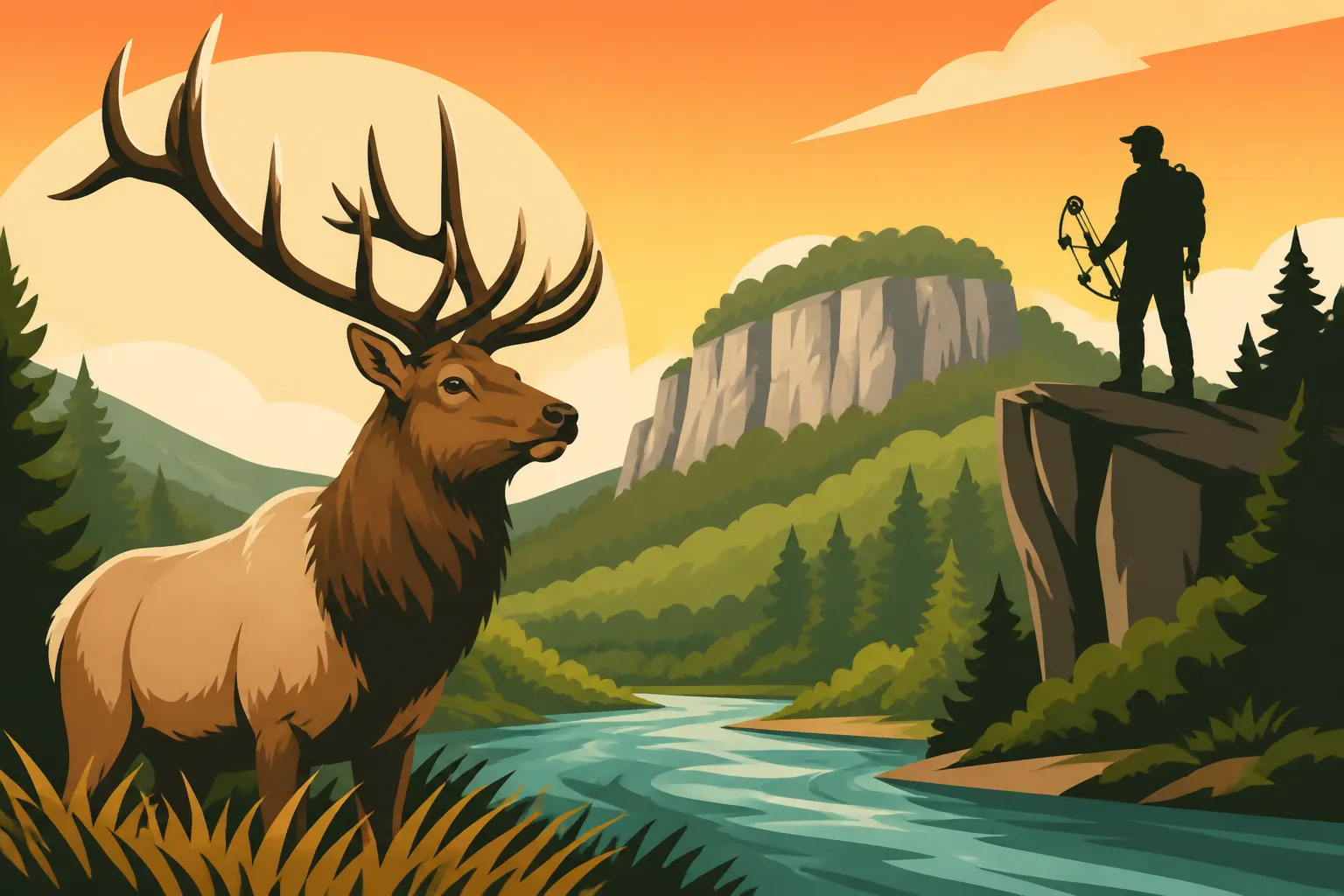
Elk Along the Arkansas Buffalo River
Many hunters across the country dream of chasing elk, but for those in or visiting Arkansas, the thought of actually hunting these majestic creatures in the Natural State can feel less like a dream and more like a far-fetched fantasy. The truth is, while it's a specialized pursuit, Arkansas is indeed home to a unique and thriving elk population, primarily concentrated in the breathtakingly rugged terrain surrounding the Buffalo National River. This guide is here to unravel the mystery, offering a deep dive into how these magnificent animals came to roam our Ozark hills, how the highly competitive permit draw system actually works, and what it takes to give yourself the best possible shot at experiencing an Arkansas elk hunt.
The Return of the Monarch: Arkansas Elk Reintroduction History
The story of elk in Arkansas is one of both loss and incredible triumph. For generations, these magnificent animals were a vital part of the state's wildlife heritage, but like many large game species, they faced significant challenges. Understanding their journey back to the Ozarks helps us appreciate the unique hunting opportunity we have today.
From Extinction to Restoration
It's hard to imagine now, but North America, including much of Arkansas, was once home to massive herds of elk. Historical accounts and archaeological findings confirm their widespread presence across the region. These were likely eastern elk, a subspecies that roamed vast swaths of the continent. However, as European settlers moved westward, unchecked market hunting, coupled with widespread habitat destruction through logging and agricultural expansion, took a devastating toll. By the late 19th and early 20th centuries, the eastern elk was declared extinct, and Arkansas's wild elk population vanished entirely. The forests grew silent where their bugles once echoed.
There were attempts to bring elk back to Arkansas in the early 1900s, with some unsuccessful releases in various parts of the state. These efforts, while well-intentioned, often failed due to insufficient habitat, a lack of understanding of elk ecology, and possibly poor genetics of the introduced animals. It became clear that simply dropping elk into the woods wasn't enough; a comprehensive, scientifically-backed approach was needed to ensure their long-term survival. This long period of absence was a stark reminder of humanity's impact on wildlife and a powerful motivator for future conservationists.
The pivotal moment for Arkansas elk came in the 1980s. Recognizing the unique ecological niche elk could fill and the potential for a new big game opportunity, the Arkansas Game and Fish Commission (AGFC), in partnership with organizations like the Rocky Mountain Elk Foundation, embarked on a meticulous reintroduction program. Between 1981 and 1984, 112 elk were transplanted from Colorado and Nebraska to a designated release area near the Buffalo National River. These were Rocky Mountain elk, a robust subspecies known for their adaptability. The initial years were crucial, with biologists closely monitoring the transplanted animals, tracking their movements, and assessing their health. This careful, measured approach laid the groundwork for the thriving herd we see today. You can learn more about the specifics of this journey in our dedicated piece on Arkansas Elk Reintroduction History.
Establishing the Buffalo River Herd
The decision to focus the reintroduction efforts around the Buffalo National River was a stroke of genius. This region offered a mosaic of open pasturelands (often private farms), dense hardwood forests, and cedar glades, providing excellent food sources, bedding cover, and water. The rugged, broken terrain of the Ozarks also offered natural protection and privacy for the establishing herd. The AGFC worked tirelessly with local landowners, who were integral to the success of the project. Many farmers allowed elk to graze on their pastures, understanding the long-term benefit of having these animals back on the landscape. This collaboration fostered a sense of community ownership and pride in the returning elk.
Initial challenges were inevitable, including adapting to the new environment, some mortality, and managing human-wildlife conflicts, particularly related to agricultural damage. However, the dedicated efforts of biologists and the tolerance of local communities allowed the herd to gain a foothold. The elk gradually expanded their range within the primary management zones, establishing distinct breeding and calving areas. Their numbers began to climb steadily, slowly but surely transforming the landscape. The iconic bugle, once lost to these hills, started to echo again through the autumn air, signaling a true success story in wildlife conservation.
As the herd grew, the AGFC continued to refine its management strategies, focusing on habitat improvements, population monitoring, and public education. The Buffalo River area, specifically parts of Newton, Boone, and Carroll counties, became the undeniable heartland of Arkansas elk country. The rugged beauty of the region, combined with the presence of these magnificent animals, quickly made it a unique destination, not just for hunters but for wildlife enthusiasts and tourists alike. The story of The Buffalo River Elk Herd is a testament to what dedicated conservation efforts can achieve.
Understanding the Arkansas Elk Population and Range
Knowing where the elk are, how many there are, and what makes them tick is paramount, whether you're dreaming of drawing a tag or simply hoping to catch a glimpse of them in their natural habitat. The Arkansas elk population is a managed one, and its characteristics are closely tied to the unique Ozark landscape.
Current Herd Size and Distribution
The Arkansas Game and Fish Commission meticulously monitors the elk population, conducting aerial surveys and ground observations to estimate herd size and distribution. While exact figures fluctuate year to year due to various factors, the population has generally stabilized at a healthy level since its reintroduction. As of recent estimates, the Arkansas elk herd typically hovers around 450-500 animals. This isn't a massive herd compared to Western states, but it's a significant and robust population for a state like Arkansas.
The primary range of these elk is undeniably centered within the incredibly scenic Buffalo National River corridor. You'll find the highest concentrations in specific areas of Newton, Boone, Carroll, and Madison counties. Hotspots like Boxley Valley, Pruitt, and Ponca are legendary among locals and visitors for their consistent elk sightings. These areas offer a perfect blend of habitat, making them magnets for elk. While the core herd remains concentrated, smaller satellite groups sometimes venture beyond these primary zones, exploring new areas and occasionally providing surprises for landowners and even deer hunters in adjacent counties. It's a testament to their adaptability and the success of the reintroduction that they've expanded naturally over time.
For anyone serious about understanding current distribution for hunting or viewing, resources like the AGFC's map tools are invaluable. Services such as GoHunt also offer detailed mapping layers that can help you identify public land access, private land boundaries, and potential habitat features within the elk zones, giving you an edge in pre-season scouting. While the numbers aren't as vast as those out west, the quality of the animals and the unique Ozark setting make every encounter special.
Habitat and Food Sources
The habitat that supports Arkansas's elk herd is a diverse tapestry, quite different from the sprawling high-country meadows of the Rockies. Here in the Ozarks, elk thrive in a mosaic environment where open, pastoral lands owned by private citizens meet dense, mature hardwood forests and interspersed cedar glades. This blend is crucial. The fertile, often manicured, pastures provide excellent grazing opportunities, particularly for lush grasses and nutritious legumes. This abundant forage on private lands is a primary reason why the elk choose to stay in these areas, despite the hunting pressure.
The presence of elk on private lands, while beneficial for their diet, can also lead to significant crop damage, especially to hayfields and newly planted forage. This is a recurring challenge that the AGFC works to mitigate through various programs, balancing the desires of landowners with the health of the elk herd. It’s a delicate dance, but one that is essential for the long-term viability of elk in the state. Beyond the open fields, the hardwood forests provide crucial browse, acorns, and bedding cover. During fall, when acorns drop from species like red oaks and white oaks, they become a highly sought-after food source, providing critical calories for elk preparing for the winter and the rut.
Water sources are also abundant and widely distributed throughout their range. The Buffalo River itself, along with its numerous tributaries, creeks, and springs, ensures that elk have constant access to hydration. This constant supply is particularly important during the warmer months and throughout the strenuous rut. Understanding this unique blend of habitat types—the interplay between private land agriculture and public forest—is key to predicting elk movement and behavior.
Factors Influencing Elk Health and Growth
The Arkansas elk herd, while robust, faces its own set of ecological factors that influence its health and overall growth. Unlike their western counterparts, which contend with a full spectrum of large predators like wolves and grizzlies, adult elk in Arkansas have relatively few natural predators. Black bears and coyotes might opportunistically prey on calves, but mature elk are largely unthreatened, which contributes to higher survival rates for adult animals. This low predation pressure helps maintain a stable to growing population.
However, a significant concern that looms over all cervid populations in Arkansas, including elk, is Chronic Wasting Disease (CWD). This neurological disease is invariably fatal and has been detected in wild deer and elk populations in several counties, including some within the traditional elk range. The AGFC takes CWD very seriously, implementing strict monitoring, testing, and management protocols. Hunters are often required to have their harvested animals tested in certain zones, and carcass transport regulations are in place to prevent the spread. Keeping an eye on CWD in the Arkansas Elk Herd is vital for any hunter or conservationist. The presence of CWD introduces a level of uncertainty and complexity into future management plans.
Beyond CWD, other factors like habitat quality, annual weather patterns impacting forage production, and even human disturbance can influence elk health. Management strategies continually adapt to these challenges. This includes managing harvest rates through the permit draw to keep the population in balance with available habitat, as well as educational initiatives to inform the public about responsible interaction with elk. The goal is always to ensure a healthy, sustainable herd for future generations to appreciate.
Navigating the Arkansas Elk Permit Draw System
For most hunters, the dream of an Arkansas elk hunt hinges entirely on successfully navigating the permit draw system. It's a highly competitive process, and understanding its intricacies is the first, most crucial step towards putting yourself in a position to pursue one of these magnificent animals.
The Application Process: Dates and Requirements
The Arkansas elk permit draw is an annual event, and the application window is typically quite specific, usually opening in May and closing in June. Missing this window means missing your chance for the entire year, so staying informed about the exact dates released by the AGFC is absolutely critical. You'll need to have a valid Arkansas hunting license, typically a Sportsman's License or a similar comprehensive package, to even be eligible to apply. This ensures that only those who contribute to the state's conservation efforts through license fees are in the running. Non-residents are eligible to apply, but their odds are even slimmer, and they face higher license costs.
The application itself is usually submitted online through the AGFC website. It's a straightforward process, but you'll need to be accurate with your personal information and aware of the specific zones you wish to apply for. There are different permit types available: either-sex permits (allowing you to harvest a bull or a cow) and antlerless-only permits. The number of each available varies by year and zone. It's a game of patience and a bit of luck, and many seasoned hunters apply for years before finally drawing a tag. Resources like GoHunt can be incredibly helpful during this stage, offering tools to track application deadlines, research past draw odds, and even provide detailed maps for potential hunting zones. Staying informed about Arkansas Elk Permit Application Dates is the golden rule for anyone hoping to draw.
Understanding Draw Odds and Permit Allocation
Let's be real: drawing an Arkansas elk permit is like winning the lottery for hunters. The draw is incredibly competitive because the AGFC aims to keep the elk population at a manageable level while providing a quality hunting experience. Each year, only a very limited number of permits are issued, typically ranging from 30 to 50 total permits for the entire state, often split between either-sex and antlerless options. This scarcity is what makes the opportunity so special and the draw odds so low. Your chances are further influenced by whether you're a resident or non-resident, with residents having significantly better odds due to a proportional allocation system.
The AGFC also holds a unique tradition: the "on-site" permits awarded at the annual Buffalo River Elk Festival. This event, usually held in June, is a fantastic celebration of elk and conservation. A small number of coveted permits are drawn live at the festival, offering another, albeit still highly competitive, pathway to securing a tag. This adds an exciting community element to the draw process, giving attendees a direct, personal stake in the outcome. It's truly a special atmosphere for those who gather, even if the odds are long. Knowing How Many Arkansas Elk Permits Are Issued helps set realistic expectations for anyone hoping to experience this hunt.
To put the odds into perspective, consider the hundreds, if not thousands, of applications received each year for those few dozen tags. It's not uncommon for hunters to apply for 10, 15, or even 20 years before their number finally comes up. This reality often leads hunters to apply annually without fail, viewing each application as another lottery ticket, hoping that someday, their turn will come.
| Permit Type | Total Permits (Example) | Resident Applications (Example) | Non-Resident Applications (Example) | Resident Odds (Approx.) | Non-Resident Odds (Approx.) |
|---|---|---|---|---|---|
| Either-Sex (Zone 1) | 10 | 1,500 | 300 | 1 in 150 | 1 in 300 |
| Either-Sex (Zone 2) | 8 | 1,200 | 250 | 1 in 150 | 1 in 313 |
| Antlerless (Zone 3) | 12 | 1,800 | 350 | 1 in 150 | 1 in 292 |
| Festival Draw | 2-5 | ~2,000 in person | Not Applicable | ~1 in 400 – 1000 | N/A |
Note: These numbers are illustrative examples based on typical ranges and should not be taken as exact current statistics. Actual odds vary annually.
The Various Elk Hunt Zones
Arkansas's elk range is divided into specific Elk Hunt Zones, each with its own characteristics and potential advantages or disadvantages. While the names and boundaries can shift slightly over time, the general structure remains consistent. These zones typically align with concentrations of elk and often reflect the mix of public and private land within them. For example, some zones might have a higher proportion of private land, meaning successful hunters will need to secure landowner permission before heading afield, even with a tag. Other zones might offer more public hunting opportunities within the Ozark National Forest or specific Wildlife Management Areas (WMAs).
Understanding these zones is crucial when you apply, as your choice can significantly impact your hunting strategy and even your chances of success if you do draw a tag. Some zones might be known for larger bull potential but tougher access, while others might offer more consistent cow sightings but in areas with more human presence. The AGFC provides detailed maps and descriptions of each Arkansas Elk Hunt Zones on their website, which are essential resources for researching your options. It's not just about drawing a tag, it's about drawing a tag for a zone where you feel you can be successful given your preferred hunting style and access strategy.
The terrain within these zones is consistently rugged. Expect steep inclines, deep hollows, and dense forest, regardless of your chosen area. The Buffalo River itself often forms a natural boundary or central feature within these zones, influencing elk movement patterns. Researching the specific characteristics of each zone, including land ownership, topography, and known elk behavior within them, is a critical component of pre-draw planning.
Scouting and Planning Your Arkansas Elk Hunt
Drawing an Arkansas elk tag is an achievement in itself, but the real work begins long before opening day. Unlike deer, elk are often in specific, localized areas, and knowing where to focus your efforts in the vast Ozark landscape can make all the difference. Meticulous scouting and planning are non-negotiable for success.
Pre-Season Preparation and E-Scouting
Once that coveted email or postcard arrives confirming your tag, the clock starts ticking. The first step for many is immersing themselves in "e-scouting." This involves spending hours poring over maps, satellite imagery, and topographical data from the comfort of your home. The AGFC's interactive map tool is an invaluable resource, allowing you to view public land boundaries, WMA perimeters, and even habitat types. Utilizing advanced mapping apps like GoHunt is also highly recommended. These platforms often provide detailed public and private land ownership layers, crucial for identifying huntable ground and understanding access points.
During this virtual reconnaissance, your goal is to identify potential elk habitat based on terrain features. Look for areas with a mix of dense bedding cover (thick timber, cedar thickets), open feeding areas (clear cuts, old fields, private pastures), and reliable water sources. Ridgelines and saddles can serve as natural travel corridors, while steep, north-facing slopes often hold bedding elk during warmer weather. Mark potential stand sites, glassing نقاط, and possible ambush points. Pay close attention to any designated wilderness areas or non-hunting zones, ensuring you don't inadvertently plan a hunt where it's not allowed. This detailed digital groundwork saves countless hours of physical boot leather later on and allows you to prioritize areas for on-the-ground investigation.
This stage is also about understanding the historical context of elk movement in your chosen zone. While precise locations change, elk generally follow consistent patterns related to food, water, and cover. Cross-referencing your map findings with any available harvest reports or anecdotal information can provide valuable insights. The more data you can gather virtually, the more efficient your physical scouting will be.
On-the-Ground Reconnaissance
E-scouting is a fantastic starting point, but there's simply no substitute for putting boots on the ground. Once you've narrowed down potential areas, it's time to hit the woods. This is where you verify your e-scouting findings and look for fresh sign. Search for elk tracks (much larger than deer tracks), fresh droppings, and rubbed trees. Bulls will often rub velvet and later polish their antlers on saplings and small trees, leaving distinct marks. Wallows, muddy depressions where elk roll to cool off and deter insects, are another key indicator of presence, especially during the rut.
The Ozark terrain is famously rugged and unforgiving. Expect steep climbs, rocky outcrops, and dense undergrowth. Physical scouting not only helps you find elk sign but also familiarizes you with the challenges of navigating the area, estimating travel times, and identifying potential extraction routes for a harvested animal. Don't underestimate the physical demands; scouting trips should double as conditioning hikes. When you're in the Ouachitas or Ozarks, understanding Wind and Thermals in Ouachita Hollows becomes critical, as these factors dictate how sound and scent will carry, affecting both scouting and hunting.
Part of on-the-ground reconnaissance, especially if your hunt involves private land access (which many Arkansas elk hunts do), is respectfully engaging with locals and landowners. Introduce yourself, explain you have an elk tag, and inquire about elk activity on or near their property. Many local residents are proud of the elk and may be willing to share valuable information or even grant permission if approached correctly and respectfully. Building these relationships can be invaluable. Remember, a polite inquiry can open doors, while trespassing can shut them permanently.
Essential Gear for Elk Hunting in Arkansas
Elk hunting in Arkansas, despite being in the relatively temperate South, requires a comprehensive gear list tailored to the rugged Ozark environment and the demanding nature of elk pursuit. Your optics are paramount. High-quality binoculars (10×42 or 12×50) are essential for glassing open areas, clear cuts, and distant ridges. A spotting scope (20-60x or higher) can be a game-changer for identifying elk at extreme distances and determining antler points, especially if you're hunting a bull-restricted zone. Don't skimp on these; they are your most important scouting tools.
Comfortable, durable, and waterproof boots are non-negotiable. You'll be covering miles over uneven, rocky, and potentially wet terrain. Invest in good quality, broken-in boots that offer excellent ankle support. Layered clothing is key, as Ozark weather can be notoriously unpredictable, swinging from crisp mornings to warm afternoons, with sudden rain showers. Good quality rain gear is a must. Hydration is also critical; carry a reliable water bladder or bottles, especially during early season hunts when temperatures can still be warm.
For hunting, calling equipment is fundamental. A good quality bugle tube and a variety of cow calls (mouth reeds, diaphragms, or external calls) are essential for communicating with elk during the rut. A rangefinder is highly useful for accurate shot placement in varying terrain. Finally, consider game retrieval. Elk are large animals, and packing one out of a steep Ozark hollow is a monumental task. A sturdy game cart, a robust pack frame, and strong knives for quartering are vital, as you might be miles from the nearest road. Remember, scouting the area will also help you identify potential game retrieval routes, making the difficult task of extracting your elk a bit more manageable.
Effective Hunting Tactics for Arkansas Elk
Elk hunting in the Ozarks is a beast of its own. It's not the high-country open expanse of the West, nor is it strictly dense forest hunting. It's a unique blend, demanding a versatile approach that combines calling, patient stalking, and strategic ambushing. Success hinges on adapting to the specific behavior of Arkansas elk in their challenging habitat.
Calling Strategies in the Ozarks
Calling is arguably one of the most exciting and effective tactics for hunting elk, especially during the peak of the rut, which typically occurs in late September and early October. The key in the Ozarks is knowing when and how to call. Bulls can be very responsive to bugles and cow calls, particularly if they are alone or have a small herd. Aggressive bugling can challenge a dominant bull, drawing him in to confront a perceived rival. However, too much aggressive calling, or calling at the wrong time, can also make elk shy, especially older, wary bulls who have heard it all before.
Soft cow calls and mews are often more effective, especially in dense cover or when trying to locate elk without alarming them. These calls mimic the natural sounds of the herd and can sometimes draw in a curious bull or even an entire group. The trick is to read the elk's response. A bull that answers your bugle with an immediate, angry retort is likely close and may be coming in. A distant, half-hearted reply might indicate a bull that's moving away or less interested. Adjust your calling volume and intensity based on the terrain and the elk's reactions. In the thick timber of Arkansas, it's often best to set up so the bull has to come looking for you, presenting a shot opportunity as he searches. Remember to keep silent approaches and good wind discipline paramount, as elk have incredible senses.
Spot and Stalk in Challenging Terrain
The Ozarks offer some excellent opportunities for spot and stalk hunting, particularly in areas with a mix of open fields, clearcuts, and broken timber. This tactic relies heavily on keen observation and patient, stealthy movement. Find a high vantage point overlooking potential feeding or bedding areas – an open ridge top, a steep bluff, or a clearcut edge. Use your high-quality optics to methodically scan every nook and cranny, looking for the tell-tale shape of an elk, a flick of an ear, or even just a patch of brown or tan that seems out of place. This is where your GoHunt map layers come in handy, allowing you to quickly identify clearings and open canopy areas from a distance.
Once an elk is spotted, the real challenge begins. The Ozark terrain, with its steep hollows, rocky drainages, and dense undergrowth, makes a direct approach difficult. You'll need to carefully plan your stalk, using terrain features, available cover, and especially the wind to your advantage. Elk have an exceptional sense of smell, and a swirling wind can quickly give you away. Move slowly, deliberately, and quietly. Every step needs to be calculated to avoid breaking sticks or dislodging rocks. It's often a game of inches, where patience is rewarded. Navigating steep slopes and thickets silently requires immense concentration and physical endurance.
Safety is also a major consideration. When stalking, be acutely aware of your surroundings, including other hunters who might be in the area. Always identify your target positively and ensure you have a safe backdrop before taking a shot. In the dense timber, shooting lanes can be extremely limited, so positioning yourself for a clear shot is paramount.
Utilizing Ambush and Still-Hunting Methods
When calling isn't effective or the terrain is too thick for spotting and stalking, ambush hunting and still-hunting become viable strategies. Ambush hunting involves setting up near a known elk travel route, a favored feeding area, or a natural pinch point. This might be a saddle between two ridges, a crossing point on a creek, or the edge of a private field where elk regularly feed at dawn or dusk. Consider using a ground blind or even a carefully chosen tree stand (if allowed and practical) to break up your silhouette and conceal your movement.
Still-hunting is a slow, deliberate process of moving through the woods, taking a few steps, then pausing for several minutes to glass and listen. The goal is to move so quietly and slowly that you blend into the environment, potentially catching an elk off guard. This is especially effective in dense hardwood forests or cedar thickets where visibility is limited, and elk might be bedded or slowly browsing. Pay attention to every sound and movement, and always be ready for a quick shot. Still-hunting requires immense patience and discipline, as the temptation to move quickly to cover more ground can be strong.
During dry periods, hunting near water sources can be an excellent ambush tactic. Elk need to drink daily, and a secluded spring or a quiet bend in the Buffalo River can act as a natural funnel. Similarly, understanding how elk utilize specific food sources, such as acorn flats, can lead to successful ambush points when those food sources are abundant. Regardless of the method, remember that elk in Arkansas can be pressured, so finding ground others walk past, or getting into areas that are difficult to access, can increase your odds. Consider also that Hunting Ozark Ridges and Hollows for Deer tactics are often quite transferable to elk, given the similar terrain challenges and habitat types.
After the Shot: Processing and Regulations
Successfully harvesting an elk in Arkansas is an incredible accomplishment, but the hard work isn't over when the animal hits the ground. Proper field dressing, adherence to regulations, and careful meat handling are crucial to honoring your harvest and ensuring a high-quality food source.
Field Dressing and Meat Care in Remote Areas
An Arkansas elk is a large animal, often weighing several hundred pounds, and getting it out of the rugged Ozark terrain can be the toughest part of the hunt. Immediate field dressing is paramount to begin cooling the meat, especially during the earlier seasons when temperatures can still be quite warm. If you’re hunting in September or early October, you’ll be familiar with Field Dressing in Arkansas Heat from deer season, but an elk demands even more rapid and thorough cooling. Gutting the animal quickly helps dissipate body heat and prevents spoilage.
Because of the steep slopes and dense cover, dragging a whole elk out is often impossible. Be prepared to quarter the animal in the field. This involves skinning the elk and breaking it down into manageable sections (four quarters, backstraps, tenderloins, neck meat, etc.). A good quality, sharp knife (and a spare!) is essential, along with game bags to protect the meat from dirt and insects. Each quarter can weigh 70-100 pounds or more, necessitating a sturdy pack frame and multiple trips, often with a hunting partner. This is where pre-scouting for extraction routes becomes vital; identifying the path of least resistance will save you immense effort.
Once the meat is out of the woods, it needs to be cooled as quickly as possible. This might involve placing it in coolers packed with ice. Ensure the meat doesn't sit directly in melted water; drain coolers regularly or use block ice that lasts longer and creates less water. Getting the meat to a professional processor or your own cold storage within a reasonable timeframe is key to preserving its quality and ensuring it's safe for consumption.
Checking and Transporting Your Harvest
Just like deer and other big game, harvested elk in Arkansas must be checked in with the AGFC. This is a mandatory step that helps the commission manage the herd, collect vital biological data, and ensure legal compliance. Typically, this can be done online through the AGFC website or via their mobile app, or by calling a toll-free number. You'll need to provide details such as the date and time of harvest, the county and zone, and the sex of the animal. Make sure you complete this process within the required timeframe, usually before moving the animal from the kill site or within a certain number of hours.
Due to the presence of CWD in Arkansas, there are specific CWD testing requirements for harvested elk in certain zones. If you harvest an elk in a CWD management zone, you may be required to submit a tissue sample for testing. Be prepared to follow these instructions precisely, as they are critical for monitoring and controlling the spread of the disease. Additionally, there are strict transport regulations regarding carcass parts. For instance, in CWD zones, certain parts like the head (with antlers attached) or spinal column may only be transported out of the zone if they are being taken directly to a taxidermist or processor. Understand these rules fully before your hunt to avoid any legal issues during transport.
The AGFC website is the definitive source for the most up-to-date checking and transport regulations. Failing to comply can result in fines or other penalties, so ensure you have a clear understanding of all rules specific to elk harvest.
Managing Expectations and Enjoying the Experience
Let's be realistic: drawing an Arkansas elk tag and successfully harvesting an animal is an incredibly difficult feat. The draw odds are extremely low, and the hunt itself is physically demanding and often challenging. It's easy to get caught up in the desire for success, but it's important to manage your expectations. Many hunters who draw a tag don't actually harvest an elk. The public land opportunities, while present, are limited and often require significant effort to access.
However, a successful hunt isn't solely defined by punching a tag. The opportunity to simply hunt elk in the Ozarks is a rare and profound experience. It's about spending time in truly wild and beautiful country, listening for bugles at dawn, testing your skills against a formidable animal, and being immersed in nature. The anticipation of the draw, the painstaking scouting, the physical exertion of the hunt—all these elements contribute to an unforgettable adventure, regardless of the outcome. Focus on the unique opportunity you've been granted, appreciate the stunning scenery of the Buffalo River region, and savor every moment. The memories made, the lessons learned, and the stories shared will be just as valuable as any antlers.
Elk Viewing and Conservation Efforts
Beyond the hunt, the presence of elk along the Buffalo River offers incredible opportunities for wildlife viewing and serves as a testament to ongoing conservation efforts. These majestic animals are a natural treasure, and their long-term health is a priority for the state.
Best Spots for Viewing Arkansas Elk
For those who simply want to witness the grandeur of Arkansas's elk, there are prime locations that offer consistent viewing opportunities. Boxley Valley, nestled in Newton County along Highway 21, is widely considered the epicenter for elk viewing. This picturesque valley, with its mix of open pastures and forested hillsides, is often frequented by large herds, especially during the early morning and late evening hours. Pull-offs along the highway offer safe places to park and observe, but remember to bring binoculars for the best experience. Other notable areas include the Erbie area, Pruitt, and Ponca, all within the Buffalo National River corridor, which provide similar habitat that elk frequent. These locations are highlighted in our guide on Arkansas Elk Viewing at Boxley Valley.
The best times for viewing are typically at dawn and dusk, when elk are most active, moving between feeding and bedding areas. Fall, particularly during the rut (late September through October), is an exceptional time to visit. During this period, bulls are bugling, challenging rivals, and herding cows, creating a captivating spectacle. The annual Buffalo River Elk Festival, usually held in June, is another fantastic opportunity. Beyond the permit draw, it's a family-friendly event celebrating the elk and the local culture, often including guided viewing tours and educational programs. Always remember to maintain a respectful distance from the elk, use binoculars or spotting scopes for close-up views, and never disturb or approach them. These are wild animals, and their safety and well-being should always come first.
Conservation Funding and Programs
The continued existence and health of the Arkansas elk herd are direct results of robust conservation efforts, largely funded through hunting and fishing license sales and excise taxes on hunting equipment. The AGFC plays a central role in managing the herd, which includes regular population surveys, habitat management, disease monitoring (like CWD), and landowner assistance programs. The revenue generated from hunting licenses and, specifically, the highly coveted elk permits directly feeds back into these conservation initiatives, demonstrating how hunters are a primary source of funding for wildlife management.
In addition to state-level efforts, partnerships with national organizations like the Rocky Mountain Elk Foundation have been instrumental. These groups provide financial support, expertise, and volunteer labor for habitat improvement projects, such as creating food plots, prescribed burning to enhance forage, and improving water sources. Landowner relations are also a key component. The AGFC works closely with private landowners in the elk range to help mitigate crop damage caused by elk, sometimes offering technical assistance or even cost-sharing for fencing. This collaborative approach ensures that the elk can thrive on both public and private lands, which is crucial given the habitat mosaic they utilize.
These programs are not just about ensuring a hunting opportunity; they are about maintaining a healthy, ecologically balanced elk population for all Arkansans to appreciate.
The Future of Arkansas Elk Hunting
The future of Arkansas elk hunting and viewing is a topic of ongoing discussion and careful planning. While the herd is stable, challenges persist. Chronic Wasting Disease (CWD) remains a significant concern, requiring continuous monitoring and adaptive management strategies to minimize its spread and impact on the population. As human populations grow and land use changes, habitat encroachment and fragmentation also pose long-term threats to elk range. Balancing the needs of elk with agricultural interests and recreational demands requires constant vigilance and thoughtful policy.
The AGFC continues to manage the herd with a focus on ecological sustainability, ensuring that population numbers remain within the carrying capacity of the available habitat. This includes adjusting permit numbers, monitoring herd health, and adapting hunting seasons as necessary. The conservation story of Arkansas elk is far from over. It's a living, breathing testament to dedicated efforts and the remarkable resilience of nature. By continuing to support conservation initiatives, adhere to regulations, and practice responsible hunting and viewing ethics, future generations will continue to have the chance to experience the awe-inspiring presence of elk along the majestic Buffalo River.
Disclaimer
Please be aware that hunting regulations, season dates, and permit requirements can change frequently. Always consult the official Arkansas Game and Fish Commission (AGFC) website or their most current regulations guide before planning any hunting trip. This guide is for informational purposes only and should not be considered a substitute for official AGFC documentation.