How Many Arkansas Elk Permits Are Issued
Drawing an elk permit in Arkansas often feels like chasing a ghost, doesn't it? For so many dedicated hunters, the dream of calling a bugling bull in the Ozarks is a powerful one, yet the reality of getting one of those coveted tags can be downright frustrating. This guide is here to shed some much-needed light on just how rare an Arkansas elk permit truly is, breaking down the numbers and the process so you understand exactly what you're up against.
The Allure and Extreme Rarity of an Arkansas Elk Tag
There's something incredibly special about the idea of elk hunting in Arkansas. It conjures images of majestic animals roaming the rugged, beautiful landscapes of the Ozarks, a stark contrast to the deer and turkey most of us are accustomed to pursuing. For those of us who grew up hearing whispers of the "Elk State" days, or have simply seen the impressive animals that now thrive along the Buffalo River, the draw is undeniable. It's more than just a hunt; it's a chance to connect with a truly wild, magnificent animal in a truly wild, magnificent place.
However, that allure comes with a heavy dose of reality: getting an Arkansas elk permit is exceptionally difficult. We’re not talking about just tough hunting; we're talking about a genuine needle-in-a-haystack scenario when it comes to drawing a tag. Many hunters apply for years, even decades, without ever seeing their name come up in the draw. It’s a testament to both the success of the Arkansas Elk Reintroduction History and the limited nature of the herd that these permits are so highly prized and so rarely awarded. It can be disheartening to put in for the draw year after year and feel like you're just throwing money into the wind, but that's the nature of managing a unique, growing resource.
Understanding the Limited Opportunity
The limited opportunity for elk hunting in Arkansas stems directly from the history and current management of the herd. After being extirpated from the state in the 19th century, elk were successfully reintroduced starting in 1981, primarily around the Buffalo National River corridor. This small, localized population has grown, and careful management by the Arkansas Game and Fish Commission (AGFC) has allowed for a very conservative hunting season since 1998. The goal isn't mass harvest; it's precise management to keep the herd healthy, prevent overpopulation in sensitive agricultural areas, and provide a world-class, though very limited, hunting experience.
This means that every single permit issued is a carefully calculated decision. The AGFC works tirelessly to monitor The Buffalo River Elk Herd, track population dynamics, and assess habitat health to determine how many animals can be harvested without negatively impacting the long-term viability and growth of the herd. When you consider the vast numbers of hunters in Arkansas and the relatively small, concentrated elk population, it quickly becomes clear why these permits are so few and far between. It’s a success story in wildlife management, but that success means incredible competition for a chance to participate.
Why Elk Permits Are So Scarce
The scarcity of Arkansas elk permits boils down to a few critical factors: population size, geographic range, and conservation goals. While the Arkansas Elk Range and Viewing opportunities are expanding, the core population remains concentrated in a relatively small area, primarily within Boone, Carroll, Madison, Newton, and Searcy counties, bordering the Buffalo National River. This isn't a western state with vast, continuous elk habitat; it's a unique, somewhat isolated herd in the heart of the Ozarks. The AGFC’s primary objective is to maintain a healthy, stable herd that can continue to grow and thrive in this specific habitat, not to maximize hunter opportunity.
Another key reason for the scarcity is the intrinsic value placed on elk in Arkansas. They are a beloved species, a symbol of successful conservation, and a major draw for tourism in the region, particularly during the rut when thousands flock to witness the spectacle. This public appreciation means that hunting seasons must be managed with extreme care and sensitivity. Issuing too many permits could not only damage the herd but also erode public support for the hunting program itself. Therefore, the number of permits is intentionally kept very low, making each one a true lottery win for the fortunate few.
Annual Permit Numbers and Distribution
Okay, let's get down to the brass tacks: how many of these elusive permits are actually handed out each year? The exact number can fluctuate slightly from year to year based on herd health and management objectives, but the reality remains consistently tight. The Arkansas Game and Fish Commission is transparent about the numbers, but seeing them laid out really drives home the challenge.
The Base Number of Permits
Historically, the Arkansas Game and Fish Commission (AGFC) issues a very limited number of elk permits each year. For the general public draw, the typical number of permits hovers around five to seven. Yes, you read that right – five to seven permits for potentially tens of thousands of applicants. This extremely low number reflects the AGFC's conservative management strategy for the state's growing but still relatively small elk herd. These permits are typically divided between "either-sex" permits, allowing the harvest of a bull or a cow, and "antlerless" permits, which target cow elk to help manage herd growth. The breakdown can vary annually, so it's always critical to check the current year's regulations for specifics on Either-Sex Versus Antlerless Elk Permits.
These numbers are not pulled out of thin air. They are the result of extensive biological surveys, aerial counts, harvest data analysis from previous seasons, and landowner feedback. The AGFC takes its responsibility to manage this unique resource very seriously, ensuring that hunting plays a sustainable role in the overall health and population control of the elk. It's a delicate balance, and the current permit numbers reflect a cautious approach to ensure the long-term success of the Arkansas's Buffalo River Elk Permit Draw.
Here’s a general look at the typical permit distribution for the public draw:
| Permit Type | General Public Draw (Approx. Annually) |
|---|---|
| Either-Sex (Bull/Cow) | 2-3 |
| Antlerless (Cow) | 3-4 |
| Total | 5-7 |
Note: These numbers are approximate and can change annually based on AGFC biological assessments and management goals. Always consult the most current AGFC regulations for exact figures.
Permit Categories: Public Land vs. Private Land
When we talk about those precious few permits, it's important to understand how they are categorized. The public draw, which most of us enter, is primarily for hunting on public lands within the elk management zones. These are the tags everyone dreams of, allowing access to the Ouachita National Forest and other public grounds within the elk range. However, there’s also a significant component of elk management that involves private landowners.
In addition to the public draw permits, the AGFC allocates a separate set of permits directly to landowners within the elk management zones who have experienced documented crop damage or other issues related to elk on their property. These landowner permits are designed to mitigate conflicts and provide a management tool for private land, where elk can sometimes impact agricultural operations. The number of landowner permits also varies but is generally higher than the public draw, as it directly addresses localized issues. These landowners often use these permits themselves or allow friends/family to hunt. This means the overall harvest number includes both public draw and landowner permits, but the opportunity for the general hunter is strictly limited to the public draw.
Specific Hunt Zones and Permit Allocation
The permits issued are not just for "anywhere there are elk." They are highly specific to designated hunt zones within the core elk range. The primary public hunting opportunities are often concentrated around the Gene Rush Wildlife Management Area (WMA) and other public lands adjacent to the Buffalo National River. The AGFC divides the elk range into several management zones, and the few public draw permits are allocated to specific zones or as "statewide" (meaning they can be used in any open zone). For example, some years might see one or two either-sex permits for Zone 1, and another antlerless for Zone 2.
Understanding these zones is crucial when you apply. You're not just applying for an elk permit; you're often applying for an Arkansas Elk Hunt Zones permit in a specific area. While all zones hold elk, some are more rugged or offer different types of hunting experiences. The allocation ensures that hunting pressure is distributed appropriately and that specific areas with higher concentrations of elk or areas needing more targeted harvest (e.g., more cows to reduce population growth) are addressed. This meticulous approach underscores the AGFC's commitment to sustainable management, even if it makes the application process feel even more granular and competitive.
The Permit Draw Process and Odds
So, you're ready to throw your hat in the ring for one of those coveted tags? Excellent! Just make sure you go into it with open eyes and a full understanding of the process and, more importantly, the extremely long odds. It's an experience in hope and patience, that's for sure.
Applying for an Arkansas Elk Permit
The application process for an Arkansas elk permit is managed entirely by the Arkansas Game and Fish Commission. Typically, you'll need to apply online through the AGFC's licensing portal. The application period usually opens in May and closes in early June, with the draw results announced in late June or early July, often coinciding with the annual Buffalo River Elk Festival. It's crucial to pay close attention to the Arkansas Elk Permit Application Dates each year, as missing the deadline means missing your only chance for that season. There's a non-refundable application fee, usually around $35 for residents and $70 for non-residents. This fee helps fund the AGFC's elk management programs, so even if you don't draw, you're contributing to the conservation efforts.
When applying, you'll select the type of permit you're hoping for – either-sex or antlerless – and potentially your preferred zone, though sometimes the permits are simply "statewide" options. Make sure all your information is accurate and up-to-date. There's nothing worse than finally drawing a tag only to find out there was an error in your application! While the AGFC doesn't use a preference point system, meaning every applicant starts fresh each year with equal odds, you can increase your chances slightly by applying for less popular categories if they exist, though for elk, almost all categories are highly sought after. Using resources like GoHunt can sometimes help you identify trends or unique opportunities in other states, but for Arkansas elk, the field is pretty level.
What Are Your Real Odds?
Let's be brutally honest: the odds of drawing an Arkansas elk permit are incredibly, incredibly slim. We’re talking about lottery-level odds, without exaggeration. With only a handful of permits available each year for the general public, and tens of thousands of applicants vying for them, your chances are significantly less than 1%. To put it into perspective, if the AGFC issues 7 permits and receives 20,000 applications (which is a conservative estimate), your odds are roughly 1 in 2,857. It's a true roll of the dice, a testament to how few permits are issued compared to the overwhelming demand.
Unlike some western states that have preference point or bonus point systems, Arkansas operates a true random draw. This means that whether you've applied for one year or twenty years, your name goes into the same "hat" as everyone else's each season. There's no accumulated advantage for loyal applicants. This can be a point of frustration for many, as it feels like luck is the only factor. However, it also means that a first-time applicant has the exact same mathematical chance as someone who has been applying since the draw began. So, while the odds are long, every year is a new chance to be one of the lucky few to experience Arkansas's Buffalo River Elk Permit Draw.
The On-Site Permit at the Elk Festival
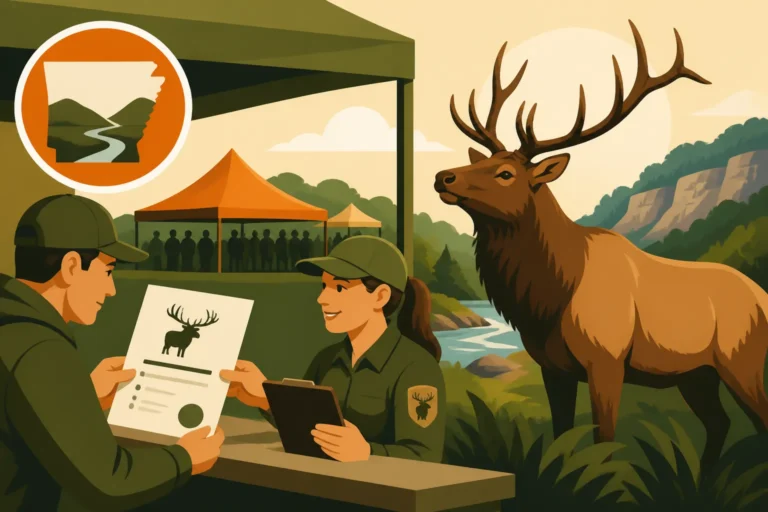
There's one unique twist to the Arkansas elk permit process: the on-site drawing at the annual Buffalo River Elk Festival in Jasper. This is a truly special event that generates immense excitement. Each year, the AGFC designates a specific number of permits (usually one or two either-sex tags) that are only available to those who register in person at the festival. This offers a different kind of opportunity, rewarding those who make the journey to the heart of elk country and participate in the community celebration. For many, it's a social event, a chance to immerse themselves in elk culture, listen to bugling contests, and enjoy the festivities, with the added bonus of a live permit drawing.
To be eligible for the festival draw, you typically need to register on-site, usually on a Friday evening or Saturday morning of the festival. There's often a separate registration fee for this drawing, and you must be present when the names are called to claim your permit. This provides a fantastic in-person experience and a different pathway to drawing a tag, albeit still with very long odds given the crowd. It’s a highlight for many elk enthusiasts, offering a sense of tradition and community that's often missing from online draws. You can learn more about this unique opportunity by looking up On-Site Elk Permits at the Elk Festival.
Maximizing Your Chances and Alternative Elk Opportunities
Given the incredibly tough odds for an Arkansas elk tag, it’s only natural to wonder if there’s anything you can do to improve your chances, or at least explore other avenues for elk hunting. While there are no magic bullets for the Arkansas draw, a strategic approach can still make a difference, even if it's mostly about playing the percentages wisely.
Strategies for the Draw
Let's be clear: since Arkansas uses a true lottery system without preference points, there are no "hacks" to guarantee a permit. However, there are a few things you can do to ensure you're always in the game and not inadvertently hurting your already slim odds. First, make sure you apply every single year. Consistency is key. You can't win if you don't play, and even if it feels like a long shot, that one lucky year could be just around the corner. Double-check all application details – name, address, license number – to avoid any disqualifications. An easily overlooked typo could cost you everything if your name is drawn.
Secondly, pay close attention to the specific permit types and zones if the AGFC offers them that year. Sometimes, there might be a slight difference in application numbers for an antlerless tag in a particular zone versus an either-sex statewide tag. While all elk permits are highly competitive, a nuanced understanding of the categories could, in theory, offer a marginally better chance. Don’t just blindly apply for the "bull" tag if you're truly hoping for any elk opportunity. Staying informed about the Arkansas Elk Draw Odds for each specific category, if that data is released, can help you make a more informed decision, however slight the advantage may be.
Understanding Permit Types and Zones
A deeper understanding of the available permit types and hunt zones can sometimes offer a strategic edge, however small. As mentioned, the AGFC typically offers a mix of Either-Sex Versus Antlerless Elk Permits. While everyone dreams of a bull, an antlerless tag might statistically have slightly fewer applicants, making your odds infinitesimally better. If your primary goal is to simply hunt an Arkansas elk, regardless of sex, carefully consider applying for an antlerless tag if that's an option.
Furthermore, some permits might be designated for specific zones. While all zones are in the prime elk country of the Ozarks, there might be subtle differences in their accessibility or perceived desirability that could influence application numbers. For instance, if one zone is known for more rugged terrain or limited access, it might see fewer applicants than a more accessible area. Keeping an eye on the AGFC's annual regulations and any demographic information they release about past draws could provide a tiny advantage. Ultimately, knowledge is power, even if the power to influence the draw outcome is minimal.
Exploring Other Elk Hunting States
For most hunters whose dream is to chase elk, relying solely on the Arkansas draw can be a long and frustrating journey. While Arkansas offers an incredible, unique experience, it's also realistic to acknowledge that for guaranteed opportunity, looking beyond the state's borders might be necessary. States like Colorado, Montana, Idaho, Wyoming, and New Mexico offer significantly more elk hunting opportunities, with various permit systems, over-the-counter tags in some areas, and much larger elk populations.
If the experience of elk hunting itself is your priority, rather than solely hunting an Arkansas elk, exploring these other states is a wise move. Resources like GoHunt are invaluable for researching draw odds, unit breakdowns, and hunting strategies in other states. They provide data and insights that can help you navigate the complexities of Western elk draws, preference point systems, and general season opportunities. While nothing quite matches the charm of Arkansas elk country, expanding your horizons can transform a distant dream into a more achievable reality, allowing you to experience the thrill of the elk woods much sooner.
Disclaimer
Please remember that hunting regulations, permit numbers, and season dates are subject to change annually by the Arkansas Game and Fish Commission (AGFC). This guide provides general information and historical context. Always consult the most current AGFC regulations and official publications before planning any hunting trip or applying for permits. The author and publisher are not responsible for any changes in regulations or for any errors or omissions in this content.