Bear Processing and Hide Care
Harvesting a black bear in Arkansas is an incredible accomplishment, a testament to your patience, skill, and understanding of the woods. But the moment that magnificent animal is on the ground, a new challenge begins: ensuring its meat is properly cared for and its hide preserved as a lasting memory. Rushing this critical post-harvest process can ruin both the table fare and the potential trophy. This guide will walk you through the essential steps for processing your Arkansas black bear, from field to freezer and taxidermist, making sure your hard work pays off.
Immediate Field Care for Your Arkansas Black Bear
The clock starts ticking the moment your bear hits the ground, especially here in Arkansas where early season hunts can still mean warm temperatures. Proper field care isn't just a suggestion; it's absolutely crucial for both meat quality and hide preservation.
Why Speed and Cleanliness Matter
Bear meat, while delicious when handled correctly, can spoil quickly if not cooled rapidly. Bear fat, in particular, can be prone to developing a strong, undesirable flavor if it's allowed to heat up and sit too long. Imagine you've just taken a beautiful bear deep in the Ouachita National Forest during an early September archery hunt. The air temperature is still in the high 70s. That bear's body heat, combined with the ambient warmth, can quickly start to degrade the meat. Not only does this affect the taste, but it also creates a less-than-ideal environment for hide preservation. Blood and bodily fluids can stain the fur, and bacterial growth can cause hair slippage, rendering your hard-earned trophy useless for taxidermy. So, the goal is always to get the animal field dressed and cooling as quickly and cleanly as possible.
Gutting and Quartering in the Field
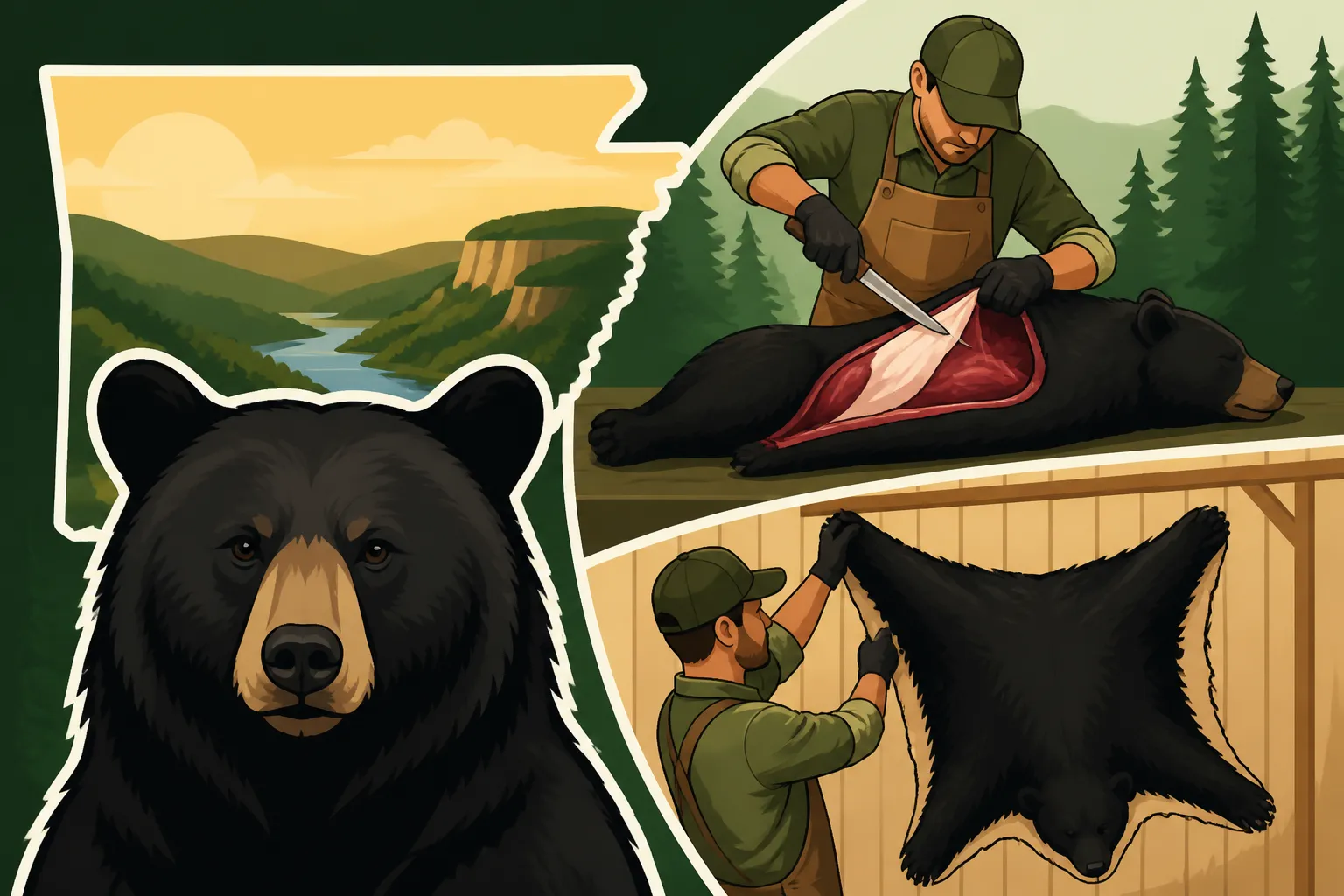
Field dressing a bear is similar to deer, but bears are often larger and their fat can be more substantial, making some steps a bit more challenging. You’ll need a very sharp knife (or two!), game bags, and perhaps a small saw or bone cutters. Start by making a shallow incision from the breastbone down to the pelvis, being careful not to puncture the intestines. Cut around the anus and then work to free the internal organs. For large bears or those taken in remote, rugged terrain, quartering the animal in the field is often the most practical solution for extraction. This involves removing the front shoulders, hindquarters, and backstraps, leaving the ribcage and spine behind. For many, this process also means caping the animal in the field, which we’ll discuss more in the hide section. The key is to keep everything as clean as possible, minimizing hair, dirt, and debris from touching the exposed meat. Once separated, place the quarters immediately into breathable game bags. For more detailed guidance on handling game in warm weather, check out Field Dressing in Arkansas Heat.
Getting the Meat Cooled Down
Once your bear is field dressed and, ideally, quartered, the absolute priority is getting that meat cooled. If you're lucky enough to be hunting near a camp with refrigeration, great! Otherwise, you need a plan. Hanging the quarters, if possible, where air can circulate around them is a good first step. In warmer conditions, getting them into large coolers packed with ice is often the best strategy. Make sure the ice is directly contacting the meat, and drain any melted water frequently to prevent the meat from soaking. Remember, bears are large animals, so you'll likely need multiple large coolers and plenty of ice. If you have a long journey home, consider freezing plastic bottles of water to use as long-lasting ice packs that won't create meltwater. Don’t be afraid to pull out that cooler of ice and dump it right onto the meat in the field if you have a long way to go, especially if you anticipate delays. You're fighting against rapid bacterial growth, and every minute counts. Having a solid plan for transport and cooling is part of responsible hunting, as discussed in Handling Bear Meat Safely.
Processing Bear Meat for the Table
Bringing home bear meat is a culinary adventure, but it requires careful attention to detail. Unlike deer, bear meat has some unique characteristics that demand a slightly different approach.
Butchering Your Bear at Home or With a Processor
You have two main paths once you've successfully cooled your bear quarters: tackle the butchering yourself or take it to a professional game processor. If you choose the DIY route, you'll need a clean workspace, sharp knives, a meat saw, and plenty of freezer paper or vacuum seal bags. The main difference from deer is the amount and type of fat. Bear fat is different from deer fat; it's often softer and can be quite thick. It's generally recommended to trim as much of this fat off as possible before grinding or packaging the meat for specific cuts. This helps prevent the stronger, sometimes gamey, flavor from permeating the muscle tissue. Professional processors are experts at this, and they'll know exactly how to break down the animal into roasts, steaks, and ground meat, often offering options for sausage or specialty cuts. For many hunters, especially after their first bear, entrusting the task to a skilled processor is well worth the investment to ensure optimal flavor and yield.
Managing Bear Fat and Flavor
As mentioned, bear fat can be a flavor powerhouse, and not always in a good way. Bears are omnivores, and their diet can vary wildly depending on the season and available food sources. A bear that's been gorging on berries and acorns might have milder fat than one that's been scavenging. Regardless, it’s generally best practice to trim off almost all visible fat from the muscle meat before cooking or freezing. You can render the fat separately if you wish to use it for cooking or baking, as rendered bear lard is quite flavorful and traditional in some circles.
To further manage any strong flavors, marinating bear meat is a fantastic option. Acidic marinades with ingredients like vinegar, wine, or citrus juice can help tenderize the meat and infuse it with complementary flavors. Long, slow cooking methods are also excellent for bear meat, helping to break down tough muscle fibers and distribute flavor evenly.
| Bear Meat Cut | Recommended Preparation | Notes |
|---|---|---|
| Roasts (Shoulder, Ham) | Slow-cook in a Dutch oven, Crock-Pot, or smoker with plenty of liquid (broth, wine, vegetables). | Excellent for tenderizing. Trim all visible fat. Cook to high internal temperature. |
| Steaks (Backstrap, Hindquarter) | Pan-sear, grill, or pan-fry. Best when thinly sliced or pounded. Marinating is highly recommended. | Can be tougher than deer steaks. Ensure thorough cooking. Ideal for stir-fries or fajitas if sliced thin. |
| Ground Meat | Grind with a higher fat content than deer (e.g., 80/20) using pork fat or beef fat. | Perfect for chili, sausage, meatballs, burgers, or tacos. Always cook thoroughly. Remove bear fat before grinding unless you specifically want to render it later. |
| Stew Meat | Cube and simmer in stews, goulash, or rich gravies. | Benefits from long, slow cooking to become fork-tender. |
Cooking and Preserving Bear Meat
One of the most critical aspects of preparing bear meat for consumption is proper cooking. Black bears can carry Trichinella parasites, which are destroyed by heat. Therefore, bear meat must always be cooked thoroughly to an internal temperature of at least 160°F (71°C) to ensure it is safe to eat. Using a meat thermometer is non-negotiable when cooking bear. Do not consume rare or medium-rare bear meat.
Once cooked, bear meat is versatile and delicious. For preserving, freezing is the most common method. Vacuum-sealed packages will last the longest in the freezer, preventing freezer burn. Some hunters also enjoy canning bear meat, which is an excellent way to prepare it for long-term storage in stews or shredded form. Smoking is another fantastic preservation method, especially for cuts destined for sausage or jerky. No matter how you prepare it, savoring your bear meat is a fulfilling part of the hunting experience. If you're looking for more ideas on how to prepare your harvest, consider the advice in Best-Eating Game in Arkansas.
Preparing the Hide for a Taxidermist
A bear hide is a beautiful trophy, whether you envision a full mount, a rugged shoulder mount, or a striking rug. Proper hide care starts in the field and is just as critical as meat care.
Skinning for a Full Mount, Rug, or European Mount
How you skin your bear depends entirely on your taxidermy goal.
- Full Mount: This requires a "tube" cut down the belly, from the tip of the chin to the tip of the tail, extending down the inside of each leg to the paw. The goal is to keep the entire hide intact, with minimal cuts. The taxidermist will then flesh and prepare it.
- Rug: Similar to a full mount, but often with more care taken to ensure symmetry for laying flat. A ventral cut is common, but often the hide is cut straight down the middle of the belly.
- Shoulder Mount/Half Mount: A dorsal cut (down the back) is typically preferred, allowing the chest and shoulder area to remain fully intact. The cut usually extends to behind the front legs. The head and paws will need careful skinning regardless.
No matter the desired outcome, always exercise extreme caution to avoid making cuts into the hair follicles themselves, which can cause "knife marks" that are difficult for a taxidermist to conceal. Skin around the eyes, nose, lips, and ears with meticulous care, going slowly. For a full or rug mount, you'll need to leave the bones in the feet and skull attached to the hide for the taxidermist to properly skin out later. A precise Shot Placement on a Black Bear is good for the animal, but good skinning is good for the hide.
Salting and Curing the Hide
Once skinned, the hide needs to be preserved as quickly as possible. This usually means salting. First, lay the hide out flat, flesh side up. Scrape off any large chunks of meat or fat. Then, apply a generous, thick layer of non-iodized salt (fine-grain plain salt works best, like feed salt or rock salt). Cover every square inch of the flesh side, paying special attention to the extremities: the lips, nose, ears, and paws. These areas are prone to slippage. Work the salt into all crevices.
Once fully salted, roll the hide up, flesh side in, and let it sit for a day or two. The salt will draw out moisture. You'll likely see a brine forming. After 24-48 hours, unroll the hide, scrape off the wet salt, and reapply a fresh, thick layer of dry salt. This second salting is critical for long-term preservation. You want the hide to be dry and stiff, almost like cardboard. This process can take several days to a week, depending on the hide's thickness and humidity. If you're at camp for a few days before heading home, this initial salting step is essential.
Transporting and Choosing a Taxidermist
After salting and drying, the hide can be rolled up, flesh side in, and placed into a breathable bag (like a canvas duffel bag or even a pillowcase) for transport. Avoid plastic bags for long-term storage of salted hides, as they can trap moisture and lead to spoilage. Ensure the hide remains dry during transport.
Choosing the right taxidermist is paramount for a lasting trophy. Don't rush this decision. Look for a taxidermist with extensive experience with bears. Ask to see examples of their bear work, paying attention to the realism of the face, ears, and paws. Get references from past clients and don't hesitate to call them. Discuss your vision for the mount in detail and get a clear understanding of the costs, timeline, and deposit requirements. A good taxidermist will be passionate about their craft and eager to answer all your questions. Finding skilled artisans locally is often a good start, and you can begin your search by looking into Taxidermists in Arkansas Hunting Towns.
Important Considerations and Regulations
Hunting black bears in Arkansas comes with specific responsibilities beyond the harvest itself. Being aware of regulations and potential biological factors is key to a successful and ethical hunt.
Checking Your Bear and Regulatory Compliance
In Arkansas, once you've harvested a black bear, you are required to check it within 24 hours. This is a crucial step for wildlife management, allowing the Arkansas Game and Fish Commission (AGFC) to collect vital data on harvest numbers, location, and biological information. You can typically check your bear online, via a mobile app, or at designated check stations. Failure to properly check your bear can result in fines and penalties, so make sure you understand the current regulations before you head afield. This requirement is a cornerstone of responsible hunting and contributes to the ongoing management of the state's bear population. For detailed information on this process, refer to Arkansas Bear Checking Requirements.
Diseases and Parasites in Black Bears
As mentioned earlier, Trichinella is a parasite found in some bear populations that can affect humans if the meat is undercooked. This is why thorough cooking of bear meat to a safe internal temperature is non-negotiable. While Trichinella is the most common concern, bears can also carry other parasites or diseases. It's always wise to wear gloves while field dressing and butchering any wild game. If you notice anything unusual about the bear's internal organs, lymph nodes, or general health (e.g., lesions, tumors, extreme emaciation), it's best to consult with the AGFC or a local veterinarian regarding the suitability of the meat for consumption. Healthy animals typically yield healthy meat, but vigilance is always a good practice.
Ethical Considerations and Respect for the Animal
Beyond the regulations, there's a deep ethical responsibility that comes with harvesting any wild animal, especially a magnificent creature like a black bear. Properly processing the meat and preserving the hide isn't just about adhering to rules or securing a trophy; it's about honoring the animal and ensuring that its life was not taken in vain. Every part of the bear that can be used should be utilized. This approach ensures that you are making the most of your harvest, showing respect for the animal, and upholding the traditions of conservation and ethical hunting that are so important in Arkansas. From the meat that feeds your family to the hide that serves as a cherished reminder, every effort you put into post-harvest care reflects your commitment to these values. Knowing these steps thoroughly is part of planning a successful hunt, whether you scout your own land or look for opportunities through resources like BookYourHunt or GoHunt.
Disclaimer
This article is for general informational purposes only and does not constitute professional advice. Laws, prices and regulations vary by location and change over time. Consult a qualified professional for guidance on your specific situation.