Camp Robinson WMA Draw Hunts
Ever felt like you’re trying to crack a secret code just to get a shot at hunting a truly special piece of public land in Arkansas? Many of us have. Camp Robinson WMA is one of those places that hunters whisper about – its reputation for quality deer is legendary, but gaining access feels like winning the lottery. This guide is here to pull back the curtain, demystifying the ins and outs of Camp Robinson WMA draw hunts so you can navigate the application, prepare for your hunt, and hopefully, punch that coveted tag.
Understanding Camp Robinson WMA's Unique Appeal
Camp Robinson Wildlife Management Area isn't just another parcel of public land; it's a beast entirely of its own. Situated right near Little Rock, its proximity to a major metropolitan area combined with its unique management system makes it both incredibly desirable and famously exclusive.
Why Camp Robinson Is So Coveted by Hunters
The allure of Camp Robinson isn't hard to understand once you know a bit about its history and management. Unlike many other public lands where hunters face constant pressure and heavily hunted deer, Camp Robinson offers something different. The primary reason for its high demand is the quality of its deer herd. Because hunting access is strictly controlled through a limited draw system, the deer experience significantly less pressure throughout the season. This reduced pressure allows bucks to mature, leading to better age structures and the potential for harvesting truly impressive animals.
Imagine hunting an area where you're not constantly bumping into other hunters, where the deer act more naturally because they haven't been pushed relentlessly since September. That's the dream Camp Robinson offers. Its diverse habitat, including mature hardwoods, pine plantations, and creek bottoms, provides excellent cover and food sources. For many hunters, securing a Camp Robinson draw hunt is a bucket list item, a chance to experience public land hunting under conditions that feel almost private. It’s a stark contrast to the often crowded conditions you might find on other public land spots, where every ridge and hollow seems to have a boot print.
General Rules and Regulations on the WMA
While Camp Robinson operates under the Arkansas Game and Fish Commission's (AGFC) WMA system, it also has its own specific set of rules due to its status as a military installation. This is crucial to remember. Beyond the general statewide hunting regulations, you’ll encounter layers of rules designed to ensure safety and coordinate with military operations. You can expect strict entry and exit procedures, often involving a check-in and check-out system where you sign in upon arrival and out when you leave. This helps the AGFC and military personnel keep track of who is on the property.
Vehicle access might be restricted to designated roads or parking areas, and off-road travel is almost certainly prohibited. Hunter orange requirements are typically in full effect, and sometimes even more stringent than standard statewide rules due to the presence of military training activities. It's not uncommon for specific areas within the WMA to be closed suddenly due to military exercises, so staying informed is paramount. Always check the AGFC website for Camp Robinson's specific regulations and any last-minute closures well before your hunt. Respecting these rules isn't just about avoiding a ticket; it's about ensuring future access for all hunters to this unique public resource. For a broader understanding of how specific rules apply to public lands, you might find information on Blinds and Stands on Arkansas Public Land helpful, though Camp Robinson will have its own specific additions.
Navigating the Camp Robinson Draw Hunt Application Process
Getting a spot in a Camp Robinson draw hunt feels like applying for college—competitive and a bit overwhelming. But breaking it down makes it much more manageable.
Eligibility and Application Period
First things first, who can even throw their hat in the ring for one of these coveted spots? Generally, any hunter with a valid Arkansas hunting license can apply, including both residents and non-residents, provided they meet any age requirements for specific hunt types (like youth hunts). However, it's worth noting that resident hunters often have a distinct advantage in draw odds or specific allocations. You'll need to ensure your license is current and appropriate for the species you intend to hunt. For example, if you're hoping for a deer hunt, you'll need a valid deer tag. Arkansas Hunting Licenses and What They Cost details the various license options available, which is a great place to start.
The application period itself is critical and typically falls during late summer or early fall for most deer hunts, though specific dates can vary for other game species if available. The AGFC is usually quite diligent about announcing these windows, so regularly checking their official website and signing up for email alerts is your best bet. Missing the application deadline means missing out entirely for that season, and trust me, you don't want that kind of heartache. It's a short window, and once it closes, that's it until next year.
Step-by-Step Application Guide
Applying for a Camp Robinson draw hunt is primarily an online process through the AGFC's licensing and permit system. Here’s a general rundown of what you can expect:
- Access the Portal: Head to the AGFC website and navigate to their draw hunt application section. You'll likely need to log in to your existing AGFC customer account or create one if you’re a new user.
- Select Your Hunt: Browse the available draw hunts. You'll see options for specific WMAs, including Camp Robinson, and different hunt types (e.g., archery, modern gun, muzzleloader). Pay close attention to the dates, weapon restrictions, and any bag limits associated with each hunt.
- Provide Information: You'll input your personal details, verify your hunting license information, and potentially answer questions about your hunting history.
- Group Applications: Many hunters like to apply as a group. If this is an option for Camp Robinson (it often is for deer draw hunts), you’ll need to designate a group leader, and all members must apply together, linking their applications. This means if one person in the group is drawn, everyone in that group gets access. Be sure to coordinate all members' information carefully.
- Payment: There's usually a small, non-refundable application fee. This fee is typically a nominal amount that helps cover the administrative costs of running the draw system. Remember, this fee doesn't guarantee you a spot, only entry into the lottery.
- Confirmation: Once submitted, you'll receive a confirmation email or number. Keep this handy!
The options for weapon types can be varied, offering opportunities for different hunting styles. For instance, some draws might be specific to Arkansas Modern Gun Deer Hunting, while others cater to Bowhunting Arkansas's Five-Month Archery Season. Always double-check the specifics for the particular draw you are entering.
Understanding the Draw Odds and Preference Points
This is where the rubber meets the road, and reality often sets in. The draw for Camp Robinson is a lottery, plain and simple. Each application is assigned a unique number, and winners are chosen randomly. Because of the high demand and limited number of spots, the draw odds can be quite low. Don't go into this expecting to be drawn on your first try; it's more about persistence and a bit of luck.
Some draw systems, particularly for highly sought-after hunts, incorporate a preference point system. This means that for every year you apply and are not drawn, you might accrue a "preference point" or "loyalty point." These points don't guarantee you a spot, but they might give you a slightly better chance in subsequent draws by, for example, giving you more entries into the lottery or a higher priority in certain tiers. It's a way to reward long-term applicants. Be sure to check the AGFC's specific rules for Camp Robinson to see if such a system is in place and how it works. It's a common feature for Arkansas WMA Permits and Draw Hunts across the state, but each WMA can have its own nuances. Knowing if your non-selection buys you a better chance next year can certainly soften the blow of disappointment.
Preparing for a Camp Robinson WMA Draw Hunt
Getting drawn for Camp Robinson is only half the battle; proper preparation is key to making the most of this unique opportunity. Since access is limited, you need to maximize your time in the woods.
Scouting and Pre-Season Information Gathering
One of the biggest challenges for Camp Robinson, and many other limited-access WMAs, is the restriction on pre-season physical scouting. You likely won't be able to just drive in and walk around weeks before your hunt like you might on open public land. This means your scouting has to be largely digital and through research.
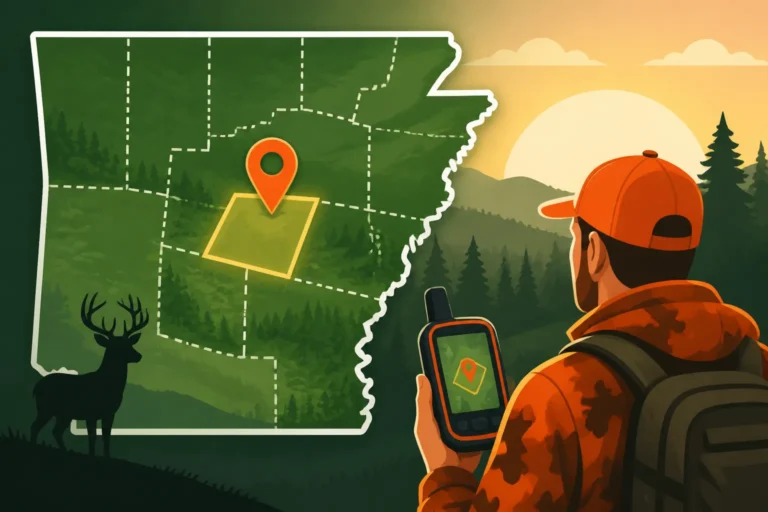
This is where tools like onX Hunt and GoHunt become absolutely invaluable. These apps allow you to "scout" from your couch. You can pour over detailed aerial imagery, topographic maps, and property lines. Look for key features like:
- Habitat Changes: Identify transitions from dense cover to more open areas, mature timber to younger growth, or pine stands to hardwoods.
- Water Sources: Locate creeks, ponds, or low-lying areas that might hold water, especially if your hunt is during drier periods.
- Topography: Pinpoint ridge lines, saddles, drainages, and benches. Deer often use these natural funnels for travel. You can even virtually walk a ridge to see what it looks like from a deer's perspective.
- Access Points: Figure out the best entry and exit routes to your chosen hunting areas, considering wind direction and minimizing disturbance.
onX Hunt, for example, excels at showing detailed property boundaries, including WMA lines, and overlays for things like public land ownership, making it easy to see where you can and cannot go. GoHunt offers similar robust mapping features and often includes community insights or harvest data overlays for certain regions, which can be immensely helpful. Use these tools to identify potential bedding areas, feeding zones, and travel corridors before you ever set foot on the property. Combine this with any information the AGFC provides, such as past harvest reports or general WMA maps. While it’s not the same as boots on the ground, a thorough digital scout can give you a significant advantage. Remember, Scouting Arkansas Public Land Before Season is always recommended, and for Camp Robinson, digital is your primary avenue.
Gear and Equipment Considerations
Because Camp Robinson is managed for quality deer and experiences lower pressure, your gear choices can be optimized for a more strategic hunt.
- Tree Stands/Ground Blinds: Given the diverse habitat, both options are viable. If you plan to use a tree stand, ensure it’s lightweight and easy to set up quietly, as you may need to move it to adapt to deer movement. Consider a climber for versatility in timbered areas, or a hang-on with climbing sticks if you identify a specific tree during your digital scouting. A ground blind can be excellent for areas with thick cover or near field edges, providing concealment and warmth in colder weather. For tips on stands, you might check out Hanging a Stand in Bottomland Hardwoods, though Camp Robinson's terrain varies significantly.
- Optics: High-quality binoculars and a spotting scope are essential. You'll be looking for subtle movements and trying to identify deer from a distance, particularly in open timber or clear-cut edges.
- Navigation: While onX Hunt or GoHunt will be on your phone, a handheld GPS unit or a fully charged phone with extra battery packs is crucial. You’re on a large WMA, and getting disoriented, especially in the dark, is a real possibility.
- Comfort and Safety: Pack layers for changing weather, a good headlamp, and a first-aid kit. Don't forget your hunter orange—Camp Robinson typically has strict Arkansas Hunter Orange Requirements. Being prepared for the elements and unexpected situations is paramount for a safe and successful hunt.
On-Site Rules and Check-In Procedures
Arriving at Camp Robinson for your hunt is not like pulling up to a random public access point. There’s a formal process, and you need to be ready for it.
- Check-In: You will typically have a designated check-in point and time. Be prepared to show your hunting license, photo ID, and your draw permit. Military personnel or AGFC staff will likely verify your identity and confirm your hunt dates. This might also be the time they brief you on any last-minute closures or specific instructions for your hunting compartment.
- Vehicle Inspection: As a military installation, you might experience vehicle inspections upon entry and exit. Be cooperative and have all your gear easily accessible for inspection if requested.
- Compartment Rules: Your draw permit will usually assign you to a specific hunting compartment or zone within the WMA. You are expected to stay within that area. Studying this boundary on your mapping app before arriving is crucial.
- Game Check: After a successful harvest, you’ll be required to check your game at a designated station before leaving the WMA. This is standard AGFC procedure for monitoring harvest data and ensuring compliance. Be familiar with Arkansas Deer Checking and Tagging processes, as Camp Robinson will follow these closely, likely with additional WMA-specific steps. This check-out ensures the military base knows exactly what game is leaving the property.
Strategies for Success During Your Hunt
Once you've navigated the application and prepared your gear, it's time to hit the woods. Hunting Camp Robinson WMA, even with reduced pressure, still requires smart strategies to be successful.
Hunting Tactics for Camp Robinson
Because deer on Camp Robinson experience less pressure than typical public lands, they might be more inclined to follow natural patterns. However, they are still wild animals.
- Patience and Persistence: Don't expect to see deer everywhere. Quality deer hunts often require patience. Set up in areas you've identified during digital scouting that offer good cover, food, or travel corridors, and be prepared to sit for extended periods. If your initial spot isn't producing, don't be afraid to quietly move to another pre-scouted location.
- Still-Hunting: Given the varied terrain, especially in the timbered sections, still-hunting can be highly effective. This involves moving slowly and deliberately through the woods, taking a few steps, then pausing for several minutes to scan for movement or listen for sounds. This tactic allows you to cover ground while remaining stealthy. It's an art form, and mastering Still-Hunting Arkansas Pine Country will certainly give you an edge in some of Camp Robinson's habitats.
- Calling and Rattling: With less pressure, deer might be more responsive to calling. Light grunting can pique a buck's curiosity, and rattling antlers can sometimes pull in a mature deer looking for a fight, especially during the rut. Practice your calls and understand the timing. Check out tips for Rattling and Grunting in Arkansas to hone your skills.
- Adapt to the Conditions: Pay close attention to wind direction, thermals, and recent weather. A sudden cold front or rain can change deer movement patterns dramatically. Be flexible in your approach and willing to adjust your strategy on the fly. If you hunted a food source in the morning, consider a bedding area transition zone for the afternoon.
Respecting Boundaries and Other Hunters
Even on a draw hunt where hunter numbers are limited, ethical behavior and respect for the rules and fellow hunters are paramount. Your assigned compartment is your hunting zone, and straying outside of it can lead to serious consequences, including losing your permit and facing fines. Always have your digital maps (like onX Hunt or GoHunt) handy to confirm your location relative to your boundaries.
While you're less likely to encounter a constant stream of hunters, remember that you're still sharing the resource. Maintain a safe distance from other hunters you might spot, and never interfere with someone else's hunt. Communication, if necessary, should be courteous and respectful. The low-pressure environment of Camp Robinson is a privilege, and every hunter has a responsibility to maintain that experience for others. If you observe any unethical behavior or violations of WMA rules, it's important to report it to the AGFC. Knowing how to correctly identify and report such instances, as discussed in Reporting a Poacher in Arkansas, helps protect the integrity of the hunt for everyone.
It's a fantastic opportunity to experience Arkansas hunting in a way that truly prioritizes quality over quantity. Take your time, enjoy the incredible woods, and good luck in the draw!
| Feature | Camp Robinson WMA Draw Hunts | General Public Land Hunting in Arkansas |
|---|---|---|
| Access | Extremely limited, lottery-based draw | Generally open, first-come, first-served |
| Hunter Pressure | Very low due to limited permits | Can be very high, especially on opening weekends |
| Deer Quality | Higher potential for mature bucks | Varies widely, often pressured deer |
| Scouting | Primarily digital, limited physical access | Physical scouting encouraged, often unrestricted |
| Rules & Regulations | AGFC + specific military installation rules | AGFC statewide + WMA-specific rules |
| Application Process | Mandatory online draw, specific deadlines | No application needed (beyond license & permits) |
| Cost | License + nominal application fee | License + relevant tags |
| Flexibility | Restricted to specific dates/compartments | High flexibility within open seasons/areas |
| Success Rate Potential | Generally higher per hunter due to low pressure | Highly variable, often lower due to pressure |
Disclaimer
This article is for general informational purposes only and does not constitute professional advice. Laws, prices and regulations vary by location and change over time. Consult a qualified professional for guidance on your specific situation.