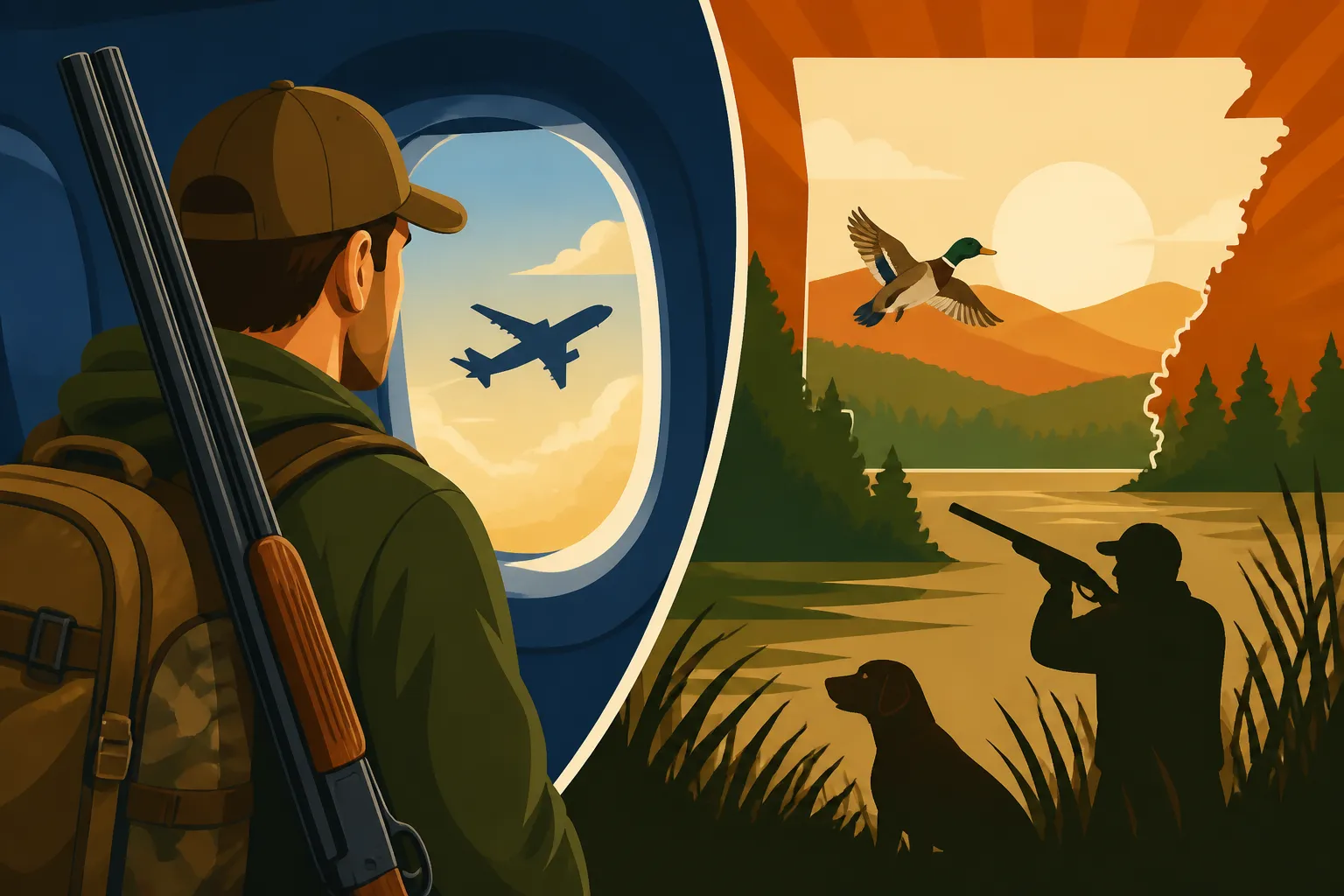
Flying With a Shotgun to Arkansas
Planning a hunting trip to Arkansas, especially if you're flying in, can bring a unique set of anxieties. Beyond just scouting your spot or choosing the right calls, figuring out how to safely and legally transport your shotgun on an airplane can feel like navigating a minefield of regulations. This guide is here to cut through the confusion and give you a clear, step-by-step roadmap for flying with your shotgun to the Natural State, ensuring your prized hunting companion arrives ready for action.
Understanding the Regulations for Flying with Firearms
The rules for flying with firearms might seem like a tangled mess, but they're actually quite clear once you break them down. The key is understanding that there are federal regulations set by the Transportation Security Administration (TSA), and then individual airlines layer their own, often stricter, policies on top. It’s a dual system you need to master before you even pack your bags.
Federal TSA Guidelines for Firearms
Let's start with the absolute baseline: the federal regulations. The TSA is primarily concerned with safety and security, and their rules for firearms are designed to ensure no loaded weapons or easily accessible components make it onto an aircraft cabin. The golden rule, the one you absolutely must commit to memory, is this: your firearm must be unloaded, secured in a locked, hard-sided container, and declared to the airline at check-in.
"Unloaded" means exactly that – no ammunition in the chamber, magazine, or attached to the firearm itself. Double-check, triple-check, and then check again. A simple oversight here can lead to significant delays and legal trouble. The "locked, hard-sided container" part means a case made of metal, heavy-duty plastic, or wood that cannot be easily opened. It needs to fully enclose the firearm, preventing any part of it from being accessed without breaking the container or unlocking it. The case itself must be secured with a lock that prevents unauthorized access. While TSA-approved locks are generally acceptable for checked luggage, for firearms, you are the only one who should have access to the key or combination. If the TSA needs to inspect the case, they will ask you to open it; they won't cut your lock like they might with a regular suitcase. This whole process is about keeping control of your firearm in your hands until it's safely stowed in the aircraft's belly.
Airline-Specific Policies: What to Expect
While the TSA sets the federal floor, individual airlines can and do impose their own additional restrictions. This is where many hunters get tripped up, thinking "I met TSA rules, so I'm good." Not always! Every major airline that operates flights into Arkansas, whether it's Southwest, Delta, American, or United, will have a specific section on their website detailing their firearm and ammunition transport policies. These often cover things like:
- Ammunition limits: While the TSA doesn't specify a weight limit for ammunition in checked bags, airlines often do. It could be 11 pounds, 50 pounds, or something else entirely. They might also require ammunition to be in its original manufacturer's packaging or a sturdy container designed for ammo. Loose rounds rattling around in your case? Absolutely not.
- Case requirements: Some airlines might have specific language about the type of hard-sided case, though typically if it meets TSA's definition, you're fine.
- Lock types: Again, you should use non-TSA locks for your firearm case, but confirm the airline doesn't have an obscure restriction.
- Fees: Many airlines charge an oversized baggage fee or an additional fee for firearms, treating them sometimes like special baggage. Don't let this surprise you at the counter.
Before you even think about packing, visit your airline's website. Read their policy thoroughly. Print it out and bring it with you, just in case you encounter an agent who isn't familiar with it. This proactive step can save you a world of headaches at the airport. It's also a good idea to check out hunting planning resources like BookYourHunt or GoHunt for general travel tips from other hunters, though always double-check with the specific airline.
The Importance of Declaring Your Firearm
This isn't just a suggestion; it's a non-negotiable requirement. When you arrive at the check-in counter, the very first thing you need to do, before you even put your bag on the scale, is declare that you are checking a firearm. Don't hide it, don't try to be discreet. Be upfront and clear.
The agent will likely ask you to sign a declaration card, stating that the firearm is unloaded. This card then gets placed inside the locked case with the firearm. This is a critical step in the chain of custody and ensures everyone involved knows what's being transported and that all initial checks have been made. Trying to bypass this declaration, even accidentally, can result in severe penalties, including fines and potential arrest. It's about transparency and following established security protocols. Remember, the airport staff are there to help facilitate this process safely, not to judge your choice to travel with a firearm for your Arkansas Modern Gun Deer Hunting adventure or Arkansas Waterfowl Seasons and Zones trip.
Essential Gear for Transporting Your Shotgun
Successfully flying with your shotgun hinges on having the right equipment and preparing it correctly. This isn't just about meeting regulations; it's about protecting your valuable firearm from damage and ensuring a smooth, stress-free journey.
Choosing the Right Hard-Sided Case
Your hard-sided case is your shotgun's fortress. It needs to be robust enough to withstand the rigors of baggage handling – think bumps, drops, and general airline abuse. Plastic cases from reputable brands like Pelican, SKB, or Boyt are popular choices, known for their durability and secure latches. Aluminum cases are also an option, offering excellent protection. The key features to look for are:
- Material: Heavy-duty plastic or metal that won't flex or crack under pressure.
- Latches: Multiple strong latches that snap securely, preventing accidental opening.
- Lock Points: Designated points where you can attach your own robust, non-TSA locks. Many cases have reinforced areas for padlock shackles.
- Interior Padding: High-density foam inserts, often customizable (pick-n-pluck foam or custom-cut), are crucial for cradling your shotgun and preventing it from shifting inside the case. Any movement can lead to scratches, dents, or even impact damage to sensitive components like sights or scopes.
- Fit: Your shotgun should fit snugly within the foam, preventing any movement. Some hunters even break down their shotgun into barrel and receiver components to fit more compactly and securely.
Investing in a high-quality case isn't just an expense; it's an insurance policy for your firearm. A cheap, flimsy case is a recipe for disaster and can lead to damage or even denial of transport.
Securing Your Shotgun and Ammunition
Once you have your case, it's time to pack. As mentioned, the firearm must be unloaded. Remove any optics if they are fragile or could snag. Secure your shotgun within the padded interior so it cannot move. Many cases have dedicated compartments for accessories or extra magazines.
Ammunition requires its own set of rules. The TSA states it must be in a "properly packed container" that "securely contains the ammunition." This typically means:
- Original Manufacturer's Packaging: This is always the safest bet. It's designed to hold rounds securely.
- Sturdy Ammunition Box: Plastic or metal ammo cans are also acceptable, as long as they prevent individual rounds from coming loose.
- Separate from Firearm: Ammunition must generally be placed in a separate container from the firearm, though often within the same hard-sided, locked case is acceptable. Some airlines require it to be in a separate, locked container entirely within the main case, or even in a separate checked bag (if it meets the weight limits for that bag). This is a crucial detail to verify with your specific airline.
- Weight Limits: Always, always check your airline's specific weight limits for ammunition. Going over can mean leaving rounds behind or paying exorbitant excess baggage fees. For those heading to the Delta for waterfowl, you might be surprised how quickly shotgun shells add up in weight. Remember, Nontoxic Shot Rules in Arkansas will apply for ducks, so make sure you have the right type of ammo too!
A good practice is to place your ammunition in a small, lockable ammo box (like a sturdy plastic MTM case) within your main firearm case, securing it with a small padlock. This provides an extra layer of security and organization.
Labeling and Documentation
While not strictly required by TSA for the firearm case itself (beyond the declaration card inside), proper labeling of your outer luggage is always a smart move. Include your name, phone number, and destination address. Do NOT label the case itself as containing a firearm; that's just advertising. The declaration card inside is for official identification.
Beyond the physical case, make sure you have all your necessary documentation readily available, but not necessarily attached to the case itself. This includes:
- Your hunting license and tags: Make sure you've obtained your Arkansas Hunting Licenses and What They Cost well in advance.
- Proof of firearm ownership: While generally not required for domestic travel within your own country, having a copy of a bill of sale or registration can be helpful in very rare, unusual circumstances if a specific authority questions ownership. Most states, including Arkansas, don't register shotguns, so this might just be your original receipt.
- Airline confirmation with firearm policy: As mentioned, having a printout of your airline's specific firearm policy can be a lifesaver if there's any confusion with airline staff.
Consider using a service like GoHunt to help organize your trip logistics and track all your documentation digitally, providing peace of mind that everything is accessible when you need it.
| Requirement | TSA Federal Rule | Common Airline Additions/Variations |
|---|---|---|
| Firearm Condition | Unloaded | Must be unloaded, action open or cable locked. |
| Case Type | Hard-sided, fully enclosed, lockable | May specify materials (e.g., impact-resistant plastic), number of latches. |
| Locks | Owner retains key/combination (non-TSA lock) | May have specific guidance on lock type (e.g., keyed vs. combination). |
| Declaration | MUST be declared at check-in counter | Declaration card signed, usually placed inside case. |
| Ammunition | Securely packed in original or sturdy container | Strict weight limits (e.g., 11 lbs, 50 lbs), original packaging often preferred. |
| Placement | Separate from firearm (can be in same case if secure) | May require ammo to be in a separate, lockable container within the main case, or even in a separate bag. |
| Fees | Not specified by TSA | Standard checked bag fees, oversized fees, or specific firearm transport fees. |
The Airport Process: From Check-In to Retrieval
The actual airport experience can be the most intimidating part, especially if it's your first time flying with a firearm. But armed with knowledge and preparation, it can be remarkably straightforward.
The Check-In Counter: Your First Step
This is where the rubber meets the road. Arrive early – at least an hour earlier than you normally would for a domestic flight. Give yourself plenty of buffer time for any questions or procedures. Head directly to the airline's check-in counter. Do not try to use a self-service kiosk or curbside check-in when checking a firearm. You need to speak to a human.
Politely and clearly state, "Hello, I need to check a firearm." The agent will guide you through the process. They will ask you to open your locked case, inspect the unloaded firearm, and then hand you the declaration card to sign. Once signed, you'll place the card inside the case, usually on top of the firearm, and relock it. The agent might then attach the baggage tag to the case.
In some cases, the agent might direct you to a special baggage area or to the TSA screening point themselves, rather than having it go down the regular conveyor belt immediately. Be prepared to follow their instructions. Remember, it's about cooperation and compliance.
TSA Inspection and Approval
After you've declared your firearm and checked it with the airline, it will typically go through a separate screening process with the TSA. You might be asked to personally take your locked case to a designated TSA inspection area. Here, a TSA agent will conduct a secondary inspection. They will ask you to unlock and open your case so they can visually inspect the firearm and ensure it's unloaded and properly secured.
This is why you, and only you, should have access to the keys or combination for your firearm case. If you're not there to unlock it, the TSA cannot proceed with the inspection and your bag could be delayed or even denied boarding. Once the inspection is complete, the agent will ask you to relock your case. They usually won't put a TSA lock on it, as they respect your right to maintain custody of your firearm. Make sure you get your keys back!
Once the TSA has given their approval, your case will be routed to the aircraft. This whole process, from check-in to TSA approval, usually takes 10-20 minutes, but it can take longer depending on staffing and how busy the airport is. This is why that "arrive early" advice is so important.
Retrieving Your Shotgun at Your Destination
When you land in Arkansas, the retrieval process is usually a little different from regular luggage. Your firearm case typically won't come out on the standard baggage carousel with everyone else's bags. This is another security measure to prevent unsupervised access.
Instead, your case might be delivered to:
- Airline Baggage Office: Often, the case will be held at the airline's baggage service office, located near the baggage claim area. You'll need to go there, show your ID and baggage claim tag, and sign for it.
- Special Services Counter: Similar to the baggage office, but might be a designated spot for oversized or special items.
- Directly to the Jetway: Less common, but sometimes a representative might meet you directly at the jetway with your case.
Listen to the instructions you receive at check-in or upon arrival. If you're unsure, head to the airline's baggage service counter and ask. Always inspect your case for any signs of tampering or damage before you leave the airport. If anything seems amiss, report it immediately to the airline staff. Once you have it, you're ready to pick up your rental vehicle (see Renting a Vehicle for a Delta Hunt) and head towards your hunting grounds.
Planning Ahead for a Smooth Arkansas Hunt Trip
A successful hunting trip to Arkansas, especially when flying, is built on solid preparation. Knowing the rules of the skies is just one piece of the puzzle. You also need to consider your destination's specific hunting regulations, potential alternatives to flying, and how to handle unexpected bumps in the road.
Researching Arkansas Laws and Your Destination
While federal law governs air travel, once you step off that plane in Arkansas, you're subject to state and local laws regarding firearm possession and transport. For most law-abiding hunters, this won't be an issue, but it's always wise to be informed. Generally, Arkansas is a very pro-gun state, and there are no unusual restrictions for legal firearm owners transporting a shotgun for hunting purposes.
However, you should always be aware of:
- Specific hunting regulations: What are the limits for your target game? What are the Legal Firearms for Arkansas Deer if you're hunting deer with a shotgun (slugs are typically required for deer)? Are you hunting on public land, like an Arkansas WMA, which might have its own rules? Checking Arkansas WMA Rules and Permits is essential.
- Local ordinances: While rare, some cities might have specific rules, though these usually don't impact transport of a legally checked firearm heading to a hunt.
- Carrying laws: Once you've retrieved your shotgun, how do you transport it in your vehicle? Most states require firearms to be unloaded and often secured in a case, out of immediate reach. Arkansas generally allows open carry of long guns, but it's always safest to transport them securely cased and unloaded when not actively hunting.
The Arkansas Game and Fish Commission (AGFC) website is an invaluable resource for all hunting regulations. Reviewing it thoroughly before your trip is as important as checking your airline's policies. Many hunters use platforms like BookYourHunt to find guides and outfitters, and these services often have local knowledge that can help you with region-specific regulations.
Considering Alternatives: Shipping or Renting
Flying with a firearm isn't for everyone. The hassle, the fees, and the anxiety can sometimes outweigh the convenience. Thankfully, you have alternatives:
- Shipping Your Shotgun: You can ship your shotgun via a licensed FFL (Federal Firearms License) dealer to another FFL dealer in Arkansas near your hunting destination. This can be less stressful, as the FFL handles the legal transfer and shipping logistics. However, it requires planning, additional fees for both FFLs, and shipping costs. You'd pick up your firearm from the FFL in Arkansas.
- Renting a Shotgun: If you're primarily hunting waterfowl near Stuttgart or other Delta locations, many outfitters and lodges, especially those you might find on GoHunt, offer shotgun rentals as part of their packages. This completely eliminates the need to travel with your own firearm. It's often a great option for those making a once-in-a-lifetime trip or who don't want to deal with the complexities of air travel with a gun. Just make sure the rental gun is a good fit for you and is legal for the game you intend to hunt. This can simplify your Booking an Arkansas Duck Hunt considerably.
Evaluate the costs, convenience, and your comfort level with each option. For some, the familiar feel of their own shotgun is worth the effort of flying with it. For others, simplicity trumps personal preference.
What to Do If Issues Arise
Even with the best planning, sometimes things go sideways. Here's a quick plan for common issues:
- Baggage Delay/Loss: If your firearm case doesn't show up, immediately report it to the airline's baggage service office. Provide your baggage claim tag and a detailed description. Stress the importance of the bag's contents. Airlines have specific protocols for lost firearms.
- Damage to Case/Firearm: If your case is damaged or you suspect your firearm has been mishandled, report it to the airline before leaving the airport. Take photos. They will have a claim process.
- Confusion at Check-In: If an airline agent seems unfamiliar with firearm policies, politely refer them to their company's published guidelines (which you thoughtfully brought a printout of!). If necessary, ask to speak to a supervisor. Remain calm and courteous.
- TSA Questions: Cooperate fully with TSA agents. Answer their questions clearly and directly. Follow their instructions for inspection.
Remember that patience and politeness go a long way in resolving any issues. You're trying to enjoy a fantastic hunting trip in Arkansas, perhaps chasing ducks after Hunting Arkansas Flooded Green Timber or calling turkeys in the spring. Don't let travel stress overshadow the excitement of your adventure. With careful planning and a good understanding of the rules, flying with your shotgun can be a smooth part of that journey.
Disclaimer
This article is for general informational purposes only and does not constitute professional advice. Laws, prices and regulations vary by location and change over time. Consult a qualified professional for guidance on your specific situation.