Nearest Airports for an Arkansas Duck Hunt
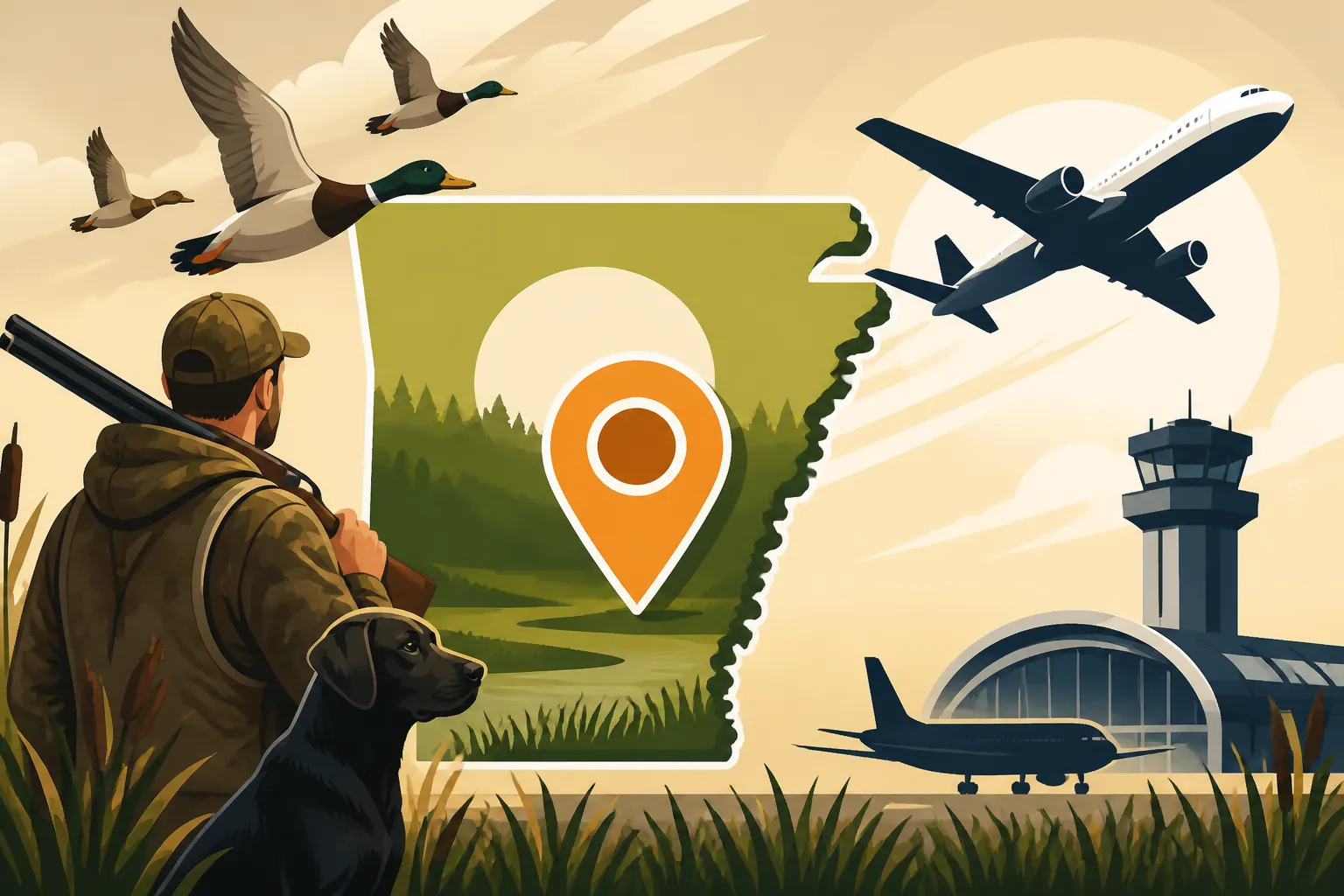
Heading to Arkansas for a duck hunt is an experience unlike any other, but getting there can feel like half the battle. From navigating airline rules with your gear to figuring out which airport is actually closest to the timber and rice fields you're dreaming of, the logistics can be overwhelming. This guide is here to untangle that travel knot, helping you pinpoint the best airports for your Arkansas duck hunting adventure and streamline your journey from touchdown to flooded timber.
The Central Hub: Bill and Hillary Clinton National Airport (LIT)
When you're looking at a map and trying to figure out the most straightforward route to Arkansas's prime duck hunting, the Bill and Hillary Clinton National Airport (LIT) in Little Rock often comes up as the most sensible option. It's centrally located within the state, making it a common choice for hunters heading to various regions, especially the legendary Grand Prairie.
Your Gateway to the Grand Prairie and Beyond
LIT serves as the largest commercial airport in Arkansas, offering a good number of direct flights from major hubs across the country. For many hunters, flying into Little Rock puts them within a reasonable driving distance of some of the most famous duck hunting areas, like those around Stuttgart, known affectionately as the "Duck Capital of the World." The drive from LIT to Stuttgart, for instance, is typically about an hour to an hour and a half, depending on traffic and your exact destination. This proximity is a huge advantage, especially when you've got a tight schedule and are eager to get into the field.
Beyond Stuttgart, LIT is also a viable option if your hunt takes you to areas north or south of the Grand Prairie within the central Delta region. You might be heading to a private lease near Hazen, a WMA closer to Des Arc, or even further south towards Pine Bluff. While the drive times will naturally extend, the convenience of a major airport for flight options and rental car availability often outweighs the extra miles on the ground. Think about how many people choose to fly into this spot for their Arkansas Duck Season Dates planning.
Navigating Ground Transportation from LIT
Once you land at LIT, your next step is almost certainly a rental vehicle. The airport hosts all the major rental car agencies, which is a blessing when you're traveling with a group or have a lot of gear. It's worth noting that during peak duck season, especially around the Arkansas Modern Gun Season Dates that overlap with some duck splits, rental cars can be in high demand. Booking well in advance is not just a recommendation; it's practically a necessity. You don't want to land in Little Rock with a mountain of gear, visions of greenheads dancing in your head, only to find the rental car lot nearly empty.
When considering your vehicle choice, remember you'll likely be driving on rural Arkansas roads, some of which can be muddy or less maintained, especially if you're venturing off the main highways to access specific hunting spots or lodges. A truck or an SUV with decent ground clearance and four-wheel drive can be a real asset, particularly if you anticipate rain or need to haul a trailer with ATVs. Don't underestimate the need for a reliable vehicle that can handle a little grit – your rental agreement might frown on taking it truly off-road, but a capable vehicle for unimproved access roads is a smart move. For more on getting around, consider reading Renting a Vehicle for a Delta Hunt.
Logistics for Gear and Groups
Flying with shotguns and other hunting gear requires careful planning, and LIT is accustomed to hunters. Airlines have specific regulations for transporting firearms, which generally involve checking them in a locked, hard-sided case, unloaded, and declared at the ticket counter. Ammunition usually needs to be in its original packaging or a suitable container, separate from the firearm, and often has weight limits. Always double-check your specific airline's policies well before your flight, as they can vary.
For larger groups, coordinating flights and ground transport is key. Consider carpooling from the airport to minimize rental car costs and make it easier to stay together. Many hunting lodges and outfitters, especially those that cater to out-of-state hunters, might offer shuttle services from LIT, or at least be able to recommend local transport options. If you're looking at booking a hunt through a service like BookYourHunt, they often have insights into these logistics and can connect you with guides who know the best ways to get their clients to camp. This can save you a ton of hassle after a long travel day.
Eastern Arkansas Access: Memphis International Airport (MEM)
While Little Rock is a solid choice, many duck hunters find that Memphis International Airport (MEM) offers an equally, if not more, convenient gateway, particularly if their hunt is focused on the eastern side of the Arkansas Delta. The drive across the Mississippi River bridge and into eastern Arkansas is a common pilgrimage for waterfowlers.
Proximity to the Delta's Heart
Memphis International Airport is strategically located to serve not only western Tennessee but also eastern Arkansas. For hunters targeting areas like the famed Bayou Meto WMA, Dave Donaldson Black River WMA, or the numerous private rice and timber leases in counties like Arkansas, Prairie, Monroe, or Poinsett, MEM can actually be closer than LIT. Driving times from MEM to popular hunting towns like Stuttgart, Roe, or Weiner can range from an hour and a half to two and a half hours.
What makes MEM particularly attractive is its larger array of flight options. As a bigger hub, it often has more direct flights and potentially more competitive pricing, which can be a deciding factor for hunters coming from further afield. This wider selection means you might find a more convenient flight schedule or save a few bucks on airfare, allowing you to put that money towards your Arkansas Hunting Licenses and What They Cost or perhaps some new decoys.
Rental Car Considerations and Cross-State Travel
Similar to LIT, all major rental car companies operate out of MEM. Again, booking ahead, especially during peak season, is crucial. While you might not be worried about deeply rutted roads immediately outside the airport, you'll still be driving a fair distance into rural Arkansas. The same advice about considering a truck or SUV applies.
Crossing the Mississippi River from Memphis into Arkansas is usually straightforward, but be mindful of rush hour traffic if you're arriving or departing during those times. Once you're across the bridge and heading west, you'll mostly be on well-maintained highways. However, once you turn off into the smaller towns and approach your hunting area, the roads can quickly become gravel or dirt. It’s all part of the adventure, but it’s something to factor into your travel time and vehicle choice. Many hunters coming to the Delta specifically for ducks will find this route familiar, making Getting to the Arkansas Delta part of their annual ritual.
When MEM Makes More Sense
MEM often makes more sense if your hunting party is coming from states to the east or northeast of Arkansas, or if flight connections are simply better through Memphis. If you've booked a hunt with an outfitter based in the eastern Delta, they might even explicitly recommend MEM for its convenience.
For example, if your destination is one of the many renowned Stuttgart and Grand Prairie Duck Lodges, both LIT and MEM are viable, but MEM's flight schedules might just align better for your group. Always check the exact location of your lodge or hunting area before committing to an airport. Sometimes, an extra 30 minutes of driving from one airport over the other can mean the difference between getting to camp before dark or fumbling in the pitch black.
Smaller Regional Options and Private Aviation
While LIT and MEM are the giants of air travel for Arkansas duck hunters, there are a few smaller airports that can be invaluable under specific circumstances, and for those with the means, private aviation offers unparalleled convenience.
Jonesboro (JBR) for Northeast Delta Access
For hunters targeting the extreme northeast portion of the Arkansas Delta, particularly around areas like the Cache River or Dave Donaldson Black River WMA, the Jonesboro Municipal Airport (JBR) can be a dark horse contender. It's a much smaller regional airport with limited commercial service, typically connecting through larger hubs like Dallas/Fort Worth or St. Louis.
The main advantage of JBR is its direct proximity to some prime hunting real estate. If you can find a flight that works with your schedule and budget, flying into Jonesboro can cut down on significant driving time compared to coming from Little Rock or Memphis. However, rental car options might be more limited, and flight availability is definitely scarcer. It's worth checking if you're truly focused on that specific corner of the state, but for most, it's not the primary gateway.
Considering Private Airfields for Convenience
For those who prioritize speed and direct access, or who are flying a private plane, Arkansas is dotted with numerous small municipal and county airfields. Towns like Stuttgart, De Witt, Hazen, and Brinkley all have local airports capable of handling private aircraft. This option completely bypasses the commercial airport hustle, security lines, and baggage claim delays. Imagine landing just a few miles from your hunting lodge, loading your gear directly into a waiting truck, and being in the blind in record time.
The downside, of course, is the cost and logistics associated with private aviation. However, if you're part of a corporate group or a well-funded hunting club, this can be an incredibly efficient way to travel. It allows you to avoid the complexities of Flying With a Shotgun to Arkansas through commercial airlines, and the headaches of coordinating rental cars for multiple people and heavy gear. When using a service like GoHunt to research potential hunting destinations or outfitters, sometimes they can provide insights into guides who operate near these smaller airfields.
Flying with Firearms and Hunting Gear
This is often the most stressful part of travel for many hunters. While airlines are generally experienced with firearms, knowing the rules is vital to avoid unnecessary delays or issues.
Airline Regulations for Sporting Arms
Every airline has its own detailed policy regarding the transport of firearms, and these rules are subject to change, so always check directly with your chosen carrier well in advance of your trip. Generally, you'll need to:
- Declare Your Firearm: Inform the airline agent at the check-in counter that you are checking a firearm. Never carry a firearm, or even a component like a bolt, onto the plane.
- Unloaded and Secure: The firearm must be unloaded and encased in a hard-sided, locked container. The lock must be strong enough that it cannot be easily opened. TSA-approved locks are generally acceptable. Only you should have the key or combination.
- Ammunition: Ammunition must typically be stored in its original manufacturer's box or a container specifically designed for ammunition. It must be separated from the firearm itself, usually in a separate piece of checked luggage, and has specific weight limits (often 11 pounds per passenger).
- Magazines: Detached magazines are usually fine in checked luggage, but ensure they are unloaded.
- Fees: Many airlines charge an oversized or extra baggage fee for firearm cases, so factor this into your budget.
Failure to follow these rules can lead to significant delays, fines, or even having your firearm confiscated. Be patient, polite, and prepared for questions from airline or TSA staff. This process is standard for Modern Gun Tactics on Arkansas Public Land and private land hunters alike.
Packing Your Decoys, Waders, and More
Beyond firearms, hunters often travel with a significant amount of other gear. Waders, hunting clothes, calls, decoy bags, and specialized boots can quickly fill luggage allowances and add to weight.
- Consolidate and Prioritize: Consider what you truly need versus what might be available for rent or purchase locally. Some lodges provide waders or even loaner guns.
- Heavy Items: Pack heavier items like boots and ammunition (following rules) in bags that are less likely to incur overweight fees.
- Soft-Sided Decoy Bags: If you're bringing your own decoys (less common for most flying hunters unless they are specialized), soft-sided bags can sometimes be checked, but they are bulky. Most outfitters will have decoys already set up.
- Layer Your Clothing: Dress in layers for the flight, especially if you're coming from a warmer climate and heading to a chilly Arkansas morning. This helps save space in your checked bags.
- Carry-On Essentials: Keep vital personal items, medications, and perhaps a hunting call or two in your carry-on, just in case your checked luggage is delayed.
Remember, the goal is to get all your essential gear to Arkansas safely and legally. Being prepared and patient is your best strategy.
Comparison of Key Airports for Arkansas Duck Hunting
Here's a quick overview to help you decide which airport might be best for your next Arkansas duck hunt:
| Airport | IATA Code | Primary Service Area | Pros | Cons | Typical Drive to Stuttgart |
|---|---|---|---|---|---|
| Bill and Hillary Clinton National | LIT | Central Arkansas, Grand Prairie | Central location, major rental car presence, good flight options | Can still be 1+ hour drive to prime spots | 1 hour 15 min |
| Memphis International | MEM | Eastern Arkansas Delta, Western Tennessee | Larger flight selection, often good for eastern Delta access | Cross-state drive (Arkansas/Tennessee), can be further for western Delta | 1 hour 45 min |
| Jonesboro Municipal | JBR | Northeast Arkansas Delta | Closest to specific northeast Delta hunting areas | Limited commercial flights, fewer rental car options | 2 hours 15 min |
| Local Private Airfields | Varies | Specific towns (e.g., Stuttgart, De Witt, Hazen) | Direct access to hunting grounds, no commercial airport hassle | Only for private planes, higher cost, requires coordination | N/A (direct to area) |
Planning Your Hunt Beyond the Flight
Choosing the right airport is just one piece of the puzzle. A successful Arkansas duck hunt involves careful planning across several fronts.
Combining Flight Plans with Lodge Bookings
Your flight destination should ideally align seamlessly with your hunting lodge or outfitter's location. If you've booked a guided hunt, ask your outfitter which airport they recommend or if they offer shuttle services. Many of the premier Booking an Arkansas Duck Hunt services cater specifically to out-of-state clients and are well-versed in travel logistics. They often have preferred routes or even specific pick-up points.
Consider the timing of your flights relative to your hunt schedule. If you arrive late in the day, you might miss a scouting opportunity or the initial hunt briefing. Likewise, if you depart too early on your last day, you might cut your final hunt short. Factor in travel time from the airport to the lodge, check-in, and time to organize your gear.
Utilizing Online Resources for Trip Planning
The digital age has made planning hunting trips much easier. Websites like BookYourHunt and GoHunt are fantastic resources for researching outfitters, reviewing hunting opportunities, and sometimes even getting insights into travel logistics for specific regions. You can compare different guided operations, read reviews from other hunters, and get a better feel for what to expect before you commit.
These platforms often provide detailed descriptions of what's included in a hunt package, which can help you understand what gear you might need to bring versus what the outfitter provides. This information can be invaluable for minimizing what you have to haul on a plane. For example, knowing if an outfitter provides blinds or calls can significantly lighten your load. Taking advantage of these tools can alleviate a lot of the stress that comes with planning a big trip, letting you focus more on the excitement of chasing Mallards in the Arkansas Delta.
Ultimately, a well-planned trip starts long before you step foot on a plane. By understanding your airport options and coordinating your travel with your hunting plans, you'll be much better prepared to enjoy every moment of your Arkansas duck hunting adventure.
Disclaimer
This article is for general informational purposes only and does not constitute professional advice. Laws, prices and regulations vary by location and change over time. Consult a qualified professional for guidance on your specific situation.