Are There Breeding Mountain Lions in Arkansas?
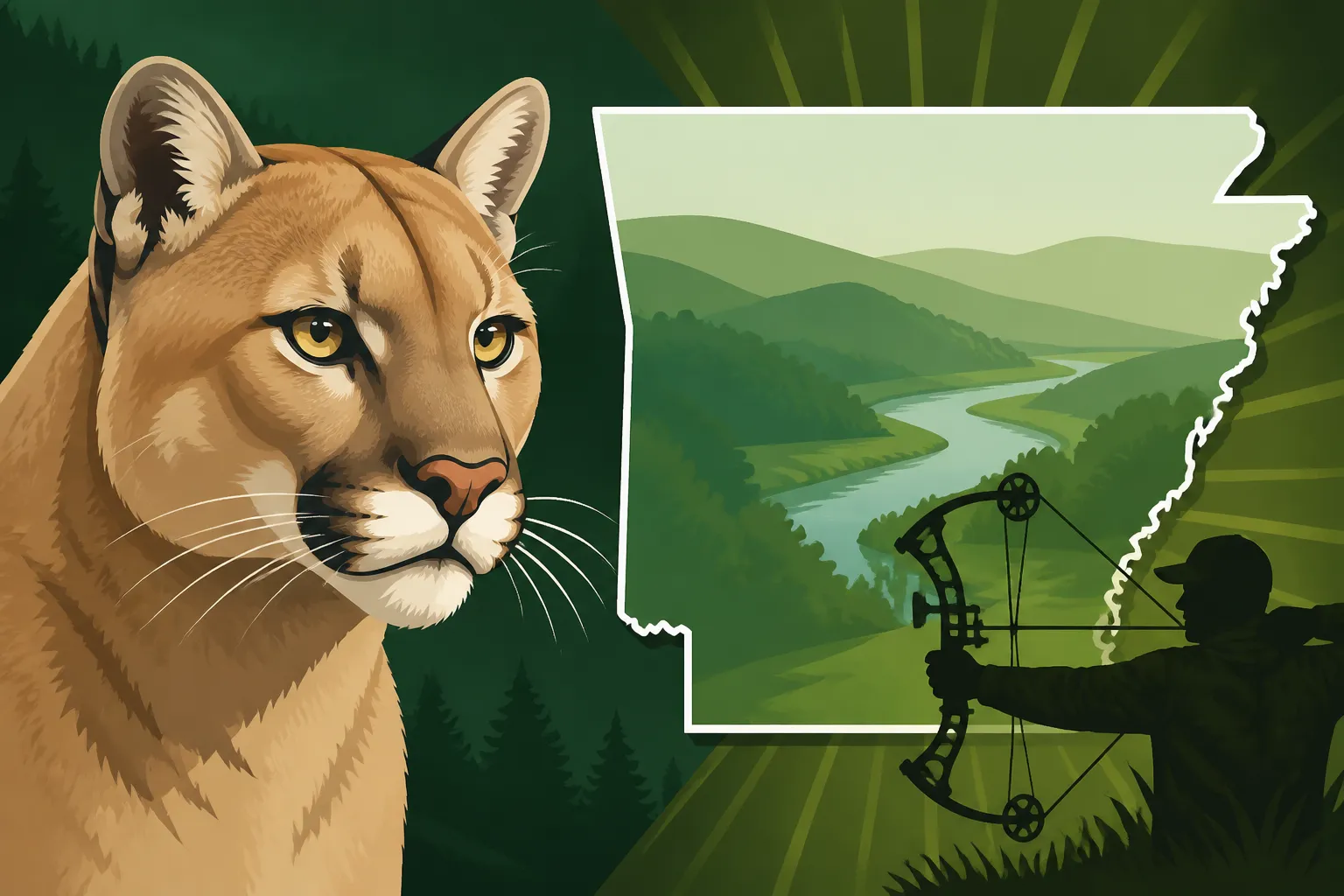
The question of whether breeding mountain lions exist in Arkansas is one that sparks curiosity and debate among hunters, hikers, and rural residents across the state. Many folks swear they've seen a mountain lion, a cougar, a panther – whatever you want to call that big, long-tailed cat. Yet, officially, the Arkansas Game and Fish Commission (AGFC) maintains that while transient male mountain lions do pass through, there is no evidence of a self-sustaining, breeding population in our state. This guide will dive deep into the real story behind these sightings, what a "breeding population" truly means, and what the latest scientific evidence tells us about this elusive predator in the Natural State.
The Elusive Arkansas Mountain Lion: Fact vs. Fiction
For generations, stories of mountain lion sightings have circulated around Arkansas campfires and coffee shops. It's almost a rite of passage for some to claim they've glimpsed the ghostly shape of a big cat slipping through the shadows. The sheer mystique of these powerful predators, coupled with the dense, rugged landscapes of the Ozarks and Ouachitas, makes it easy to believe they've found a secret stronghold here. But separating the myth from the reality is often tougher than tracking a phantom deer through a thicket.
Historical Perspective and Disappearance
Arkansas was once home to a robust population of mountain lions. Historically, these magnificent cats roamed freely across much of the eastern United States, including our river bottoms, forested hills, and piney woods. However, relentless hunting, habitat loss, and human encroachment through the 19th and early 20th centuries led to their extirpation from Arkansas, just as it did in many other eastern states. By the mid-20th century, most wildlife biologists believed the eastern cougar, as a distinct subspecies, was effectively gone, vanishing into history like the passenger pigeon. While we certainly regret the loss of these incredible animals, understanding their historical presence helps us frame the current discussion. It's not that they never lived here; it's that they were systematically removed.
The forests that once provided ample prey like deer and a safe haven for these predators were fragmented by farming and development. Without the vast, unbroken wilderness they needed to thrive and reproduce, their numbers dwindled until they were no longer a viable population. This historical context is crucial, because while many hope for their return, recreating the conditions that supported them centuries ago is a monumental challenge.
The Nature of Modern Sightings and Evidence
Today, reports of mountain lion sightings pop up regularly, often accompanied by blurry photos or secondhand accounts. A deer hunter might describe seeing a long tail disappear into a ravine while on a stand, or a homeowner might find unusual tracks near their chicken coop. These individual experiences are powerful and real to those who have them. You hear stories of a big cat crossing a logging road in the Ouachitas, or a fleeting glimpse of something far too large to be a bobcat darting across a field edge near the Arkansas River Valley Public Land. It's these kinds of personal testimonies that keep the idea of mountain lions alive in the public consciousness.
However, many of these sightings turn out to be misidentifications. Large domestic cats, coyotes, bobcats, or even large dogs can easily be mistaken for a mountain lion, especially at a distance, in poor light, or when adrenaline is pumping. In some cases, people have been known to mistake a healthy bobcat, which can be surprisingly large, for a cougar if they only catch a quick glimpse. The key distinguishing feature of a mountain lion is its incredibly long, thick tail, often as long as its body, with a dark tip. This is a detail often missing or misidentified in anecdotal reports. As hunters, we're always scanning the woods, and our minds can sometimes fill in the blanks, especially when we want to see something truly wild and rare. Tools like GoHunt for scouting or researching general wildlife movements can help us better understand what animals are typically in an area, though it won't directly confirm an elusive cat.
Understanding a Breeding Population: What Biologists Look For
When wildlife agencies like the AGFC say there's no evidence of a breeding mountain lion population, they're not dismissing all sightings outright. Instead, they're referring to a very specific set of biological criteria that defines a self-sustaining group of animals. It's far more than just a few individuals passing through; it requires consistent, verifiable signs of reproduction.
Key Indicators of a Self-Sustaining Population
For a wildlife agency to declare a breeding population exists, they look for undeniable evidence of reproduction over time, across a specific geographic area. This includes:
- Verified Sightings of Females with Young: The absolute gold standard. This means clear photographs or video of an adult female mountain lion accompanied by kittens or juvenile cats. Not just one blurry image, but repeated, verifiable evidence of a mother raising offspring.
- Discovery of Dens: Finding active den sites with kittens is another irrefutable sign. These dens are typically well-hidden and contain obvious signs of recent occupancy by a mother and her young.
- Genetically Distinct Populations: DNA evidence from scat, hair, or deceased animals that shows genetic diversity consistent with a resident, reproducing population, rather than individuals dispersing from distant established areas.
- Consistent Distribution of Sexes and Ages: A healthy breeding population would show a mix of adult males, adult females, and various age classes of young, not just a sporadic appearance of lone males.
- Long-Term Monitoring: Extensive camera trapping, track surveys, and field investigations over many years confirming the sustained presence and successful reproduction of multiple generations.
Without these indicators, even frequent sightings of individual animals don't confirm a breeding population. A single male mountain lion can cover hundreds of miles in search of new territory and mates, meaning its presence is more a sign of dispersal than a resident, breeding group. When you're out Scouting Arkansas Public Land Before Season, you might find all sorts of tracks, but interpreting them correctly takes experience and often, expert verification.
The Importance of Verified Evidence
The emphasis on "verified" evidence is critical for wildlife management. It means the evidence has been examined and confirmed by trained biologists, often through DNA analysis, photographic comparison, or physical examination of tracks and scat. It's about ruling out other possibilities and establishing certainty. A hunter might see a large track, but a biologist can distinguish it from a large dog print, a black bear cub, or even a very large bobcat track, especially when paired with stride length and other context.
For instance, finding a fresh, unambiguous mountain lion track is a strong indicator of presence, but it doesn't tell you if it's a male or female, or if it's accompanied by young. Finding multiple tracks of different sizes together would be much stronger. This rigor is necessary because misidentifications can lead to misplaced public concern or management efforts based on incorrect assumptions. The scientific community needs concrete proof, not just compelling anecdotes, to draw conclusions about population status. This objective approach ensures that conservation efforts and public information are based on sound ecological data.
Arkansas Game and Fish Commission's Stance and Findings
The Arkansas Game and Fish Commission (AGFC) takes mountain lion reports seriously. They understand the public's fascination and concern, and they actively investigate credible sightings. However, their official stance remains consistent: while transient mountain lions have been confirmed in Arkansas, there is no evidence of a breeding population.
AGFC's Approach to Sightings
When a report comes in, especially one with potential evidence like clear photos, video, or physical tracks, the AGFC typically dispatches wildlife biologists or enforcement officers to investigate. They use their expertise to:
- Evaluate Photos and Videos: Analyzing images for key characteristics like tail length, body proportion, and distinctive markings. They can often quickly identify misidentified animals.
- Examine Tracks: Taking measurements, plaster casts, and comparing them to known mountain lion prints. Mountain lion tracks typically show no claw marks (claws are retractable), and the heel pad has a distinctive three-lobe shape at the rear.
- Collect DNA Evidence: If scat, hair, or a deceased animal is found, samples are sent for genetic analysis to confirm species identification and determine its origin. This is a crucial step in understanding the individual animal's lineage.
- Camera Trap Surveys: In areas with persistent reports, the AGFC may deploy trail cameras to capture images of elusive wildlife. While these are excellent for monitoring deer, bears, and other game, catching a mountain lion is a rare event.
The AGFC's detailed investigations are what lead to their conclusions. They aren't trying to hide anything; they're reporting what the verifiable science tells them. For any hunter interested in wildlife, keeping up with AGFC reports and understanding how they manage species like White-Tailed Deer Across Arkansas or Black Bears in the Arkansas Ozarks and Ouachitas can provide valuable context for understanding why the mountain lion situation is different.
Documented Confirmations and Their Implications
Over the years, the AGFC has had several confirmed mountain lion sightings in Arkansas. These confirmations, however, have almost exclusively been of young, male, transient cats. These animals were typically identified through DNA analysis from scat or hair, or from clear photos/video.
Here's a breakdown of what confirmed sightings usually reveal:
| Evidence Type | Implications for Breeding Population |
|---|---|
| Clear Photos/Video | Confirms presence of an individual animal, but not necessarily a resident female or breeding. |
| DNA from Scat/Hair | Confirms species, and often the sex and geographic origin (e.g., from a Western population). |
| Roadkill/Deceased Animal | Provides definitive species confirmation, often reveals sex and age. If female and pregnant, it's significant. |
| Confirmed Den Site | Strongest evidence for breeding. Indicates a female has successfully given birth and is raising young. |
| Female with Young | Strongest evidence for breeding. Direct observation of successful reproduction. |
Crucially, in every confirmed case of a mountain lion in Arkansas, the animal has been a lone male, likely dispersing from an established population far to the west. There has never been a confirmed case of a female mountain lion with cubs, or a den site, or any evidence that suggests a pair has settled down to reproduce. This distinction is paramount. A single male, no matter how often sighted, does not make a breeding population. These confirmed individuals are simply passing through, often in search of new territory or a mate, only to disappear again.
Where Do the Confirmed Mountain Lions Come From?
If Arkansas doesn't have a breeding population, but we do have confirmed sightings, where exactly do these occasional mountain lions originate? The answer lies in the incredible dispersal capabilities of young male cougars from established populations in the western United States.
Dispersal Patterns of Western Cougars
Mountain lions, also known as cougars or pumas, have a vast range across North and South America. The largest and most robust populations in the United States are found in the Western states, such as Texas, Oklahoma, Colorado, and New Mexico. As these populations thrive, young male cougars are often forced to leave their birth territories to avoid competition with older, dominant males and to find their own hunting grounds and potential mates. This is a natural behavior known as dispersal.
These dispersing males can travel hundreds, even thousands, of miles. They follow river corridors, forested areas, and other natural landscapes, essentially exploring until they find suitable unoccupied territory or encounter an insurmountable barrier. Arkansas sits on a potential dispersal route for these animals, particularly from populations in Texas and Oklahoma. A young male making its way eastward might pass through parts of Arkansas, especially the more remote and rugged areas like the Ozark National Forest Hunting or Ouachita National Forest Hunting. It's a testament to their incredible resilience and adaptability that they can cover such distances. Some have even been documented traveling as far east as Connecticut and New York, though these individuals are exceedingly rare and typically do not establish new breeding grounds.
The Challenges of Eastward Movement
While a young male cougar might wander into Arkansas, establishing a breeding population is a far more complex undertaking. The challenges are numerous:
- Finding a Mate: A lone male needs a female to reproduce. If no female mountain lions are dispersing eastward into Arkansas, or if they don't survive the journey, then reproduction simply can't occur. The odds of both a male and female simultaneously dispersing into the same area, surviving, and finding each other are incredibly slim.
- Habitat Fragmentation: Although Arkansas has significant forest cover, especially in the Ozarks and Ouachitas, it's not the continuous wilderness found in many Western states. Roads, towns, and agricultural lands create barriers and increase the risk of human-wildlife conflict for wide-ranging predators. These fragmented habitats make it harder for animals to establish large, secure territories.
- Human Population Density: Compared to truly remote wilderness, Arkansas has a higher human population density and more rural development than core mountain lion country. This increases the chances of encounters, whether accidental or intentional, that can lead to the animal's demise.
- Survival Rates: The journey itself is fraught with peril. Dispersing animals face dangers from traffic, poaching (intentional or accidental), lack of familiar prey, and conflicts with other predators like coyotes or even Black Bear Hunting in Arkansas. Many simply don't survive the long trek.
So, while the occasional confirmed mountain lion is a fascinating event, it doesn't signify a return of the species to Arkansas in a breeding capacity. It simply highlights the incredible, natural drive of these animals to expand their range. For those of us who spend a lot of time in the woods, understanding these biological realities helps us appreciate the natural world around us, even as we keep a hopeful eye out for that undeniably long tail. The AGFC continues to monitor for Mountain Lion Reports in Arkansas and other large predators, using science to inform the public and guide wildlife management.
Disclaimer
This article is for general informational purposes only and does not constitute professional advice. Laws, prices and regulations vary by location and change over time. Consult a qualified professional for guidance on your specific situation.