Arkansas Dove Harvest Numbers
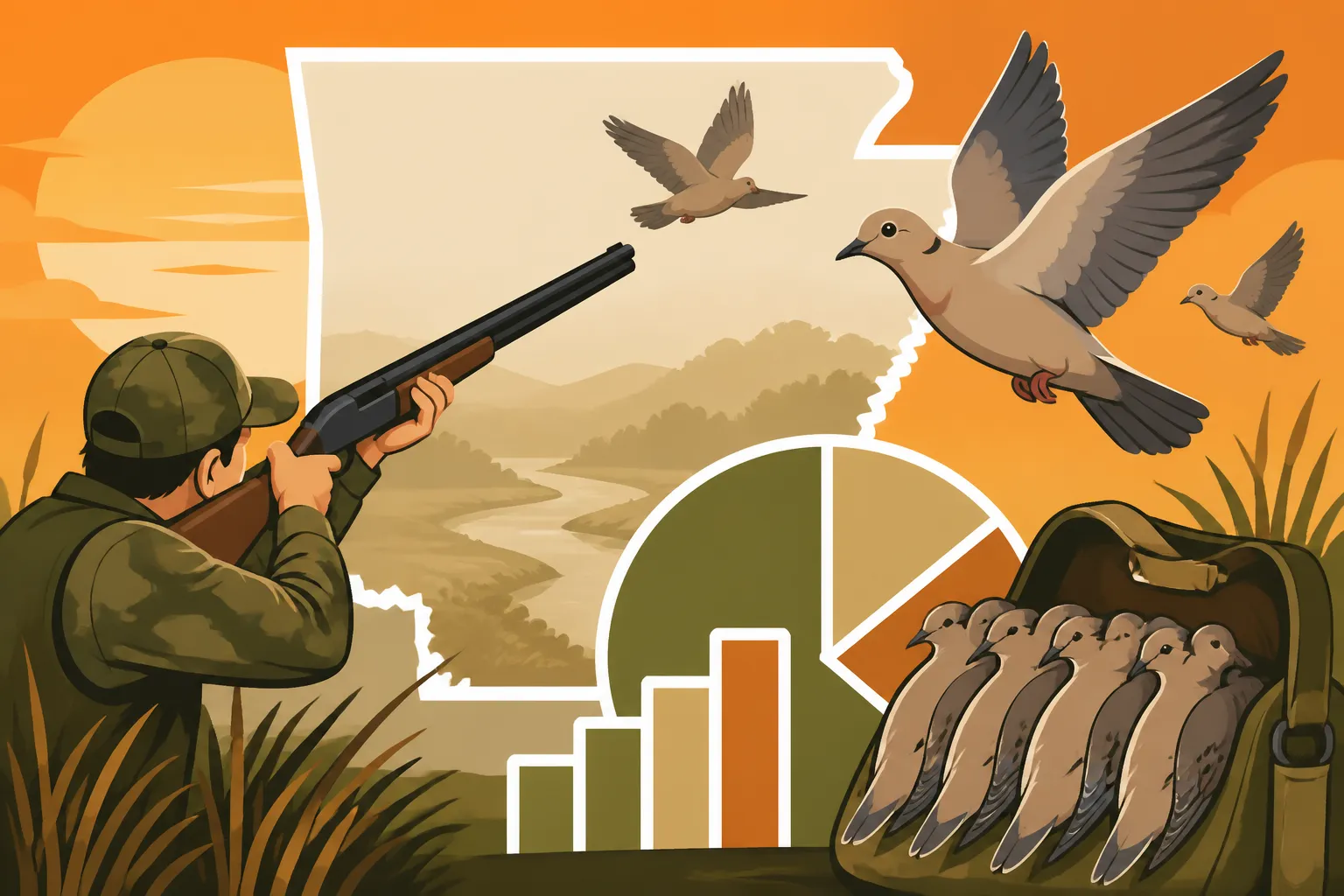
When you're eagerly anticipating the start of dove season in Arkansas, it's easy to wonder: "What are my chances this year?" It can be frustrating to put in the time scouting and preparing, only to wonder if there will even be enough birds around to make it worthwhile. This guide is here to shed some light on the various factors that influence Arkansas's annual dove harvest numbers, helping you understand the bigger picture so you can plan your hunts more effectively and improve your odds of success.
The Landscape of Arkansas Dove Harvest: What Hunters Need to Know
Dove hunting in Arkansas is a cherished tradition, kicking off the fall hunting season for many of us. There’s nothing quite like the crack of a shotgun on a warm September afternoon, the camaraderie of friends and family in a cut field, and the fast-paced action of these acrobatic birds. But while the experience is consistent, the actual number of doves harvested year to year can fluctuate quite a bit. Understanding these broader trends, rather than just focusing on your own immediate field, can give you a better sense of what to expect and where to concentrate your efforts.
Think of the dove harvest numbers as a large puzzle, with many pieces contributing to the final picture. It's not just about how many birds are out there, but also how many hunters are afield, what the weather's doing, and even the agricultural practices that change year to year. For instance, a bumper crop of birds doesn't automatically mean a record harvest if those birds are scattered across vast areas with abundant natural food sources, making them harder to concentrate. Conversely, a year with fewer birds might still see a respectable harvest if specific feeding areas draw them in like a magnet. This overall understanding is crucial, especially when you're making decisions like where to travel for your hunt or if you should invest more time in scouting. Tools like GoHunt can be incredibly useful here, allowing you to examine different regions and historical patterns (without specific numbers, of course) to get a feel for where conditions might be most favorable.
Why Harvest Numbers Matter to the Hunter
For the average hunter, harvest numbers aren't just statistics collected by wildlife agencies; they're a barometer of the season's potential. A higher overall harvest typically suggests a robust dove population, favorable weather conditions during nesting and migration, and ample food sources. This often translates into more opportunities for hunters across the state. On the flip side, lower harvest numbers can indicate challenges like poor nesting success, drought conditions, or even over-pressured areas. Knowing these trends can help you manage your expectations and adjust your hunting strategy.
It's a lot like trying to predict the stock market; while you can never be entirely sure, understanding the underlying economic indicators helps you make more informed decisions. For us hunters, these indicators include population estimates, weather patterns, and agricultural reports. If the statewide harvest numbers suggest a tougher season, it might be a year to focus even more heavily on securing prime private land access or meticulously scouting public areas to find those honey holes. It could also mean adjusting your expectations from a limit every time to enjoying the simple act of being outdoors and taking the opportunities as they come.
The Role of Hunter Participation
One often-overlooked aspect of harvest data is hunter participation itself. Even with a healthy dove population, if fewer hunters head afield, the overall harvest numbers will naturally be lower. This can happen for various reasons: economic downturns, changes in work schedules, or even just shifts in interest towards other hunting seasons. In Arkansas, dove hunting is a social event for many, and the tradition itself drives participation. However, if factors like scorching early season heat deter hunters, it can impact the total take.
Consider a scenario where the birds are plentiful, but an unusually hot early September weekend keeps many folks home or sends them to the lake instead of the dove field. This could lead to a lower harvest report despite there being plenty of birds to go around. On the other hand, a cooler-than-average opening weekend could draw out more hunters, boosting the numbers even if the birds aren't exceptionally abundant. This is why agencies like the Arkansas Game and Fish Commission (AGFC) also track hunter effort, recognizing that harvest isn't just about the birds, but also about the people pursuing them. It’s a dynamic interplay that shapes the final figures we see.
Key Factors Driving Arkansas's Annual Dove Harvest Numbers
Arkansas's dove harvest isn't a static figure; it's a dynamic result of numerous environmental and biological factors, some of which are entirely out of our control. From the weather patterns of spring and summer to the availability of crucial food sources, these elements conspire each year to shape the health of the dove population and, consequently, the success of our hunts. Understanding these underlying drivers can help you make more informed decisions when you're planning your own season.
Weather's Influence on Nesting and Migration
Weather plays an enormous role in dove populations. The spring and summer nesting season is particularly critical. Mild winters followed by warm, dry springs often lead to higher nesting success, meaning more young doves making it to flight stage. Mourning doves are prolific breeders, often having multiple clutches in a season, so good weather during these crucial months can quickly build up their numbers. Conversely, prolonged periods of cold, wet weather during nesting can devastate nests, leading to chick mortality and overall lower recruitment into the population.
Then there's the fall migration. Early cold fronts that sweep down from the north can push birds south quickly, sometimes even before the season opens in certain areas, or move them out of prime hunting locations. A mild fall, on the other hand, might keep birds around longer, offering more consistent hunting opportunities throughout the season. Hunters often watch weather forecasts not just for their comfort but to anticipate these shifts in bird movement. A strong north wind on an October morning can bring new flights of birds, while a prolonged warm spell might mean you're mostly hunting local birds that have been pressured for weeks. Mourning Dove Migration Timing is something many of us follow closely for this very reason.
Food Availability and Agricultural Practices
Doves are primarily seed-eaters, and their presence in an area is almost entirely dictated by food availability. This makes agricultural practices a huge factor in Arkansas. Fields of sunflowers, corn, millet, wheat, or even certain native grasses are dove magnets, especially if they are managed for hunting or recently harvested. The timing of these harvests is critical. A field of cut corn or soybeans can attract doves for weeks, providing consistent hunting. However, if farmers harvest early or late, or if crops fail due to drought or excessive rain, those traditional hot spots might be barren.
The shift in crop types across the state can also impact dove concentrations. For example, if fewer acres are planted in traditional dove-attracting crops in a given year, birds might be more dispersed or forced to rely more heavily on natural weed seeds. Additionally, the increasing prevalence of large-scale, efficient farming means fields are often cleaned up quickly after harvest, leaving less waste grain for doves. This can make scouting for those "dirty" fields with plenty of waste an even more vital part of your pre-season routine. It's why some hunters swear by tools like GoHunt that help them scout satellite imagery to identify agricultural patterns and potential food sources.
Hunting Pressure and Public Land Dynamics
The amount and distribution of hunting pressure also influences harvest numbers. On popular public lands, particularly those managed for doves, birds can become "educated" very quickly. After the opening day barrage, doves learn to avoid fields with heavy hunter presence, flying higher, coming in from unexpected directions, or abandoning those fields altogether. This intense pressure, especially during Arkansas Dove Opener and Later Splits, can lead to a rapid decline in harvest success after the initial rush.
For hunters targeting public land, understanding where and when pressure is heaviest is key. Some WMAs might offer fantastic hunting on opening day, but rapidly decline in quality. Other, less accessible areas, or those requiring more effort to reach, might hold birds longer. This is where scouting ahead of time, using tools like the AGFC map tool, and being willing to walk a little further can pay dividends. Scouting Arkansas Public Land Before Season is not just for deer or turkey, it's absolutely vital for doves too. Private land, by contrast, often sees less pressure, allowing birds to feed more consistently and providing better hunting throughout the season for those lucky enough to secure access.
Regional Nuances: Dove Harvest Across Arkansas's Diverse Terrain
Arkansas isn't a monolithic landscape, and neither is its dove hunting. What holds true for dove harvest in the flat, agricultural expanse of the Delta often differs dramatically from the rolling hills and pine forests of the Ouachitas or the rugged terrain of the Ozarks. Understanding these regional variations is crucial for any hunter hoping to maximize their chances, especially if you're traveling across the state for a hunt.
Delta Region: The Mecca for Doves
The Arkansas Delta, with its vast agricultural fields, has long been considered the epicenter for dove hunting in the state. This region, characterized by its rich, fertile soil, is a powerhouse for crops like rice, corn, soybeans, and wheat – all of which are prime food sources for doves. After harvest, these fields are often littered with waste grain, providing an irresistible buffet for large flocks of migratory birds. This abundance of food and open space typically leads to higher concentrations of doves and, subsequently, some of the highest harvest numbers in the state.
Hunters in the Delta often find success in fields specifically planted for doves, or those adjacent to water sources and roosting cover. The expansive nature of the region means birds have plenty of room to spread out, but they also tend to gather in very specific locations based on current food availability. This is why securing access to private land in the Delta, especially near major flyways or river bottoms, can be a game-changer. Even on public ground, understanding the local crop rotation and recent harvest activity is paramount. If you're wondering Hunting Doves on an Arkansas Field, chances are good that field is somewhere in the Delta.
Ozark and Ouachita Regions: Hill Country Opportunities
While the Delta gets much of the attention, the Ozark and Ouachita Mountain regions offer a different, but often rewarding, dove hunting experience. These areas are characterized by more varied terrain, including timber, scattered pastures, and smaller, often more isolated agricultural plots. Doves here tend to be more dispersed, often feeding on natural weed seeds in pastures, logging roads, or small cultivated fields, including food plots designed for other game species like deer.
Harvest numbers in the Ozarks and Ouachitas might not reach the staggering highs of the Delta, but they can still be very consistent for hunters who understand the local patterns. Success often hinges on finding those smaller, out-of-the-way fields, especially those near water and good roosting cover in timbered draws. Hunters here often rely on Reading an Ozark Bench for Deer or Wind and Thermals in Ouachita Hollows not just for big game, but also to understand how doves might move through the landscape, utilizing terrain features to their advantage. It's a different kind of hunt, often more solitary and focused on smaller pockets of birds, but no less satisfying.
Arkansas River Valley: A Blend of Both Worlds
The Arkansas River Valley acts as a transitional zone, blending elements of both the Delta and the mountain regions. Here, you'll find expansive river bottom farmlands interspersed with rolling hills and pockets of timber. This unique mix can create excellent dove hunting opportunities, as birds move between the larger agricultural areas and more secluded feeding and roosting sites in the surrounding uplands.
Harvest numbers in the River Valley can vary, often mirroring the agricultural intensity of specific locales within the valley. Areas with extensive corn or soybean production will naturally attract more birds than those dominated by pastureland. Hunters here benefit from being adaptable, ready to hunt both open fields and smaller, more timber-edge plots. The key is to pay attention to recent harvest activity and scout for birds moving between the river bottoms and the higher ground. Often, these birds will use timber lines and natural breaks in the landscape as their flyways, making scouting for these corridors a prime strategy.
Here's a simplified look at how regional factors can influence your dove hunting experience:
| Region | Primary Habitat Types | Typical Dove Behavior | Key to Hunter Success |
|---|---|---|---|
| Delta | Large agricultural fields (corn, beans, rice) | Concentrate in huge flocks on waste grain | Private land access, identifying active harvest |
| Ozarks & Ouachitas | Smaller pastures, timber edges, food plots | More dispersed, utilize natural seeds | Scouting isolated fields, understanding local movements |
| River Valley | Mix of large fields and rolling timbered hills | Move between open fields and timbered cover | Adaptability, scouting diverse habitat, finding flyways |
Translating Harvest Data into Successful Dove Hunts in Arkansas
Alright, so we've talked about the big picture, the environmental influences, and the regional variations that dictate Arkansas's dove harvest numbers. But how does all this information actually help you fill your vest on opening day, or even mid-season? The real trick is translating these broader trends and understandings into actionable strategies for your own hunts. It's about being prepared, adaptable, and knowing where to focus your limited time and effort.
Pre-Season Scouting: Your Best Bet
No matter what the general harvest reports suggest, your personal success hinges heavily on pre-season scouting. Knowing that the overall population is strong is encouraging, but you still need to find your birds. Doves are creatures of habit, often using the same flight paths and feeding areas year after year, until something changes. This is where you put in the legwork. Drive the backroads, look for concentrations of birds, identify active feeding fields, and note their flight lines. Pay attention to water sources and potential roosting areas, often dense timber or shelterbelts.
If you know, for example, that it was a banner year for nesting success, you might expect more local birds to be available. This means focusing your scouting on identifying those local food sources. If there was an early cold front predicted to push migratory birds through, you might shift your focus to fields along traditional migration corridors. Tools like GoHunt can be invaluable here, letting you view aerial maps to identify potential crop fields, timber lines, and water sources from home before you ever put boots on the ground. Using the AGFC Map App Offline is another fantastic resource for identifying public hunting grounds and their boundaries, which is crucial for ethical and legal scouting.
Adapting to In-Season Conditions
Harvest numbers are an annual snapshot, but hunting conditions can change by the day, or even by the hour, during the season. A hot, sunny day will see birds watering more frequently than a cool, overcast one. A strong north wind might bring in new birds, or push existing ones out. Being able to adapt on the fly is a hallmark of a successful dove hunter. If your opening day spot gets hammered and the birds disappear, don't be afraid to move. Have a few backup spots in mind from your scouting efforts.
This adaptability extends to your setup. Are birds flying high? You might need to adjust your decoy spread, use a mojo, or even consider a ground blind for better concealment. Is the field getting heavily pressured? Perhaps focusing on the edges, or looking for a more secluded corner, will be more productive. The birds themselves will tell you what's working and what's not, if you're paying attention.
Utilizing Resources and Understanding Regulations
Staying informed is another key part of converting generalized harvest data into personal success. Pay attention to local reports, talk to other hunters, and keep an eye on AGFC updates. These can sometimes offer insights into local bird concentrations or specific WMA conditions. Also, always, always be intimately familiar with the current regulations, including Arkansas Dove Opener and Later Splits, bag limits, shooting hours, and any specific WMA rules. These regulations are in place for a reason – to ensure sustainable populations for future hunts, and your adherence is crucial.
Understanding what makes a field attractive to doves, knowing their flight patterns, and being willing to adapt your strategy are the cornerstones of a successful season. The statewide harvest numbers give us a general outlook, a hopeful glimpse or a cautionary tale, but it's your effort in scouting and your flexibility in the field that ultimately determine the success of your Arkansas dove hunt.
Disclaimer
This article is for general informational purposes only and does not constitute professional advice. Laws, prices and regulations vary by location and change over time. Consult a qualified professional for guidance on your specific situation.