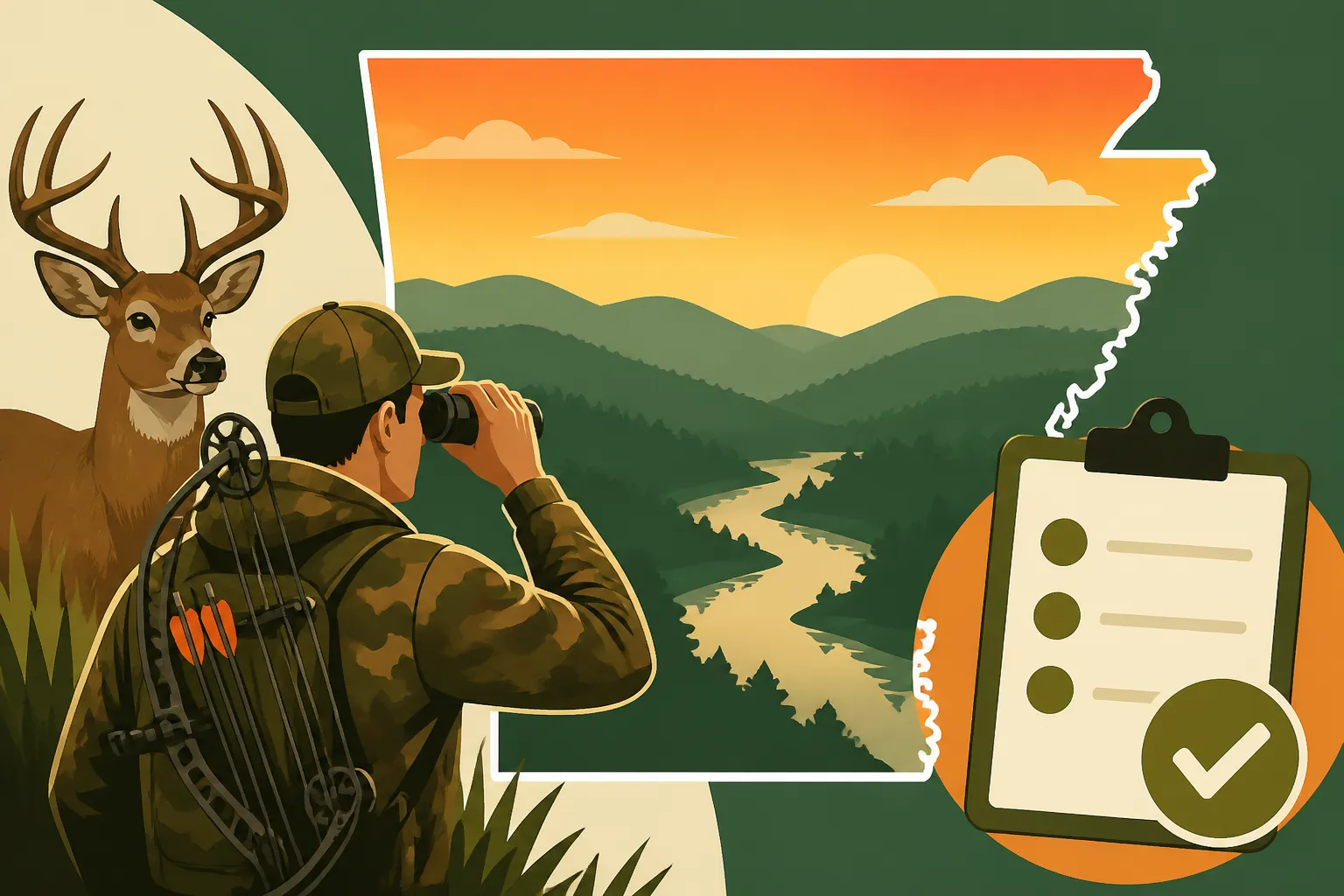
The Arkansas Bowhunter Observation Survey
For bowhunters in Arkansas, it can often feel like you're out there alone, trying to decipher the subtle language of the woods and figure out deer patterns that seem to shift with the wind. We've all spent countless hours in a stand, observing everything around us, wishing there was a way to pool that incredible knowledge. This guide will walk you through the Arkansas Bowhunter Observation Survey, a fantastic tool that helps connect those individual experiences into a collective understanding of our deer herd and other wildlife, giving us all better insights into the season.
What Exactly is the Arkansas Bowhunter Observation Survey?
You might hear a lot about harvest reports and hunter success rates, but the Arkansas Bowhunter Observation Survey is a different beast entirely. It's not about how many deer you put down, but about what you see when you're out there, bow in hand, patiently waiting. This survey is a crucial piece of the puzzle for wildlife managers, and it’s a direct way for you, the boots-on-the-ground hunter, to contribute valuable, real-time data to how our state’s deer herd is managed. It's a chance to turn your quiet moments of observation into impactful information that benefits everyone.
More Than Just a Harvest Report
When you fill out a harvest report, you're typically recording very specific, quantifiable data: the date, time, location, sex, and age class of the animal you harvested. That's essential for tracking overall population health and hunter success, no doubt about it. But a harvest report doesn't tell us about the mature buck that walked by just out of range, or the bachelor group of younger bucks you saw in September, or even the doe you observed with three healthy fawns in tow. It doesn’t capture the nuances of daily deer activity, rut progression, or fawn survival.
The Arkansas Bowhunter Observation Survey steps into that gap, gathering a much richer, more qualitative dataset. It’s designed to collect information on all the deer and other wildlife you encounter, whether you pull the trigger or not. This includes details like the number of antlered bucks seen, the number of antlerless deer, and critically, the number of fawns. It also captures observations about the timing and intensity of rutting behavior, which can vary widely across the state and from year to year. This deep dive into observed activity provides a living snapshot of what's happening in the woods, far beyond what simple harvest numbers can convey.
How Bowhunters Participate and Why It Matters
Participating in the Arkansas Bowhunter Observation Survey is surprisingly straightforward, and it's built right into the routine you probably already have as a dedicated bowhunter. Essentially, you're asked to record what you see during each hunting trip, regardless of whether you harvest an animal. This typically involves noting the date, the general location (often by county or specific Wildlife Management Area), and then a tally of the various deer and other species observed. Many hunters use apps like GoHunt or even simple field journals to log their sightings, which makes transferring the data to the survey much easier when they get home.
The reason your participation matters so much is that it provides a massive, distributed network of eyes and ears in the woods. Wildlife biologists can conduct spotlight surveys or aerial counts, but they can't be everywhere, all the time, observing natural behavior. Bowhunters, with their patient, low-impact approach, spend countless hours sitting still, watching, and listening. This makes them uniquely positioned to gather invaluable information on deer populations, sex ratios, fawn recruitment, and behavioral patterns. Every single observation contributes to a clearer picture, helping the Arkansas Game and Fish Commission make more informed decisions about season dates, bag limits, and management strategies that ultimately improve hunting opportunities for all of us. It truly is a collective effort to manage our incredible resources.
The Data Collected: What Hunters Are Reporting
The beauty of the Arkansas Bowhunter Observation Survey lies in its comprehensive approach to data collection. It’s not just about deer; it’s about understanding the entire ecological tapestry that supports our game species. When you sit in your stand, taking mental notes or jotting them down in an app like GoHunt, you're capturing moments that, when aggregated with thousands of other hunters' observations, create a powerful dataset. This data goes on to inform everything from general population estimates to specific management decisions related to disease or habitat.
Key Deer Observations and Trends
The core of the survey, naturally, revolves around deer. Bowhunters are asked to meticulously record various categories of deer observed during their hunts. This includes specific tallies for antlered bucks (often categorized by visible points to help understand age structure), antlerless deer (does and fawns without antlers), and fawns. Beyond just counts, the survey often collects information on behaviors associated with the rut, such as scrapes, rubs, and active chasing. This kind of behavioral data is invaluable for understanding Hunting the Arkansas Rut by Zone and predicting its peak activity.
For example, a sudden increase in reports of rutting activity in one zone compared to previous years might indicate a shift in the timing of peak breeding. Consistent reports of high fawn-to-doe ratios over several seasons can signal a healthy and growing deer population, while low ratios might raise concerns about fawn survival rates or predator impacts. This information, combined with harvest data and scientific surveys, helps biologists monitor the overall health, density, and age structure of the deer herd, influencing decisions like specific antler point restrictions or whether to allow additional antlerless harvest opportunities in certain areas. It's truly a granular look at the day-to-day lives of our deer.
Beyond Deer: Other Wildlife Insights
While deer are a primary focus, many observation surveys, including the one in Arkansas, often encourage or allow for the reporting of other wildlife. This often includes sightings of wild turkeys, which can provide critical insights into Arkansas Turkey Population Trends, brood success, and general distribution. Predators like coyotes and bobcats are also frequently reported, helping wildlife managers track their prevalence and potential impact on deer and turkey populations. Even incidental sightings of less common species can contribute to a broader understanding of ecosystem health and biodiversity across the state.
These broader wildlife observations are important for several reasons. First, they help paint a more complete picture of the landscape hunters are experiencing. For instance, a notable increase in coyote sightings might correlate with a decrease in fawn observations, suggesting a potential predation pressure. Second, they can highlight emerging trends in wildlife distribution or behavior that might not be captured by species-specific surveys. This holistic data empowers the Arkansas Game and Fish Commission to manage not just individual game species, but the entire habitat and interconnected wildlife community, ensuring a balanced and healthy environment for all. It's all about understanding how every piece fits together in our natural world.
How This Survey Benefits the Average Arkansas Hunter
As a bowhunter, you invest a lot of time, effort, and money into your passion. You scout, you practice, you brave the heat and the cold. So, knowing that your personal observations can contribute to a larger pool of data that directly informs hunting decisions is incredibly empowering. The Arkansas Bowhunter Observation Survey isn't just for biologists; it's a feedback loop that benefits every single person who steps into the woods with a bow, providing insights that can genuinely improve your hunting strategy and opportunities.
Understanding Regional and Statewide Deer Activity
Imagine being able to access a collective understanding of deer movement, rut intensity, and fawn numbers for your specific hunting zone or a public land area you frequent. That's exactly what the compiled data from the Arkansas Bowhunter Observation Survey offers. You can use this data to see how the Arkansas Deer Population Estimate is trending in your area, or to understand how the timing of the rut is playing out relative to historical averages. If you notice fewer rubs and scrapes than usual, or less chasing activity, the survey data might confirm that the peak rut hasn't quite hit, or perhaps that deer density is lower than expected.
This information can directly influence your hunting tactics. For instance, if the survey indicates a strong fawn crop in your zone, you might anticipate more does and younger bucks, or realize that pressure has caused mature bucks to become more nocturnal. If you're trying to time your hunt with the peak of Hunting the Arkansas Rut by Zone, the survey's aggregated reports on rutting behavior can be a far more reliable indicator than anecdotal evidence. Platforms like GoHunt often incorporate publicly available wildlife data, making it easier for hunters to visualize and apply these trends to their planning. It gives you a broader perspective beyond just your own property or immediate area, helping you to strategize more effectively throughout the long archery season.
Contributing to Conservation and Management Decisions
Beyond personal hunting strategies, participating in the Arkansas Bowhunter Observation Survey means you are an active participant in wildlife conservation and management. Your observations become part of the scientific data that the Arkansas Game and Fish Commission (AGFC) uses to make critical decisions. This includes setting Arkansas deer season dates, adjusting bag limits, determining specific regulations like the Buck Age Structure Under the Three-Point Rule in certain zones, and even addressing challenges like Chronic Wasting Disease. The more data they have, the better equipped they are to ensure the long-term health and sustainability of our deer herd.
For example, consistent reporting of a low number of fawns per doe might prompt biologists to investigate potential causes, such as habitat limitations, disease, or predator issues. If a specific area consistently shows a high density of deer but low buck-to-doe ratios, it might lead to management actions aimed at balancing the herd. The survey also helps track the general distribution of deer, informing where CWD surveillance efforts might need to be intensified. By simply recording what you see, you are providing crucial feedback from the field, acting as a vital partner with the AGFC in ensuring that future generations of Arkansans will have rich and thriving hunting opportunities.
Making the Most of Your Observations
Alright, so you're convinced that your observations matter – and they absolutely do! But how can you ensure your contributions to the Arkansas Bowhunter Observation Survey are as valuable as possible? It's not just about jotting down a few numbers; it's about consistency, accuracy, and understanding how to apply the collective wisdom back to your own hunting efforts. Think of it as refining your natural hunter's instinct with a bit of data-driven discipline.
Tips for Accurate and Consistent Reporting
To make your observations count, consistency is key. Try to report data for every hunting trip, even if you don't see anything. "Zero observations" is still data and helps establish a baseline. Before you head out, decide on a method for recording. A small notebook and pencil work fine, but many modern hunters find success with mobile apps that allow them to quickly log sightings right from their stand. Apps like GoHunt often have features that let you pinpoint your location, making it easier to accurately describe where you saw certain animals.
Focus on clear distinctions: antlered bucks versus antlerless deer, and differentiate fawns from adult does. Try to estimate age class for bucks if you can. Also, be mindful of double-counting. If a group of deer walks through, exits, and then re-enters the same area, it's generally best to count them as one group observed during that outing, rather than inflating the numbers. Pay attention to the details, like specific rutting behaviors (chasing, grunting, sparring) and the time of day these activities occur. This meticulous approach ensures that your data points are clear, reliable, and truly reflective of what happened during your hunt, bolstering the overall integrity of the survey.
Accessing and Interpreting the Survey Results
Once all those thousands of hunter observations are submitted, what happens to them? The Arkansas Game and Fish Commission compiles and analyzes this wealth of data, often making the results publicly available through reports on their website. It's a goldmine of information for anyone who wants to Scouting Arkansas Public Land Before Season or simply better understand deer behavior statewide. These reports might break down observations by deer zone, showing trends in buck-to-doe ratios, fawn recruitment, and the progression of the rut across different regions.
Learning to interpret these results can give you a significant edge. Look for patterns: Is the average number of bucks observed per 100 hours of hunting going up or down in your preferred zone? Are fawn sightings consistently low, suggesting potential challenges for herd growth? Does the peak rut activity consistently shift earlier or later in certain areas? Combining this survey data with tools like the Using the AGFC Map Tool and your own scouting notes can lead to a powerful, informed hunting strategy. You're not just relying on your own limited experience, but tapping into the collective wisdom of thousands of dedicated bowhunters, all working together to understand and improve Arkansas Hunting Licenses and What They Cost and experience.
| Observation Type | What it Tells Us About the Herd | How it Helps Hunters |
|---|---|---|
| Antlered Bucks | Age structure, buck presence, buck density. | Indicates mature buck potential in an area. |
| Antlerless Deer | Overall deer density, doe population. | Helps identify high-traffic areas, potential food sources. |
| Fawns | Reproductive success, fawn survival rates, herd growth potential. | Predicts future deer population, indicates healthy does. |
| Rutting Behavior | Peak breeding activity, rut timing, buck movement patterns. | Critical for timing hunts, rattling, and grunt calling. |
| Other Wildlife | Predator presence, overall ecosystem health, habitat quality. | Gives broader context, identifies potential competition. |
Disclaimer
This article is for general informational purposes only and does not constitute professional advice. Laws, prices and regulations vary by location and change over time. Consult a qualified professional for guidance on your specific situation.