Arkansas Hunters Feeding the Hungry
For many folks in Arkansas, hunting isn't just a passion or a tradition; it's a way to connect with the land and provide for their families. But what about those families who struggle to put food on the table? The reality of food insecurity touches communities across our state, and often, lean protein is one of the hardest things for food banks to acquire. This guide will walk you through how Arkansas hunters can make a tangible difference by donating their deer, ensuring that a valuable resource reaches those who need it most.
Understanding the Need for Venison Donation
It’s easy to think of hunger as an issue that happens "somewhere else," but the truth is, it's right here in Arkansas. Many families, through no fault of their own, face daily challenges in securing nutritious meals. That's where hunters step in, often without even realizing the full extent of the impact they can have.
The Reality of Food Insecurity in Arkansas
Imagine struggling to feed your kids, day after day. You might qualify for assistance, but fresh meat, especially lean protein, can be incredibly expensive and hard to come by. Food banks do amazing work, but their shelves are often filled with non-perishables, which are vital, but sometimes lack the full nutritional punch of fresh protein. This isn't just a minor inconvenience; it can have long-lasting effects on health, energy levels, and even a child's ability to learn and thrive in school. When you're constantly worried about where your next meal is coming from, it overshadows everything else. The struggle is very real for many of our neighbors, and it’s a burden no one should have to carry.
Why Venison is a Valuable Donation
Now, think about the bounty of our Arkansas woods. Whitetail deer are abundant, and venison is incredibly lean, packed with protein, and a fantastic source of essential nutrients. For families relying on food assistance, a package of ground venison isn't just "food"; it's a game-changer. It provides high-quality protein that's often missing from emergency food supplies, helping to build strong bodies and minds. Plus, it's locally sourced and natural, aligning with a growing desire for healthy, sustainable food options. When you consider the sheer volume of deer harvested annually in our state, the potential for venison to make a significant dent in food insecurity is truly enormous. It's a healthy, natural gift from the wild, straight to someone's dinner plate.
How Venison Donation Programs Work in Arkansas
Arkansas is fortunate to have dedicated programs that bridge the gap between hunters and hungry families. These organizations streamline the process, making it as easy as possible for you to contribute your harvest to a good cause. Knowing the basics of these programs is your first step toward making a real difference.
Arkansas Hunters Feeding the Hungry (AHFH) Program
The premier program in our state is Arkansas Hunters Feeding the Hungry (AHFH). This incredible initiative connects hunters with participating meat processors who then prepare the donated venison for distribution to local food banks and hunger relief agencies. AHFH works tirelessly to cover the processing costs, ensuring that hunters don't incur extra expenses when they choose to donate. They understand that most hunters are already dealing with license fees, gear costs, and the general expenses of a hunting trip, so removing the financial barrier to donation is a huge part of their success. The program relies on generous donations and volunteer efforts to keep everything running smoothly, making every donated deer count towards a greater good.
Approved Processors and Logistics
The backbone of the AHFH program is its network of approved, inspected meat processors spread across the state. These processors are crucial because they ensure the venison is handled safely, hygienically, and according to all health regulations before it reaches any family. You can't just take a deer to any butcher shop and expect it to be accepted for donation; it has to go through an AHFH-partnered facility. The AHFH website is typically the best place to find an up-to-date list of these participating processors. Before your hunt, it's always a good idea to check this list, maybe even call ahead to a processor in your hunting area, to confirm their participation and any specific drop-off times or requirements they might have. Planning this ahead of time, perhaps while using a tool like GoHunt to scout Scouting Arkansas Public Land Before Season, can save you a lot of hassle after a successful harvest.
General Rules and Requirements for Donation
Donating venison is a straightforward process, but there are a few key rules to keep in mind to ensure your contribution is accepted and goes to good use. First and foremost, the deer must be legally harvested and properly tagged, just like any other deer you take. This means adhering to all Arkansas Deer Checking and Tagging requirements. The deer also needs to be in good condition – free from visible signs of disease, excessive bruising, or decomposition. This is particularly important when considering Field Dressing a Deer in Warm Weather to ensure the meat quality remains high. Generally, only whole, field-dressed deer (or sometimes boned-out meat, but always check with the processor first) are accepted. Processors cannot accept deer that have already been quartered or partially butchered at home unless specific arrangements are made. They also won't accept deer where only parts have been removed. The goal is to get as much usable, safe meat as possible to those in need.
Getting Your Harvest to the Table: Processing and Donation Steps
You’ve done the hard work in the field, and now you want to make sure your deer contributes beyond your own freezer. Turning your harvested deer into a valuable donation for a hungry family involves a few practical steps that are easy to follow with a little planning.
Field Dressing and Transport Considerations
The moment your deer is down, the clock starts ticking, especially if it’s a warmer day in early season like Bowhunting Arkansas in September Heat. Proper field dressing is paramount to ensuring the meat stays fresh and suitable for donation. Get the internal organs out quickly to allow the carcass to cool down as fast as possible. If you can, rinse the cavity with clean water and pat it dry. Once field-dressed, focus on cooling the animal. In cooler weather, hanging it in a shady, breezy spot can work wonders. In milder temperatures, you might need to use ice. I've often seen hunters pack the body cavity with bags of ice wrapped in towels to prevent waterlogging, then cover the deer with a tarp to keep it cool during transport. Remember, getting the meat cooled quickly is critical, whether you're taking it to your own butcher or to an AHFH processor. For a more detailed look, check out Cooling Meat in an Arkansas November.
Finding a Participating Processor
Before you even head out to the woods, especially if your plan is to donate, it’s a smart move to know exactly where you’re going to take your deer. I always recommend visiting the Arkansas Hunters Feeding the Hungry website. They maintain a current list of all participating processors across the state. Take a moment to jot down a few names and phone numbers, especially for those located near your hunting grounds. It's often helpful to give the processor a quick call before you harvest, or right after, just to confirm their operating hours and whether they have capacity to accept donations that day. Some smaller shops might have limited space, especially during the peak of deer season. Using a mapping tool like those found on GoHunt can help you locate these processors efficiently after you've made a successful harvest in one of Arkansas's deer-rich areas.
The Donation Process at the Processor
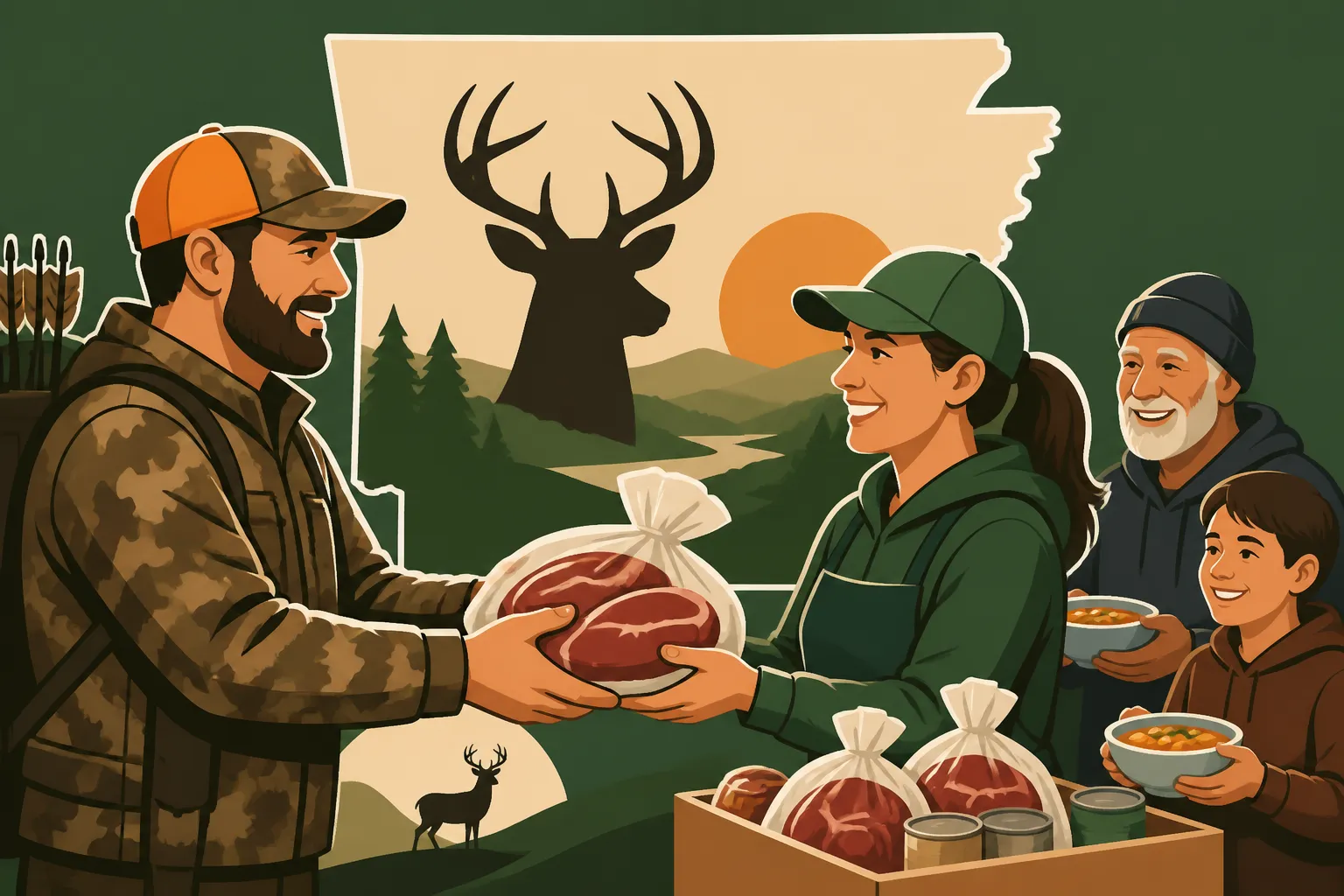
Once you arrive at the participating processor with your properly field-dressed deer, the donation process itself is quite simple. You'll typically be asked to fill out a short form provided by the processor, indicating that you wish to donate your deer to the AHFH program. You’ll need to provide your name, contact information, and your deer tag number. This documentation is important for tracking and ensuring compliance with game laws and food safety standards. The processor will then take over, handling all the butchering, packaging, and freezing of the venison into ground meat. This ground venison is then collected by local food banks and distributed to families in need. The beauty of the AHFH program is that the hunter usually doesn't bear the processing cost when donating a whole deer, as these costs are covered by the program. It truly makes giving back effortless.
Here's a quick overview of the venison donation process:
| Step | Hunter Action | Key Considerations |
|---|---|---|
| 1. Plan Ahead | Check AHFH website for participating processors near your hunting area. | Confirm hours and capacity; consider logistics for Getting a Deer Out of an Ozark Hollow. |
| 2. Harvest Legally | Take deer according to all state regulations. | Ensure proper tagging and adherence to Arkansas Deer Seasons and Zone Limits. |
| 3. Field Dress Properly | Quickly remove organs and cool carcass. | Crucial for meat quality; prevent contamination and spoilage. |
| 4. Transport to Processor | Deliver deer to an AHFH-approved processor promptly. | Keep deer cool during transport; call processor if unsure of hours. |
| 5. Complete Donation Form | Fill out required AHFH paperwork at the processor. | Provide license/tag info; confirm desire to donate entire deer. |
| 6. Processor Handles Everything Else | Processor butchers, packages, and freezes venison for food banks. | Hunter incurs no processing cost for donated deer. |
Impact and Importance of Hunter Contributions
The act of donating your deer might seem like a small thing when you’re out in the vastness of the Arkansas woods, but the ripple effect it creates throughout our communities is profound. It’s a testament to the generosity and community spirit that defines so many hunters.
Nutritional Benefits for Recipients
For those struggling with food insecurity, the arrival of donated venison means so much more than just another meal. It’s a nutrient-dense, lean protein source that can be hard to come by through traditional food bank channels. Think about a child who rarely gets enough protein, or a senior citizen whose diet consists mostly of starches. A meal featuring venison provides essential amino acids, iron, and B vitamins that are vital for energy, growth, and overall health. It fills a critical nutritional gap and can contribute significantly to better health outcomes. It's not just about filling stomachs; it's about nourishing bodies and providing the building blocks for a healthier, more active life, which is a powerful thing to be a part of.
Community Engagement and Conservation Ethic
Beyond the immediate nutritional benefits, the Arkansas Hunters Feeding the Hungry program, and your participation in it, strengthens the bond between the hunting community and the broader public. It showcases hunters as responsible conservationists who give back to their communities. It helps dispel misconceptions about hunting and highlights the ethical stewardship that lies at the heart of our passion. When the public sees hunters actively contributing to alleviating hunger, it fosters understanding and appreciation for what we do. It demonstrates that hunters are not just takers from the land, but vital contributors to ecological balance and community well-being. This kind of positive Arkansas Deer Meat Donation Programs is critical for the future of hunting and conservation efforts. Whether you're planning your hunt using an app like GoHunt or simply enjoying time in the woods, knowing your harvest can help others strengthens the entire hunting community.
How Hunters Can Further Support These Efforts
If donating a deer isn't an option for you every season, there are still plenty of ways to support the Arkansas Hunters Feeding the Hungry program and similar initiatives. Financial contributions are always welcome, as they directly help cover the processing costs of donated deer. Even a small donation can help process several pounds of venison. You could also volunteer your time, perhaps helping with fundraising events or assisting at a processing center if they need extra hands during busy times. Spreading the word about the program among your hunting friends and in your local community is another powerful way to contribute. Education is key; many hunters simply aren't aware of how easy and impactful it is to donate. By advocating for these programs and sharing information, you help expand the reach and ensure more families receive the nutritious food they need. Our collective efforts truly make a difference, whether it's through a donated deer, a few dollars, or simply a conversation.
Disclaimer
This article is for general informational purposes only and does not constitute professional advice. Laws, prices and regulations vary by location and change over time. Consult a qualified professional for guidance on your specific situation.