Camping Rules on Arkansas WMAs
It’s a common scenario: you’ve got your hunting gear packed, your tags in hand, and a prime spot on an Arkansas Wildlife Management Area (WMA) in mind for deer, ducks, or turkeys. But before you can settle in for a few days of pursuing game, you’ve got to figure out where you’re going to lay your head. The rules around camping on Arkansas WMAs can feel a bit like a tangled briar patch if you don't know where to look, leading to confusion and, honestly, unnecessary stress. This guide is designed to cut through that confusion, helping you understand the ins and outs of WMA camping so you can focus on the hunt itself, not worrying about where to pitch your tent or park your camper.
Understanding the Basics of WMA Camping in Arkansas
Heading out to an Arkansas WMA for a hunting trip often means immersing yourself in the wild for more than just a day. Camping can extend your time afield, allow you to be on location at first light, and deepen your connection with the outdoors. However, these aren't your typical developed campgrounds with shower houses and electrical hookups. WMAs are primarily managed for wildlife habitat and public hunting, and camping rules reflect that mission.
Why Rules Exist: Safety, Resource Protection, and Fair Access
It’s easy to feel like regulations are just there to make things harder, but when it comes to WMA camping, every rule has a purpose. The Arkansas Game and Fish Commission (AGFC) implements these guidelines to ensure public safety, protect the natural resources that make these areas so special, and maintain fair access for everyone. Think about it: without rules, some areas could become overrun, scarred by uncontrolled fires, or choked with trash. These policies are in place to prevent those nightmares, allowing generations of hunters and outdoors enthusiasts to enjoy the natural beauty and abundance Arkansas offers. They help manage impacts like erosion, water contamination, and disruption to wildlife patterns, ultimately preserving the very reason we want to be out there in the first place.
General Permissible Camping Activities on WMAs
Most Arkansas WMAs allow some form of camping, but it's typically primitive or dispersed camping. This means you're generally allowed to set up a tent, hammock, or even sleep in your vehicle in designated areas or where otherwise permitted. Don't expect established campsites with amenities like picnic tables, fire rings, or restrooms, though some WMAs might have a few very basic, designated spots. The beauty of WMA camping often lies in its simplicity – finding a quiet spot off the beaten path, away from the crowds, where you can truly connect with the solitude of the woods. It's about self-sufficiency and leaving minimal impact, embracing a more rugged experience than a state park campground might offer.
Prohibited Camping Activities to Avoid Fines and Frustration
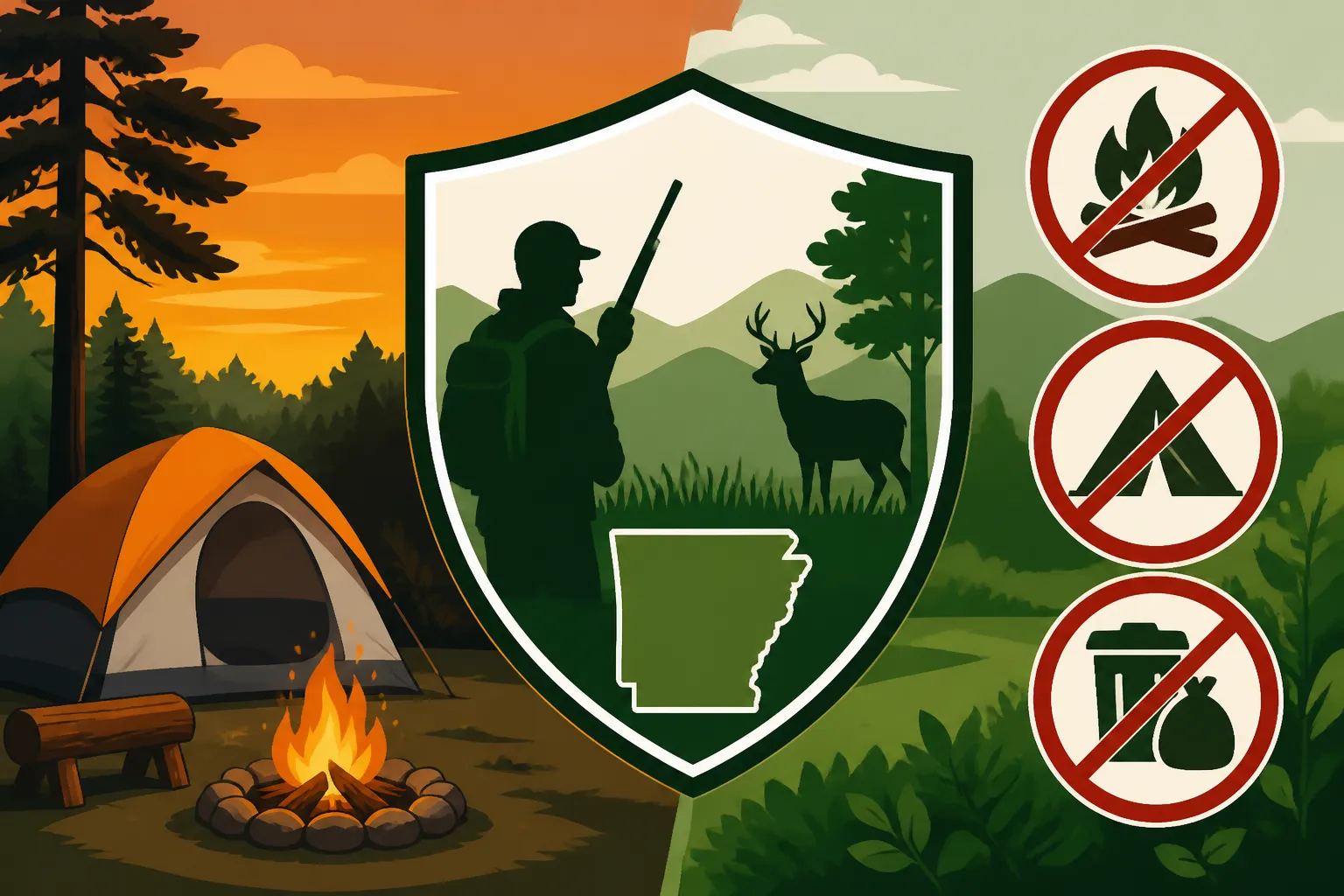
Knowing what not to do is just as important as knowing what you can do. On WMAs, you absolutely cannot establish permanent or semi-permanent camps. This isn't your backyard where you can leave a structure up for weeks or months. Any camping equipment must be removed at the end of your stay, and typically after a specific time limit. Cutting down live trees for firewood or shelter is a big no-no, and you should never discharge firearms within or from a campsite area, especially near other campers. Also, excessive noise, littering, or digging significant trenches around your tent are generally prohibited. Ignoring these common-sense rules can lead to fines, citations, and a swift end to your hunting trip. Believe me, nobody wants to drive all the way out there only to be told they’re breaking the rules and have to pack up early. It pays to understand the general Arkansas WMA Rules and Permits before you even load the truck.
Navigating the Different Types of WMA Camping Setups
When you're planning your trip to an Arkansas WMA, it's helpful to know what kind of camping setup will best suit the specific area and your hunting style. Not all WMAs are created equal when it comes to accommodating campers, and being prepared for various scenarios will save you a lot of headaches.
Designated Primitive Campsites: What to Expect (and Not Expect)
Some WMAs, particularly those with a history of public access or within national forest boundaries like the Ouachita National Forest, might have what are loosely called "designated primitive campsites." These aren't usually fancy. You'll often find little more than a cleared area, sometimes with a rudimentary fire ring, and maybe a flat spot or two for a tent. Don't go expecting picnic tables, grills, or even a vault toilet; those are luxuries rarely found on WMA land. These spots are typically first-come, first-served, and they offer a slight advantage in that they're recognized as legitimate places to camp. They provide a balance between the complete wilderness experience of dispersed camping and the structure of a developed campground. You're still mostly self-sufficient, but there's an unspoken understanding that this spot is meant for camping.
Dispersed Camping and the "Leave No Trace" Ethic
For many seasoned WMA hunters, dispersed camping is the preferred method. This means finding a suitable spot to set up camp in an undesignated area, often tucked away in the woods, far from any amenities. The freedom this offers is incredible – you can set up right where you want to hunt, waking up to the sounds of the forest. However, this freedom comes with immense responsibility. The "Leave No Trace" principles are paramount:
- Plan Ahead and Prepare: Know the rules, weather, and terrain.
- Travel and Camp on Durable Surfaces: Stick to existing trails, bare ground, or rock whenever possible. Avoid sensitive vegetation.
- Dispose of Waste Properly: Pack out everything you pack in. Yes, that includes all trash, food scraps, and even human waste needs to be buried properly, ideally 6-8 inches deep and 200 feet from water sources, trails, and campsites.
- Leave What You Find: Don't collect souvenirs or disturb natural objects.
- Minimize Campfire Impacts: Use established fire rings if available, or create small, contained fires where permitted. Make sure they are cold out before leaving.
- Respect Wildlife: Store food properly to avoid attracting animals.
- Be Considerate of Other Visitors: Keep noise to a minimum.
Adhering to these principles ensures that the next person to come along has just as pristine an experience as you did. For me, part of the satisfaction of a successful hunt is knowing I left my campsite just as I found it. It’s often how I find those quiet spots where Finding Ground Others Walk Past is the key to a successful hunt.
Vehicle, RV, and Camper Trailer Camping: Specific Considerations
For those who prefer a bit more comfort than a tent can provide, vehicle, RV, or camper trailer camping can be an option on some WMAs. However, the rules surrounding these larger setups are often stricter. Generally, you’re limited to parking your rig in designated parking areas, along county roads that traverse WMAs, or in pull-offs where legal and safe. You absolutely cannot drive off-road to set up an RV camp deep in the woods unless a specific WMA rule explicitly allows it, which is rare. The goal is to prevent damage to habitat and to maintain clear access for other vehicles, including emergency services. Be mindful of turnarounds and parking areas, ensuring you don't block access roads or gates. If you're bringing a substantial setup, always check the specific WMA regulations for any size or location restrictions. Understanding Vehicle Rules on Arkansas WMAs is non-negotiable here, as is knowing the ATV Rules on Arkansas Public Land if you plan to use one to get to your hunting spot from your vehicle camp.
Key Regulations and Practical Tips for a Smooth WMA Stay
Understanding the broad categories of camping is a great start, but the devil, as they say, is in the details. Arkansas WMAs have specific regulations that, if ignored, can quickly turn a peaceful hunting trip into a frustrating ordeal.
Length of Stay Limits and Moving Your Camp
WMAs aren't meant for long-term residency. Most have explicit limits on how long you can camp in one spot, often ranging from 10 to 14 consecutive days. This rule is in place to prevent people from establishing semi-permanent residences and to ensure that all users have a fair chance at using desirable camping locations. After the maximum stay, you typically need to move your camp a certain distance (often a mile or more) or completely off the WMA for a specified period before returning. It's a system designed to keep areas rotating and prevent overuse, so be sure to check the specific limits for the WMA you plan to visit. It’s also a good practice to plan accordingly so you don’t find yourself having to break camp in the middle of a prime hunting week.
Firewood, Campfires, and Preventing Wildfires
A campfire is a quintessential part of any camping experience, especially on a cool fall evening after a long day of hunting. However, fires are also one of the biggest risks on WMAs. Generally, you are allowed to collect dead and downed wood for campfires, but cutting any live trees or branches, no matter how small, is strictly prohibited. Always check for current burn bans, which are common during dry periods and can be county-wide or specific to a WMA. When you do have a fire, build it in a clear area, keep it small, and never, ever leave it unattended. Most importantly, ensure your fire is completely extinguished and cold to the touch before you leave it, even for a short time. Carry a shovel and plenty of water specifically for fire dousing. A wildfire, especially one started by a hunter, is a devastating event for the habitat and can lead to severe penalties.
Waste Management, Food Storage, and Wildlife Encounters
Beyond the basic "pack it in, pack it out" for visible trash, consider all forms of waste. This includes gray water from washing dishes (distribute it widely away from water sources) and human waste, as discussed under Leave No Trace. Food storage is another critical aspect, particularly in areas like the Ozarks and Ouachitas where black bears are common. Never leave food, cooking supplies, or even scented items like toothpaste in your tent or accessible at your campsite. Use bear-resistant containers, hang food from a tree limb at least 10 feet off the ground and 4 feet from the trunk, or store it in a hard-sided vehicle. Proper food storage isn't just about protecting your snacks; it's about preventing dangerous Bear Encounters in Arkansas Campgrounds and conditioning bears to associate humans with food, which can lead to unfortunate outcomes for both bears and people.
Noise, Courtesy, and Sharing the Woods
Hunting and camping on WMAs mean sharing the space with other hunters, hikers, birdwatchers, and sometimes even local residents. Be a good neighbor. This means observing quiet hours, especially early in the morning and late in the evening when hunters are moving to and from their stands. If you have a generator, use it sparingly and ensure it’s a quiet model. Loud music, excessive talking, or bright lights can disturb wildlife and disrupt other people's experience. Remember that sounds carry far in the woods, and what seems quiet to you might be an intrusion to someone trying to enjoy the tranquility of nature. A little courtesy goes a long way in fostering a positive environment for everyone.
Leveraging Technology and Scouting for Optimal WMA Camping
In today's world, planning a successful WMA hunting and camping trip involves more than just a paper map and a compass. Technology has become an indispensable tool, but nothing truly replaces boots on the ground.
Utilizing Digital Mapping Tools for Site Selection
Before I head out, I'm always on my onX Hunt app, looking at the public land layers and satellite imagery. It's a lifesaver for identifying potential camp spots, especially when you're looking for dispersed camping away from the crowds. These apps can show you WMA boundaries, access roads, and topography, allowing you to pinpoint flat areas or hidden nooks that might make a perfect tent spot. You can drop pins, measure distances, and visualize the approach to your hunting area from your camp. Another fantastic tool, similar to onX Hunt, is GoHunt. Both allow you to drop pins, mark water sources, and plan out your exact route, whether you're hiking in for a tent camp or finding a pull-off for your RV. These tools are incredibly powerful for understanding the lay of the land, identifying potential water sources, and even seeing how far you are from the nearest road or other access point. They integrate well with what you'd find Using the AGFC Map Tool on a desktop, giving you a comprehensive view.
Checking for WMA-Specific Rules, Closures, and Draw Hunts
While general WMA rules apply, every single WMA can have specific regulations or temporary closures. This is where many hunters get caught off guard. Always, and I mean always, check the AGFC website for the specific WMA you intend to visit. Look for announcements, special regulations pamphlets, or temporary closures. For example, some WMAs might have areas designated for Arkansas WMA Waterfowl Draw Hunts that restrict other access during certain periods, or sections might be closed due to timber operations or flooding. This is particularly crucial if you're heading to a Delta WMA, where Flooding and WMA Access in the Delta can change daily. What was a perfect camping spot last week might be under three feet of water this week. It’s also wise to verify rules concerning Blinds and Stands on Arkansas Public Land and any unique Baiting Rules on Arkansas Public Land that might be in effect for that particular WMA. A quick check before you leave can save you a world of trouble.
Pre-Season Scouting: The Best Way to Find Your Perfect Camp
While digital maps are amazing, nothing beats putting boots on the ground for Scouting Arkansas Public Land Before Season. A pre-season scouting trip allows you to physically explore potential camping areas. You can check for level ground, assess drainage, look for natural shelters, and ensure the spot feels safe and secluded. You can also evaluate the proximity to your chosen hunting spots and confirm access routes. Is that old logging road passable? Is there a good tree for a food hang? Does this area get a lot of Hunting Pressure on Arkansas WMAs? Scouting helps you avoid the disappointment of arriving in the dark only to find your planned camp spot is uneven, swampy, or already occupied. It gives you confidence that your home base for the hunt is dialed in and ready for action.
Camping Rule Summary for Arkansas WMAs
To help you keep track of the key camping regulations and best practices on Arkansas WMAs, here's a quick overview:
| Aspect | General WMA Rule | Key Considerations |
|---|---|---|
| Type of Camping | Primitive, dispersed camping generally allowed. | Limited or no amenities. Self-sufficiency is key. |
| Designated Sites | Some WMAs may have very basic, primitive designated spots. | First-come, first-served. Don't expect developed facilities. |
| Length of Stay | Typically 10-14 consecutive days. | Must move camp or vacate WMA after limit. Check specific WMA regulations. |
| Vehicle/RV Camping | Generally limited to designated parking, county roads, pull-offs. | No off-road driving for camp setup. Do not block access. Check Vehicle Rules on Arkansas WMAs. |
| Campfires | Dead, downed wood only. No cutting live trees. | Check for burn bans. Keep fires small, contained, and cold out before leaving. |
| Waste Management | Pack it in, pack it out (all trash, food scraps). | Bury human waste 6-8 inches deep, 200 ft from water/trails. Store food securely from wildlife. |
| Noise & Courtesy | Observe quiet hours. Respect other users. | Generators used sparingly; avoid loud music/voices, bright lights. |
| Permanent Structures | Absolutely prohibited. All gear must be removed. | Camps are temporary; no leaving items or building structures. |
| Hunting in Camp | Not permitted to discharge firearms within or from camp area. | Maintain safe distances from camp for hunting activities. |
| Information Source | AGFC website, WMA-specific regulations. | Always check for current rules, closures, and Arkansas WMA Waterfowl Draw Hunts impacts. |
Getting out and exploring Arkansas's vast WMAs is an incredible experience, and a well-planned camping strategy can make your hunt even more rewarding. By understanding and respecting the rules, utilizing the tools available, and embracing the Leave No Trace ethic, you're not just ensuring a smooth trip for yourself, but you're also doing your part to preserve these precious wild spaces for everyone who follows.
Disclaimer
This article is for general informational purposes only and does not constitute professional advice. Laws, prices and regulations vary by location and change over time. Consult a qualified professional for guidance on your specific situation.