Modern Gun Tactics on Arkansas Public Land
Hunting deer with a modern gun on Arkansas public land can often feel like a frustrating challenge, especially when opening day arrives and every prime spot seems to have a truck parked nearby. It’s tough to put in the time scouting, only to feel like you’re constantly competing for space. This guide is designed to help you cut through that pressure, offering real-world tactics to find success and make the most of your modern gun hunt on Arkansas's beautiful public lands.
Understanding Public Land Pressure in Arkansas
Let's face it, public land in Arkansas during modern gun season is a different beast. It’s not your secluded private lease where you have exclusive access and deer patterns are somewhat predictable. Here, you're sharing the woods with a lot of other passionate hunters, and that dynamic changes everything.
The Reality of Opening Day Crowds
Picture this: it's 4:00 AM on opening day, and you pull into the WMA parking lot, expecting to be the first one there. Instead, you're greeted by a line of taillights, and every discernible trail already has a headlamp bobbing down it. This isn't an exaggeration; it's the norm on many popular Wildlife Management Areas (WMAs) across the state, particularly those known for good deer numbers or easy access. The sheer volume of hunters can scatter deer, push them into thick cover, and make traditional stand locations less effective. You might have found the perfect oak flat during your summer scouting, only to discover a dozen other hunters had the same idea. It's disheartening, but understanding this pressure is the first step to overcoming it.
This initial rush doesn't just impact deer movement; it impacts hunter behavior, too. Many hunters will make quick decisions, setting up close to parking areas or along well-worn trails, hoping for a fast opportunity. This means deer are immediately pushed deeper, often into areas that are harder to access or less appealing to the casual hunter. To succeed, you need to think beyond the obvious spots and anticipate where deer will go when the woods get loud. You also need to realize that the first few hours, or even the first day, might be chaotic, so patience and adaptability are crucial.
Finding Overlooked Pockets
The key to public land success with a modern gun isn't always about finding the best deer sign; it's about finding the best deer sign in an area that other hunters overlook. This often means putting in more effort, walking further, or navigating challenging terrain. Look at the maps, study the contours, and identify those little fingers of timber that extend into fields, steep ridges that deter most foot traffic, or isolated thickets surrounded by water. These "nasty" spots that make you groan at the thought of the hike are often exactly where pressured deer will seek refuge.
Consider access points. Most hunters will use main roads or established WMA entrances. Can you find an obscure logging road, a utility right-of-way, or even a creek crossing that allows you to approach an area from an unexpected direction? Tools like the AGFC Map Tool or commercial apps like GoHunt allow you to scrutinize property lines and topographic features, helping you identify these less-traveled routes. Deer quickly learn which areas are safe and which are hot, so your ability to get into their sanctuary undetected is paramount. Sometimes, it's not about being smarter than the deer, but smarter than the other hunters.
Key Considerations for Modern Gun Deer Hunts
Before you even step foot in the woods, there are some fundamental considerations that will significantly impact your modern gun hunting success on public land. These range from the gear you carry to how well you understand the rules.
Gear Selection for Public Land
Your gear selection for public land should prioritize mobility, durability, and efficiency. Unlike private land where you might have ATVs or established food plots, public land often means packing everything in on your back and dealing with unpredictable conditions. A comfortable, supportive backpack is non-negotiable for carrying essentials, game bags, and perhaps even a portable climbing stand if that's your preferred method. Choose camouflage that blends well with the diverse Arkansas habitats, whether it's the deep woods of the Ozarks or the mixed timber of the Delta.
Beyond your clothing and pack, think about your firearm. A modern rifle offers greater range and accuracy than a shotgun with slugs or a muzzleloader, which can be a huge advantage when deer are pressured and moving quickly across open timber or clearings. However, maneuverability is key in dense public land thickets. Consider a compact rifle or one with a shorter barrel if you plan on still-hunting through thick cover. Don't forget high-quality optics – binoculars are essential for glassing distant ridges or picking apart dense cover, and a reliable scope will make sure you capitalize on that hard-earned opportunity.
Safety First: Hunter Orange and Regulations
Safety on public land, especially during modern gun season, is paramount. You are sharing the woods with potentially hundreds of other hunters, so vigilance is a must. Adhere strictly to the Arkansas Hunter Orange Requirements, which often mandate wearing at least 400 square inches of solid, unbroken hunter orange above the waist, visible from all sides. This isn't just a suggestion; it's a critical safety measure that could save your life by making you visible to other hunters. Always positively identify your target and what's beyond it before taking any shot. The rule "if in doubt, don't shoot" is even more critical on public land.
Beyond hunter orange, familiarize yourself intimately with all Arkansas hunting regulations, including specific rules for the WMA you plan to hunt. Each WMA can have unique restrictions on vehicle access, camping, stand placement, baiting, and even legal firearms. Before you go, check the latest AGFC regulations handbook or the WMA-specific details online. Understanding Arkansas Deer Seasons and Zone Limits is also crucial, as bag limits, antler point restrictions (like the Three-Point Rule), and season dates can vary by zone. Ignorance of the law is no excuse, and a violation on public land can result in heavy fines and loss of hunting privileges.
Planning for the Unpredictable
Public land hunting often throws curveballs. Weather can change rapidly, unexpected high water can flood access points, or intense hunting pressure can completely alter deer behavior overnight. Having a flexible plan, rather than a rigid one, will serve you well. Instead of having just one spot in mind, scout several distinct locations in different habitat types or with varied access routes. This way, if your primary spot is overrun or inaccessible, you have a viable backup plan ready to go.
Communication is also vital. If you're hunting with a partner or group, ensure everyone knows the hunting plan, emergency procedures, and how to communicate safely in the field, perhaps with two-way radios in areas with poor cell service. Let someone not in your hunting party know where you're going and when you expect to return. This level of preparedness, both mentally and practically, will help you navigate the inherent unpredictability of public land hunting.
Scouting Strategies for Public Land Deer
Successful modern gun hunting on public land isn't just about showing up with a rifle; it's about putting in the homework long before the season begins. Effective scouting is your biggest advantage in navigating pressure and finding deer.
Pre-Season Digital and On-the-Ground Scouting
Before you ever lace up your boots, start your scouting digitally. Utilize online mapping resources like the AGFC’s interactive WMA maps, Google Earth, and specialized hunting apps like GoHunt. These tools allow you to identify potential travel corridors, bedding areas, food sources, and most importantly, access points and areas of thick cover that might be overlooked by others. Look for subtle terrain features like benches, saddles, and drainages on contour maps, as these naturally funnel deer movement. Pay close attention to public land boundaries to avoid trespassing, and use satellite imagery to pinpoint transitions between different timber types, old logging roads, or brushy clearcuts that could hold deer. This initial digital phase is critical for narrowing down vast public land tracts into manageable areas to explore.
Once you have a few promising spots identified on the map, it's time to hit the ground. Conduct your physical scouting during the late summer or early fall, before heavy hunting pressure begins. Look for fresh deer sign: rubs, scrapes, tracks, and droppings. Identify primary food sources in your target area – are there white oaks dropping acorns, persimmon trees, or browse regeneration in clearcuts? Pay attention to water sources and potential bedding cover. Remember that deer patterns can change with the availability of food and water, so note multiple options. Walk potential entry and exit routes to determine their stealthiness and identify natural funnels. The goal is to piece together a puzzle of deer movement, identifying where they feed, bed, and travel in between. This is also a good time to hang a few trail cameras in strategic, yet subtle, locations to get a better understanding of what deer are using the area and when.
Reading Sign After Opening Day
The woods on opening day are vastly different from the woods you scouted pre-season. Deer will immediately react to increased human activity. Your pre-season knowledge is a foundation, but you need to be able to "read" the immediate environment to understand how deer are reacting to current pressure. Look for fresh tracks that indicate movement away from roads and crowded areas, or sign leading into dense, often overlooked thickets. Deer might shift their bedding areas dramatically, seeking the deepest, nastiest cover they can find.
Don't be afraid to adjust your plans. If your primary spot is overrun, be ready to move to a secondary or tertiary location that offers more seclusion. This might mean adapting your hunting style from a static stand to still-hunting through less-pressured areas. Pay attention to what other hunters are doing. Are they driving deer in a particular direction? Are they pushing deer off a ridge and into a hollow you can access? Being observant and adaptable, rather than stubbornly sticking to a pre-conceived plan that isn't working, is a hallmark of a successful public land hunter.
Hunting Diverse Public Land Habitats
Arkansas public lands offer a wide variety of habitats, each requiring a slightly different modern gun approach. Understanding these nuances will help you tailor your tactics for maximum effectiveness.
Ouachita and Ozark Mountain Tactics
The mountains of the Ouachita and Ozark National Forests present unique challenges and opportunities. Here, terrain is king. Deer often travel along natural benches, saddles, and ridge lines, using the elevation to their advantage for both movement and surveillance. Instead of focusing solely on food sources, pay close attention to topography and how it funnels deer. Hunting Ozark Ridges and Hollows for Deer often involves identifying these travel corridors between feeding and bedding areas. During modern gun season, deer pushed by hunters in the valleys will often seek refuge on steep, overlooked benches or in the headwaters of deep hollows.
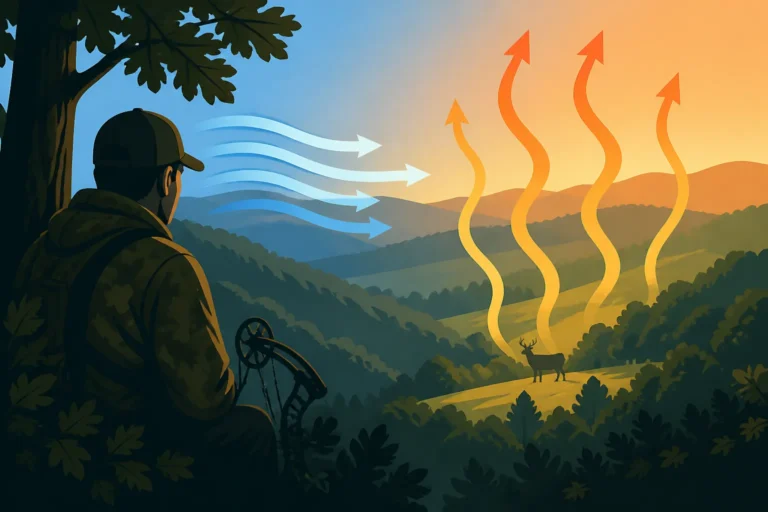
Modern gun hunting in these areas benefits from a lighter, more mobile approach. Still-hunting slowly through timber, especially along contour lines, can be highly effective. Utilize the terrain to conceal your movement and break up your silhouette. Setting up on a dominant ridge overlooking multiple draws or a saddle that connects two major ridges can provide excellent shot opportunities as deer move between cover and feeding areas. When choosing a stand location, consider your shot angles carefully, as steep terrain can make some shots trickier than they appear. Wind direction and thermals are also critical in the mountains; thermals often rise in the morning and fall in the evening, so position yourself accordingly to avoid scenting deer.
Hunting Bottomland and Delta WMAs
In stark contrast to the mountains, the public lands of the Arkansas Delta and its river bottoms present a flat, often water-dominated landscape. WMAs like Bayou Meto, Dave Donaldson Black River, and Dagmar offer incredible hunting but demand different strategies. Here, water levels heavily influence deer movement. Look for subtle rises, old levees, cypress sloughs, or islands of higher ground that provide dry bedding and escape routes when surrounding areas flood. Deer in these regions are masters of navigating dense cover and water.
Modern gun tactics in the Delta often involve identifying "dry pockets" or dense thickets where deer will hold up when pressured. Focus on edges – the transition lines between different timber types, or the edges of CRP fields and standing timber. Deer drives can be effective in these areas, especially on smaller tracts, as deer will often run predictably along the paths of least resistance. Alternatively, setting up on high ground overlooking these escape routes can pay off. Accessibility can be a major issue; areas requiring a boat or a long, wet wade often hold the least pressured deer. Using mapping tools to identify these subtly elevated islands or ridges within the vast flatlands is key.
Navigating Pine Plantations and Cutovers
Pine plantations and clearcuts are common features on public lands, especially in central and southern Arkansas. These areas can be incredibly productive, but they require a specific hunting approach. Young pine plantations provide extremely dense thermal and security cover, making them ideal bedding areas. However, visibility is often limited to mere yards, making traditional stand hunting challenging. Older pine plantations, on the other hand, can offer more open understories but might lack the browse of younger growth.
Hunting Arkansas Cutovers and Clearcuts often means focusing on the edges. Deer will frequently travel along the boundary where a thick cutover meets mature timber, using the cover for security while still having access to more open areas. Inside the cutover, look for subtle deer trails or "tunnels" that offer just enough visibility for a shot. Still-Hunting Arkansas Pine Country by slowly slipping through the thickest parts, especially on windy days that mask your noise, can be effective. Alternatively, setting up on a well-used trail that leads into or out of a cutover, or on a logging road within the clearcut, can capitalize on deer movement. Patience is crucial here; deer will often move slowly through these dense areas, picking their way carefully.
Executing the Hunt: Stand Placement and Movement
Once you've scouted and understood the habitat, the next challenge is executing the hunt. This involves smart stand placement and knowing when and how to move.
Strategic Stand Placement and Entry/Exit
On public land, your stand placement needs to be even more precise than on private ground, mainly because deer are highly sensitive to human intrusion. Your goal is to intercept deer without alerting them to your presence. Identify pinch points, funnels, or preferred travel corridors that deer use to move between bedding and feeding areas. Consider your background and foreground, making sure your stand breaks up your silhouette effectively. Don't set up too close to a major food source if that food source is also heavily pressured; instead, back off to an intercept point along a trail leading to it.
Perhaps even more critical than the stand itself is your entry and exit strategy. Deer on public land are incredibly wary of human scent and noise. Plan your approach and departure routes to be as quiet and scent-free as possible, preferably using terrain features, water, or dense cover to conceal your movement. Walk against the wind, if possible, and avoid disturbing the area around your stand. This means getting in early, well before daylight, and staying put until well after shooting light to minimize any impact. Your discipline in these small details will be the difference between seeing deer and spooking them. Remember, other hunters can also blow deer your way, so placing your stand where you can see downwind or along likely escape routes can be advantageous.
Still-Hunting and Drives on Public Ground
While stand hunting is a common tactic, still-hunting or organizing small drives can be incredibly effective on pressured public lands, especially during modern gun season. Still-hunting involves moving slowly and deliberately through the woods, taking a few steps, then pausing for several minutes to scan for movement. This method is particularly useful in dense cover like pine thickets or bottomland swamps where visibility from a stand is limited. Pay attention to wind direction, move into the wind or crosswind, and use terrain and vegetation to your advantage to remain unseen. The goal is not to "jump" deer but to spot them before they spot you, allowing for a controlled shot.
For groups, Deer Drives in Arkansas Bottomland or smaller wooded tracts can effectively push deer past waiting shooters. This requires careful planning and coordination. Designate specific drivers and standers, ensure everyone knows the boundaries of the drive and safety zones, and communicate clearly. Drivers should move slowly and deliberately, focusing on pushing deer rather than running them. Standers should be positioned in natural escape routes, pinch points, or areas of slightly higher ground where deer are likely to travel when pressured. Again, safety is paramount; clearly communicate shooting lanes and ensure all hunters are wearing hunter orange. While drives can be controversial on public land due to the increased movement and noise, a well-executed small drive in a specific block of cover can be highly productive.
Utilizing Calls and Rattling
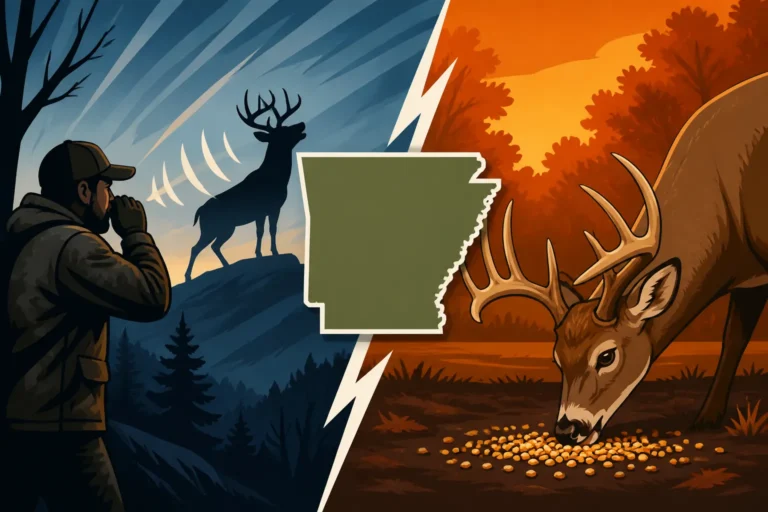
While not as common for modern gun hunting as for archery or muzzleloader seasons, using calls and rattling can still play a role on public land, especially if you understand the local rut timing. Grunt tubes and doe bleat calls can be effective, particularly during the peak of the rut, to entice curious bucks. However, be mindful of over-calling on public land, as deer are often more call-shy due to constant human imitation. Subtle, infrequent calling is usually more effective.
Rattling antlers can also be effective, mimicking the sound of two bucks fighting. This can draw in dominant bucks looking for a fight or satellite bucks trying to sneak in. Again, consider the pressure; aggressive rattling might only work during the very peak of the rut in less-pressured areas. If you hear other hunters rattling nearby, adjust your strategy. You might be better off moving quietly into an area that those hunters have just "cleaned out" with their calling, as deer often circle downwind of rattling sequences to investigate. Always be aware of your surroundings and any other hunters when using calls that mimic deer.
Post-Shot and Recovery on Public Ground
The moments immediately following a shot are critical, and recovering an animal on public land introduces unique challenges.
Ethical Tracking and Recovery Techniques
After you take a shot with your modern gun, resist the urge to immediately sprint to the spot. Even if you're certain of a good hit, give the animal time, typically 30 minutes to an hour for a lung or heart shot, and several hours for a gut shot. This allows the deer to bed down and expire, rather than being pushed further by your pursuit. Mark your shot location clearly, and then return to it after the waiting period. Look for blood, hair, bone fragments, and disturbed earth at the point of impact. Once you find the first sign, track slowly and methodically, marking the blood trail every few yards, perhaps with biodegradable flagging tape or toilet paper.
Tracking on public land can be particularly challenging due to dense undergrowth, varied terrain, and the possibility of other hunters. If the blood trail becomes sparse, expand your search in concentric circles from the last visible sign. Deer often follow paths of least resistance, like old logging roads, creek beds, or natural funnels, especially if they are wounded. If tracking into nightfall, use a bright LED flashlight; sometimes blood can be easier to see with artificial light. Always maintain a quiet and respectful demeanor; other hunters might be nearby, and your focus should be on recovering your game efficiently and ethically. If you lose the trail completely, consider returning at first light, as dried blood can sometimes be easier to spot in certain light conditions, and the deer won't have traveled further.
Dealing with Other Hunters During Recovery
This is where public land recovery can get tricky. You've tracked a deer for an hour, and suddenly you see another hunter heading toward where you last saw sign. It’s a frustrating situation, but handling it calmly and respectfully is crucial. If you encounter another hunter in the vicinity of your downed or wounded deer, calmly and clearly explain that you've shot an animal and are actively tracking it. Show them your blood trail, if visible, and explain your estimated last location. Most ethical hunters will understand and respect your right to recover your game.
However, be prepared for situations where another hunter might attempt to claim your deer, or even shoot it if they come across it while it’s still alive. While Arkansas law generally favors the hunter who inflicts the first mortal wound, proving it can be difficult if there's a dispute. The best practice is to move swiftly and efficiently on a blood trail to minimize these encounters. If a dispute arises and cannot be resolved amicably, contact the Arkansas Game and Fish Commission (AGFC) immediately. Do not engage in arguments or confrontations; let law enforcement handle it. Having detailed photos of the shot site, the blood trail, and the deer once found can be valuable evidence.
Field Dressing and Transport Challenges
Once you’ve successfully recovered your deer on public land, the next step is Field Dressing in Arkansas Heat. Even in November and December, Arkansas can have surprisingly warm days, making quick and efficient field dressing essential to preserve the meat. Remove the entrails as soon as possible to allow the carcass to cool. If you're deep in the woods, consider quartering the deer to make transport easier. Carrying a few game bags and a sharp knife is crucial.
Getting a field-dressed deer out of remote public land areas can be a strenuous undertaking. If you’re hunting alone, a deer cart can be a lifesaver, especially on relatively flat terrain or old logging roads. In mountainous or extremely thick areas, quartering the animal and packing it out in a sturdy backpack might be the only viable option. Plan your extraction route before the hunt, considering the easiest path back to your vehicle. Remember to tag your deer immediately after harvest according to AGFC regulations, and ensure you comply with all Arkansas CWD Rules and Carcass Transport, especially if you are in a CWD Management Zone. Always have a plan for cooling the meat quickly once you get it out, whether it's ice chests or a trip to a local processor.
Final Thoughts on Modern Gun Public Land Hunting
Hunting Arkansas public land with a modern gun is undeniably challenging, but it's also incredibly rewarding. It demands more from you as a hunter – more scouting, more patience, more adaptability, and a deeper understanding of deer behavior under pressure. By focusing on overlooked areas, meticulous preparation, and respecting both the regulations and your fellow hunters, you can absolutely find success. Don't let the crowds deter you; instead, use this guide to develop a smarter, more effective strategy for your next public land adventure.
| Public Land Habitat Type | Typical Deer Behavior | Recommended Modern Gun Tactics | Key Considerations |
|---|---|---|---|
| Ozark/Ouachita Mountains | Use ridges, hollows, benches for travel & bedding. | Still-hunt ridges/saddles; stand hunt natural funnels; long-range shots. | Thermals, steep terrain, physical exertion. |
| Delta/Bottomland WMAs | Seek high ground, dense thickets when pressured. | Stand hunt edges, dry islands; small deer drives; access by boat/wade. | Water levels, dense cover, mosquitoes/bugs. |
| Pine Plantations/Cutovers | Dense bedding, travel through "tunnels" or edges. | Still-hunt slowly in thickets; stand hunt edges/logging roads. | Limited visibility, thick undergrowth, navigating blowdowns. |
| Mixed Hardwood Forests | Variable movement based on food/cover availability. | Stand hunt active food sources, pinch points; still-hunt mature timber. | Acorn drops, logging activity, pressure from other hunters. |
Disclaimer
Always consult the latest Arkansas Game and Fish Commission (AGFC) regulations before heading into the field. Hunting laws and WMA-specific rules can change annually, and it is your responsibility to be fully aware of and comply with all current regulations.