How Many Dogs Work a Hunt
One of the most common questions folks have when they’re thinking about booking a guided hunt, especially if they're coming to Arkansas for the first time, is about the dogs. Specifically, hunters often wonder how many dogs will be working during their hunt and what role they'll play. It’s not just a matter of curiosity; the number and type of dogs can significantly impact the dynamics of your experience, from the noise level to the efficiency of retrieves, and understanding this beforehand can help set your expectations just right. This guide aims to pull back the curtain on how many dogs typically work a hunt across various Arkansas hunting scenarios, giving you a clearer picture of what to expect from your next guided adventure.
The Role of Dogs in Arkansas Hunting
Dogs are an integral part of many hunting traditions across Arkansas, not just for the camaraderie they bring to camp, but for their incredible skill and efficiency in the field. From flushing game to tracking wounded animals and retrieving downed birds, a good dog is often the difference between a successful, ethical hunt and a frustrating, lost opportunity. Their role, and thus their numbers, can vary wildly depending on the species you're pursuing and the specific style of hunting.
Species-Specific Dog Use
Think about it: a well-trained duck retriever has a very different job than a pack of deer hounds. When you're out chasing waterfowl in a flooded timber hole or a cut rice field, you're usually looking for one or two highly specialized retrievers that can sit quietly, mark birds, and bring them back quickly and softly. Their focus is on minimizing disturbance while maximizing recovery. They need to be disciplined, capable of working in cold water, and often, able to navigate thick cover.
On the other hand, if you're participating in a deer drive with dogs, especially in the thick bottomlands, you might encounter a pack of several hounds. These dogs aren't there for quiet retrieves; they're there to cover ground, find deer, and push them towards waiting standers. The dynamics are entirely different, demanding dogs with endurance, a good nose for scent, and the vocal prowess to announce their progress. Similarly, rabbit hunters often run a small pack of beagles, each contributing to flushing and driving the cottontails.
Impact of Terrain and Hunting Style
The landscape of Arkansas plays a huge role in determining how many dogs are practical and effective for a given hunt. In the dense, often flooded green timber of the Delta, navigating with a large pack of dogs for waterfowl would be chaotic and counterproductive. One or two agile retrievers are far more effective at picking up birds amongst the trees. But if you're hunting ducks in vast, open rice fields, a single retriever might be working a much larger area, and an extra dog might be there to help with a heavy shoot or to relieve the first.
When it comes to deer hunting, the terrain dictates dog numbers heavily. A lone tracking dog might be brought in to follow a blood trail through rugged Ozark hills or dense pine plantations after a deer has been shot. This is a quiet, methodical process requiring immense focus from both dog and handler. Contrast that with Deer Drives in Arkansas Bottomland, where a small army of hounds might be unleashed into a block of timber, their baying echoing through the woods as they push deer through thickets and across openings. Each dog in that scenario contributes to the overall effort of moving game.
Common Scenarios for Dog Numbers in Arkansas Hunts
Let's dive into some specific examples of how many dogs you're likely to see working on different types of guided hunts here in the Natural State. It's rarely a random number; there's usually a good reason behind an outfitter's chosen dog team.
Waterfowl Hunting
When you envision duck hunting in Arkansas, you probably picture a great retriever. And you're right! Retrievers are absolute heroes in the duck blind.
- Green Timber and Flooded Fields: For most guided duck hunts in the iconic flooded timber or expansive rice fields, you’ll typically see one to two highly skilled retrieving dogs working the blind. These dogs are usually Labradors or Chesapeake Bay Retrievers, renowned for their marking ability, drive, and tolerance for cold water. The focus is on quick, efficient retrieves to minimize crippling losses and allow the hunt to continue smoothly. With proper training, one dog can handle a significant number of retrieves, especially in the intimate setting of a timber hole. Sometimes, a second dog might be present if the guide anticipates a particularly hot shoot or if they're working with younger dogs that are still learning the ropes alongside an experienced veteran. For more on this, check out Hunting Arkansas Flooded Green Timber or Hunting Rice Fields and Levees.
- Goose and Specklebelly Hunting: When targeting specklebelly geese or snow geese, especially during the Light Goose Conservation Order, the retrieve can be a much bigger job. Geese are larger birds, and often fall further from the spread. Here, you might still see one or two retrievers, but they're often bigger, more powerful dogs built for strength and endurance. If the hunt is particularly fast-paced with many birds down, having a second dog can be invaluable for continuous retrieves without exhausting a single animal.
Deer Hunting
Deer hunting with dogs is a strong tradition in parts of Arkansas, especially in the flat, expansive timber of the Delta. It’s a completely different ballgame than a quiet sit in a treestand.
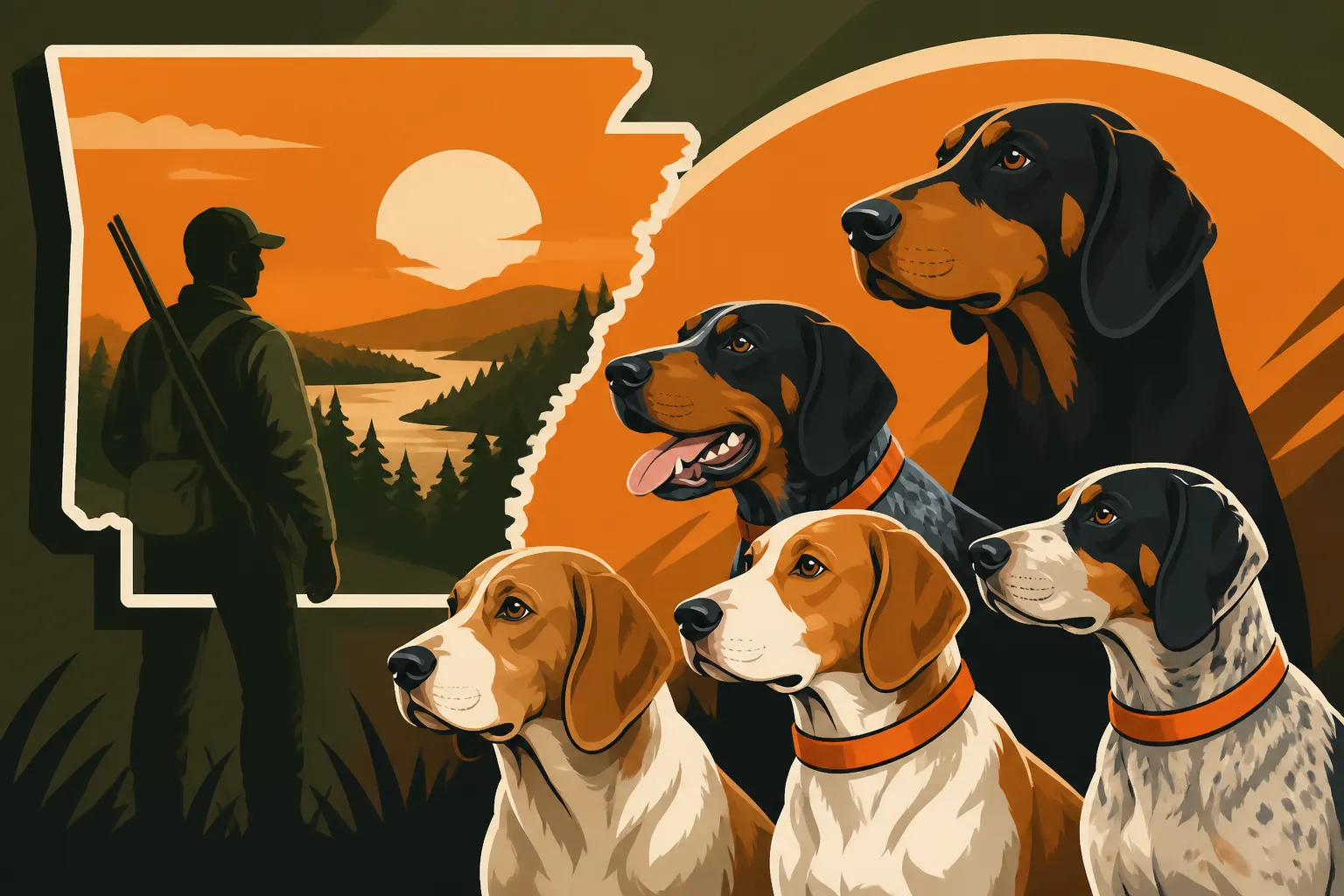
- Running Deer Dogs: This is where dog numbers can jump. A deer dog hunt involves releasing a pack of hounds, usually 3-6 or even more, into a large block of timber or field edge to push deer out. The dogs are typically Black and Tan, Redbone, Plotts, or Walker hounds, bred for their scenting ability and vocalization. Each dog contributes to creating the "drive" that moves deer. The exact number can depend on the size of the block being hunted, the density of the cover, and the specific strategy of the dog handler. A larger, denser area might warrant more dogs to ensure thorough coverage. This method is often employed on private lands or specific WMAs where Running Deer Dogs in Arkansas is permitted.
- Tracking Wounded Deer: If you’ve made a shot that wasn’t quite perfect, or you’re on a guided hunt where a deer has been wounded, a professional tracker with a single, highly specialized tracking dog (often a bloodhound or a cur dog mix) might be brought in. This isn't a "hunting" dog in the traditional sense, but a recovery specialist. Their job is to follow the faintest scent trail, often for hours and over long distances, to locate a downed animal. It’s a precise, quiet operation, and usually, one dog is all that's needed and wanted for maximum focus.
Small Game and Predator Hunting
Arkansas offers fantastic opportunities for small game and predator hunting, and dogs are often at the heart of these pursuits.
- Rabbit Hunting: For a classic rabbit hunt, especially in brush piles and thickets, a pack of beagles is the go-to choice. You'll typically see anywhere from two to five beagles working together. Their short legs and incredible noses make them perfect for flushing rabbits from cover and pushing them in circles, allowing hunters to get a shot. Each dog’s baying helps hunters pinpoint the rabbit's movement. If you're looking for this kind of action, check out Rabbit Hunting With Beagles.
- Squirrel Hunting: When it comes to chasing bushytails, a good squirrel dog is invaluable. Most squirrel hunters work with one or two dogs, often a cur or a feist. These dogs are trained to tree squirrels, barking to alert the hunter to the squirrel’s location. One well-trained dog can be incredibly effective, but sometimes a second dog is used to cover more ground or as a backup. Find out more about this traditional hunt in Squirrel Hunting Arkansas Hardwoods.
- Raccoon Hunting: Night hunting for raccoons with hounds is a deeply rooted tradition in Arkansas. A typical coon hunt involves a pack of two to five hounds. These dogs are often Black and Tans, Redbones, or Plotts, bred for their keen night vision, exceptional scenting abilities, and powerful voices. They work together to pick up a coon's trail, chase it, and eventually "tree" it, barking loudly to signal its location to the hunters. The number can vary based on the terrain and the experience of the dogs and handler. You can learn more about this exciting pursuit in Raccoon Hunting at Night in Arkansas.
- Coyote and Bobcat Hunting: For predator calling, dogs aren't always used, but when they are, it's often a single, highly trained decoy dog or a couple of specialized hounds for tracking after a shot. Some hunters use cur dogs to track wounded coyotes, similar to deer tracking. For running large tracts, a small pack of hounds might be employed, but this is less common with outfitters and more with dedicated predator hunters.
What to Expect and How to Ask Your Outfitter
Knowing these general guidelines is great, but every outfitter runs their operation a little differently. It's totally okay, and in fact, encouraged, to ask direct questions about the dogs before you book.
Standard Practices vs. Special Requests
Most reputable outfitters have a set protocol for how they use dogs on their hunts. They'll have a team of well-trained animals that are accustomed to working with guides and clients. This usually means they have a pretty standard number of dogs they use per group for a given hunt type. For example, a duck outfitter in Stuttgart might always run two Labs in their timber holes.
However, if you have a specific request—maybe you're bringing your own retrieving dog and want to know if it's permitted (and whether it can hunt alongside the guide's dogs), or perhaps you have a sensitivity to dog noise—it's crucial to discuss this upfront. Don't assume. Many outfitters are flexible, but only if they know your needs in advance. You can find more details on this in Bringing Your Own Dog to an Arkansas Lodge.
Impact on Your Hunt Experience
The number of dogs can subtly, or not so subtly, shape your hunting experience.
- Noise Level: A quiet timber hunt with one disciplined retriever is vastly different from a deer drive where multiple hounds are constantly vocalizing. Understand that if dogs are running deer or raccoons, there will be constant barking and baying, which is part of the thrill, but it might not be what you expect if you're used to quiet stand hunting.
- Interaction: Will you be interacting with the dogs? On a duck hunt, you'll likely see the retriever perform its job, maybe even give it a little pat. On a small game hunt, you'll be following the dogs through the woods. On a tracking mission, you'll be walking quietly behind the dog and handler.
- Efficiency: More dogs don't always mean more efficient. For retrievals, a single, perfectly trained dog is often more efficient than two lesser-trained ones. For driving game, a well-managed pack is key, and too many dogs, or poorly handled ones, can actually be detrimental.
Questions to Ask Before Booking
To ensure you have a clear understanding, here are some questions you should definitely ask your outfitter about their dog practices before you commit to a hunt. Resources like BookYourHunt or GoHunt can sometimes list details about outfitter practices, but a direct conversation is always best.
| Question | Why It Matters |
|---|---|
| How many dogs typically work a hunt for my chosen species/style? | Sets your expectation for the number of dogs you'll see. |
| What breed(s) of dogs do you use? | Gives you an idea of their typical temperament and hunting style. |
| What is the primary role of the dogs on this hunt? | Clarifies if they are flushing, retrieving, tracking, or driving. |
| Are the dogs used exclusively by the guide, or will clients interact with them? | Important for understanding your role and interaction with the dogs. |
| Are they quiet in the blind/stand? | Crucial for waterfowl or still-hunting to avoid spooking game. |
| Can I bring my own dog? If so, what are the rules/fees? | Essential if you plan to bring your canine companion. |
| What happens if a dog gets injured or isn't performing well during the hunt? | Good to know the outfitter's contingency plans. |
| Will the number of dogs vary by party size? | Sometimes larger groups might get an extra dog, or smaller groups fewer. |
Asking these questions directly will not only give you peace of mind but also show the outfitter that you're an engaged and prepared hunter, leading to a better experience for everyone involved. A good outfitter will appreciate your thoroughness and be happy to provide all the details.
Disclaimer
This article is for general informational purposes only and does not constitute professional advice. Laws, prices and regulations vary by location and change over time. Consult a qualified professional for guidance on your specific situation.