Asking About Shooting Distances
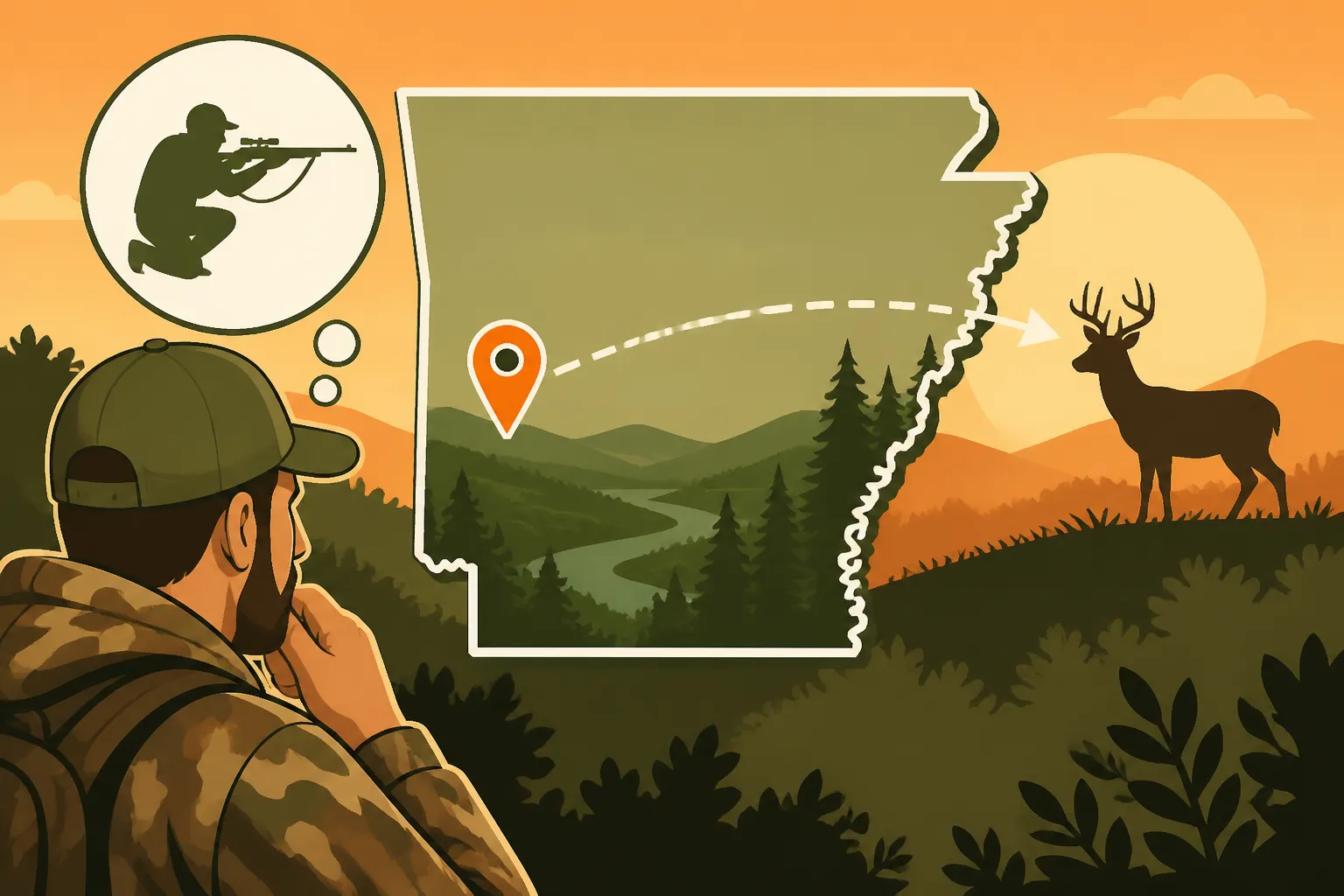
You've finally booked that exciting guided hunt in Arkansas—maybe it's for whitetails in the Ozarks or ducks in the legendary Delta. You've packed your gear, confirmed your dates, and your anticipation is through the roof. But have you stopped to have a real, nitty-gritty conversation with your outfitter about the actual shooting distances you'll face? It's a question often overlooked, but it can make or break your hunt, impacting everything from your preparation to your confidence in the blind or stand. This guide will walk you through why asking about shooting distances is so crucial and how to prepare for whatever Arkansas throws your way.
Why Shooting Distances Matter on a Guided Hunt
It might seem like a minor detail when you're dreaming of big antlers or cupped wings, but understanding the typical shooting distances you'll encounter on a guided hunt is paramount. It's not just about making the shot; it's about ethical hunting, managing your own expectations, and ensuring you're truly prepared for the moment of truth. Arkansas's diverse terrain, from the thick timber of the Delta to the rolling hills of the Ouachitas, presents a myriad of different shooting scenarios, and your guide knows them intimately.
Managing Expectations and Skill Levels
Imagine arriving in a duck blind expecting close-quarters timber shooting, only to find yourself facing birds circling wide over a vast rice field, requiring longer shots. Or perhaps you've practiced extensively with your bow for typical 20-30 yard deer shots, but the outfitter consistently sets up stands where 40-50 yards is the norm. These discrepancies can be disheartening and lead to missed opportunities or, worse, poorly placed shots.
Open communication about expected shooting distances allows you to manage your expectations before you even set foot in the field. It helps you understand if the hunt aligns with your current skill level and what kind of practice you need to put in beforehand. A good outfitter, the kind you might find listed on platforms like BookYourHunt, will appreciate your proactive approach to ensuring a successful and ethical hunt. They want you to succeed and will be happy to share these details. It’s a part of understanding the game you're after, whether it's White-Tailed Deer Across Arkansas or Arkansas Waterfowl on the Mississippi Flyway.
Ethical Harvest and Shot Placement
This is where the rubber meets the road. As hunters, we have a profound responsibility to make clean, humane kills. That means taking shots within our effective range and ensuring we can place our projectile precisely where it needs to go. If you haven't practiced shooting your rifle accurately at 300 yards, you shouldn't be attempting that shot on a deer, regardless of whether your guide says it's "doable." The same goes for archery; pushing your maximum range significantly increases the risk of a non-lethal hit.
By discussing shooting distances with your guide, you empower yourself to make ethical decisions in the field. You can set personal boundaries and communicate them clearly. If the shot presented is beyond your comfort zone, it's always better to pass than to risk wounding an animal. Your guide's role is to put you in a position for a shot, but the decision to take it rests squarely on your shoulders. Knowing typical ranges helps you prepare for Field Dressing in Arkansas Heat or Blood Trailing After Dark in Arkansas if a shot isn't perfect, but the goal is always a clean harvest.
Key Questions to Ask Your Outfitter
Before you embark on your Arkansas adventure, arm yourself with specific questions that will help paint a clear picture of the shooting scenarios you'll encounter. Don't be shy; a professional outfitter will welcome these inquiries as a sign of a prepared and serious hunter.
General Shooting Ranges for Specific Game
This is the bread and butter of your inquiry. You need to know the typical engagement distances for the specific species you're pursuing. The answers will vary wildly depending on the game, the habitat, and the hunting method.
For example, if you're Arkansas Modern Gun Deer Hunting in a wide-open agricultural field in the Delta, your guide might say shots frequently range from 150 to 250 yards, sometimes longer. However, if you're hunting thick bottomland hardwoods, shots could be much closer, perhaps 50-100 yards, or even tighter. Similarly, a guided duck hunt in flooded green timber might involve shots at 20-30 yards over decoys, while hunting ducks over a rice field could mean birds working at 35-50 yards, or even higher pass shooting if they're not committing.
Here are some specific questions to ask:
- For Deer (or Bear, Turkey): "What's the typical shot distance you see on deer in your stands/blinds? What's the longest shot I might realistically expect to take?" If it's a rifle hunt, inquire about average ranges and maximum comfortable distances. For bowhunting, explicitly ask about typical archery distances. Bowhunting Arkansas's Five-Month Archery Season often involves closer encounters, but don't assume.
- For Ducks (or Geese): "When ducks are working your decoys, what's the average range they're shot at? Do you ever take longer pass shots, and if so, what's the typical maximum distance?" This can be critical as shotgun patterns spread out quickly, making longer shots less effective.
- For Small Game (e.g., Squirrels): "What ranges do you usually target squirrels at? Is it mostly close-range bushwhacking, or are there longer shots involved?"
Don't just ask about the "average." Ask about the "range" from shortest to longest anticipated shots. This gives you a much better spectrum for your practice. Many hunting outfitters listed on reputable platforms like BookYourHunt will often include these details in their hunt descriptions or be ready to discuss them in detail.
Factors Influencing Shot Distance in Arkansas Terrain
Arkansas offers a stunning variety of landscapes, and each one dictates different hunting strategies and, consequently, different shooting distances. Understanding these factors will help you comprehend why certain distances are common.
Consider the dense forests of the Ouachita National Forest. Here, visibility is often limited, and shots are generally closer than in open country. Conversely, a hunt in the vast, flat expanses of the Delta, whether chasing deer or waterfowl, can present much longer opportunities.
Here's how different terrains and tactics affect shooting distances:
| Terrain/Habitat | Game Type | Typical Hunting Method | Average Shot Distance Expectation | Influencing Factors |
|---|---|---|---|---|
| Flooded Green Timber | Ducks | Decoys, calling | 15-30 yards (shotgun) | Dense canopy, limited visibility, close-range decoying |
| Open Rice/Bean Fields | Ducks/Geese | Layout blinds, large spreads | 30-50+ yards (shotgun) | Wide-open spaces, high-flying birds, wind |
| Delta River Bottoms | Deer | Stands, drives | 50-150 yards (rifle) | Moderate to thick cover, smaller clearings |
| Ozark Hardwood Ridges | Deer/Turkey | Stands, still-hunting | 75-200 yards (rifle/shotgun) | Undulating terrain, open understory in winter, longer sightlines |
| Pine Plantations | Deer/Turkey | Stands, logging roads | 50-175 yards (rifle/shotgun) | Dense rows, clear-cuts, defined lanes |
| Bear Baiting (where legal) | Black Bear | Ground blind/stand | 20-50 yards (rifle/archery) | Close proximity to bait, controlled environment |
When speaking with your outfitter, ask about their specific hunting spots. Do they primarily hunt deep timber holes or open fields for ducks? Are their deer stands typically along food plot edges or deep in the woods along a Scrape Lines Along a Logging Road? These details are invaluable. Also, consider tactics like Rattling and Grunting in Arkansas, which usually mean getting deer in closer. While GoHunt primarily focuses on self-guided Western hunts, the principle of using maps and scouting tools to understand terrain and potential shot opportunities before a trip applies universally to all hunting, giving you a framework for these questions.
Preparing for Different Scenarios
Once you have a solid understanding of the expected shooting distances, your preparation can become laser-focused. This isn't just about sighting in your gun; it's about building confidence and muscle memory for the specific challenges of your hunt.
Practicing for Anticipated Distances
This is perhaps the most critical step. Knowing is one thing; being able to perform is another.
- Rifle Hunters: If your outfitter indicates that 200-300 yard shots are common for deer, don't just zero your rifle at 100 yards and call it good. Practice at those longer distances. Understand your bullet's drop and drift. Shoot from various positions you might encounter in the field – off a bipod, from shooting sticks, or leaning against a tree. Simulate cold bore shots and follow-up shots. Bring the same ammunition you plan to hunt with. Remember, hunting ethically means taking shots within your proven effective range, not just your rifle's capabilities.
- Archery Hunters: For bowhunters, every yard matters. If your guide says 40-yard shots are the norm, extend your practice beyond your typical 20-30 yard comfort zone. Practice from elevated positions if you'll be in a treestand. Use your rangefinder consistently during practice, just as you would in the field. Practice drawing silently and holding your pin steady for longer durations. Make sure your broadheads are tuned to fly identically to your field points. The extra effort in practice will pay dividends when that Ozark buck steps out.
- Shotgun Hunters: For waterfowl or turkey, it's all about patterning. Don't just assume your shotgun shoots where you point it. Take it to the range with the exact shells and choke you'll be using and pattern it at typical hunting distances (20, 30, 40 yards for ducks; 30-50 for turkey). See how dense your pattern is. This reveals your effective range and ensures you're not flinging lead past what your setup can ethically handle. Understand how Calling Ducks in Tight Arkansas Timber or Setting Decoys in Timber Holes can bring birds right into your sweet spot.
Beyond just range, practice speed if necessary. Sometimes, a deer will present itself for only a few precious seconds. Can you quickly shoulder your rifle, acquire the target, and make an ethical shot? Practice this deliberate speed safely at the range.
Gear Considerations for Your Hunt
Your shooting distances will directly influence your gear choices.
- Optics: For longer rifle shots, good quality optics are non-negotiable. A scope with clear glass, a reliable turrets system, and appropriate magnification for the expected range will be crucial. For archery, a fast, accurate rangefinder is your best friend. Even for duck hunting, a pair of binoculars can help you identify birds at a distance and judge their approach before they're in range.
- Ammunition/Arrows: Ensure you're using appropriate ammunition for the game and distances. For deer, a bullet designed for good energy transfer and expansion at typical ranges is key. For ducks, ensure you have enough non-toxic shot in the right size for the birds you're targeting and the ranges expected.
- Shooting Aids: Don't forget shooting sticks, bipods, or even a sturdy backpack to rest your rifle on for stability, especially if longer shots are expected. A wobbly off-hand shot at 200 yards is far less likely to be ethical than a supported one. These aids can drastically improve accuracy when you're Hunting Ozark Ridges and Hollows for Deer or trying to get steady in a deer stand.
What to Do If the Shot Isn't Ideal
Even with the best preparation and communication, hunting is unpredictable. There will be times when the animal presents at an awkward angle, at an unexpected range, or simply doesn't give you the clean shot you're hoping for. How you handle these moments defines you as an ethical hunter.
Communicating with Your Guide
Your guide is there to help you, not just to show you where to go. They want a successful hunt for you and for the animal. If a deer steps out at 300 yards and you know your personal limit is 200, tell your guide. A simple, "That's a bit far for me, I'm going to wait," or "I don't have a clear shot from this angle," is perfectly acceptable and expected from a responsible hunter.
Good communication fosters trust. Your guide would rather you pass on a marginal shot than take it and risk a wounded animal. They can often work to get the animal closer, or find a better angle, if they know what your capabilities and comfort levels are. Don't let the pressure of being on a guided hunt, or the excitement of the moment, push you into a shot you're not confident in. Remember that your Arkansas Hunter Education and Safety Rules emphasized ethical shooting.
Knowing Your Personal Limits
Ultimately, you are responsible for the shot you take. Your personal limits are not just about raw skill but also about confidence, conditions, and the specific moment. What might be a comfortable 200-yard shot on a calm, bright day with a rested deer might be an entirely different story in fading light, gusting winds, or with a skittish animal constantly on the move.
Before you raise your firearm or draw your bow, mentally run through a checklist:
- Is the animal within my proven effective range?
- Do I have a clear shot at the vitals, free of obstructions?
- Are the conditions (wind, light, animal movement) conducive to an ethical shot?
- Am I calm and steady enough to execute the shot accurately?
If the answer to any of these is "no," then it's a "no-go" on the shot. Patience is a virtue in hunting, and passing on a shot you're unsure of demonstrates respect for the animal and the hunting tradition. There's no shame in it; in fact, it's a mark of a truly experienced and ethical hunter. Your guide will respect you more for it.
Disclaimer
This article is for general informational purposes only and does not constitute professional advice. Laws, prices and regulations vary by location and change over time. Consult a qualified professional for guidance on your specific situation.