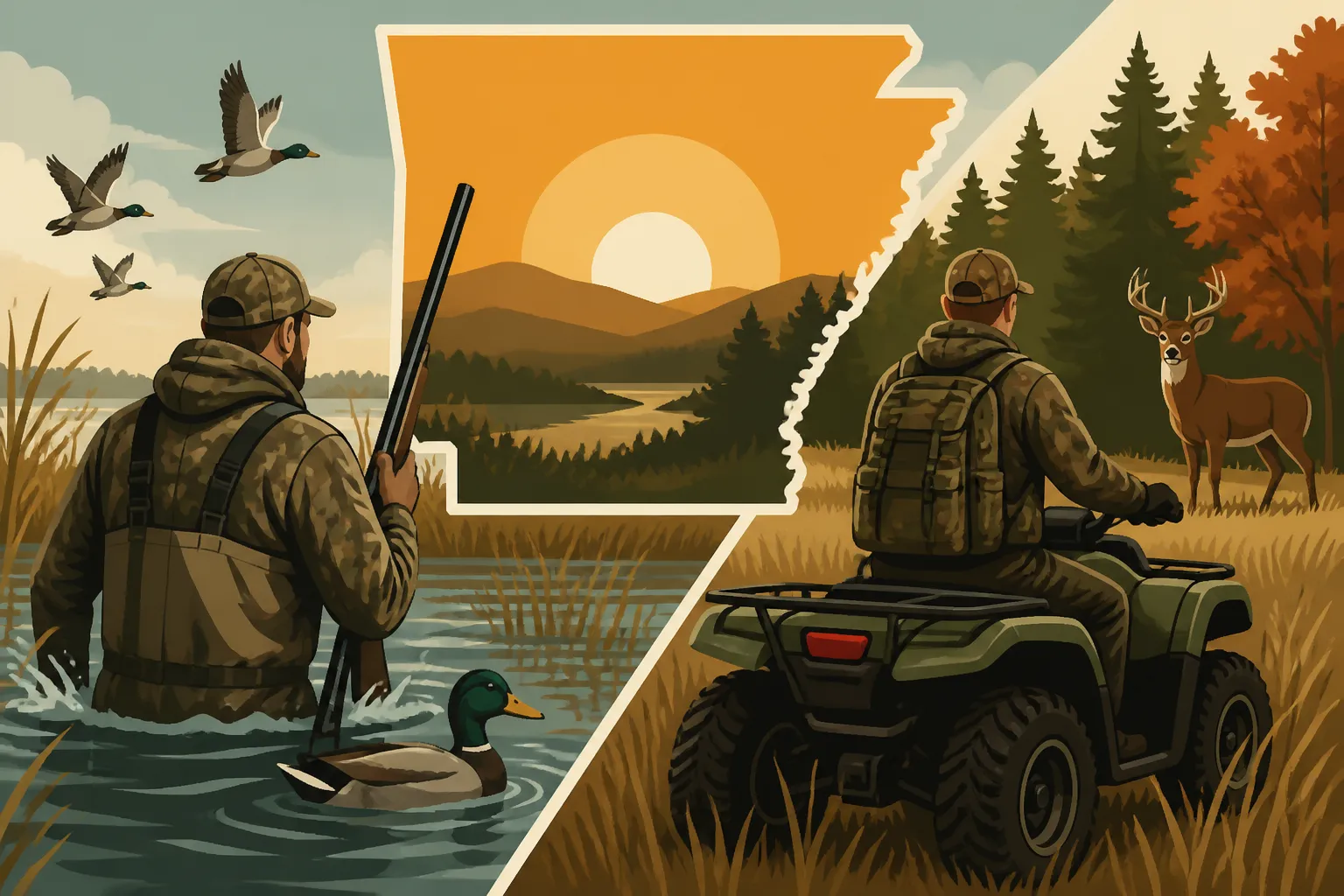
Whether You Wade or Ride
One of the biggest questions that pops into a hunter's mind when planning a trip to Arkansas, especially for waterfowl or even some deer hunts, is a practical one: "Am I going to be slogging through water up to my chest, or will I be zipping around in a boat or ATV?" The reality is that the method of movement can drastically change your hunting experience, impacting everything from your gear choices to your physical exertion and even the type of camaraderie you share with your fellow hunters. This guide is here to help you understand the core differences between wading and riding on an Arkansas hunt, so you can make an informed decision that suits your style and expectations.
The Wading Experience in Arkansas Hunting
When you hear "wading" in the context of Arkansas hunting, particularly for ducks, it often conjures images of thick cypress brakes and flooded timber. It’s a quintessential Delta experience, but it’s far more than just getting your feet wet.
What "Wading" Truly Means for a Hunter
Wading for ducks in Arkansas typically involves donning chest waders and physically walking through flooded timber, sloughs, or even some shallow fields to reach your hunting spot. This isn't just a leisurely stroll; it's often a purposeful, sometimes grueling, trek through varying depths of water, over submerged logs, through sticky mud, and past tangles of vegetation. You might be carrying decoys, your shotgun, a blind bag, and maybe even a stool or a small dog platform. The water could be ankle-deep one moment and waist-deep the next, changing with rainfall, river levels, and even the natural contours of the land. It’s a very hands-on, immersive way to hunt, connecting you directly with the environment in a profound way. For a deeper dive into what to expect in specific areas, you might want to read about Hunting Arkansas Flooded Green Timber.
Imagine a crisp December morning, the air still, and the fog just beginning to lift off the water. You're following your guide, flashlight beam cutting through the pre-dawn gloom, hearing the squelch of waders and the occasional splash as someone navigates a hidden obstacle. You might be breaking ice in shallower areas, feeling the chill seep through your neoprene, but the anticipation of setting up in a perfect pocket of timber keeps you moving. It’s a quiet approach, with only the sounds of the swamp for company, a truly primal way to get into position. This kind of experience demands a certain level of fitness and a willingness to embrace the elements, truly earning your spot in the blind.
Advantages of Wading Hunts
Wading offers several distinct advantages that appeal to many hunters, especially those seeking a more traditional and intimate experience. First and foremost is stealth. By moving on foot, you minimize the noise that motorized vehicles inevitably create, allowing you to slip into prime hunting locations undetected. This quiet approach can be crucial for surprising wary waterfowl or deer that might otherwise be spooked by an approaching engine. It also opens up access to incredibly remote areas that boats simply can't reach due to timber density, shallow water, or submerged obstacles.
Beyond the practical benefits, wading fosters a deep connection with the hunting environment. You feel the water, smell the damp earth and decaying leaves, and experience the nuanced topography of the flooded woods firsthand. This physical engagement makes the hunt feel more earned, more personal. There's a certain satisfaction that comes from navigating challenging terrain and reaching a pristine spot purely on your own two feet, or with the aid of a seasoned guide who knows every submerged log. It can lead to some truly unforgettable moments, like watching a flock of mallards commit to your decoys in a quiet timber hole that few others could ever access.
Disadvantages and Challenges of Wading
While rewarding, wading hunts come with their fair share of disadvantages and challenges. The most obvious is the physical exertion required. Hauling gear, fighting currents, and navigating uneven underwater terrain can be incredibly tiring, especially over several hours or days. This isn't an experience for someone with significant mobility issues or those who are out of shape; it truly is Asking About Physical Demands of yourself. The constant exposure to cold water, even with good waders, can lead to discomfort, and the risk of slips, falls, or stepping into deep holes is ever-present. Safety, in terms of personal injury or even just keeping your expensive gear dry, becomes a major concern.
Furthermore, wading often limits the amount of gear you can comfortably carry. You're typically restricted to what fits in a blind bag or can be slung over a shoulder, meaning fewer decoys, less elaborate blind setups, and limited comfort items. Bad weather, like freezing rain or strong winds, can make a wading hunt exponentially more miserable and even dangerous. You might also find yourself waiting for specific Wading Depth and Water Conditions to make certain areas accessible. If you're looking for an outfitter that specializes in these types of hunts, a platform like BookYourHunt can sometimes offer search filters that highlight "wading" or "timber" hunts, giving you a better idea of what to expect before you commit.
The Riding Experience in Arkansas Hunting
In contrast to the intimate, often strenuous, wading experience, "riding" in Arkansas hunting typically implies utilizing some form of motorized transport to get to and from your hunting location. This can cover a wide spectrum of vehicles and situations.
What "Riding" Entails on an Arkansas Hunt
"Riding" on an Arkansas hunt usually means you'll be transported by a guide or drive yourself in a truck, ATV, UTV, or specialized watercraft like an airboat or mud boat to reach your hunting destination. This method is common for accessing fields, large water bodies, or even some timber areas where specific trails or channels allow vehicle passage. For duck hunting, this often involves being driven right up to a permanent pit blind in a rice field, or perhaps ferried across a reservoir to a boat blind. For deer hunting, it could mean driving to a strategically placed stand or using an ATV to scout large tracts of land. These methods are designed for efficiency and comfort, moving hunters and their gear quickly across greater distances. You'll definitely want to be familiar with Vehicle Rules on Arkansas WMAs if you plan on using your own transport on public ground.
Consider a scene where you pull up to a warm duck blind in the predawn darkness, having covered several miles in a comfortable UTV. Instead of slogging through mud and water, your focus is on getting your gear organized, pouring a cup of coffee from your thermos, and watching the eastern sky lighten. The decoys might already be set by the guide or accessible from the blind, reducing your physical effort. This style of hunting prioritizes getting to the action quickly and comfortably, often allowing for more gear, more amenities, and a quicker setup. It’s a very different vibe than wading, often more social and less physically demanding, and it’s especially prevalent in the vast agricultural landscapes of the Arkansas Delta, which are prime for Hunting Rice Fields and Levees.
Advantages of Riding Hunts
The primary advantages of riding hunts revolve around speed, range, and convenience. Vehicles allow hunters to cover vast distances rapidly, accessing areas that would be impractical or impossible to reach on foot. This means more hunting locations can be explored in a day, or simply a quicker commute to a productive spot. The ability to carry a significant amount of gear – more decoys, larger blinds, extra clothing, snacks, and even portable heaters – drastically enhances comfort and the effectiveness of your setup. This is a huge plus when you're considering What an Arkansas Guided Duck Hunt Costs, as the outfitter's ability to transport extensive setups directly impacts the quality of your experience.
Furthermore, riding greatly reduces the physical strain of hunting. This makes it an excellent option for hunters with physical limitations, those who prefer comfort, or simply when you want to conserve your energy for the hunt itself rather than the journey to the blind. Out-of-state hunters, who might not be accustomed to the unique demands of Arkansas terrain, often find riding hunts more accessible. It’s also often easier to manage How Many Hunters Share a Hole when you can transport an entire group and their gear efficiently to a large pit blind or boat blind.
Disadvantages and Limitations of Riding
Despite the comfort and convenience, riding hunts do have their drawbacks. Noise is a significant factor; the sound of an ATV, UTV, or especially an airboat can carry for miles, potentially alerting and spooking game long before you arrive. This often necessitates longer cool-down periods before hunting or specific routes that minimize disturbance. Access can also be a limitation, ironically. While vehicles open up some areas, strict regulations on many public lands, like WMAs, dictate where and when ATV Rules on Arkansas Public Land apply, or if any motorized vehicles are allowed off designated roads at all. Private landowners also have specific rules.
The cost associated with owning, maintaining, and fueling vehicles can be substantial, and if you’re booking a guided hunt, this cost is factored into the outfitter's price. There's also the risk of mechanical breakdowns, leaving you stranded in remote locations. Environmentally, vehicle use can lead to trail degradation and increased emissions. While outfitters on platforms like GoHunt might highlight their use of comfortable transport, it’s always worth asking about their specific access methods and any potential restrictions they face, especially if you prioritize a quiet, low-impact hunt.
Making the Choice: Wading vs. Riding
Deciding whether to wade or ride isn't just about physical capability; it's about what kind of hunting experience you're truly after. Each has its distinct character and charm.
Factors to Consider for Your Hunt
When you're trying to figure out which approach is right for you, think about several key factors. First, consider your physical condition and tolerance for discomfort. Are you ready for a strenuous hike through cold water and mud, or do you prefer a more relaxed journey to the blind? Next, what species are you targeting, and in what kind of habitat? Ducks in flooded timber often lend themselves to wading, while ducks in open rice fields are typically accessed by vehicle. Deer in dense swamps might require a combination of boat access and then wading, while deer in open pine forests might be accessible by truck or ATV to a stand.
Weather plays a huge role. Frigid temperatures and ice can make wading miserable or even dangerous, while a warm rain might make it more appealing. Your group size can also influence the decision; a large group with lots of gear might struggle to wade efficiently, making vehicles a better option. Finally, consider your budget and overall hunting style. Do you want the full, immersive, hard-earned experience, or do you prioritize comfort and efficiency? When looking for guided hunts, platforms like BookYourHunt often detail the method of transport, allowing you to filter options based on whether you're looking for a challenging Green Timber Guided Hunt Prices experience or a more comfortable Rice Field Guided Hunt Prices trip.
When a Guided Hunt Can Clarify the Choice
For many hunters, especially those new to Arkansas or exploring unfamiliar territory, a guided hunt can be invaluable in navigating the wading versus riding dilemma. Outfitters have intimate knowledge of their lease properties and the specific hunting conditions. They'll know if the water is too high for wading in certain areas, or if a particular field is too muddy for vehicles. More importantly, they provide the necessary equipment and logistical support for whichever method is chosen. If you book a timber hunt, they'll likely have you wading, providing the expertise to navigate the woods safely. If it’s a field hunt, they'll have the pits and vehicles ready.
When you're Booking an Arkansas Duck Hunt, don't hesitate to ask outfitters directly about their typical methods of access. Inquire about the distance from parking to the blind, the expected water depths, and what kind of vehicles they use. A reputable guide will be transparent about the physical demands and the overall experience. This upfront communication, perhaps facilitated by researching on platforms like GoHunt where outfitters often list these details, ensures that your expectations align with the reality of the hunt, preventing any unwelcome surprises once you arrive in Arkansas.
Hybrid Approaches and Adaptability
It’s also important to remember that the choice isn't always black and white, and many hunts might involve a hybrid approach. You might ride an ATV part of the way down a logging road, then disembark and wade the last half-mile into a secluded timber hole. Or you could use a boat to cross a large river or lake, then paddle a canoe or kayak into a tight slough before wading the final distance. Adaptability is key in Arkansas hunting, as conditions can change rapidly with weather and water levels.
Being open to both methods, or a combination, will give you the most flexibility and increase your chances of success. A guide will typically assess conditions daily and decide the best approach, but knowing your own preferences and capabilities ahead of time will help you communicate with your outfitter and choose the right kind of hunt for you. Ultimately, whether you wade or ride, the goal is to enjoy the incredible hunting opportunities that Arkansas has to offer.
| Feature | Wading Hunts | Riding Hunts |
|---|---|---|
| Primary Movement | On foot, through water and uneven terrain | Via motorized vehicle (ATV, UTV, boat, truck) |
| Physical Demand | High – strenuous, requires good stamina | Low to moderate – less physical exertion |
| Stealth | Very high – quiet, minimal disturbance | Lower – vehicle noise can spook game |
| Gear Capacity | Limited to what can be carried/worn | High – can transport more decoys, gear, amenities |
| Access | Excellent for dense timber, shallow, remote areas | Excellent for covering long distances, open water/fields |
| Comfort | Lower – exposed to elements, potentially cold/wet | Higher – often sheltered, warmer, more amenities |
| Speed | Slower, especially over challenging terrain | Faster, efficient for covering large areas |
| Typical Habitat | Flooded timber, shallow sloughs, small ponds | Rice/bean fields, large reservoirs, accessible forests |
| Environmental Impact | Minimal | Potential for trail erosion, noise pollution |
| Cost Implications | Less equipment-dependent for basic access | Higher equipment costs (vehicle purchase/maintenance) |
Disclaimer
This article is for general informational purposes only and does not constitute professional advice. Laws, prices and regulations vary by location and change over time. Consult a qualified professional for guidance on your specific situation.