Bear Baiting Rules and Tactics in Arkansas
Hunting black bears in Arkansas can be an incredibly rewarding experience, but let's be honest, it also comes with its fair share of complexities, especially when you start looking at specific methods like baiting. Many hunters find themselves scratching their heads, unsure about the precise rules, what baits actually work, and how to set up a site effectively without running afoul of regulations or simply wasting their time and money. This comprehensive guide is here to untangle all those knots, providing clear, actionable advice on bear baiting rules and tactics in Arkansas so you can hunt confidently and successfully.
Understanding Arkansas's Bear Baiting Regulations
Navigating the regulations for bear hunting in Arkansas, particularly concerning baiting, can feel a bit like wading through thick swamp water at times. It's crucial to get this right, not just for ethical hunting but also to avoid potential fines or loss of hunting privileges. The Arkansas Game and Fish Commission (AGFC) has specific guidelines in place to ensure fair chase, public safety, and sound wildlife management.
Legal Zones and Dates for Baiting
First and foremost, not all areas of Arkansas are open to bear hunting, nor are all areas open to bear baiting. The state is divided into Bear Zones, and the rules can vary significantly between them. Generally, bear baiting is permitted only in certain zones within the Ozark and Ouachita National Forests, specifically Bear Zones 1 and 2. It’s absolutely essential to check the current AGFC regulations each year, as zone boundaries, season dates, and specific baiting windows can change. For instance, a particular zone might have an archery season that allows baiting, but a modern gun season might have different rules. You need to know your exact hunting location and cross-reference it with the AGFC's most recent hunting guide.
Furthermore, there are strict dates when baiting is allowed. You can't just throw out a bait pile months in advance. The AGFC usually stipulates a specific period leading up to and during the bear season when bait can be placed. This prevents bears from becoming overly reliant on artificial food sources for too long and helps manage hunter pressure. Make sure your trail cameras are set to monitor only within legal timeframes. You should also be aware of when the season opens and closes, as outlined in the Arkansas Bear Seasons and Zone Quotas information, because the quotas for each zone can cause a season to close early, which would, of course, impact any baiting plans.
Prohibited Baits and Methods
This is where many hunters can unintentionally make a mistake. Arkansas has a clear list of what you cannot use as bait. Generally, anything considered a domestic animal product or part thereof (like meat, bones, or rendered fats) is strictly prohibited. This is to prevent the spread of diseases and to encourage the use of more natural, plant-based attractants. It also helps prevent unintended interactions with other scavengers or domestic animals.
Commonly prohibited items also include human food waste from commercial sources, though some specific, processed foods might be allowed if they meet certain criteria. Always err on the side of caution. Stick to natural agricultural products. Also, certain methods of bait placement might be restricted. For example, bait often needs to be placed on private land or specific public land areas with permission. It cannot be within a certain distance of public roads, dwellings, or even certain water sources. It's not just what you use, but how and where you place it that matters. Using mapping tools like those from GoHunt can really help you visualize these distances and ensure you’re compliant before you even step foot in the woods.
Permit Requirements and Reporting
While a general bear hunting license is required, Arkansas typically does not require a specific "baiting permit" in the same way some other states might. However, it's crucial to understand all the broader license and tag requirements for bear hunting itself. You'll need a valid Arkansas hunting license, along with a bear tag. Non-residents will have different license structures, so be sure to check those out.
Once you harvest a bear, reporting requirements are strict and mandatory. You must check your bear within 24 hours of harvest. This process ensures the AGFC can track harvest numbers against the established quotas for each zone. If a zone's quota is met, the season in that zone will close immediately, often with very short notice. Knowing Checking Whether an Arkansas Bear Zone Is Open is paramount, especially as your hunt progresses. Failure to check your bear can result in serious penalties, so always have a plan for how you'll report your harvest, whether it's through the AGFC app, online, or at a designated check station.
Choosing the Right Bear Bait for Arkansas Conditions
The effectiveness of your bear baiting strategy hinges significantly on the type of bait you choose. Bears are opportunists with incredibly keen senses of smell, but not all baits are created equal, especially when considering the specific environment and food sources available in Arkansas.
High-Calorie Options for Attraction
Bears are constantly looking for high-energy food sources, especially as fall approaches and they prepare for denning. Their metabolism drives them to consume vast amounts of calories. This makes high-sugar, high-fat, and high-carb baits particularly attractive. Some of the most popular and effective choices include:
- Pastries and Sweets: Doughnuts, expired candies, cakes, cookies, and even sugary cereals are bear magnets. Their strong scent and high sugar content make them irresistible. Many bakeries and grocery stores will sell or give away day-old or damaged goods at a very low cost, or even free, making them a cost-effective option.
- Corn and Grain Mixes: Whole kernel corn, molasses-mixed grains, or even a mix of discarded nuts can provide significant calories. While not as pungent as sweets, they offer a sustained food source that bears will return to.
- Dog Food/Cat Food: High-fat content pet foods can be very appealing, but always check local regulations, as some areas may restrict or prohibit their use due to attractants or processing. In Arkansas, you generally want to stick to natural or agricultural products.
Remember, the goal isn't just to get them to visit once but to keep them coming back. A mix of immediate attractants (like strong-smelling sweets) and longer-lasting, caloric options (like grains) can create a robust bait site.
Scent Attractants and Lures
Beyond the physical bait, scent plays a colossal role in drawing bears in from a distance. Their sense of smell is legendary, allowing them to detect food sources from miles away. Incorporating powerful scent attractants can significantly increase the reach of your bait site.
- Anise Oil: This is a classic bear attractant. Its strong, licorice-like smell travels far, even on calm days. You can mix it with vegetable oil and rub it on trees around your bait site, or even soak rags in it and hang them from branches.
- Bacon Grease/Cooking Oils: While actual meat products are typically prohibited, certain cooking oils or heavily rendered fats (like bacon grease if processed to remove all meat particles, though still use with caution and check regulations) can emit a strong, appealing odor. Always confirm legality before using. Many hunters find success with heavily scented vegetable oils mixed with other legal attractants.
- Commercial Bear Lures: Many companies produce specific bear lures designed to mimic natural bear attractants or incredibly potent food smells. Brands like Cabela's or Bass Pro Shops offer a range of sprays, gels, and liquids that can be applied around the bait site. Some of these are incredibly powerful and specifically formulated to be legal for bear baiting where allowed.
- Molasses: The thick, sweet smell of molasses is another fantastic long-range attractant. You can pour it directly onto stumps, mix it with corn, or even create a "molasses drip" to slowly release scent over time.
When using scent attractants, think about wind direction. You want the scent to drift into areas where bears are likely to be traveling, pulling them towards your site.
When to Use Different Baits
The timing of your baiting strategy can also influence what types of bait are most effective.
- Early Season (Late Summer/Early Fall): During this time, bears are still actively feeding on natural food sources like acorns, berries, and wild fruits. Your bait needs to compete with these natural options. This is a great time to focus on highly aromatic, sugary baits that stand out. Think expired pastries and molasses. You might be scouting for Hunting Arkansas Bear Over Natural Food during this time, but bait can give you an edge.
- Mid-Season (Peak Hunting Pressure): As hunting pressure increases, bears can become warier. This is when a consistent, high-calorie bait site that they've grown accustomed to can be invaluable. A mix of sweets and grains that they know provides reliable nutrition will encourage them to keep visiting.
- Late Season (Pre-Denning): In the weeks leading up to denning, bears enter hyperphagia, a period of excessive eating to pack on fat reserves. They are driven to consume as many calories as possible. This is when those high-carb, high-fat, dense baits really shine. Maintaining a steady supply of caloric food is key.
Regardless of the season, consistency is crucial. Bears learn quickly where reliable food sources are. If your bait site is sporadic, they might not bother checking it regularly. Regular replenishment, while adhering to monitoring schedules, helps build that consistent pattern.
| Bait Type | Primary Benefit | Scent Strength | Longevity at Site | Best for Season | Legal Considerations (Arkansas) |
|---|---|---|---|---|---|
| Pastries/Sweets | High sugar, strong scent | Very High | Low | Early/Mid | Generally legal, check for commercial food waste nuances |
| Corn/Grain Mixes | High calories, consistent | Medium | High | All | Generally legal, widely accepted |
| Anise Oil | Long-range attractant | Very High | Medium (applied) | All | Generally legal, used as scent |
| Molasses | Sweet, sticky attractant | High | Medium | All | Generally legal, mixes well |
| Commercial Lures | Targeted powerful scents | High-Very High | Varies | All | Check ingredients, typically legal if non-meat |
Strategic Placement of Bear Baits
Simply throwing out some donuts in the woods isn't a strategy; it's a picnic for raccoons. Effective bear baiting requires careful thought about location, accessibility for both you and the bear, and how to maximize your chances for a successful, ethical harvest.
Location Scouting for Success
Choosing the right spot for your bait site is paramount. This isn't just about finding a remote corner of the woods; it's about understanding bear movement, prevailing winds, and your own access.
- Bear Sign: Before you even think about bait, you need to find bear sign. Look for tracks, scat, rub trees (where bears scratch and rub against trees, often leaving hair), and flipped-over rocks or torn-apart logs where they've been foraging for insects. Areas with abundant natural food sources, like oak flats full of acorns or thickets of wild berries, are natural places to start. The AGFC map tool or even a GoHunt subscription can help identify these potential hotspots and public land boundaries. Information on Finding Bear Sign in the Ozarks can give you great insights into what to look for.
- Remote and Secure: Bears are wary creatures, especially in areas with human activity. Your bait site needs to be off the beaten path, away from hiking trails, roads, and other public access points. This minimizes disturbance to the bears and prevents unintended encounters with other people. A secluded, dense block of timber or a hard-to-reach hollow in the Ouachita National Forest Hunting or Ozark National Forest Hunting could be ideal.
- Water Source: Bears need water daily, especially in warmer weather. A bait site near a reliable water source like a creek, spring, or swampy area will be more attractive.
- Wind Direction: This is critical. You want the prevailing wind to carry the scent of your bait into areas where bears are likely to be traveling or bedding, not away from them. Set up your bait so that you, as the hunter, will be downwind of the bait when you hunt, preventing your scent from spooking the bear.
- Topography: Bears often use natural travel corridors like creek bottoms, saddles between ridges, or old logging roads. Placing your bait near these pathways can intercept bears on their regular routes. Scouting Arkansas public land before season is an important part of this process.
Setting Up for the Shot
Once you've identified a promising location, you need to think about the actual hunting scenario. A well-placed bait won't do you any good if you can't get a shot.
- Clear Shooting Lanes: Clear any brush or small trees that might obstruct your shot from your chosen stand or blind location to the bait. You want an unobstructed view and clear shot path, typically within 20-30 yards for archery or 50-75 yards for firearms, depending on your comfort and weapon.
- Stand/Blind Placement: Your stand or blind needs to be positioned downwind of the bait for the prevailing wind, giving you the best chance of remaining undetected. Consider the sun's position throughout the day to avoid being silhouetted or having the sun directly in your eyes. A comfortable, secure setup is essential for long waits.
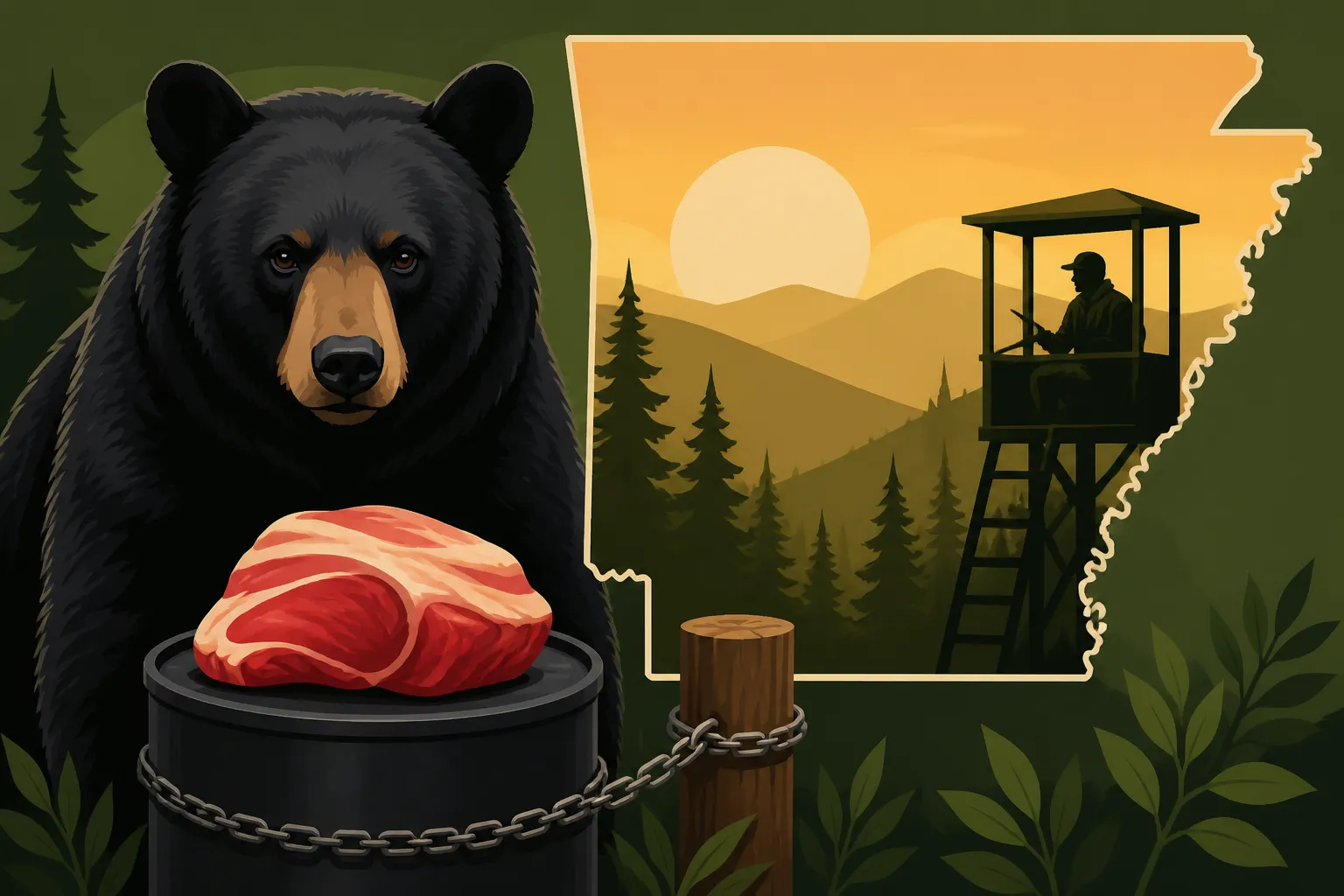
- Bait Container/Securing: You don't want the bears to just walk off with all your bait. Consider using a sturdy container, like a culvert pipe, a large log with a hole bored into it, or a heavy-duty feeder barrel anchored to a tree or the ground. This forces the bears to work at the bait, keeping them occupied longer and giving you more time for a shot. It also prevents smaller critters from devouring all your costly bait too quickly.
- Entry and Exit Routes: Plan your approach and departure routes to and from your stand carefully. These routes should minimize disturbing the area around the bait and, ideally, keep you out of the bear's direct line of sight or smell as you approach. Avoid walking directly through the bait site.
Security and Secrecy
Bear baiting is often a significant investment of time and resources. Protecting your site from theft, vandalism, or interference from other hunters is crucial.
- Discretion: Don't advertise your bait site. The fewer people who know about it, the better. Be subtle when entering and exiting the woods, and don't leave obvious signs of your presence.
- Camouflage and Concealment: Your bait setup, including any feeders or trail cameras, should be well-camouflaged. Use natural materials to blend them into the surroundings.
- Private Land Considerations: If you're baiting on private land, ensure you have explicit written permission. This protects you legally and clearly defines your hunting area. If you're on public land, respect the space of others and understand that you don't have exclusive rights to an area.
Monitoring Your Bear Bait Site Effectively
Once your bait site is established, it's not a "set it and forget it" operation. Consistent and intelligent monitoring is key to understanding bear activity, optimizing your bait, and ultimately planning your hunt. Without proper monitoring, you're essentially hunting blind.
Trail Camera Best Practices
Trail cameras are your eyes in the woods when you're not there. They provide invaluable information about what bears are visiting, when they're visiting, and their size and sex.
- Placement and Angle: Position your camera approximately 10-15 feet from the bait, angled slightly downwards. This gives you a good view of the bear at the bait. Clear any brush or vegetation in front of the camera that could trigger false alarms from wind movement. Consider placing a second camera slightly further back, capturing a wider view of the approach and exit routes.
- Settings Optimization: Set your camera to take both photos and short videos. Videos can provide more context, especially for identifying individual bears and understanding their behavior. Adjust sensitivity to avoid triggering on smaller critters if your primary target is bear. Use a rapid trigger speed if available to ensure you capture the bear as soon as it enters the frame. Some of the newer cellular-enabled cameras, like those offered by Cuddeback or Browning, can even send photos directly to your phone, saving you trips to the woods.
- Security: Trail cameras are unfortunately common targets for theft. Secure your camera with a locking cable or a security box. Hide it as best you can, camouflaged with natural materials. Consider placing it higher up on a tree, angled down, making it less visible to casual passersby.
- Battery Life and Storage: Ensure you're using high-quality batteries (lithium batteries often perform best in cold weather) and sufficient SD card storage. There's nothing worse than checking your camera only to find it died or filled up a day after a big bear started hitting the bait.
Frequency of Checks and Minimizing Disturbance
How often you check your bait site and cameras can be a delicate balance. You need information, but you don't want to spook the bears.
- Initial Setup: For the first week or two after setting up a new bait, check it every 3-5 days. This helps you gauge initial interest and identify if the bait needs adjusting or if there are unexpected issues (like raccoons or feral hogs monopolizing the site).
- Once Established: Once bears are consistently hitting the bait, reduce your checks to once every 5-7 days, or even longer if possible, especially as hunting season approaches. Bears are intelligent and can become wary of human scent and activity. The less you visit, the more comfortable they will be.
- Approach Strategy: Always approach your bait site with extreme caution. Walk slowly, paying attention to wind direction, and try to minimize noise. Avoid touching anything unnecessarily. Wear clean clothes and rubber boots to reduce scent transfer. A methodical approach, like that used in Still-Hunting Arkansas Pine Country, is beneficial even when checking bait.
- Replenishment: Only add more bait when necessary. Over-baiting can lead to waste, and under-baiting can cause bears to lose interest. Trail camera photos will tell you how quickly the bait is being consumed.
Adapting to Bear Behavior
Bears are not static creatures; their behavior can change based on pressure, natural food availability, and weather. Your monitoring should inform your adaptations.
- Nocturnal vs. Daylight Activity: Your cameras will reveal if bears are hitting the bait primarily at night or during daylight hours. If they're mostly nocturnal, you might need to adjust your hunting times (if legal for your method and zone) or increase consistency to try and shift their patterns. Increased pressure, either from other bears or hunters, often makes bears more nocturnal.
- Multiple Bears: If multiple bears are visiting, you might see a pecking order emerge. Larger, dominant bears might push out smaller ones. This can impact your strategy, especially if you're targeting a specific size or sex of bear.
- Response to Hunting Pressure: As the season progresses and more hunters are in the woods, bears will become more cautious. They might start approaching the bait from different directions, spending less time at the site, or switching to entirely nocturnal visits. You might need to adjust your stand placement or approach routes accordingly. Don't forget to review Arkansas Bear Harvest Trends to get a sense of overall pressure in certain zones.
Common Bear Baiting Mistakes to Avoid
Even experienced hunters can fall into common traps when it comes to bear baiting. Recognizing and avoiding these pitfalls can save you time, effort, and frustration, ultimately leading to a more successful hunt.
Not Understanding Regulations Thoroughly
This is, without a doubt, the number one mistake and the one with the most severe consequences. Simply assuming you know the rules or relying on outdated information is a recipe for disaster.
- State vs. Federal Land: Regulations can differ between state-managed lands (like WMAs) and federal lands (like National Forests). For example, while baiting might be allowed in certain parts of the Ozark or Ouachita National Forests, it might be strictly prohibited on specific Arkansas Wildlife Management Areas (WMAs). Always confirm the rules for the specific piece of property you're hunting. You can find detailed rules for different areas under Arkansas WMA Permits and Draw Hunts.
- Annual Changes: Hunting regulations are not static. The AGFC reviews and updates them annually. What was legal last year might not be this year. Always download and thoroughly read the current year's hunting guide. Don't rely on memory or what someone told you five years ago.
- CWD Zones: Chronic Wasting Disease (CWD) is a serious concern in Arkansas. In CWD Management Zones, there are often additional restrictions on baiting and feeding to prevent the concentration of animals and potential spread of the disease. Always check if your baiting location falls within a CWD zone and adhere to any specific Baiting Rules in Arkansas CWD Zones that may apply.
- Permit Specifics: Make sure you have all the necessary licenses and tags. Ignorance of the law is not a valid defense.
Poor Bait Management
A successful bait site isn't just about throwing out food; it's about managing that food source strategically.
- Inconsistency: If you bait sporadically, bears won't learn to rely on your site. They'll move on to more consistent natural food sources or other bait sites. Consistency in replenishment, even if infrequent, builds trust with the bears.
- Over-Baiting: Piling too much bait at once can lead to spoilage, especially in warm Arkansas weather. Rancid bait is unattractive and can also attract unwanted pests. Instead, offer a quantity that will be consumed within a few days to a week.
- Under-Baiting: On the flip side, if bears show up and find the bait gone or nearly gone, they might decide it's not worth their time to keep checking. Find that sweet spot of enough bait to keep them interested without it spoiling or being completely devoured too quickly.
- Lack of Scent Trail: While the bait itself provides scent, a strong scent trail leading to the bait is crucial for initial attraction. Don't just place bait; create a scent corridor using strong attractants like anise oil or commercial lures, especially when first establishing the site.
Ignoring Wind and Scent Control
Bears have an incredible sense of smell, far superior to dogs. Ignoring wind direction and your own scent is a surefire way to spook them.
- Improper Stand Placement: Setting your stand or blind upwind of the bait means your scent will blow directly to the bait, alerting any approaching bears. Always position yourself downwind of where you expect the bear to approach and feed.
- Lack of Personal Scent Control: Even when approaching to check a camera or replenish bait, practice rigorous scent control. Wear clean clothes, use scent-eliminating sprays, and wear rubber boots. Your goal is to leave as little human scent as possible. This is particularly crucial on hunting days.
- Prevailing Winds vs. Daily Thermals: Understand that while you might have a general prevailing wind, daily thermals (air currents that rise in the morning and fall in the evening) can affect scent dispersion, especially in hilly or mountainous terrain like the Ozarks and Ouachitas. Factor these into your approach and stand selection. This is a critical point that can easily be overlooked.
By being meticulous with regulations, diligent with bait management, and obsessive about scent control, you'll significantly increase your chances of a successful bear hunt in Arkansas.
Ethical Considerations and Responsible Bear Baiting
Bear baiting, like all forms of hunting, comes with a responsibility to uphold ethical standards and contribute to conservation. It's not just about what's legal; it's about what's right and what fosters a positive public perception of hunting.
Minimizing Environmental Impact
When you establish a bait site, you are introducing artificial elements into a natural environment. It's our duty to minimize any negative impact.
- Cleanliness: Keep your bait site as clean as possible. Avoid leaving wrappers, plastic bags, or non-biodegradable materials. Any containers used for bait should be removed once the season is over or if you discontinue the site. The goal is to leave no trace.
- Avoid Over-Clearing: While you need clear shooting lanes, don't unnecessarily clear large swaths of vegetation around your bait site. Maintain the natural habitat as much as possible.
- Impact on Other Wildlife: While bears are your target, other wildlife will inevitably be attracted to the bait. Be mindful of unintended consequences. If you notice an excessive amount of non-target species (like raccoons, skunks, or even deer, though some rules address baiting near deer) monopolizing the site, you might need to adjust your bait type or method.
- Long-Term Bear Habits: While baiting for a season or two won't typically create a "problem bear," long-term, year-round baiting can condition bears to associate humans with food. This can lead to undesirable behavior and conflicts. Stick to the legal baiting windows and dismantle your site completely when the season ends.
Respecting Other Hunters and Public Access
Public land is just that – public. When baiting on public ground, or even near public access on private land, it's essential to show respect and courtesy to others who use the outdoors.
- Avoid Overlapping Zones: Try to establish your bait site in an area where it won't interfere with other hunters' established spots, especially if you know others are hunting nearby. A bit of scouting to find areas with less pressure can go a long way.
- No Trespassing: Ensure your bait site, and your hunting activities, do not infringe on private property. Always know your boundaries and, if in doubt, get permission. This ties into the general Arkansas Trespass and Permission Law that all hunters should be familiar with.
- Safety First: If you see other individuals (hunters, hikers, birdwatchers) in the vicinity of your bait, exercise extreme caution. Clearly identify your target and background before taking a shot. Never shoot in the direction of roads, trails, or occupied dwellings. This is part of responsible hunter education, which all hunters, regardless of experience, should take seriously, especially if you were exempt from formal training (e.g., those who were grandfathered in before modern hunter ed was mandatory). More information is available on Arkansas Hunter Education and Safety Rules.
Contributing to Wildlife Conservation
Hunters are often the most dedicated conservationists, and responsible baiting practices align with this ethos.
- Adherence to Regulations: By strictly following AGFC rules, you are directly contributing to sound wildlife management. Regulations are put in place based on scientific data to ensure sustainable populations.
- Reporting and Data Collection: Checking your harvested bear and providing accurate information (sex, weight, location) is crucial data for wildlife biologists. This data helps the AGFC assess bear populations, adjust quotas, and make informed management decisions for future seasons. This ensures that generations to come can also experience bear hunting.
- Promoting a Positive Image: Hunting is under constant scrutiny. By demonstrating ethical, responsible, and legal baiting practices, you help foster a positive image of hunters and contribute to the broader acceptance of hunting as a vital conservation tool. This is especially true given the unique history of The Arkansas Black Bear Restoration.
Bear baiting can be a highly effective method for harvesting a black bear in Arkansas. However, its effectiveness and ethical standing are entirely dependent on the hunter's commitment to understanding and respecting the rules, the animal, and the environment. By approaching it with knowledge, preparation, and a strong sense of responsibility, you can have a truly memorable and successful hunt.
Disclaimer
Please note that hunting regulations, seasons, and zone boundaries are subject to change by the Arkansas Game and Fish Commission (AGFC). It is the hunter's responsibility to consult the most current AGFC hunting guide and regulations annually before participating in any hunting activity. This guide is for informational purposes only and should not be considered a substitute for official AGFC publications.