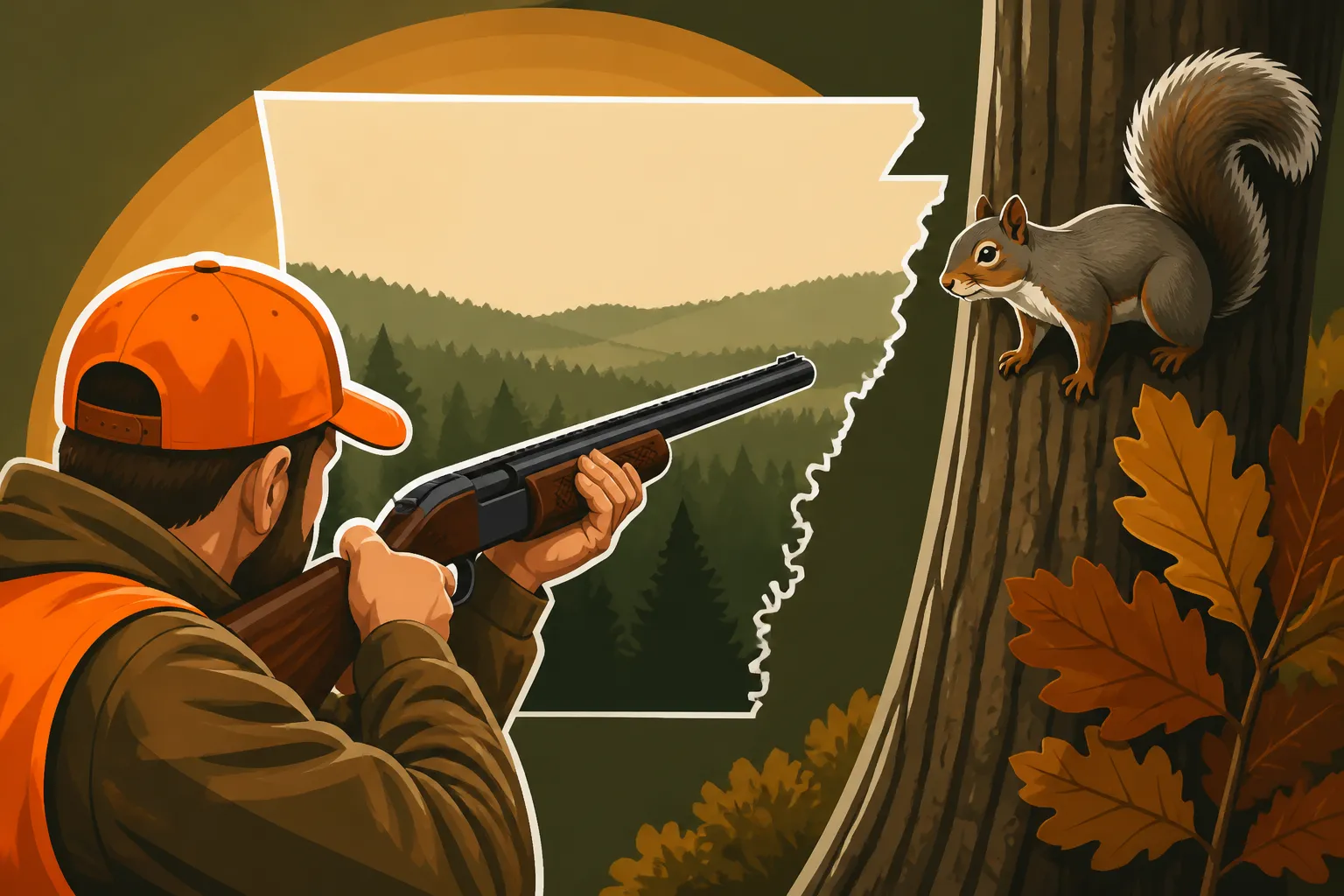
Squirrel Hunting Arkansas Hardwoods
Hunting squirrels in Arkansas hardwoods can feel overwhelming, especially when you're looking at what seems like an endless expanse of trees. It's easy to get lost, confused by the vastness, and discouraged when the bushytails seem to vanish into thin air. But with the right approach, understanding their habits, and knowing how to navigate these rich forests, you can turn those frustrations into rewarding hunts. This guide is all about breaking down the art and science of finding success squirrel hunting Arkansas hardwoods.
Understanding Arkansas Hardwoods for Squirrels
Arkansas is truly blessed with an incredible diversity of hardwood forests, from the rolling Ozarks to the flat, fertile river bottoms of the Delta. Each of these unique landscapes holds its own secrets when it comes to finding squirrels, and truly successful hunters know that understanding these nuances is the first step. It's not just about walking into the woods; it's about walking into the right woods at the right time, knowing exactly what the squirrels are looking for.
Identifying Key Food Sources
Squirrels, whether they're the common gray squirrel or the larger fox squirrel, are essentially tiny, bushy-tailed farmers. Their entire year revolves around the harvest cycle of the forest's mast crop. When you're out there, especially early in the season, finding those prime food sources is like finding a goldmine. Think about the variety of hardwoods we have: white oaks, red oaks, hickories, pecans, and even some walnuts. Each one drops its bounty at slightly different times, and squirrels will be keyed into whichever tree is currently serving dinner.
In late summer and early fall, look for beech trees dropping their small, triangular nuts, or those early-dropping white oak acorns. These are high-energy treats the squirrels absolutely devour. As the season progresses into October and November, the red oaks start letting loose their acorns, providing a longer-lasting food source, and the hickories are often a huge draw. If you can locate a stand of mature hickory trees, especially on a ridge or in a bottomland area, you'll almost certainly find squirrels. You'll see the husks of hickory nuts littering the ground, or tell-tale "cuttings" on logs and stumps where they've been feasting. Knowing how to differentiate these trees and their nuts is crucial for predicting where squirrels will be. For more on this, check out our guide on Squirrel Hunting Arkansas Hickories.
Reading Squirrel Sign and Behavior
Squirrels are creatures of habit, and they leave a ton of clues if you know what to look for. Beyond the obvious sight of a squirrel scampering up a tree, you're looking for subtle signs that tell you they're active in an area. The most common sign is the aforementioned "cuttings" – small pieces of acorn or nut shells chewed up and dropped from their feeding perches. These tell you exactly what they're eating and where. Fresh cuttings mean recent activity.
Another key sign is disturbed leaf litter. Squirrels are constantly digging for buried nuts or foraging for fresh ones, and they'll rustle leaves as they move. Listen for this rustling, especially on calm mornings. You might also spot their nests, called "dreys," which are messy balls of leaves and twigs high in tree branches. While a drey doesn't guarantee a squirrel is home, a cluster of dreys indicates a healthy population in the vicinity. Pay attention to how squirrels behave when they see you; they'll often "bark" warnings to their kin, flick their tails, or try to flatten themselves against a tree trunk, always keeping the tree between you and them. This knowledge helps you understand how to approach them and what to expect.
Navigating Different Hardwood Types
Arkansas's hardwood forests aren't all the same, and neither should your hunting approach be. In the Ozarks and Ouachitas, you'll find more mature, mixed oak-hickory stands on steep ridges and in deep hollows. Here, squirrels will often feed on the benches or along the ridgetops, where the big mast trees grow. You'll need to deal with elevation changes, and understanding wind and thermals, as outlined in Wind and Thermals in Ouachita Hollows, can be incredibly important for a successful stalk.
Conversely, in the Delta region, you're looking at sprawling bottomland hardwoods, often interspersed with sloughs and bayous. Here, you'll find more water oaks, willow oaks, and pecans, and the terrain is much flatter. Squirrels here might be feeding in specific pockets of timber, sometimes even venturing into the edges of agricultural fields. Public land in these areas, such as the various Wildlife Management Areas, can offer fantastic opportunities. The sheer amount of ground can be daunting, but using a mapping tool like the GoHunt app can really help you pinpoint promising timber blocks and access points. It's all about adapting your strategy to the specific forest type you're hunting.
Essential Gear and Preparation for Squirrel Hunting
Stepping into the hardwoods for squirrels is more than just grabbing a gun and heading out the door. Proper gear and thorough preparation can significantly impact your success and enjoyment. We're not talking about anything overly complex, but having the right tools for the job, and knowing how to use them, makes all the difference when you're trying to outsmart a nimble bushytail.
Firearms and Ammunition Choices
When it comes to squirrel hunting, the .22 rimfire rifle is a classic for a reason. Its quiet report, low recoil, and excellent accuracy make it ideal for headshots, preserving meat, and not spooking every other squirrel in the woods. Paired with a decent scope (a 4x fixed or a low-power variable like 2-7x is plenty), you'll be able to make precise shots on small targets high in the trees. Some hunters prefer a .17 HMR for its flatter trajectory, especially for longer shots, but shot placement remains key.
Shotguns are another popular choice, particularly for running squirrels or when hunting with dogs. A .410 or 20-gauge choked in modified or full, loaded with small shot (like 6s or 7.5s), can be deadly. The wider pattern offers a bit more forgiveness on moving targets. However, shotguns can damage more meat if you're not careful with your shot placement. It's also worth considering what your local regulations allow and whether the noise will affect other hunters or game you might encounter. Always confirm that your chosen firearm and ammunition are legal for Small Game and Squirrel Hunting in Arkansas.
Clothing, Optics, and Navigation Tools
Comfort and stealth are paramount when still-hunting for squirrels. Wear quiet clothing that won't rustle against branches or your skin, ideally in camouflage patterns that break up your silhouette. Layers are always a good idea in Arkansas, as mornings can be chilly and afternoons can warm up considerably, especially during the longer periods of Arkansas's Long Squirrel Season Explained. Don't forget durable boots for traversing uneven terrain.
Good binoculars (8x or 10x) are invaluable for spotting squirrels high in the canopy or tucked against a tree trunk. It's amazing how well they can blend in. A reliable compass or, even better, a GPS unit or a smartphone app like GoHunt with downloaded maps, is absolutely essential for navigation, especially if you're venturing deep into unfamiliar public land. The GoHunt app, for example, allows you to mark waypoints, track your path, and see property boundaries, which is incredibly helpful when you're focusing on hunting rather than getting lost. A small backpack to carry water, snacks, extra ammo, and a game bag rounds out your essential gear.
Pre-Season Scouting and Planning
Just like with deer or turkey, pre-season scouting for squirrels is a game-changer. Don't wait until opening morning to figure out where the best mast crops are. A few weeks before the season, take some walks through potential hunting areas. Look for those prime food trees—oaks, hickories, pecans. Are there signs of squirrel activity? Cuttings on the ground? Dreys in the trees? The more fresh sign you find, the better your chances will be when the season opens.
This is also a great time to familiarize yourself with the terrain, identify potential travel corridors for squirrels, and scout out good ambush spots. Pay attention to water sources, old logging roads, and natural funnels. If you're hunting public land, consulting the Arkansas Game and Fish Commission's WMA maps or using a mapping app to identify boundaries and access points is crucial. For deeper dives into public land preparation, consider reading our advice on Scouting Arkansas Public Land Before Season. Think about the time of day, too; squirrels are generally most active early mornings and late afternoons, especially when the weather is calm.
Effective Hunting Methods in Hardwood Forests
Once you've got your gear sorted and a good idea of where you're headed, it's time to talk tactics. Squirrels are smart and wary, and they’ve got those sharp eyes and ears. You can't just wander in and expect them to present themselves. A successful squirrel hunter employs a mix of stealth, patience, and sometimes, a little help from a furry friend of their own.
Still-Hunting and Stalking Techniques
Still-hunting is perhaps the most challenging, yet often most rewarding, method for squirrels in hardwoods. It involves moving slowly, taking a few steps, then pausing for several minutes to scan the trees and listen. The key here is patience. Squirrels often "freeze" when they sense danger, blending perfectly with the bark or lying motionless on a limb. If you keep moving, you'll walk right past them. By stopping, you give them time to relax and resume their activity, or you might spot that tell-tale twitch of an ear or flicker of a tail.
When you spot a squirrel, the stalking begins. Move slowly, deliberately, and quietly, using trees and natural cover to break up your outline. Always try to keep a tree between you and the squirrel as you circle for a shot. Be mindful of dry leaves and twigs underfoot. Sometimes, it helps to pause again and wait for the squirrel to move into a better position, or to focus on feeding, distracting it from your approach. This method requires significant focus and a keen eye but can lead to very satisfying hunts.
Hunting with Dogs
For many, hunting squirrels with dogs is the quintessential Southern experience, and it's certainly popular in Arkansas. A good squirrel dog, typically a cur or a feist, will use its nose and ears to locate squirrels, then "tree" them, barking enthusiastically to alert the hunter. This method is fantastic for covering a lot of ground quickly and finding squirrels that might otherwise be overlooked. It's also incredibly social and a wonderful way to introduce new hunters, especially kids, to the woods.
When hunting with dogs, it's a very different pace than still-hunting. You're following the dog, listening for its barks to change from a searching whine to a focused "treed" bark. Once a squirrel is treed, you approach, trying to get a visual on the squirrel high in the canopy. This often involves circling the tree, looking for eyes, a tail, or a lump that doesn't quite look like a branch. Shotguns are often favored here, as squirrels can be moving quickly between branches or running along limbs. While not everyone uses dogs, it's an undeniable part of Deer Hunting With Dogs in Arkansas and small game traditions here.
Sitting and Ambush Strategies
Sometimes, the best strategy is to simply find a good spot and wait. This method works particularly well in areas you've scouted thoroughly and know to have abundant food sources. Find a comfortable, concealed spot near a productive oak or hickory tree, ideally with good visibility, and settle in. Early morning or late afternoon, when squirrels are most active, are prime times for this.
The advantage of sitting is that you disturb the woods less. As you sit quietly, the forest slowly returns to its natural rhythm, and squirrels that may have been spooked by your entry will often start moving again. This can be especially effective when you're hunting in smaller woodlots or areas with heavy hunting pressure. Patience is key here, but it's often rewarded with multiple shot opportunities as squirrels eventually show themselves, sometimes even curious enough to come closer once they think the coast is clear.
Post-Hunt Considerations and Regulations
The hunt doesn't end when the shot rings out. There are important steps to take after you've harvested a squirrel, from properly caring for your game to understanding and adhering to all the legal requirements. Respecting the animal and the rules ensures a sustainable and ethical hunting tradition for years to come.
Field Dressing and Game Care
Once you've got your squirrel, the first thing is to field dress it. This involves removing the entrails to help cool the meat and prevent spoilage, especially if it's a warm day in Arkansas. While not as critical as with larger game like deer, it's still a good practice. There are several popular methods for skinning squirrels quickly and efficiently, often involving cutting around the mid-section, stepping on the tail, and pulling the skin off like a jacket.
Once skinned and eviscerated, the meat should be kept cool. A simple game bag or even a plastic grocery bag placed in a cooler with ice is usually sufficient until you can get home. The goal is to get the meat out of the heat as quickly as possible. For tips on managing game in warmer conditions, refer to our guide on Field Dressing in Arkansas Heat. Proper care ensures you'll have delicious meat for the table, which is, after all, a big part of why we hunt.
Legal Requirements and Checking
Arkansas has specific regulations regarding squirrel hunting, and it's your responsibility to know and follow them. This includes season dates, daily bag limits, and possession limits. For example, the daily bag limit for squirrels in Arkansas is typically 12, with a possession limit of 48. These numbers are generous, but they're there for a reason, to ensure the health of the Squirrel and Rabbit Numbers throughout the state.
While squirrels don't require tagging or checking like deer or turkeys, you still need a valid Arkansas hunting license and, if applicable, a small game permit. Always carry your license with you when you're in the field. Double-check the current year's regulations handbook from the Arkansas Game and Fish Commission (AGFC) before you head out, as dates and rules can sometimes change. The GoHunt app also often has quick links to local regulations, which is incredibly handy.
Recipes and Enjoying Your Harvest
Now for the best part: enjoying the fruits of your labor! Squirrel meat is lean, flavorful, and incredibly versatile. It's often compared to dark chicken meat, but with a richer, wilder taste. There are countless ways to prepare squirrels, from classic Southern dishes to more contemporary recipes.
- Fried Squirrel: A timeless favorite. Simply flour and season the pieces, then pan-fry them until golden brown and tender. Delicious with gravy and biscuits.
- Squirrel Stew or Gumbo: Squirrel meat really shines in slow-cooked dishes. Its rich flavor holds up beautifully in a hearty stew with vegetables or a spicy Cajun gumbo.
- Barbecued Squirrel: Marinate the squirrel pieces and then slow-cook them on the grill or in the oven with your favorite barbecue sauce until they're falling off the bone.
- Squirrel and Dumplings: A comforting dish, especially on a cold day. Simmer the squirrel in broth until tender, then add fluffy dumplings.
Don't be afraid to experiment! Every squirrel hunter has their favorite recipe, and discovering yours is part of the fun. For more ideas on how to prepare your wild game, our guide on Best-Eating Game in Arkansas offers some excellent insights. Enjoying the meal with family and friends is a perfect way to cap off a successful hunt in the Arkansas hardwoods.
Advanced Tactics for Pressured Squirrels
Even in the bountiful hardwoods of Arkansas, squirrels can become wary, especially later in the season or in heavily hunted areas. When the easy pickings are gone, and every rustle sends them scrambling, you need to dig a little deeper into your bag of tricks. Dealing with pressured squirrels isn't about giving up; it's about getting smarter.
Hunting After Peak Activity
Most hunters focus on the early morning and late afternoon, and for good reason—that's when squirrels are typically most active. However, this also means those times see the most human pressure. When squirrels are wise to this, or if the weather is particularly warm, their activity patterns can shift. Don't dismiss midday hunts, especially if it's a cool, overcast day. Squirrels often forage during the quieter midday hours when other hunters have packed up.
Furthermore, consider hunting on days with less-than-ideal weather, like a light drizzle or immediately after a rain shower. A light rain can actually mute the sound of your footsteps, making still-hunting much more effective. Just be sure to dress appropriately in waterproof gear. The sound of rain also helps cover your approach, and the squirrels might be out after the rain, taking advantage of the refreshed forest floor. This willingness to adapt to different times and conditions can give you a significant advantage over other hunters and the squirrels themselves.
Using Calls and Decoys
While not as common for squirrel hunting as for deer or turkey, calls can absolutely play a role in coaxing out a wary squirrel. A simple squirrel bark call can sometimes get a hidden squirrel to reveal its position, thinking another squirrel is nearby. There are also distress calls that can sometimes pique their curiosity. The key is to use calls sparingly and realistically. Overcalling can spook them.
Decoys are less common for squirrels, but some hunters find success with realistic squirrel replicas, especially in combination with calls. The idea is to create a visual that suggests safety or another squirrel's presence, drawing a real squirrel out of hiding. This might work best from a sitting ambush position where you can remain completely still and let the decoy and calls do the work. It's an experimental approach, but sometimes those little extra efforts can make all the difference on a slow day.
Adapting to Weather Changes
Arkansas weather is notoriously fickle, and successful squirrel hunters learn to adapt. A cold front moving through can dramatically increase squirrel activity as they frantically try to put on weight before a deep freeze. Conversely, a sudden spike in temperature might send them higher into the canopy, or even into their dreys for a midday nap. Understanding these patterns is critical.
During periods of high wind, squirrels will often stay on the leeward side of ridges or deeper in sheltered hollows to avoid the buffeting. They'll also tend to stick to larger, more stable branches rather than scurrying across swaying treetops. When the winds are howling, listening for cuttings becomes almost impossible, so you'll rely more on spotting their movement. On calm days, however, those rustling leaves become your best friend. Being attuned to these subtle changes, and adjusting your hunting locations and methods accordingly, is the hallmark of an experienced squirrel hunter in the ever-changing Arkansas hardwoods.
Disclaimer
Hunting involves inherent risks, including but not limited to injury or death. Always prioritize safety by following all firearm safety rules, knowing your target and what is beyond it, and adhering to all local, state, and federal hunting regulations. Consult the most current Arkansas Game and Fish Commission regulations before any hunt. The information provided here is for educational purposes and should not replace professional guidance or official regulatory documents.