Calling an Arkansas Gobbler Off the Roost
There’s almost nothing more frustrating in spring turkey hunting than hearing a gobbler thunder on the roost, sounding like he’s ready to hop right into your lap, only for him to pitch down and head the other way without so much as a peep. It’s a common scenario that can test the patience of even the most seasoned hunter, leaving you scratching your head about what went wrong. This comprehensive guide is all about getting those Arkansas gobblers to commit and come off the roost in your direction, turning those frustrating fly-downs into successful encounters.
Understanding the Arkansas Gobbler's Morning Routine
Before you can call a gobbler off the roost effectively, you really need to get inside his head a little bit and understand his typical morning routine. It's not just about making turkey sounds; it's about understanding why and when he makes those sounds, and what he expects to hear in return. This insight is crucial, whether you're deep in the hardwoods of the Ozarks or lurking on the edge of a pine plantation.
Why Roosted Birds Are Different
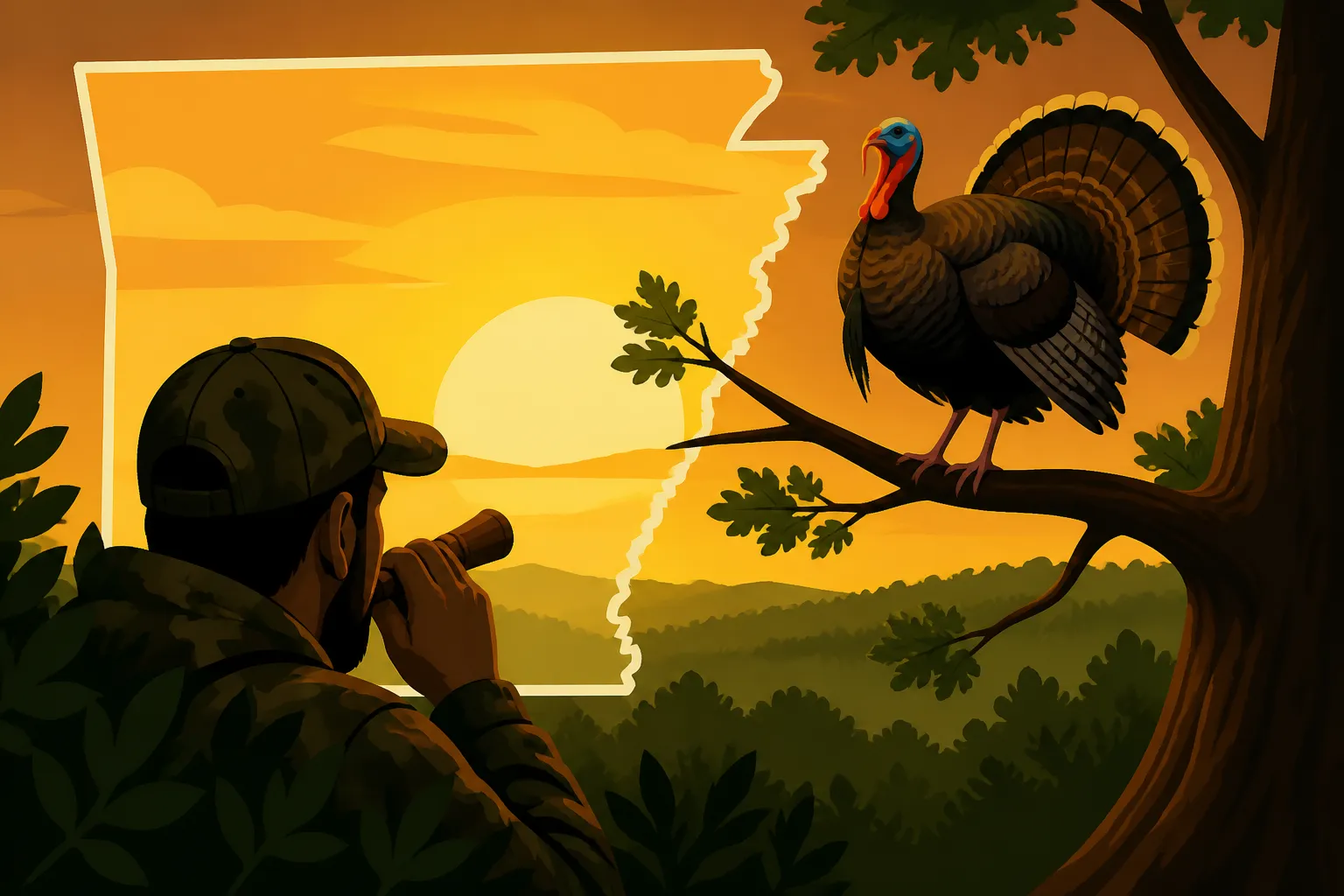
A gobbler on the roost is, in many ways, a completely different animal than a gobbler on the ground. Up in that tree, he feels safe and secure, elevated above most immediate threats. He's got a commanding view of his surroundings, especially as the pre-dawn light starts to filter through the canopy. This sense of security often makes him much more vocal and confident with his gobbling. He's proclaiming his presence, his dominance, and his desire to gather hens, all from a position of relative invulnerability.
However, once he pitches down, that dynamic changes entirely. He's back on the ground, vulnerable to predators like coyotes or even other hunters, and his focus immediately shifts to gathering his harem and moving to feed. That loud, boisterous gobbler in the tree can become incredibly cagey and quiet once his feet hit the dirt. His initial gobbling from the roost is often a roll call for hens, a way to signal his location. If he doesn't hear hens responding immediately, or if he hears other gobblers, he might choose to go find them rather than waiting for them to come to him. This is where your strategy needs to be spot-on. You want to sound like the most attractive hen nearby, a call he can't resist, making him want to fly directly to you rather than elsewhere.
The "Fly-Down" Moment
The fly-down is perhaps the most critical moment of the morning hunt when dealing with a roosted bird. As the sun begins to lighten the sky, turkeys will start to stir. You'll hear soft tree yelps, clucks, and purrs as hens communicate among themselves and with the gobbler. Then, the distinct sound of powerful wing beats as birds begin to pitch from the tree, often followed by more clucking and yelping as they regroup on the ground. A gobbler will usually be among the last to fly down, often waiting to see where his hens go first. He might strut on the limb for a bit, take a final proud gobble, and then sail down.
In Arkansas, this fly-down can look different depending on where you are. In the dense river bottomlands of the Delta, birds might pitch down into thick cover, making it hard to see them until they're very close. In the more open timber of the Ozarks or Ouachitas, they might have a clearer flight path and land in a specific, visible staging area, perhaps on a bench or near a logging road. Observing these habits, even from afar on a scouting trip, can give you a huge advantage. Knowing the likely fly-down zones, especially on public lands where scouting is essential, helps you position yourself perfectly. A tool like GoHunt's mapping features can be incredibly helpful for identifying potential roost trees and fly-down areas before you even step foot in the woods.
Factors Influencing Fly-Down
Several elements can dramatically influence when and how a gobbler pitches down, and consequently, how you should approach calling him.
- Weather: A clear, still morning often means birds will gobble more enthusiastically and fly down predictably. Cold, rainy, or windy mornings can make them much quieter and more hesitant to leave the security of the roost. They might wait longer or fly down to a more sheltered spot.
- Terrain: As mentioned, the terrain plays a huge role. A bird roosted on a high ridge in the Ozarks might fly a long distance down into a hollow or onto a logging road. In the flatter Delta, they might just drop straight down into the underbrush, often near a slough or a food plot. Understanding these regional tendencies is key to setting up effectively. For more specific insights on varying terrains, you might want to read up on articles like Calling Arkansas Gobblers in the Ozarks or Turkey Tactics in Arkansas Pine Plantations.
- Pressure: This is a big one, especially on Arkansas's popular public lands. Birds that have been hunted hard will often gobble less from the roost and be much more wary once they hit the ground. They might fly down silently and try to sneak away, or pitch to a completely unexpected direction. This requires a more subtle and patient approach.
- Food Sources: Turkeys often roost near preferred food sources, like acorn flats or chufa patches. They'll want to fly down and immediately begin feeding. If you can set up between their roost and a known food source, you increase your chances of intercepting them. During scouting, identifying these areas is paramount.
Strategic Calling Before and During Fly-Down
Calling a gobbler off the roost isn't about making the loudest, most aggressive calls you can. It's about being seductive, subtle, and incredibly patient. You want to pique his interest, make him believe there's a receptive hen waiting, and draw him directly to your position without spooking him.
Soft Calls to Wake Them Up
When the first hints of light appear, and you start to hear a gobbler stir or let out his first sleepy gobble, resist the urge to hammer him with loud yelps. This is the time for subtlety. Start with some very soft, unassuming tree yelps, clucks, and purrs. Think of it as a hen just waking up, stretching, and doing a little morning chitchat. These soft, contented sounds can be incredibly alluring. You're not challenging him; you're inviting him.
Use a mouth call, a pot call with a light touch, or even a soft box call for these initial interactions. Keep the volume low. The goal is just to let him know a hen is nearby and interested. Often, this is enough to get him to gobble in response, confirming his location and showing he's paying attention. If he gobbles hard, you might offer another soft series, but don't overdo it. You want him thinking he might miss out on this hen if he doesn't pay attention. The timing is crucial here; too early, and you might get no response; too late, and he might already have decided to go elsewhere.
Mimicking Fly-Down Sounds
As the light increases and you hear other birds start to fly down, or if the gobbler you're working sounds like he's about to pitch, this is when you can introduce fly-down cackles and realistic wing-beat sounds. A fly-down cackle is a series of rapid, excited yelps and clucks that imitate a hen as she descends from the tree. You can simulate wing beats by flapping your hat against your leg or using a specialized wing-beating tool.
Combine these sounds to create a realistic sequence: a few excited clucks and yelps, followed by the sound of wings, and then a few soft clucks and purrs on the ground, as if the hen just landed and is now contentedly walking away. This can be a huge motivator for a gobbler, making him think he's witnessing a hen flying down and settling near him. If he's a little hesitant, this mimicry can be the final push he needs to make the jump in your direction. Be sure to time this with actual fly-downs if other birds are in the area, to maintain realism.
Patience is Your Best Friend
Perhaps the hardest part about calling a gobbler off the roost, especially for excited hunters, is the sheer patience it demands. You’ve woken up early, hiked into position in the dark, and now you’re sitting there in the cold, listening to a bird gobble just out of sight. Every instinct tells you to call louder, call more often, or even sneak closer. But more often than not, those instincts are wrong. Once you’ve established contact with soft calls, and perhaps done a subtle fly-down sequence, your best move is usually to shut up and wait.
Validate that feeling of anxiety, that urge to move—it’s natural. But remember, the gobbler has just announced his location to every hen in the woods. He knows where you are (or at least, where he thinks the hen is). He expects you to come to him. If you keep hammering him with calls, he might get suspicious, or simply assume you’re an easy target and he doesn’t need to move. So, after your initial sequence, go quiet. Let the woods wake up. Let him gobble, letting his ego take over, trying to draw you in. He might hit the ground and stand there, gobbling periodically, waiting. That’s your window. Sometimes, silence is the loudest call you can make. It forces the bird to wonder why that hen went quiet, making him more likely to come investigate. Knowing when to be quiet, particularly when the birds are pressured, is a skill that takes years to hone. For a deeper dive into this, check out When Arkansas Gobblers Go Quiet.
Setting Up for Success When Roosting Birds
Your setup is just as critical as your calling when trying to pull a gobbler off the roost. The best calling in the world won’t matter if the bird spots you, hangs up out of range, or simply has no clear path to your position. This involves careful consideration of your approach, decoy strategy, and personal concealment.
Approaching the Roost
Getting to your spot undetected is paramount. This means moving slowly, quietly, and using the natural terrain to your advantage under the cover of darkness. Before the hunt, use mapping tools, like the satellite imagery on GoHunt, to identify potential roost sites and the quietest routes in. Look for logging roads, creek beds, or ridges that allow for stealthy movement. On properties with more open timber, like some areas in the Ouachita National Forest, the sounds of your footsteps can carry far, so tread lightly.
- Wind Direction: Always consider the wind. While turkeys don't rely on scent like deer, strong winds can make it harder for them to hear your calls and can also carry your sounds in an unintended direction. More importantly, it can make your own hearing difficult, masking crucial sounds like wing beats.
- Terrain for Cover: In areas with rolling hills or steep hollows, like the Ozarks, you can often use a ridge line or the bottom of a hollow to mask your approach. Try to come in below the roost, so the bird has to fly down and potentially come uphill to you, which can make him commit. In flatter areas like the Arkansas Delta, thick stands of timber or brush piles might be your best bet for concealment during your approach. For specific strategies on navigating different landscapes, articles like Hunting Ozark Ridges and Hollows for Deer (which offers insights on terrain, useful even for turkey hunting) or Turkey Tactics for Delta Field Edges can be helpful.
Once you’re within what you believe to be calling range (usually 100-200 yards, but this varies), stop. Listen. Let the woods tell you when it’s time to settle in.
Decoy Placement for Roosted Birds
Decoys can be a powerful tool when calling a gobbler off the roost, but they must be used strategically. The goal is to give the gobbler something visual to focus on once he hits the ground, confirming the presence of the "hen" he's been hearing.
- Visibility is Key: Place your decoy where it will be immediately visible to a gobbler as he flies down or walks into the area. This often means an open lane or a slight rise. However, avoid placing it so far out that he has to cross wide-open ground to get to it, which can make him nervous.
- Inviting Behavior: A single hen decoy, or a hen and jake decoy combination, can be very effective. The jake decoy, positioned slightly behind the hen, can trigger a dominant gobbler's instinct to assert himself and run off the younger bird. Position them facing away from you, as if they’re walking off, which can make a gobbler think they're leaving and encourage him to hurry.
- Timing: If you’re setting up in pitch black, it might be safer to leave the decoy in your vest until you hear the bird stir or even after he flies down and you get a read on his direction. This avoids inadvertently exposing the decoy to a curious deer or another hunter moving through the woods. Remember to consider your shooting lane in relation to the decoy; you want the gobbler to come into range, but not stand directly behind the decoy, obstructing your shot. On public land, ensure your decoys are visible from all angles to avoid confusing other hunters.
Hunter Positioning and Concealment
Your personal setup and concealment are non-negotiable. Turkeys have incredible eyesight, and the slightest movement or unnatural outline can send them packing.
- Back Against a Wide Tree: Always position yourself with your back against a tree wider than your shoulders. This provides essential back cover and breaks up your silhouette. Make sure the tree is sturdy enough to offer protection if the gobbler comes in closer than expected. Finding that perfect tree, especially on a steep Ozark slope, can be a challenge but is absolutely worth the effort. Consider reading Setting Up Against a White Oak for more specific advice on this.
- Break Up Your Outline: Wear full camouflage, including a head net and gloves. Don't underestimate how much a patch of exposed skin can stand out. Ensure your gun barrel and any exposed parts of your equipment are non-reflective.
- Shooting Lanes: Clear a few shooting lanes around your position before the birds get vocal. You don't need a wide-open field, but ensure you have a clear shot path to where you expect the bird to come from. This might mean breaking off a few small branches or kicking away some leaves, but do it quietly and well before the action starts.
- Stay Still: This cannot be stressed enough. Once you’re set up and calling, minimize all movement. Move your eyes, not your head. Even the act of raising your call can spook a wary bird if he’s close and looking. If the bird hangs up, sometimes just going completely silent and still for an extended period is enough to draw him in.
Common Mistakes and How to Avoid Them
Even experienced hunters can fall victim to common pitfalls when trying to call a gobbler off the roost. Knowing these mistakes and how to sidestep them can make all the difference between a successful hunt and a frustrating morning.
Over-Calling and Spooking Birds
One of the biggest mistakes, especially for excited hunters, is over-calling. When that gobbler is hammering from the roost, it’s incredibly tempting to keep yelping back at him. However, doing so can have several negative effects:
- Creates Suspicion: An overly aggressive or continuous hen can make a gobbler suspicious, particularly if he's heard a lot of pressure. Real hens don’t usually yelp non-stop. They communicate, then listen.
- Makes You Seem Too Eager: If you're constantly calling, the gobbler might think you're desperate and an easy target. He’ll expect you to come to him, and if you don't, he might just fly down and leave.
- Pinpoints Your Location: Every time you call, you give away your exact location. A smart gobbler, or one that has been hunted hard, will pinpoint that location and often hang up just out of sight, expecting you to close the distance.
How to Avoid It: Err on the side of under-calling. Start soft and subtle. Call just enough to get a response, then go quiet. Let the gobbler do most of the talking. Match the cadence of real hens in the woods. If he gobbles, wait for a few minutes, then maybe offer a couple of soft clucks or purrs. Silence often breeds curiosity in a gobbler and can make him come looking for the hen that suddenly went quiet.
Impatience and Moving Too Soon
This mistake often goes hand-in-hand with over-calling. You've heard him gobble, you've called a bit, and now he's quiet. The natural inclination is to think he’s gone or to start moving to find him. This is where many hunts are ruined.
- Turkeys Sneak In: Gobblers, especially those that have been educated, rarely come strolling in gobbling their heads off. They often approach silently, using terrain and cover to their advantage. If you move too soon, you’re almost guaranteed to be busted.
- The Wait is Part of the Hunt: Understanding that a gobbler might take 15-30 minutes, or even longer, to commit and approach is crucial. He’s taking his time, making sure the coast is clear, and often strutting just out of sight.
How to Avoid It: Once you're set up and have initiated contact, commit to staying put for at least 30-45 minutes, even if it goes completely silent. Resist the urge to peek over logs or fidget. If the gobbler has gone quiet, he could be walking right into your setup. Trust your setup and your calling. Use that time to scan your surroundings, identify potential approach routes, and mentally prepare for the shot. Remember, the early part of the season in Arkansas, especially on those first few archery days, can see birds that are less pressured and more willing to commit, but even then, patience is key.
Ignoring the Environment
Hunters often focus so intently on the gobbler and their calling that they overlook critical environmental factors that impact the bird's movement.
- Obstacles: Is there a creek, a fence, a thick briar patch, or a deep slough between you and the gobbler? Turkeys are notoriously reluctant to cross physical barriers, especially if they have to fly over or navigate through something difficult. This can cause them to hang up out of range.
- Open Ground: Is your setup forcing the gobbler to cross a wide-open field to get to you? He’s unlikely to do that if he has any other option, as it exposes him to predators.
- Visibility: How much can the bird see from his roost or his fly-down point? If he can see for a long distance, he's more likely to try and spot the "hen" before committing, and if he doesn't see anything, he'll get nervous.
How to Avoid It: During your scouting, pay close attention to the lay of the land, not just potential roost trees. Identify natural funnels, pinch points, and cover that a gobbler would use to approach. Position yourself on the same side of any major obstacle as the gobbler, or at least ensure there's an easy crossing point. If you must set up across open ground, consider using a ground blind or brushing in heavily. Think like a turkey: what’s the safest, easiest, and most natural path to get to that hen? Set up along that path. For a comprehensive scouting approach, remember that tools like GoHunt provide invaluable aerial views and topographic maps to help identify these critical environmental factors before your hunt.
| Call Type | Ideal Use (Off the Roost) | Key Characteristics | Pros | Cons |
|---|---|---|---|---|
| Mouth Call | Soft tree yelps, clucks, purrs; realistic fly-down cackles | Hands-free operation, wide range of sounds, subtle volume control. | Versatile, allows for natural gun movement, quiet to use. | Requires practice, can be challenging for beginners to master realism. |
| Pot Call | Soft clucks and purrs, moderate yelps, fly-down cackles | Surface (slate, glass, aluminum) and striker combo. | Easy to learn, realistic sounds, good volume control. | Requires hand movement, can be noisy if dropped or scraped. |
| Box Call | Loud yelps, cuts, clucks; some fly-down cackles | Hinged lid scrapes across sounding board. | Good volume, easy to use, excellent for aggressive gobblers or windy conditions. | Can be difficult for soft calls, requires hand movement, distinctive sound that can be recognized by wary birds. |
| Wing Flapper | Simulating wing beats during fly-down | A hat, bag, or specific tool to mimic the sound of a turkey's wings beating rapidly. | Highly realistic for fly-down, adds a crucial auditory element. | Can be awkward to use quietly, requires practice for natural timing. |
Ultimately, getting an Arkansas gobbler to commit and come off the roost in your direction is a delicate dance of patience, realistic calling, and strategic positioning. By understanding his morning routine, using subtle and well-timed calls, setting up impeccably, and avoiding common mistakes, you significantly increase your odds of punching that tag this spring. Don't be afraid to experiment, adapt to the bird's mood, and most importantly, enjoy those precious moments of anticipation in the pre-dawn woods.
Disclaimer
Please note that hunting regulations, seasons, and licensing requirements can change. Always consult the latest Arkansas Game and Fish Commission (AGFC) regulations before heading into the field. This article is for informational purposes only and does not supersede official AGFC guidelines.