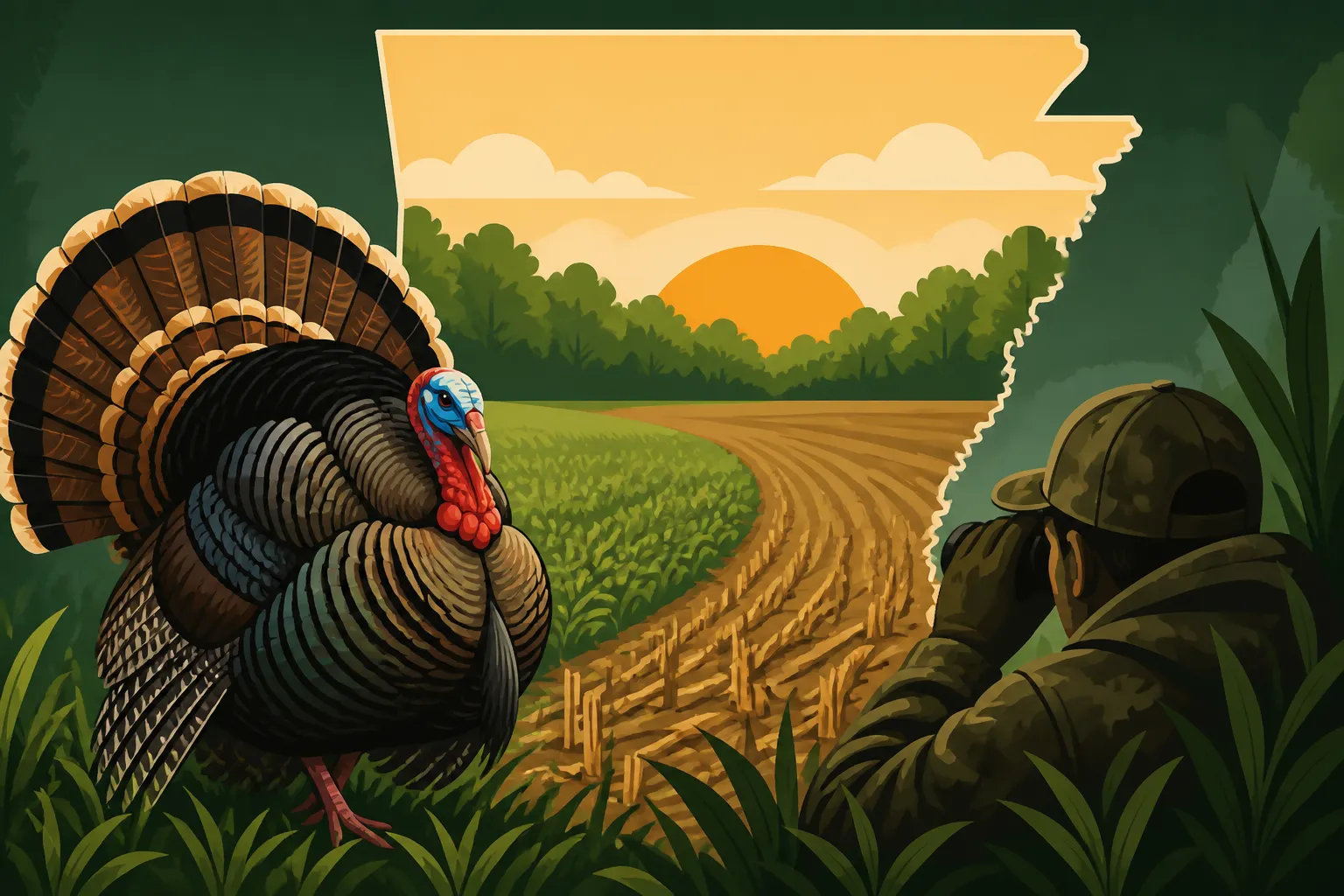
Turkey Tactics for Delta Field Edges
There’s nothing quite like the sound of an Arkansas gobbler drumming and spitting, especially when you’re out there on the vast, flat landscape of the Delta. But let’s be real, chasing longbeards along those wide-open field edges can be incredibly frustrating. Unlike the broken terrain of the Ozarks or Ouachitas, there’s often nowhere to hide, and those Delta birds seem to possess an almost supernatural ability to spot you from a mile away or hang up just out of gun range. This guide is all about tackling those specific challenges, providing you with practical, realistic turkey tactics designed to give you an edge when hunting those tricky Delta field perimeters.
Understanding the Delta Field Edge Environment for Turkeys
The Arkansas Delta is a world unto itself when it comes to hunting. Its vast, flat agricultural fields, interspersed with dense timber blocks, small drainages, and winding river systems, create a unique habitat that turkeys have learned to exploit – and hunters need to understand.
Why Turkeys Use Field Edges in the Delta
Those seemingly exposed field edges are actually prime real estate for Delta turkeys, and for several very good reasons. Think of them as the perfect transitional zone, offering both sustenance and security.
First off, these edges are a buffet line. Throughout the spring, gobblers and hens alike will frequent field edges for an easy meal. After crops like corn, soybeans, or rice have been harvested, residual waste grain provides a crucial food source. But it's not just grain; these areas are often teeming with insects, especially during the warmer parts of the day. Turkeys are omnivores, and those protein-rich bugs, grubs, and worms are irresistible, particularly for hens looking to build energy for nesting and poults needing to grow quickly. You'll often see birds picking along the edges of a newly planted field, scratching for a bite.
Beyond food, field edges provide essential cover and security. While the fields themselves are open, the immediate transition into dense timber, brushy fence rows, or overgrown drainage ditches offers an escape route and a place to loaf, dust, or strut without being completely exposed. Turkeys often strut along these edges, displaying for hens in a location that gives them a quick sprint to safety if a predator appears. These natural travel corridors also allow birds to move easily from roosting sites in the timber to feeding areas in the fields, or from one block of cover to another. It’s their highway, and understanding that flow is key.
Unique Challenges of Hunting Delta Field Edges
Hunting turkeys in the Delta is a game of extremes. What makes these areas so attractive to turkeys also makes them incredibly difficult to hunt effectively. You’re often dealing with a distinct lack of topography, meaning there are no hills, ridges, or deep creek bottoms to break up sightlines or mask your approach. A gobbler standing at one end of a large rice field can literally see a hunter attempting to stalk him from the other end. This wide-open visibility makes getting close undetected a monumental challenge.
Another significant hurdle is the inherent wariness of Delta birds. Due to the open nature of the landscape and, frankly, the sheer amount of hunting pressure some of these areas receive, these turkeys are often incredibly educated and quick to react to anything out of the ordinary. They've likely been called to, shot at, or at least spooked by hunters before. They know the game. This can lead to what we call "hung-up" birds – gobblers that will answer your calls, even strut for you, but absolutely refuse to close the distance, preferring to stay just out of shotgun range, often on the far side of a ditch or a low spot they know you can’t cross easily. Understanding how these Delta turkeys behave, especially their knack for spotting movement or unnatural shapes, is vital for success. These birds are not typically the ones that come charging in recklessly.
Scouting and Locating Delta Field Edge Turkeys
You wouldn't expect to catch a big Delta mallard without scouting the water, and turkey hunting is no different. Especially with the challenges presented by field edges, thorough scouting is non-negotiable.
Pre-Season Scouting Strategies
Long before opening day, the most successful Delta turkey hunters are out there, putting in the work. Start with your maps. Aerial photos are invaluable for identifying potential hotspots. Look for fingers of timber that extend into fields, small patches of woods surrounded by agriculture, drainages that run alongside fields, and any variations in elevation, however slight. These are natural funnels and travel routes. Tools like GoHunt can be incredibly helpful here, allowing you to layer property lines with topographic and aerial views, giving you a detailed picture of the land you plan to hunt. You can often spot old logging roads or trails that run parallel to field edges; these are often high-traffic areas for turkeys.
Once you’ve identified some promising spots on the map, it’s time for boots on the ground (or tires on the gravel). Drive or walk the roads bordering these fields, especially during the early morning hours, around 30 minutes before and after sunrise. Listen intently for gobblers sounding off from their roosts. Pay attention to specific trees or timber blocks where you hear consistent activity. This is your first clue to their morning routine. While you're out there, look for physical sign: tracks in soft dirt along ditch banks or field roads, droppings, and dusting bowls where turkeys clean their feathers. Fresh sign near a field edge confirms active use and tells you which sections of the timber they’re preferring. This early work helps you narrow down vast areas and focus your efforts when the season finally opens. For more detailed insights on general scouting, check out our guide on Scouting Arkansas Public Land Before Season.
In-Season Location Techniques
Once the season kicks off, your scouting shifts from broad strokes to precise location. The morning roost is still your best friend. Get out well before dawn, position yourself strategically where you expect birds to roost, and listen. Use locator calls—an owl hoot, a crow call, or even a sharp, loud coyote howl—to try and shock a gobbler into sounding off. This is particularly effective right before fly-down. Once you pinpoint a bird on the roost, you can plan your approach.
However, Delta turkeys, especially those on field edges, often fly down directly into the field or just inside the timber, then quickly go quiet. This is where "run-and-gun" tactics come into play, but with a Delta twist. Instead of blindly running, use the field edges themselves. Walk slowly and deliberately, pausing frequently to listen and call. Use a series of soft yelps and clucks to gauge a bird's interest, then be prepared to move quickly but quietly if you get a response. Sometimes, you'll need to cover a lot of ground along these edges before you hit a hot bird.
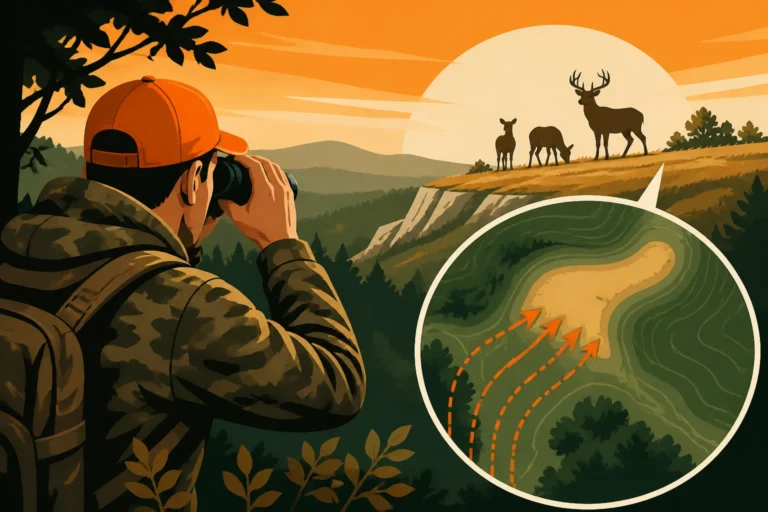
Glassing is another powerful tool in the Delta. With those wide-open fields, a good pair of binoculars or a spotting scope (especially when using a mapping tool like GoHunt to mark distances) can save you a lot of walking and help you locate birds strutting or feeding in the open from a safe distance. Spotting a gobbler already in a field allows you to strategize your approach, using any available cover like a ditch, levee, or even a tractor path to get into position before he sees you. Remember, these birds can disappear quickly into a low spot or a treeline, so keep that glass up!
Effective Calling and Setup Strategies
Calling a Delta gobbler requires a nuanced approach, and your setup is paramount to success when hunting those exposed field edges.
Selecting the Right Calls for Open Country
In the wide-open expanse of the Delta, your calls need to cut through distance and often a bit of wind, but also be adaptable for close-in work with wary birds. Loud locator calls are your initial best friends. An aggressive owl hoot, a piercing crow call, or even a sharp hawk shriek can often provoke a shock gobble from a distant bird without giving away your exact position as a turkey call might. Use these before fly-down and periodically throughout the morning to locate birds.
Once you've got a bird talking, you'll want to switch to turkey vocalizations. Start with confident, clear yelps on a pot call or a box call. These calls have good volume and carry well across open fields. They signal a hen that's ready to breed, which is exactly what a gobbler wants to hear. However, don't overcall. Delta birds hear a lot of calling. Once a gobbler commits and starts heading your way, or even just answers consistently, scale back the volume and frequency. Switch to softer clucks, purrs, and even subtle putts on a diaphragm call or a small slate call. These softer sounds are more realistic for a hen that’s close by, and they can be incredibly effective at coaxing a hung-up bird those last few crucial yards. Remember, a gobbler expects to see the hen he's calling to; if he hears a persistent, loud yelp but can’t see the source, he’ll often become suspicious and stop.
Optimal Setups Along Field Edges
Your setup is arguably more critical than your calling when hunting Delta field edges. Turkeys here have incredible eyesight, and if you're exposed, it's game over. The golden rule is always to have a good backdrop. Never set up with nothing but open field behind you. Use the densest part of the timber edge, a thick brush pile, a large downed log, or even a wide tree trunk to break up your silhouette. Think about the sun's position, too; if you can set up so the sun is in the gobbler's eyes when he approaches, that's a bonus.
Understanding turkey travel routes is also key. Turkeys often follow the path of least resistance. Look for subtle rises in the ground, old tractor paths, or openings in the brush along the timber line. Setting up to intercept a gobbler as he travels along one of these natural corridors can be highly effective. If there's a ditch running parallel to the field, consider setting up just on your side of it, knowing he might follow the ditch line and pop up within range.
Ground blinds are absolute game-changers for hunting Delta field edges. They provide complete concealment, allowing you to move, adjust, and call without being seen. A pop-up blind brushed in against the timber edge or a thick hedgerow can make all the difference, especially on private land where you can set one up ahead of time. If you’re on public land, a simple ghillie suit or excellent natural camouflage, combined with absolute stillness, is your next best option.
Decoy placement is another critical element. In open country, decoys can be incredibly effective at drawing a gobbler’s attention away from you and providing a target for him to focus on. Place your hen or jake decoy out in the field, about 20-30 yards from your position, ensuring it's clearly visible from where you expect the gobbler to approach. Positioning it so the gobbler has to walk past your shooting lane to get to the decoy is ideal. Be sure to face your decoy away from where the gobbler is coming from, simulating a hen that’s not quite ready, which can make a gobbler even more aggressive. A full-strut gobbler decoy can also be very effective at challenging an approaching bird, especially during the peak of the Hunting the Arkansas Rut by Zone.
| Calling Scenario / Turkey Mood | Recommended Calls | Volume / Frequency | Setup Consideration | Decoy Strategy |
|---|---|---|---|---|
| Roosted Gobbler (pre-dawn) | Owl Hoot, Crow Call | Loud, infrequent | Close to known roost, concealed | None (until fly-down) |
| Gobbler on Roost (post-locator) | Soft tree yelps, clucks | Low, hesitant | Ready for fly-down, clear lane | Hen decoy 20-30 yds |
| Gobbler Strutting in Field | Medium yelps, clucks | Moderate, consistent | Blind/thick cover, ambushing travel route | Strutter + Hen, 30 yds |
| Hung-Up Bird (40-60 yds) | Soft clucks, purrs, 'lost' yelp | Low, infrequent, desperate | Remain still, wait; consider very slow repositioning | Hen facing away |
| Gobbler Circling Wide | Gentle clucks, purrs | Very low, rare | Anticipate circle, adjust shotgun | Hen or Jake decoy |
| Quiet Bird (mid-morning) | Series of loud yelps, cutts | Medium to loud, varied | Mobile run-and-gun along edge | Optional hen/jake |
Patience, Persistence, and Adapting to Delta Turkeys
Hunting Delta field edges isn't always about speed; it's often about an immense amount of patience and a willingness to adapt on the fly.
Dealing with Wary and Hung-Up Birds
This is arguably the most common frustration when hunting Delta turkeys. You've located him, called him, and he's gobbling his head off, but he just won't cross that imaginary line. He'll strut back and forth at 60 yards, right on the edge of the timber or on the far side of a drainage ditch. When a gobbler hangs up like this, the worst thing you can do is get antsy and move. His eyes are laser-focused on where he expects to see that hen. Any movement, however slight, will send him packing.
Your best bet is often to go silent. Stop calling completely. Sometimes, this "silent treatment" can make him nervous enough to break and come looking. He might think the hen has left or is playing hard to get. If that doesn't work after 10-15 minutes, try a single, very soft cluck or purr – just enough to remind him you're there without giving away your exact position or sounding overly aggressive. If you have a jake or a full-strut gobbler decoy, this is where it shines, as it gives him something else to focus on and might challenge his dominance.
Sometimes, a very slow, subtle repositioning might be necessary, but this is incredibly risky in open country. If you absolutely have to move, use any available cover and take excruciatingly slow, deliberate steps. Only attempt this if the bird is out of sight or his attention is clearly focused elsewhere. It’s often better to wait him out or try another setup later in the day. Our article on Hunting Gobblers in the Late Morning delves into strategies for those midday lulls and persistent birds.
The Role of Weather and Time of Day
Weather conditions significantly impact turkey behavior, especially in the Delta. A calm, clear morning is every turkey hunter's dream. Gobblers tend to be more vocal on the roost and more active once on the ground. However, these conditions also mean turkeys can see and hear you better, making stealth even more crucial.
Wind is perhaps the biggest challenge. Strong winds can make it incredibly difficult to hear distant gobblers, and it can also carry your calls away, making them less effective. On windy days, focus on areas with denser cover that might offer some protection from the breeze, or hunt later in the morning when the wind might die down. Turkeys tend to be less vocal on very windy days, but they still move and feed. You might have to rely more on visual scouting and short, sharp locator calls to cut through the noise.
Rain can also be a mixed bag. A light drizzle might make turkeys more active, as it brings out insects. Heavy rain, however, will often silence birds and send them seeking shelter. If it's raining heavily, you might consider packing it in or waiting for a break.
The time of day also plays a huge role. Early morning is prime time, with birds on the roost and full of gobbling energy. But don't give up after the initial morning fly-down. Mid-morning, from around 9:00 AM to noon, can be incredibly productive in the Delta. Once hens have left the gobblers to go to their nests, those lonesome longbeards often become more susceptible to calling. They'll wander the field edges looking for company, making them more vulnerable. Afternoons, while often slower, can still yield results, especially if you can intercept birds heading back to their roosts along those familiar field edges. For more specific insights into how the season progresses, check out Arkansas Spring Turkey Season Dates.
Final Thoughts and Key Takeaways for Delta Field Edge Turkeys
Hunting turkeys on Delta field edges demands a unique blend of patience, strategic thinking, and precise execution. These birds are tough customers, but by understanding their habitat preferences, mastering your scouting and calling, and adapting to their wary nature, you can significantly increase your odds of success. Remember to use mapping tools like GoHunt to dissect the terrain, focus on those crucial transition zones, and always prioritize concealment in this open country. The reward of hearing that thunderous gobble echo across a vast Arkansas field, and then watching a bird commit, is truly one of a kind.
Disclaimer
Hunting is an inherently dangerous activity. This guide provides general information and tactics for turkey hunting in Arkansas. Always consult the latest Arkansas Game and Fish Commission (AGFC) regulations and local laws before hunting. Ensure you have all required licenses and permits. Prioritize safety, ethical hunting practices, and respect for wildlife and landowners. The author and publisher are not responsible for any accidents, injuries, or legal issues that may arise from the use of this information.