Hunting Gobblers in the Late Morning
It's happened to all of us: you've been in the turkey woods since before daylight, listening to distant gobblers on the roost, making your move, and then… silence. As the sun climbs higher, the woods often fall quiet, and many hunters, feeling defeated, pack up their gear by 9 AM. But what if I told you that some of the most exciting and successful turkey hunts happen when most people have already gone home? This guide is all about cracking the code of those "silent" late mornings in Arkansas and turning potential frustration into triumph.
Understanding the Late Morning Gobbler's Mindset
When the first light hits the timber and those booming gobblers start sounding off, it's a rush. But as the morning progresses, their behavior shifts dramatically. Understanding this transition is key to finding success when most other hunters are calling it a day.
The Roost-to-Breed Transition
Right at first light, most gobblers are surrounded by hens. They're on the roost, puffing up, strutting, and doing their best to attract attention. Once they hit the ground, they're often breeding or attempting to breed the hens that flew down around them. This is why you hear so much gobbling early – it's all about gathering the ladies. However, this honeymoon phase rarely lasts all day. Hens, being hens, have other priorities. They'll eventually drift off to feed, hit a dusting bowl, or slip away to their nesting areas.
When those hens disperse, what's left? A lonely gobbler. This bird, who felt like the king of the woods just an hour or two ago, now finds himself alone, and often, still looking for love. He might not gobble as frequently or aggressively as he did from the roost, but his desire to find a hen is just as strong, if not stronger. This is your window. He’s no longer tending to a flock; he's on the prowl. This makes him incredibly susceptible to a well-placed, subtle call. Think about it: a gobbler that was strutting for five hens at 7 AM is a different animal when he’s by himself at 10 AM, wondering where everyone went.
Increased Roaming and Searching Behavior
Once hens leave them, gobblers become highly mobile. Instead of holding court in one location, they're actively cruising their territory, often covering significant distances in search of another hen. This isn't random wandering; they often follow predictable routes. They'll walk ridge lines, parallel field edges, patrol logging roads, or skirt creek bottoms, constantly on the lookout.
This increased roaming means you can intercept them. While they might not be gobbling their heads off, they are listening. A soft yelp or cluck can pique their interest from a surprising distance. This active searching behavior is fundamentally different from their early morning tendencies. Early on, they expect hens to come to them. In the late morning, they understand they have to go find the hens. This makes them vulnerable to a hunter who understands this shift and is willing to adapt their tactics. They're trying to locate a hen, and if your calls sound like one, they're much more likely to investigate.
Strategic Tactics for Late Morning Gobblers
Successfully hunting late morning gobblers requires a distinct change in your approach. You can't just sit there and expect them to come to you like they might at dawn. This is where active hunting truly comes into its own.
Aggressive Locating and "Run and Gun"
The first step to late morning success is finding a bird. Since they're not gobbling on their own as much, you have to make them gobble. This is where an aggressive "run and gun" approach shines. Don't be afraid to cover ground. Instead of setting up in one spot for an hour, move methodically through the woods. Stop every few hundred yards in a good listening spot, make a loud, sharp locator call, and listen intently. Crow calls, owl hoots, or even coyote howls can often shock a silent gobbler into sounding off.
For example, if you're working a big block of timber in the Ozarks, you might walk a ridge top for 15 minutes, stop, hit your crow call a few times, listen for 5-10 minutes, and if nothing, move on. The key is to be deliberate in your movement and quiet between calls. Once you get a response, you can then switch to more subtle turkey calls. This isn't a passive sit-and-wait game; it's about actively searching and provoking a response. For tips on covering ground efficiently, check out our guide on Run-and-Gun on Arkansas Public Land. Being mobile gives you a huge advantage, especially when dealing with the vastness of some of Arkansas's public hunting areas.
Soft Calling and Patient Setups
Once you’ve located a late-morning gobbler, or even if you’re blind calling into a promising area, the calling strategy changes from the aggressive tactics of dawn. Less is often more. Think seductive, not demanding. Soft yelps, contented clucks, and subtle purrs can be incredibly effective. You're trying to mimic a lonesome hen, not a boss hen challenging every bird in the county. A single, soft yelp can be far more enticing than a flurry of loud cuts. If he responds, often a simple, soft yelp back is enough to confirm his interest without overdoing it.
When you do get a response, set up quickly but meticulously. Find a tree or brush pile that breaks up your silhouette, offers a clear view of where you expect the bird to come from, and gives you a clear shot. Don’t rush the setup to the point of being sloppy. Patience becomes paramount here. These gobblers might take their time coming in. They're often cautious, having been alone for a while. They might circle, hang up, or just move slowly. Give them 15-20 minutes, even 30, before you consider moving again. A good setup, like those described in Setting Up Against a White Oak, can make all the difference. Sometimes, just sitting quietly after a soft call and letting the woods work for you is the best strategy.
Focus on Travel Corridors and Strutting Zones
Late morning gobblers are travelers, and they often use predictable routes. These can be natural terrain features like ridge lines, creek bottoms, or saddles in hilly country. In agricultural areas, they often patrol the edges of fields or use logging roads and old two-track trails. Look for signs of activity: strut marks on roads, fresh tracks, and droppings. These are indicators that a gobbler is regularly using that area as a travel path or strutting ground.
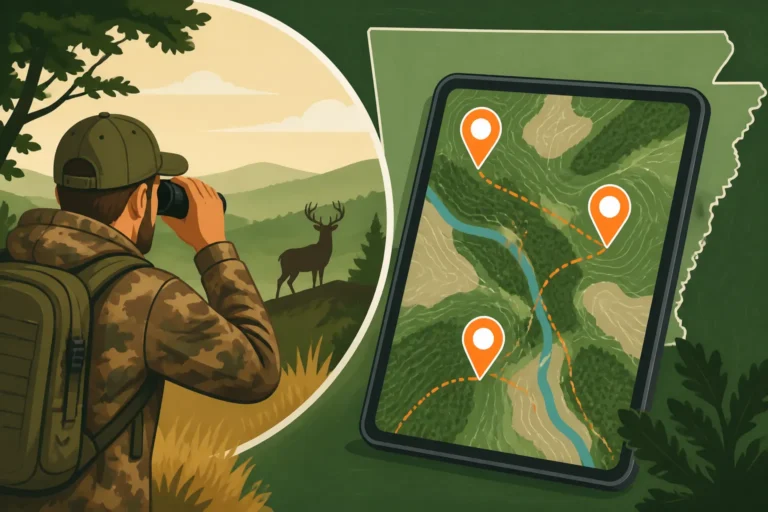
Using mapping tools can be a huge asset here. Apps like GoHunt allow you to zoom in and identify these potential travel corridors and pinch points – areas where terrain features naturally funnel game. You can look for subtle changes in elevation, creek crossings, or even old fencelines that might guide a gobbler's movements. Once you identify these, set up strategically along them, anticipating where a searching gobbler might appear. If you're hunting the fertile Delta, understanding Turkey Tactics for Delta Field Edges can be especially helpful, as those birds behave differently than their Ozark cousins. By positioning yourself along these natural pathways, you increase your chances of intercepting a cruising bird.
Overcoming Common Late Morning Challenges
Even with the right mindset and tactics, late morning hunting can present its own set of frustrations. Recognizing these challenges and knowing how to adapt will significantly improve your odds.
Giving Up Too Early
This is, without a doubt, the biggest mistake most turkey hunters make. The early morning gobbling crescendo fades, the woods quiet down, and many people assume the hunt is over. They pack up, head home, and miss out on some fantastic opportunities. The truth is, when the woods go silent, the hunting often truly begins for the more adaptable birds. The "peak gobbling" period is often finished, but the gobblers' drive to breed is not.
Validate that frustration: it’s hard to stay motivated when nothing is answering back. But remember, the birds you're targeting now are often those that got left by hens or haven't found one yet. They are often more responsive to a subtle call because they're actively looking. Furthermore, as most hunters clear out by 9 or 10 AM, the woods become quieter and less pressured. This means a gobbler that might have been reluctant to gobble or come in earlier due to hunter activity might become more bold. The lesson here is simple: don't let the silence fool you. Persistence, especially in areas with significant Hunting Pressure on Arkansas WMAs, can pay off immensely as the day wears on.
Overcalling or Calling Too Aggressively
While an aggressive cutting and yelping sequence might work on a hot gobbler at first light, it can be counterproductive in the late morning. A bird that has already been with hens or is feeling lonely and cautious might be spooked by overly loud or aggressive calling. Imagine a scenario: a gobbler has spent the last hour and a half being bossed around by a dominant hen. The last thing he wants is another demanding hen screaming at him.
Instead, think soft, subtle, and inquisitive. A few soft yelps, a cluck, or a purr that sounds like a contented, lonesome hen can be far more effective. You want to pique his curiosity and make him wonder, "Who is that quiet hen, and why isn't she with the others?" If he responds, you might just offer a single, soft yelp back, or even just cluck softly. Let him work. Sometimes, the best call is no call at all once you know he's headed your way. This is particularly true for When Arkansas Gobblers Go Quiet after initial fly-down excitement. You don't want to give him a reason to think you're not real, or that you're too aggressive.
Impatient Setups and Poor Hide
Rushing your setup is a cardinal sin in turkey hunting, especially in the late morning. Gobblers at this time of day are often more wary. They've been on the ground, likely encountered other hunters, or simply become more cautious as the day progresses. If you crash through the woods, plop down against the first tree, and don't take the time to break up your outline, you're significantly reducing your chances.
When you get a response, or decide to blind call, identify a setup location quickly but then execute it meticulously. Use natural cover to your advantage. A cluster of evergreens, a downed log, or a wide tree that completely conceals your silhouette are ideal. Ensure you have clear shooting lanes in the direction you expect the bird to approach. A gobbler's eyesight is incredible, and even a slight movement or unnatural shape can send him spiraling away. For some additional ideas on enhancing your concealment, consider the principles in Decoy Placement for Pressured Birds as a reference for blending in. Remember, a few extra seconds spent making a good hide can mean the difference between filling your tag and going home empty-handed.
Adapting to Arkansas's Diverse Terrain in Late Morning
Arkansas offers a wide variety of turkey habitats, from the rugged Ozarks to the flat agricultural lands of the Delta. Knowing how to adapt your late morning tactics to these different environments is crucial for success.
Hunting Field Edges and Openings
In many parts of Arkansas, especially in the Delta or areas with mixed timber and pasture, field edges and openings are prime real estate for late-morning gobblers. After hens leave, gobblers often gravitate to these open areas to strut, display, and search for any remaining lone hens. The warm sun feels good, and the open ground allows them to see and be seen.
If you're hunting an area with fields, scout them carefully. Look for tracks, strut marks, and droppings along the edges. Set up just inside the timber line, using the natural cover to conceal yourself. A jake or hen decoy can be highly effective in these situations, giving the gobbler a visual target to commit to. For more specific insights on these areas, our guide on Turkey Tactics for Delta Field Edges provides excellent strategies for leveraging these unique environments. Your calling might need to carry a bit more volume if the bird is out in the middle of a large field, but still aim for realism and a relaxed tone.
Working Ridge Tops and Creek Bottoms
The mountainous regions of Arkansas, like the Ozarks and Ouachitas, present a different challenge and opportunity. Here, gobblers often use ridge tops as travel corridors, offering them a good vantage point to survey their territory and listen for calls. Creek bottoms, especially those with mature timber and good bugging grounds, also serve as natural highways for roaming birds.
When hunting these areas in the late morning, pay close attention to thermals. As the sun warms the ground, air currents will start to rise up the hollows and ridges. Position yourself so your calls carry effectively and so that a bird working its way towards you doesn't pick up your scent. Being above a bird can sometimes be an advantage, as your calls will carry down to them, but they often prefer to come to the same level or higher. Our piece on Calling an Arkansas Gobbler Off the Roost details some fundamental principles of sound travel in hilly terrain that apply throughout the day. For those hunting specific timber types, remember that Hunting Turkeys in Ouachita Pine requires slight adjustments to how sound travels and how birds utilize the cover.
Dealing with Hunting Pressure
Public lands in Arkansas, while abundant, can see significant hunting pressure, especially during the early season. By late morning, many hunters have gone home, but some dedicated souls might still be out there. This means two things: first, the birds you're hunting might be warier due to earlier encounters, and second, you need to be extra vigilant about safety. Always assume any movement or sound could be another hunter.
To counter pressure, consider pushing deeper into public lands, or exploring areas that are harder to access. These spots are often overlooked and can hold less-pressured birds. Use mapping tools like GoHunt to identify remote corners or areas with challenging terrain that deter casual hunters. While it's generally about finding game, understanding Hunting Pressure on Arkansas WMAs can help you select locations where you're less likely to encounter competition for those late-morning birds. Sometimes, finding a secluded pocket where a gobbler feels safe enough to roam after the morning rush is your best bet.
Late Morning Gobbler Strategy Comparison
To help visualize the shift in strategy, here's a table comparing common early morning tactics with those that often prove successful in the late morning:
| Feature/Tactic | Early Morning (Roost to Fly-Down) | Late Morning (Post-Dispersion) |
|---|---|---|
| Gobbler Behavior | Gobbling on roost, with hens, strutting/breeding. | Often alone, actively roaming, searching for hens. |
| Primary Goal | Intercept bird as he comes off roost with hens. | Find and attract lonely, searching gobbler. |
| Movement | Stealthy approach to roost, minimal movement after setup. | Aggressive "run and gun" to locate birds. |
| Calling Style | Aggressive cutting, loud yelps to challenge or excite. | Soft yelps, clucks, purrs, subtle, inquisitive. |
| Calling Volume | Loud, attention-grabbing. | Subdued, realistic, designed to pique curiosity. |
| Locator Calls | Use sparingly, mostly to pinpoint roosted birds. | Essential for shocking silent birds into gobbling. |
| Decoy Use | Often a full strut or breeding pair to challenge rivals. | Lone hen, submissive jake, or no decoy to avoid spooking. |
| Patience Level | Once set, often expect quick action if bird is hot. | High patience required; birds may take longer to commit. |
| Location Focus | Roost sites, fly-down areas, food sources. | Travel corridors, field edges, strut zones, remote areas. |
Disclaimer
Hunting is an inherently dangerous activity. Always prioritize safety, understand and follow all Arkansas Game and Fish Commission regulations, and be aware of your surroundings and other hunters. This guide provides general information and tactics, but individual situations may vary.