Arkansas Nonresident Three-Day Deer License
Trying to squeeze in a quick deer hunt to Arkansas when you don't live here can feel like a labyrinth of license options, costs, and regulations. It’s easy to get overwhelmed figuring out which tag you actually need for just a few days in the woods. This guide is here to untangle the specifics of the Arkansas nonresident three-day deer license, helping you understand if it’s the right fit for your short hunting adventure and what you need to know before you hit the timber.
Understanding the Nonresident Three-Day Deer License
For many out-of-state hunters, committing to a full week or even a longer annual license just isn't feasible. Life gets in the way, right? That's where Arkansas steps in with a more flexible option: the nonresident three-day deer license. This specific license is designed for those who want to experience the thrill of hunting Arkansas deer but only have a short window of time. It's a testament to the state's understanding that not everyone can dedicate extensive periods to their passion, especially when traveling from afar.
The Appeal of a Shorter Hunt
Let's be honest, fitting a hunting trip into a busy schedule is a challenge. You might have only a long weekend free, or perhaps you're just dipping your toes into Arkansas hunting for the first time and don't want to invest in a full-season tag. The three-day option is incredibly appealing because it minimizes the financial commitment while still offering a legitimate opportunity to pursue deer. It’s perfect for those quick scouting missions that turn into impromptu hunts, or when you get that last-minute call from a buddy about a hot stand. This license acknowledges that flexibility is key for many hunters today, allowing you to maximize your limited time in the field without feeling like you've overpaid for days you won't use.
Flexibility for Travelers and Newcomers
This license isn't just about saving a few bucks; it's about making Arkansas accessible. Imagine you're driving through on a longer road trip, or you have a family commitment nearby, and you manage to carve out three precious days. This license makes that dream hunt a reality. It's also fantastic for newcomers to the state who might be unsure about the terrain, the pressure, or even their own success rates. Instead of buying a more expensive annual or five-day license, which you can read more about in our guide on Arkansas Nonresident License Options, the three-day tag acts as a perfect trial. It reduces the barrier to entry, inviting more hunters to experience what the Natural State has to offer without feeling locked into a long-term commitment. It's about opening the door, even if just for a short while, to Arkansas's rich hunting heritage.
Eligibility and Requirements for Your Trip
Alright, so you’re eyeing that three-day deer license. But before you get too excited planning your route to the Delta or the Ozarks, let's make sure you're actually eligible and understand what else you might need. Arkansas has some pretty straightforward rules, but missing a small detail can throw a wrench in your plans, and nobody wants that when they've driven hundreds of miles.
Defining Nonresident Status
First things first: what makes you a nonresident? Simply put, if you don't legally reside in Arkansas, you're a nonresident. This means if your permanent home, your driver's license, and your voter registration are all outside of Arkansas, you qualify for nonresident licenses. It’s not about how long you’ve been in the state for your hunt; it's about where your primary domicile is. It's a pretty standard definition across most states, ensuring that resident fees support local conservation efforts while nonresidents contribute a bit more, which helps maintain the incredible resources we have here. This distinction is crucial, as attempting to purchase a resident license under false pretenses can lead to hefty fines and loss of privileges.
Required Supplemental Stamps and Permits
Just because you have your three-day deer license doesn't mean you're fully legal for every type of hunting. Depending on what and where you plan to hunt, you might need additional stamps or permits. For instance, if you decide to jump into some migratory bird hunting after bagging your deer, you’ll definitely need a Federal Duck Stamp and to be HIP registered. While these aren't typically required for just deer, it's worth checking all your bases if you're planning any mixed-bag adventures.
A vital stamp for any deer hunter, resident or nonresident, is the Arkansas Deer Stamp. This is typically bundled with your license purchase, but it's important to be aware of its specific purpose in funding deer management and research within the state. Always confirm which stamps are automatically included and which might need to be added on. Sometimes, checking with resources like GoHunt can help clarify these smaller, but crucial, requirements before you commit to your purchase, as their platforms often detail these nuances.
Hunter Education Requirements
Now, here's a big one that often catches traveling hunters off guard: hunter education. In Arkansas, anyone born after December 31, 1968, must show proof of successfully completing a hunter education course. This is a non-negotiable safety measure. However, there are a couple of common exemptions for nonresidents:
- Valid Hunter Education Card from Another State: If you've completed a hunter education course in another state, and can provide proof, Arkansas will recognize it. Just make sure you have your card with you, whether it's a physical copy or easily accessible digital proof.
- Deferred Hunter Education: If you don't have hunter education, you can purchase a "deferred" hunter education license option. This allows you to hunt without having taken the course, but you must be accompanied by a licensed hunter who is at least 21 years old and has a valid hunter education certificate (or is exempt by age). This is a fantastic option for those spontaneous trips or first-time hunters.
It's always best to be prepared. Before buying your Arkansas Nonresident Three-Day Deer License, double-check if you meet these requirements. You can find comprehensive information on these regulations in our detailed article on Arkansas Hunter Education and Safety Rules. Safety is paramount, and these rules are in place to ensure everyone has a responsible and enjoyable time in the woods.
Cost and How to Purchase Your License
Once you've confirmed your eligibility, the next step is actually getting your hands on that three-day deer license. Understanding the cost and the various purchase options will ensure a smooth process, letting you focus more on scouting and less on paperwork.
Breaking Down the Fees
The cost of the Arkansas Nonresident Three-Day Deer License is set by the Arkansas Game and Fish Commission (AGFC) and is subject to change. As of my last check, a standard nonresident three-day all-game hunting license (which includes deer) usually runs around $225. This covers your basic hunting privileges for those three days. Remember, this fee goes directly back into conservation efforts, habitat restoration, and wildlife management programs that benefit all hunters and wildlife in Arkansas.
It’s important to note that sometimes there might be small processing fees if you buy online, or vendor fees if you purchase from a local retailer. These are usually minimal, but it’s good to factor them in. The beauty of this specific license is its singular focus, meaning you typically won't need a myriad of extra stamps unless you're planning to hunt other game like migratory birds, in which case a Federal Duck Stamp and HIP registration would be extra. Always verify the current fees directly on the AGFC website or through a trusted source like GoHunt to avoid any surprises.
Online and In-Person Purchase Options
Arkansas makes it pretty easy to acquire your hunting license, offering both online and in-person avenues:
- Online: The most convenient way for most nonresidents is through the official AGFC website. Their online licensing system is user-friendly. You'll create an account, select your desired license, pay with a credit card, and then you can usually print a temporary copy or save it to your phone. This is often the quickest method, allowing you to secure your license from the comfort of your home before your trip. Always double-check that your printer works or that you've correctly saved the digital version to your device before heading out the door.
- In-Person: If you prefer a tangible license or find yourself in Arkansas needing one quickly, you can purchase it at various license vendors across the state. This includes many sporting goods stores, bait shops, and even some Walmart locations. These vendors often have staff who are knowledgeable about local regulations and can answer quick questions, which can be helpful if you’re new to the area. Just be sure to bring a valid ID and any required hunter education documents.
Understanding the Arkansas License Year Dates is also crucial. Licenses typically run from July 1st to June 30th of the following year, so make sure your three-day window falls within the current license year.
Hunting Regulations and Limitations
Getting the license is just the first hurdle. Now, let’s talk about what you can actually do with it, because knowing the specific rules and limitations is paramount to a successful and legal hunt. Arkansas is diverse, and regulations can vary significantly, especially when it comes to deer.
Deer Zones and Bag Limits
Arkansas is divided into numerous deer zones, and your three-day nonresident license is valid within these zones, but you must adhere to the specific bag limits and regulations for the zone you are hunting in. These zones can dictate:
- Bag Limits: How many deer (antlered and antlerless) you can harvest. For instance, some zones might allow only one antlered buck, while others could permit two. Antlerless deer limits also vary widely.
- Antler Restrictions: Many zones, particularly in the Ozarks and Ouachitas, have a "three-point rule," meaning a legal buck must have at least three points on one side of its antlers or a main beam length of at least 15 inches. It's critical to understand The Arkansas Three-Point Rule for your specific zone.
- Season Dates: While your three-day license is for deer, the specific dates for archery, modern gun, and alternative firearms seasons still apply within your chosen zone.
Before you even leave home, use the AGFC's interactive map tool or consult a detailed map with zone overlays (like those found on GoHunt) to pinpoint your hunting location and understand its specific regulations. Our guide on Arkansas Deer Zones Explained can provide an excellent overview, but always cross-reference with the current AGFC regulations.
Weapon Restrictions and Season Dates
Your nonresident three-day deer license permits you to hunt during the legal deer seasons, but it does not override weapon-specific rules. For example, if you're planning to hunt during the Arkansas Modern Gun Deer Hunting season, you'll need to ensure your firearm is legal for deer in Arkansas. Similarly, if you're coming for an archery-only period, you'll be limited to archery equipment.
Season dates are dynamic and vary by zone. It's crucial to check the Arkansas Archery Deer Season Structure or Arkansas Modern Gun Season Structure to align your three-day hunt with an open season and weapon type you prefer. For instance, if you're interested in calling deer, knowing the peak rut weeks in a specific zone can drastically increase your chances, as detailed in our article on Hunting the Arkansas Rut by Zone. Don't forget, specific clothing requirements, like hunter orange, may also apply depending on the season, so review Arkansas Hunter Orange Requirements before heading afield.
Tagging and Checking Your Harvest
So, you've successfully harvested a deer within your three-day window – congratulations! Now, the crucial step of legally reporting your harvest. In Arkansas, you are required to immediately attach your deer tag to the animal. This tag, usually included with your license, must be filled out completely with the date, time, and sex of the deer.
After tagging, the deer must be checked within 24 hours of harvest. This can be done online through the AGFC website, via their mobile app, or by phone. You’ll be prompted to enter information about your harvest, including the zone, date, and sex. Once checked, you'll receive a confirmation number. It is vital to have this confirmation number with the deer until it is processed. Failure to properly tag and check your deer is a serious violation. For a complete guide, refer to Arkansas Deer Checking and Tagging. And remember, for any deer taken in warmer early season days, proper Field Dressing in Arkansas Heat is crucial for meat quality.
CWD Zones and Carcass Transport
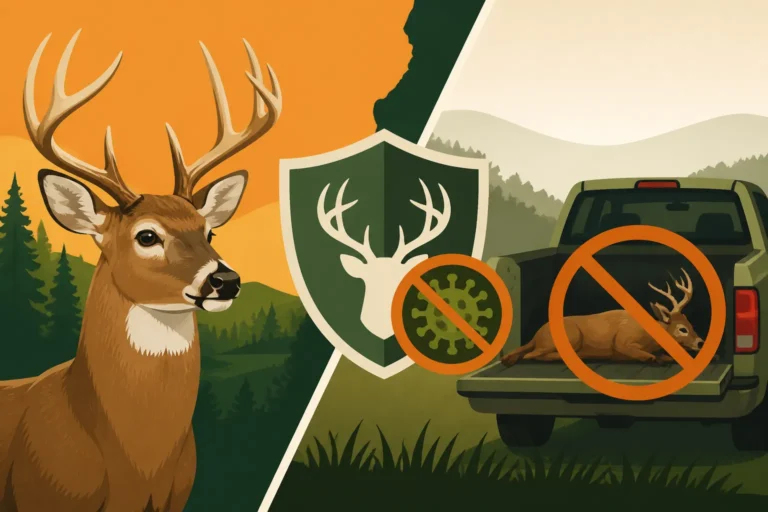
Arkansas, like many states, is actively managing Chronic Wasting Disease (CWD). Certain counties are designated as CWD management zones. If you harvest a deer in one of these zones, there are specific regulations regarding the transport of the carcass. Generally, you can only transport certain parts of the deer (deboned meat, cleaned skull plates, antlers, hides) out of a CWD zone. Whole carcasses, spinal columns, and brain material are typically prohibited from leaving these zones to prevent further spread of the disease.
It's critical to know if your hunting area falls within a CWD zone and to understand these regulations thoroughly. You can find up-to-date information on the AGFC website or in our dedicated resource on Arkansas CWD Rules and Carcass Transport. Abiding by these rules isn't just about legality; it's about being a responsible hunter and contributing to the health of the deer herd across the state.
Comparison of Nonresident Deer Licenses
To help clarify which license might be best for your specific trip, here’s a quick overview contrasting the common nonresident deer license options available in Arkansas. This table highlights key differences to consider when planning your hunt.
| License Type | Duration | Typical Cost (Approx.) | Deer Bag Limit | Other Game Covered | Best For |
|---|---|---|---|---|---|
| Nonresident 3-Day All-Game | 3 Consecutive Days | $225 | Per Zone (Specific to deer) | Some Small Game* | Short, focused deer hunts; first-time visitors |
| Nonresident 5-Day All-Game | 5 Consecutive Days | $275 | Per Zone (Specific to deer) | Some Small Game* | Slightly longer trips; combination hunts |
| Nonresident Annual All-Game | 1 Year | $400 | Per Zone (Specific to deer) | Most Small Game* | Multiple trips per year; extended stays |
*Note: "Some Small Game" typically refers to species like squirrel and rabbit. It usually does not cover migratory birds (which require a Federal Duck Stamp and HIP registration) or bear/turkey (which require additional permits/licenses). Costs are approximate and subject to change by AGFC. Always check current regulations.
Final Thoughts for Your Arkansas Deer Hunt
Embarking on a deer hunt in Arkansas, even for just three days, is an experience that promises excitement and challenge. The state's diverse landscapes, from the rolling Ozark mountains to the sprawling Delta bottomlands, offer unique hunting opportunities. The nonresident three-day deer license is a thoughtful option for those with limited time, providing a flexible and focused way to pursue whitetails without the commitment of a full season.
Remember, preparation is key. Use tools like GoHunt or the AGFC's official resources to familiarize yourself with the specific zone regulations where you plan to hunt. Understanding things like Scouting Arkansas Public Land Before Season can make a huge difference in your success, even on a short trip. Whether you're setting up a treestand in Delta hardwoods or still-hunting through pine country, every minute counts when you have a three-day window. Be respectful of the land, adhere to all regulations, and prioritize safety above all else. Arkansas welcomes you, and we hope your short but sweet deer hunt is a memorable one!
Disclaimer
The information provided in this guide is for general informational purposes only and is subject to change. Hunting regulations, license costs, and season dates are determined by the Arkansas Game and Fish Commission (AGFC) and can be updated at any time. Hunters are responsible for verifying all current regulations directly with the AGFC before engaging in any hunting activities.